
How a Scan of the Human Body Maps Fat, Muscle, and Bone
Most people think of a body scan as a sharper version of the bathroom scale. In reality, when specialists scan human body composition with DEXA, the result is closer to a tissue map. Instead of only asking, “How much do I weigh?”, the scan helps answer where fat is stored, how lean mass is distributed and how bone measurements fit into the bigger picture.
That distinction matters for anyone trying to lose fat, build muscle, train for performance or monitor bone health. Scale weight can stay flat while body composition changes in meaningful ways. A DEXA scan helps separate those changes so you can make decisions from measured data rather than guesswork.
When Technicians Scan Human Body Composition, What Gets Mapped?
DEXA stands for dual energy X-ray absorptiometry. The scanner uses two low-dose X-ray energy levels to estimate how different tissues absorb energy. Fat, lean tissue and bone mineral each behave differently, so the system can model body composition across the whole body and by region.
RadiologyInfo.org explains that DEXA is commonly used to measure bone mineral density, and modern whole-body DEXA systems can also estimate body composition. In a fitness or wellness setting, the report is usually most useful because it combines several categories in one place.
For a phrase like “scan human body composition,” the practical meaning is a report that separates total mass into usable categories. You are not just seeing a picture of your body. You are seeing estimates that can guide training, nutrition and health conversations.
| What the scan maps | What it can tell you | Why it matters |
|---|---|---|
| Fat mass | How many pounds of your body are fat tissue | Helps track fat loss beyond scale weight |
| Lean mass | Non-fat soft tissue such as muscle, water and organs | Helps monitor muscle-focused goals |
| Bone mineral content | Mineral mass in the skeleton | Adds context for bone health tracking |
| Regional distribution | Measurements by arms, legs, trunk and other regions | Shows where changes are happening |
| Left-to-right balance | Differences between sides of the body | Can reveal asymmetries worth discussing |
| Visceral fat estimate | Fat stored around internal organs | Adds context for metabolic risk discussions |
Mapping Fat: More Than a Body Fat Percentage
Body fat percentage is the number many people look for first, but it is only one part of the fat map. A complete DEXA report can also show total fat mass, regional fat distribution and a visceral fat estimate. That makes it more informative than a simple skinfold test or a scale that estimates body fat from electrical impedance.
A DEXA scan human body composition view can help someone distinguish between losing fat and merely losing weight. For example, two people might each lose 8 pounds, but one might lose mostly fat while the other loses a mix of fat and lean mass. Those are very different outcomes if the goal is long-term fitness or metabolic health.
Regional fat distribution can also be useful. Fat stored around the trunk may change at a different pace than fat in the legs or arms. If your report includes visceral fat, that metric can add another layer because visceral adipose tissue is more closely tied to cardiometabolic concerns than subcutaneous fat under the skin.
If you want a deeper breakdown of these report numbers, DEXA SF’s guide to reading DEXA scan body fat results explains how to interpret fat mass, percentage and distribution without over-focusing on one metric.
Mapping Muscle: Lean Mass, Symmetry and Training Signals
DEXA does not directly measure muscle fibers in isolation. It estimates lean soft tissue, which includes muscle plus water, organs and connective tissue. Even with that limitation, regional lean mass is one of the most practical ways to track muscle-related change when scan conditions are consistent.
When you scan human body composition under similar conditions over time, lean mass trends can show whether your program is supporting strength and hypertrophy goals. If leg lean mass is rising while trunk fat mass is falling, for example, your training and nutrition plan may be moving in the right direction even if body weight barely changes.
Asymmetry data can also be valuable. A large difference between left and right arm or leg lean mass might reflect sport demands, injury history or uneven training patterns. It does not automatically mean something is wrong, but it gives you a more specific question to discuss with a coach, physical therapist or qualified health professional.
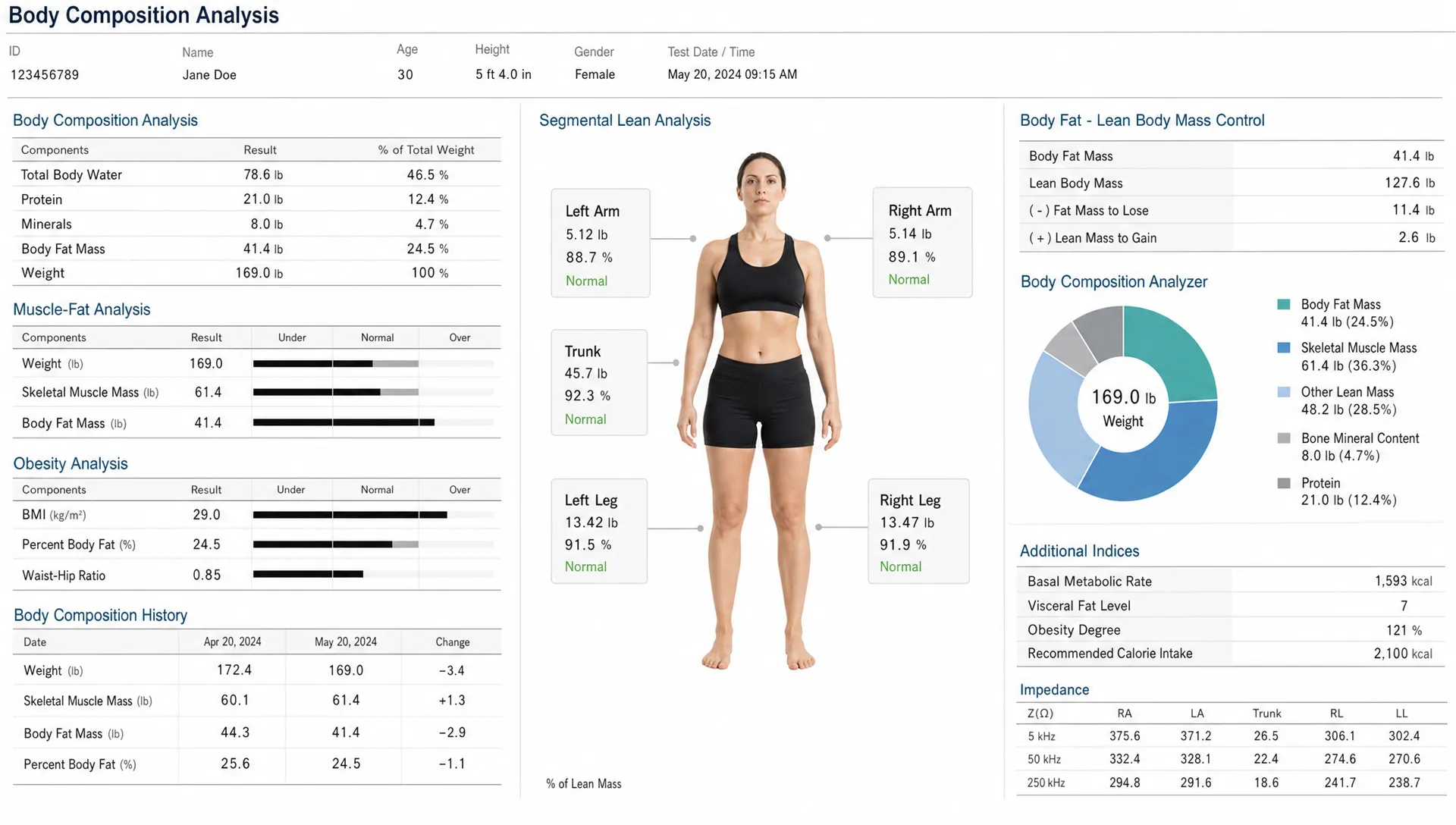
For athletes and recreational lifters, this is where a scan becomes more than a scorecard. It can help match training decisions to actual changes in tissue distribution. The article on how a body scan for fat and muscle guides your training covers that performance angle in more detail.
Mapping Bone: Density, Mineral Content and Context
DEXA is widely associated with bone measurement because it is used clinically to assess bone mineral density. A whole-body scan may include bone mineral content and related bone metrics, while a medical bone density exam may report values such as T-scores or Z-scores depending on the purpose of the test.
A scan human body composition report should be read with the right context. Bone measurements do not change as quickly as body fat or lean mass, and they should not be treated like weekly performance stats. They are more useful as part of a longer-term health picture, especially for people with risk factors such as aging, low energy availability, a history of fractures or relevant family history.
Bone data can also help prevent overly narrow goal-setting. Someone may want to get lighter for aesthetics or sport, but an aggressive plan that reduces lean mass or undermines bone health is not a good trade. Seeing fat, muscle and bone data together supports more balanced decisions.
If you have concerns about osteoporosis, fracture risk or a medical condition affecting bone health, a clinician should guide interpretation and follow-up. A wellness-focused scan can provide helpful information, but it is not a replacement for medical evaluation.
Why a Whole-Body Map Changes Decision-Making
The biggest advantage of DEXA is not that it produces more numbers. It is that the numbers are connected. Fat loss, muscle gain and bone health do not exist in separate lanes, so a body composition map can show whether your current approach is improving the full picture or only one visible outcome.
When you scan human body composition at meaningful intervals, you can compare like with like. One scan gives you a baseline. A follow-up scan after a training or nutrition phase shows whether the plan changed the tissues you intended to change.
| Common tool | What it shows well | What it can miss |
|---|---|---|
| Bathroom scale | Total body weight | Whether weight change came from fat, lean mass or water |
| Tape measure | Circumference change | Internal composition and bone metrics |
| Progress photos | Visible shape change | Visceral fat, lean mass and subtle regional shifts |
| DEXA scan | Fat, lean mass, bone and regional distribution | Daily fluctuations and non-composition factors such as performance skill |
This is why DEXA can be especially helpful when the scale feels confusing. A person might gain 3 pounds while adding lean mass and reducing fat mass. Another person might lose weight but also lose lean mass. The same scale trend can represent very different outcomes.
What to Expect From a DEXA Body Composition Scan
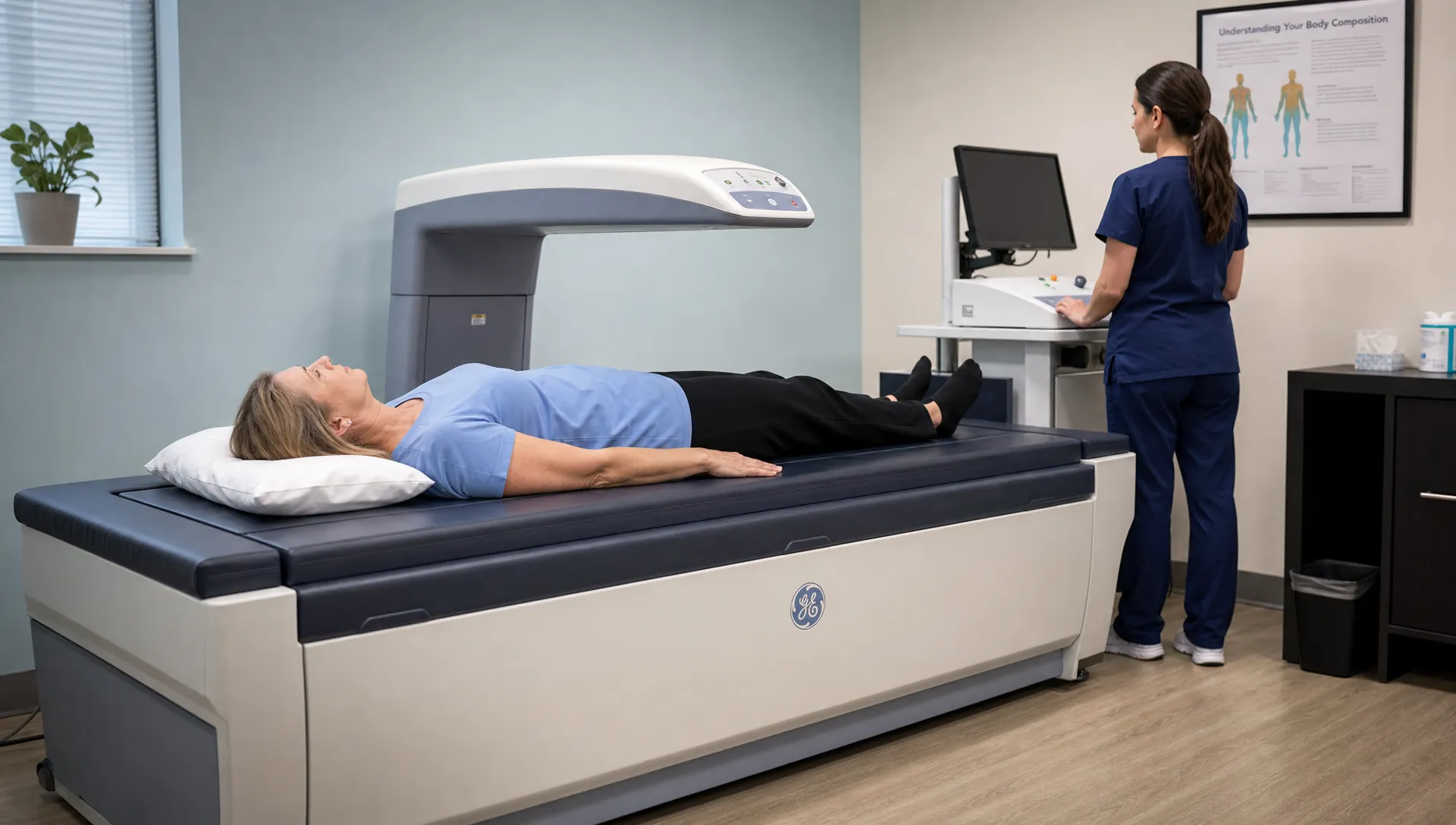
Before a technician can scan human body composition, you typically remove metal items and lie still on the scanning table while the arm of the machine passes over the body. The process is usually quick, noninvasive and does not require the exertion of a fitness test.
The value often comes after the scan, during interpretation. A report full of numbers can be easy to misread if you focus only on the lowest body fat percentage or the highest lean mass number. Qualified interpretation helps connect the report to your goals, your history and your next step.
At DEXA SF, clients can schedule professional DEXA body composition scans in San Francisco and receive measurements for body fat, lean mass, bone density, visceral fat and asymmetries, along with expert guidance around fitness and nutrition. If you are comparing options, the overview of what a DEXA scan is and why people get one is a helpful place to start.
How to Use the Results Without Overreacting
A scan is most useful when it leads to better choices, not when it creates anxiety over every metric. Treat your first result as a baseline. Then decide which numbers matter most for your current goal.
If fat loss is the priority, track fat mass, visceral fat and waist-related changes alongside energy, strength and adherence. If muscle gain is the goal, pay attention to regional lean mass, training performance and recovery. If bone health is a concern, use the scan as one data point in a broader plan that may include medical guidance, resistance training, protein intake, calcium, vitamin D and lifestyle factors.
A DEXA scan human body composition comparison works best when your follow-up conditions are similar. Try to scan at a similar time of day, avoid unusual meals or workouts right before testing and compare results across realistic time frames rather than expecting major change from week to week.
For nutrition planning, body composition data can help avoid under-eating or overcorrecting based on scale weight alone. DEXA SF’s article on how to use a body scan to build a better nutrition plan explains how these metrics can translate into more practical food decisions.
Frequently Asked Questions
Is DEXA a full scan of the human body? A whole-body DEXA scan can estimate fat mass, lean mass, bone mineral content and regional distribution across the body. It is not the same as an MRI or CT scan, and it is usually used for body composition and bone-related measurements rather than detailed organ imaging.
Can a DEXA scan show exactly how much muscle I have? DEXA estimates lean soft tissue, not pure muscle tissue alone. Because lean mass includes muscle, water, organs and connective tissue, it is best used as a consistent trend metric rather than a perfect isolation of muscle fibers.
Does DEXA show visceral fat? Many whole-body DEXA reports include an estimate of visceral adipose tissue in the abdominal region. This can be useful because visceral fat is more strongly associated with metabolic health concerns than fat stored just under the skin.
How often should I repeat a DEXA scan? The right timing depends on your goal and how quickly your plan is expected to produce measurable change. Many people use follow-up scans after a defined training or nutrition phase rather than scanning too frequently.
Do I still need a doctor if my bone numbers look low? Yes. If bone density or bone health is a concern, discuss your results with a qualified healthcare professional. DEXA data can inform the conversation, but medical diagnosis and treatment decisions should come from a clinician.
Ready to See Your Body Composition More Clearly?
If you want a clearer map of fat, lean mass, bone density, visceral fat and body asymmetry, schedule a DEXA scan with DEXA SF. You will get precise measurements plus expert interpretation to help connect the data to your fitness, nutrition and health goals.