
Use a Body Scan to Build a Better Nutrition Plan
Most nutrition plans start with a guess. You estimate calories, choose a protein target, adjust portion sizes and hope the scale moves in the right direction. That can work for a while, but it also creates a blind spot: the scale cannot tell you whether weight change came from fat, muscle, water or normal day to day fluctuation.
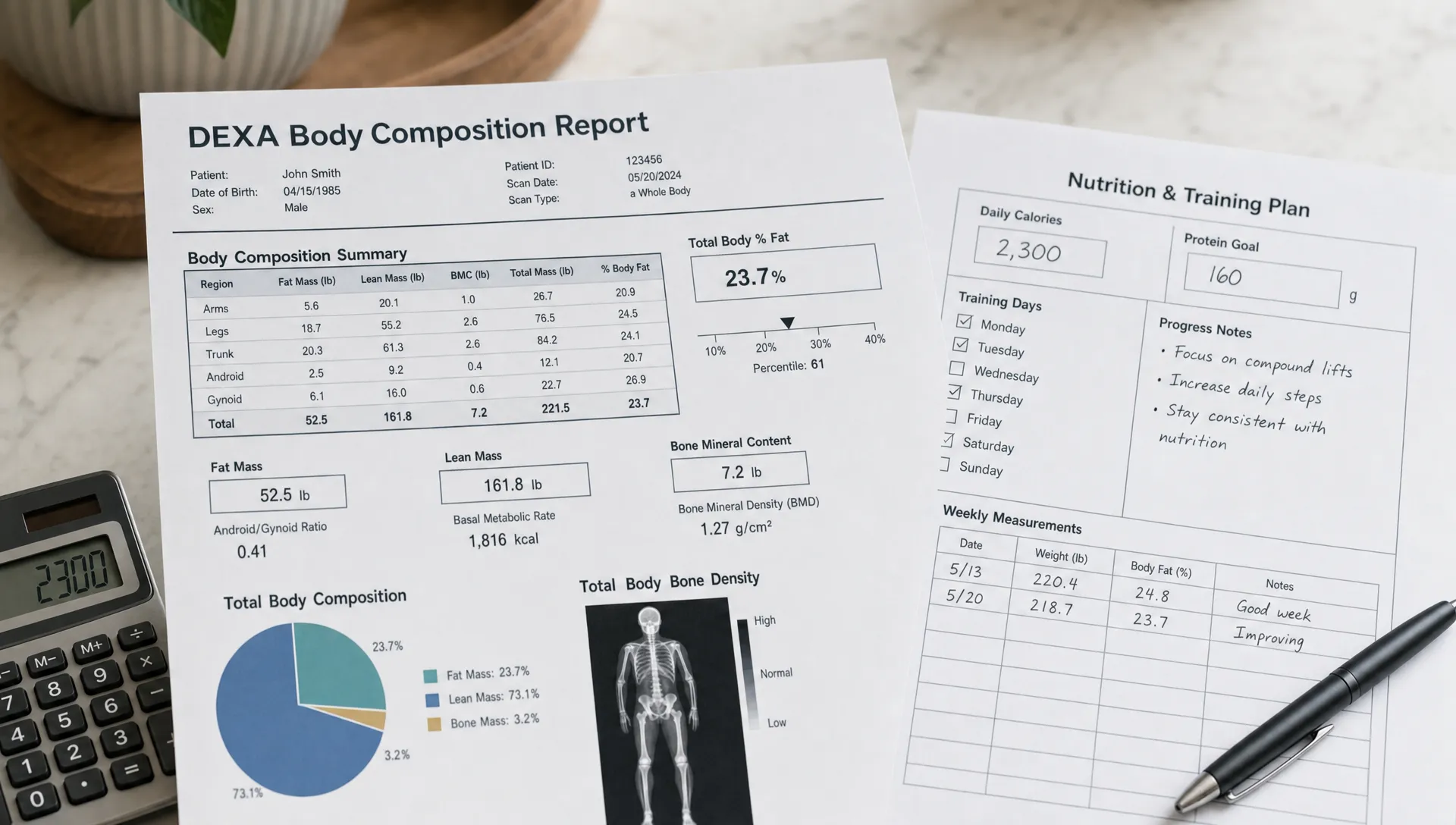
A body scan changes the starting point. Instead of building a plan around body weight alone, you can use objective data about body fat, lean mass, visceral fat, bone density and muscle distribution. That makes your nutrition plan more specific, easier to adjust and less dependent on trial and error.
For anyone trying to lose fat, gain muscle, improve health markers or fuel training, a body scan nutrition strategy gives you a better question to answer: not just “How much do I weigh?” but “What do I want to change inside that weight?”
Why body composition matters more than scale weight
Scale weight is simple, but it compresses several different tissues into one number. A 5 pound loss might mean mostly fat loss. It might also mean muscle loss, lower glycogen, less food volume in the gut or dehydration. A 5 pound gain could be unwanted fat, productive muscle gain or a mix of both.
That distinction matters because nutrition decisions are different in each case. If you are losing weight and also losing lean mass, the answer may be more protein, better resistance training support, a smaller calorie deficit or improved recovery. If your weight is stable but fat mass is down and lean mass is up, your plan may be working even though the scale looks unchanged.
This is why a body scan is especially useful when the scale starts sending confusing signals. DEXA SF has covered this problem in more detail in its guide to when a body composition scan beats a bathroom scale, but the nutrition takeaway is straightforward: you need the right measurement before you choose the right adjustment.
What a DEXA body scan can tell you about nutrition
A DEXA scan does not replace food logging, blood work or medical advice. It also does not tell you the perfect breakfast or the exact number of calories you burn every day. What it does provide is a high quality baseline for the tissues your nutrition plan is trying to influence.
| Body scan metric | What it can clarify for your nutrition plan |
|---|---|
| Total body fat percentage | Whether fat loss, maintenance or muscle gain should be the main priority |
| Fat mass | How much of your body weight is stored fat, not just total pounds |
| Lean mass | Whether your plan is supporting muscle retention or muscle gain |
| Visceral fat | Whether reducing abdominal fat should be a health focused priority |
| Bone density | Whether nutrition should better support bone health alongside training |
| Left to right asymmetry | Whether muscle distribution may need targeted training and recovery support |
| Metabolic data insights | How to think more realistically about calorie needs and progress expectations |
These numbers help you move from generic advice to a plan that fits your current body. Two people can both weigh 170 pounds and need very different nutrition strategies if one has higher lean mass and lower visceral fat while the other has lower lean mass and more central fat storage.
Start with the goal your scan actually supports
Many nutrition plans fail because the stated goal does not match the person’s current physiology. A body scan helps you choose a goal that makes sense now rather than copying a plan built for someone else.
If your scan shows higher body fat and adequate lean mass, a fat loss phase may be appropriate. The goal would be to create a modest calorie deficit while keeping protein high enough and training hard enough to preserve muscle.
If your scan shows lower muscle mass than expected, aggressive dieting may be the wrong first move. A maintenance phase or gradual muscle building phase might support better long term results, especially if you have been cycling through low calorie diets without improving body composition.
If visceral fat is elevated, nutrition quality becomes more important than aesthetics alone. The focus often shifts toward consistent calorie control, higher fiber intake, less alcohol, more minimally processed foods and sustainable activity. The Dietary Guidelines for Americans emphasize vegetables, fruits, whole grains, lean proteins, low fat dairy or fortified alternatives and healthy oils as the foundation of a healthy eating pattern.
If bone density is a concern, your nutrition plan should not be built around weight loss at any cost. Adequate protein, calcium, vitamin D, resistance training and medical guidance can all become more relevant. A body composition goal should never undermine bone health.
Use scan data to set calories with more context
Calorie targets are often chosen from calculators, app defaults or social media templates. Those can be useful starting points, but they do not know how much lean mass you carry, how much fat you carry or how your body is changing over time.
Lean mass is metabolically active tissue, so it helps provide context for energy needs. A person with more lean mass generally needs more energy than someone of the same body weight with less lean mass, though daily activity, training volume, age, sleep and hormones also matter.
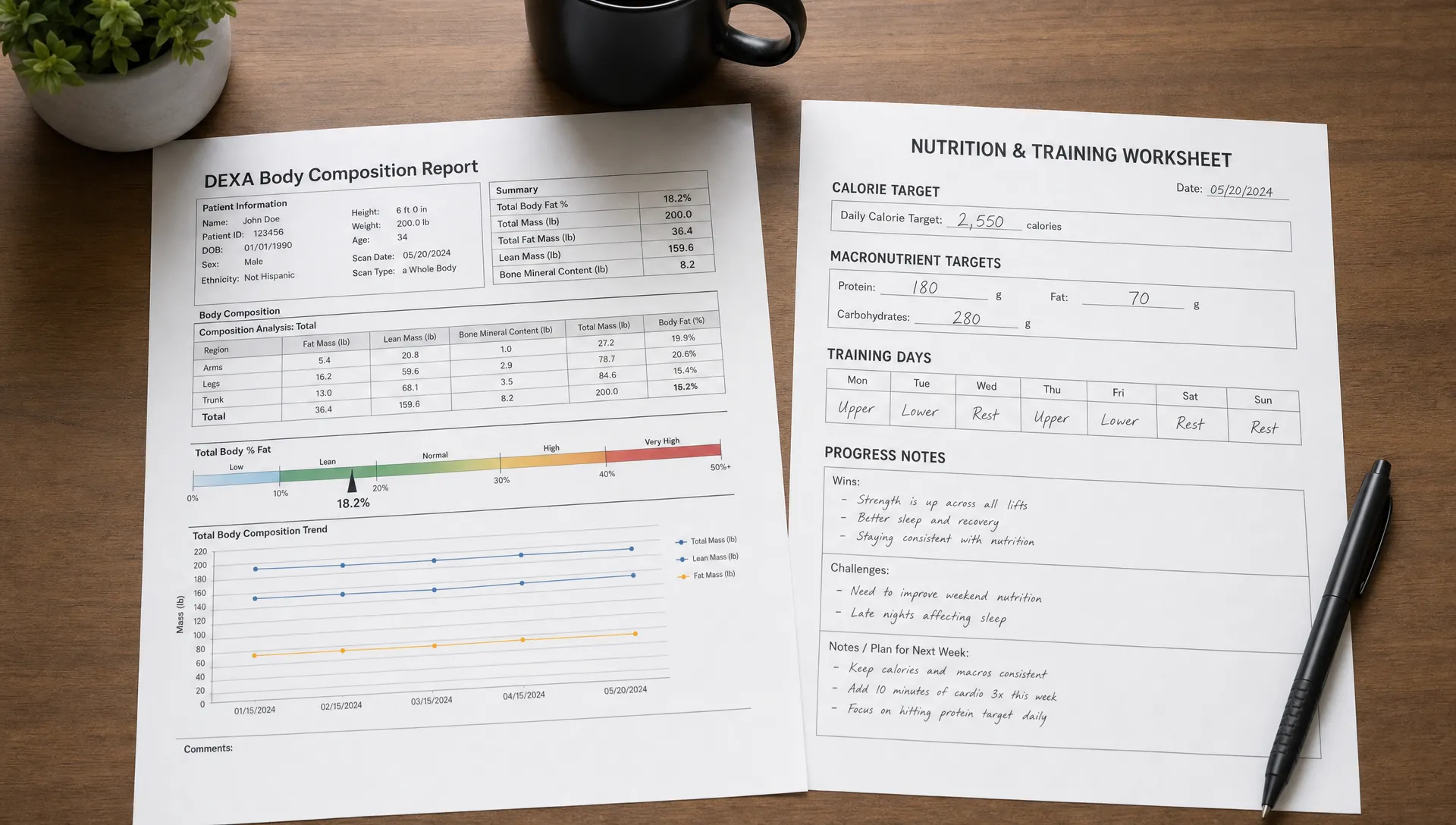
A practical approach is to use your body scan as the baseline, then combine it with real world tracking. If your goal is fat loss, start with a moderate calorie deficit rather than an extreme cut. If your goal is muscle gain, use a modest surplus or maintenance intake, then watch whether lean mass increases without excessive fat gain.
The scan helps you evaluate the outcome. If calories are reduced and the next scan shows fat mass down with lean mass stable, the plan is doing its job. If fat mass is barely changing and lean mass is dropping, the deficit may be too large, protein may be too low, training may be insufficient or recovery may be poor.
Turn lean mass into a smarter protein target
Protein is one of the most important nutrition variables for changing body composition. It supports muscle repair, helps preserve lean mass during weight loss and can improve satiety.
The International Society of Sports Nutrition states that many exercising individuals benefit from daily protein intake in the range of 1.4 to 2.0 grams per kilogram of body weight, depending on training, goals and total energy intake. Some people may need individualized guidance, especially those with medical conditions or kidney disease risk.
A body scan makes protein planning more precise because you can see whether lean mass is actually being maintained or gained. If you are dieting and lean mass is falling faster than expected, protein intake is one of the first variables to review. Meal timing can also help. Spreading protein across meals is usually more effective than saving most of it for dinner.
For many people, the simplest upgrade is not a complicated macro plan. It is making sure each meal contains a clear protein source, then adjusting total intake based on body composition changes over time.
Match carbohydrates and fats to the job
Carbs and fats both have a place in a strong nutrition plan. The right balance depends on your scan results, training demands, preferences and health goals.
Carbohydrates are especially useful for high intensity training, endurance work and recovery. If your body scan goal is muscle gain or athletic performance, cutting carbs too low can make training quality suffer. Lower training quality can limit the very lean mass gains you are trying to create.
Dietary fat supports hormone production, nutrient absorption and meal satisfaction. Very low fat diets can be hard to sustain and may make it harder to get enough essential fatty acids. For fat loss, the key is not eliminating either carbs or fats. The key is creating a calorie intake you can follow while still getting enough protein, fiber, micronutrients and training fuel.
A body scan helps you decide whether your current carb and fat choices are working. If performance is strong, lean mass is stable and fat mass is trending down, there may be no need to overhaul the plan. If you feel flat in training and lean mass is not improving, you may need more total energy or better carbohydrate timing around workouts.
Build nutrition around the type of change you want
Once you know your baseline, nutrition becomes more targeted. The right plan depends on what your next scan should ideally show.
| Goal | What you want to see on the next scan | Nutrition focus |
|---|---|---|
| Fat loss | Fat mass down, lean mass mostly preserved | Moderate calorie deficit, higher protein, high fiber foods and consistent meals |
| Muscle gain | Lean mass up, fat gain controlled | Enough calories, adequate protein, carbs around training and progressive strength work |
| Body recomposition | Fat mass down and lean mass stable or up | Consistency, resistance training, protein at each meal and slower progress expectations |
| Lower visceral fat | Visceral fat trending down | Calorie control, less alcohol, more whole foods, more fiber and regular activity |
| Bone support | Bone measures monitored appropriately | Adequate calcium, vitamin D, protein, strength training and clinician guidance when needed |
This is also where expert interpretation matters. A single number can be misunderstood when viewed alone. Body fat percentage, for example, can change because fat mass changed, lean mass changed or both changed. Looking at the full scan gives a clearer picture.
Use repeat scans to adjust, not overreact
The real value of a body scan shows up when you repeat it under similar conditions. One scan gives you a baseline. The next scan shows whether your nutrition plan is producing the intended change.
For many body composition goals, waiting long enough to see a meaningful trend is better than scanning too frequently. A common rhythm is every few months, depending on the goal, training phase and how quickly changes are expected. Try to keep conditions consistent by scanning at a similar time of day, with similar hydration and similar training timing beforehand.
When comparing results, avoid judging success by one metric alone. Look at fat mass, lean mass, visceral fat and regional changes together. If you want a deeper explanation of how to interpret changes between scans, DEXA SF’s guide on how to compare DEXA analysis results between scans is a useful companion.
Common nutrition mistakes a body scan can help prevent
A better measurement system does not make nutrition effortless, but it can prevent common mistakes that slow progress.
One mistake is dieting harder when you actually need to preserve or build muscle. If scan data shows low lean mass, repeated aggressive cuts may make you smaller without improving your physique, strength or metabolic resilience.
Another mistake is assuming no scale change means no progress. If fat mass is down and lean mass is up, body weight may stay similar while your body composition improves. This is common for beginners, returning lifters or people improving nutrition and training at the same time.
A third mistake is ignoring visceral fat because body weight looks normal. Some people carry higher central fat despite being in a normal weight range. A DEXA scan can help make that risk more visible, which may support earlier nutrition and lifestyle changes.
The final mistake is changing too many things at once. If you alter calories, protein, training, steps, supplements and sleep all in the same week, it becomes harder to know what worked. Use the scan to identify the biggest priority, make a focused change, then measure again.
How DEXA SF fits into a nutrition plan
DEXA SF provides professional DEXA body composition scans in San Francisco, including measurements related to body fat, lean mass, bone density, visceral fat and asymmetry. The scan process is quick, and clients receive expert interpretation along with personalized fitness and nutrition guidance.
That combination is valuable because data alone does not create behavior change. You still need to translate the report into meals, training support and realistic next steps. If your primary goal is fitness related, you may also find it helpful to pair nutrition planning with the principles in DEXA SF’s article on how to use a DEXA scan for fitness goals.
A strong plan does not have to be extreme. In most cases, the scan simply helps you choose the right target, stop guessing and make smaller adjustments with more confidence.
Frequently Asked Questions
Can a body scan tell me exactly what to eat? No. A body scan does not prescribe a meal plan by itself. It gives you body composition data that can guide calorie targets, protein intake, fat loss goals, muscle gain goals and progress tracking.
Is a DEXA scan useful if I already track calories? Yes. Calorie tracking tells you what you are eating, while a DEXA scan shows how your body is responding. Together, they can help you see whether your intake is leading to fat loss, lean mass gain or unwanted muscle loss.
How often should I get a body scan for nutrition goals? It depends on the goal, but many people benefit from scanning every few months rather than every few weeks. The goal is to measure meaningful tissue changes, not normal short term fluctuations.
What should I do if my scan shows I lost muscle while dieting? Review your calorie deficit, protein intake, resistance training, sleep and recovery. A smaller deficit, higher protein intake and better strength training consistency may help, but individual guidance is best.
Can a body scan help with visceral fat? Yes. A DEXA scan can measure visceral fat, which gives you a more specific baseline than waist size or weight alone. Nutrition changes, regular activity, strength training, sleep and reduced alcohol intake can all support improvement.
Build your next nutrition plan from real data
If your nutrition plan is based mostly on scale weight, it may be missing the information that matters most. A DEXA body scan can show what is changing in fat, muscle, visceral fat and bone measures, so your next adjustment is based on evidence rather than guesswork.
To get a clearer baseline and expert interpretation in San Francisco, schedule a professional scan with DEXA SF.