
How a Body Scan for Fat and Muscle Guides Your Training
A body scan for fat and muscle can make training decisions less emotional and more precise. Instead of guessing whether a stalled scale means poor progress, water retention or new muscle, you can see how much of your body is fat mass, how much is lean tissue and where those changes are happening.
That matters because most training goals are not really about weight. A runner may want to get lighter without losing power. A lifter may want to add muscle without pushing body fat too high. Someone returning to exercise may want reassurance that the work is improving health markers, not just changing how clothes fit.
DEXA is useful because it separates body composition into measurable parts. At DEXA SF, a scan can assess body fat, lean mass, bone density, visceral fat, asymmetries and related metabolic insights, then pair those results with expert interpretation so the next step is clear.
What a body scan for fat and muscle tells you
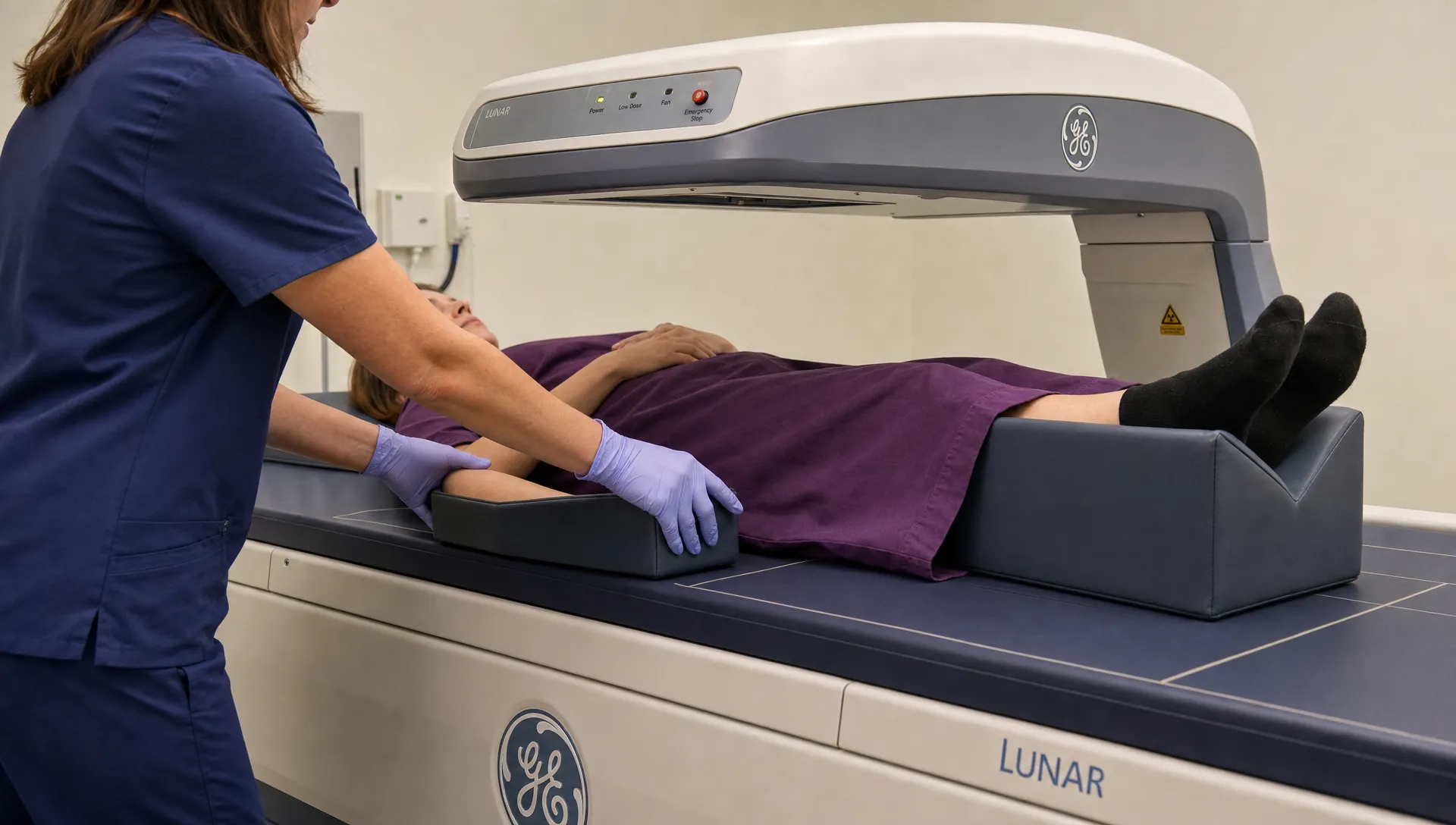
A DEXA scan uses low-dose X-ray technology to estimate the makeup of your body in more detail than a bathroom scale, tape measure or mirror check. Rather than giving one number, it breaks your body into compartments that can be tracked over time.
Fat mass and body fat percentage
Fat mass is the total amount of fat tissue measured in pounds or kilograms. Body fat percentage shows what portion of your total body weight comes from fat. Both are useful, but they answer different questions.
If your weight drops 6 pounds and most of that change comes from fat mass, your nutrition and training plan is probably moving in the right direction. If half of the loss comes from lean mass, the plan may be too aggressive, too low in protein or missing enough resistance training.
A body scan for fat and muscle is most valuable when you compare fat mass, lean mass and performance together. Lower body fat is not automatically better if strength, energy and recovery are falling at the same time.
Lean mass, muscle distribution and asymmetry
Lean mass includes muscle, organs, water and other non-fat tissue. In a training context, the most useful part is often regional lean mass, meaning how lean tissue is distributed across your arms, legs and trunk.
This can reveal patterns that are hard to see in the gym. You may discover that one leg has noticeably less lean mass than the other, or that upper body development has lagged behind lower body progress. If you are rebuilding after an injury, regional changes can show whether the affected side is catching up.
For a deeper look at this specific issue, DEXA SF has a helpful guide on when a muscle scan can reveal training imbalances.
Bone density and visceral fat
Bone density is not just a medical concern for older adults. Strength athletes, endurance athletes, people dieting aggressively and anyone with a history of low energy availability should care about bone health. DEXA can include bone density information, which adds context to training choices and long-term health.
Visceral fat, the fat stored around internal organs, is another important metric. Two people can have similar body weight and body fat percentage but different visceral fat levels. If visceral fat is elevated, the training plan may need more emphasis on sustainable fat loss, aerobic conditioning, sleep and nutrition consistency.
How scan results change your training priorities
The main benefit of a scan is not the report itself. It is the way the report helps you choose what to do next. The same workout plan can be excellent for one person and poorly matched for another because their starting points are different.
If fat loss is the priority
When fat mass is higher than desired, the goal is usually to lose fat while preserving as much lean tissue as possible. That points toward a plan built around resistance training, a moderate calorie deficit, enough protein and conditioning that does not bury recovery.
A body scan for fat and muscle can prevent a common mistake during fat loss: celebrating every drop on the scale. If the scan shows that lean mass is falling too quickly, you may need a smaller deficit, more recovery, heavier lifting or a nutrition adjustment.
Training should also match your current capacity. Someone with higher body fat and low training history may benefit from simple full-body strength sessions and low-impact cardio before adding high-intensity intervals. Someone already strong may need a more advanced plan to preserve performance while cutting.
If muscle gain is the priority
If lean mass is lower than expected, the scan can justify a dedicated hypertrophy phase. That often means more weekly training volume, progressive overload, adequate calories and patience. Muscle gain is usually slower than fat loss, so the scan helps separate real progress from day-to-day scale noise.
Regional lean mass can also guide exercise selection. If leg lean mass is lagging, the plan may need more lower body volume. If arm or shoulder development is behind, targeted accessory work may be appropriate. The scan does not write the program for you, but it helps you ask better programming questions.
If recomposition is the goal
Many people want recomposition: losing fat and gaining or preserving muscle at the same time. This is realistic for beginners, people returning after time off and some trained individuals with careful programming, but it is slower than a pure fat loss or muscle gain phase.
The key is choosing the right scorecard. Scale weight might barely move while fat mass drops and lean mass improves. That is why DEXA data can be so helpful for recomposition, especially when paired with gym performance, photos, measurements and recovery notes.
| Scan finding | What it may suggest | Training adjustment to consider |
|---|---|---|
| Fat mass is decreasing and lean mass is stable | Fat loss plan is working well | Keep the plan consistent and avoid unnecessary changes |
| Weight is down but lean mass is also down | Deficit or training stress may be too high | Increase protein, reduce the deficit or adjust training volume |
| Lean mass is up but fat mass is rising quickly | Muscle gain phase may be too aggressive | Slightly reduce calorie surplus and monitor conditioning |
| One limb has lower lean mass than the other | Possible strength or loading imbalance | Add unilateral work and track side-to-side performance |
| Visceral fat remains elevated | Health-focused fat loss may need more emphasis | Improve nutrition consistency, aerobic work and sleep habits |
Turning scan data into weekly programming decisions
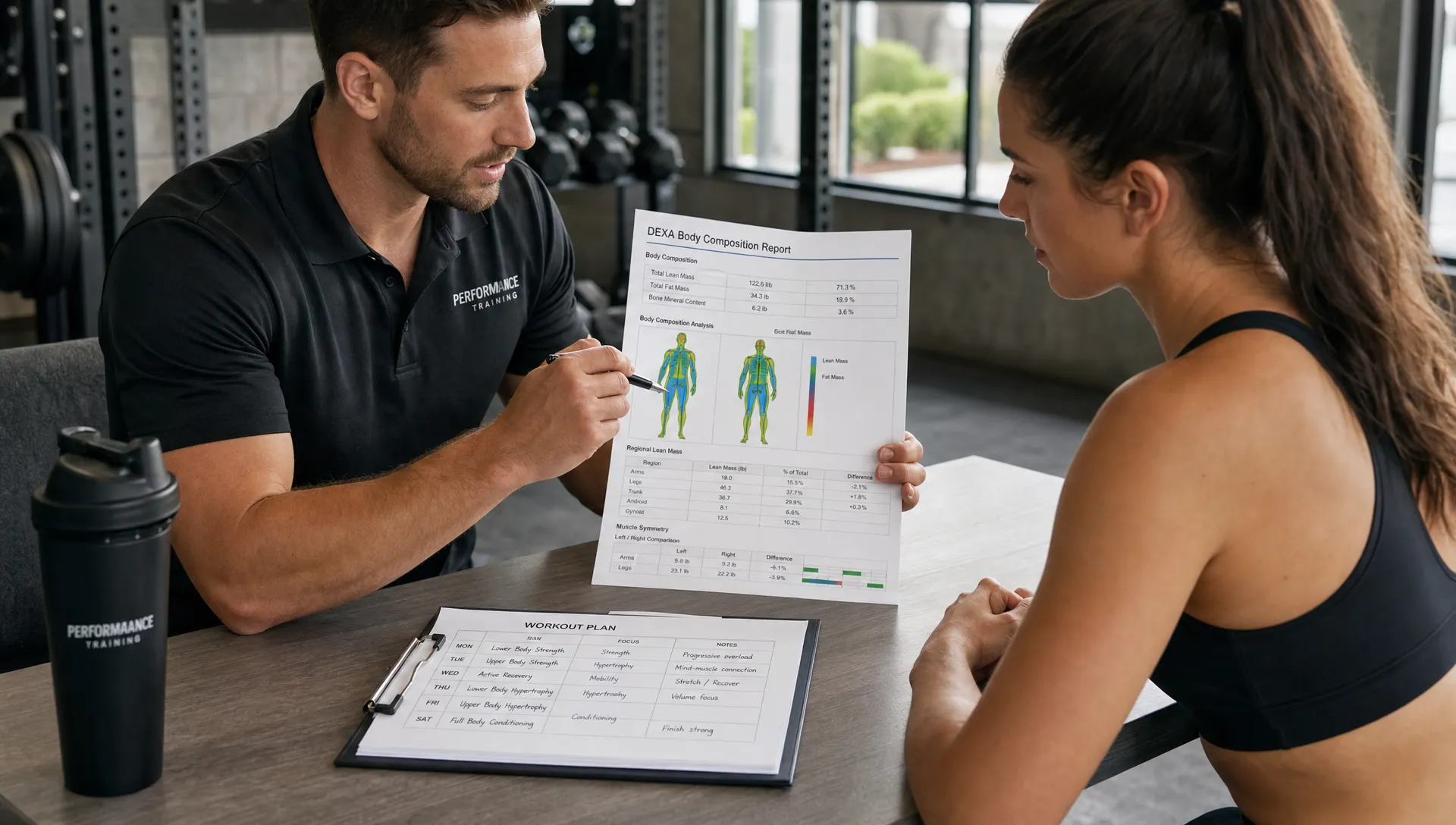
A scan gives you the map, but your weekly training turns that map into progress. The next step is to translate the numbers into choices about volume, intensity, conditioning and recovery.
If a body scan for fat and muscle shows that lean mass is stable during fat loss, your strength training is probably doing its job. You may not need a dramatic program overhaul. In that case, the smarter move is often to keep lifts consistent, progress slowly and focus on nutrition adherence.
Adjust strength volume with a purpose
Training volume is one of the main levers for muscle gain, but more is not always better. If lean mass is not increasing during a muscle gain phase, volume may be too low, effort may be inconsistent or nutrition may not support growth. If performance is falling and soreness is constant, volume may be too high.
Use the scan alongside your training log. If your report shows little lean mass change and your lifts have not improved, the issue is likely programming or execution. If your lifts are rising but the scan has not changed much yet, you may simply need more time before judging the phase.
Match conditioning to the goal
Cardio supports heart health, work capacity and fat loss, but it should not sabotage the main goal. During a fat loss phase, conditioning can help create an energy deficit without relying only on eating less. During a muscle gain phase, it should usually be dosed to support recovery and health rather than compete with lifting.
For someone with elevated visceral fat, aerobic work may deserve a larger role. For someone already lean and trying to gain muscle, excessive high-intensity conditioning may make it harder to eat enough and recover from strength sessions.
Use asymmetry data carefully
Side-to-side differences do not always mean something is wrong. Dominant limbs, sport history and previous injuries can all affect lean mass distribution. The important question is whether the asymmetry connects to pain, performance limits or repeated movement breakdown.
If it does, unilateral work can help. Split squats, single-leg Romanian deadlifts, one-arm rows, single-arm presses and carries can expose and train differences without guessing. Keep the weaker side honest by matching reps and quality rather than letting the stronger side set the standard.
How often to repeat a scan
Body composition does not change meaningfully overnight. Daily weigh-ins can be useful for trends, but DEXA scans are better used as periodic checkpoints. For many training plans, repeating a scan after roughly 8 to 12 weeks gives enough time for measurable change, assuming training and nutrition have been consistent.
A body scan for fat and muscle is especially useful before starting a new phase, after completing a fat loss block, during a muscle gain cycle or when performance has changed but scale weight is confusing. The goal is not to scan constantly. The goal is to get clean feedback at decision points.
Between scans, track a few simple signals:
- Scale weight trend, not single-day weigh-ins
- Key lift performance or sport-specific output
- Waist measurement and progress photos
- Sleep quality, soreness and energy
- Nutrition consistency, especially protein and total calories
The scan then becomes the higher-quality checkpoint that confirms whether those day-to-day signals are telling the full story.
Combining training data with nutrition guidance
Training and nutrition are connected. If the scan shows fat loss without muscle loss, your nutrition strategy is probably supporting the work. If lean mass is dropping or fat gain is outpacing muscle gain, nutrition may need as much attention as the training plan.
This is where expert interpretation helps. DEXA SF provides scan results along with fitness and nutrition guidance, so you are not left trying to decode the numbers alone. The goal is to connect your body composition results to practical choices like protein targets, calorie direction, training emphasis and recovery habits.
If nutrition is the part of your plan that feels least certain, the DEXA SF article on how to use a body scan to build a better nutrition plan explains how scan data can make food decisions more specific.
Common mistakes when using scan results
A DEXA report is powerful, but it can still be misused. The biggest mistake is treating one scan as a final verdict instead of a baseline. Your first scan tells you where you are today. The second and third scans tell you whether your strategy is working.
Another mistake is chasing the lowest possible body fat percentage without regard for performance, hormones, mood or injury risk. Leaner is not always better. The right target depends on your sport, health status, training age and lifestyle.
A third mistake is ignoring the parts of the report that do not match your favorite goal. Lifters may focus only on lean mass and overlook visceral fat. Endurance athletes may focus only on weight and overlook bone density or muscle loss. A more complete view leads to better decisions.
Finally, remember that scan data should support professional judgment, not replace it. If bone density, pain, medical symptoms or unexplained changes are concerns, involve the appropriate healthcare professional.
Frequently Asked Questions
How does a body scan for fat and muscle improve a workout plan? It shows whether your current plan is changing fat mass, lean mass and regional balance in the way you intended. That helps you decide whether to keep going, increase strength work, adjust conditioning or change nutrition.
Is DEXA better than a smart scale for training decisions? DEXA generally provides more detailed body composition information than a consumer smart scale, including regional lean mass, fat distribution, visceral fat and bone density. Smart scales can still be useful for frequent weight trends, but they should not be treated as the full picture.
Can a scan show if I am gaining muscle? A DEXA scan can estimate lean mass and show changes over time. For the clearest interpretation, compare scans under similar conditions and look at the results alongside strength performance, training consistency and nutrition.
How soon should I scan again after changing my program? Many people wait about 8 to 12 weeks before rescanning because that allows enough time for meaningful changes to appear. The best timing depends on your goal, training history and how consistent the plan has been.
Do I need to be an athlete to benefit from DEXA data? No. Athletes can use the data for performance, but anyone working on fat loss, muscle gain, recomposition, bone health or better fitness decisions can benefit from a clearer baseline.
Make your training plan measurable
If your workouts feel consistent but your progress is hard to interpret, a scan can give you the missing context. You can see what is changing, where it is changing and whether your current plan matches your goal.
DEXA SF offers professional DEXA body composition scans in San Francisco with expert interpretation, including body fat assessment, lean mass evaluation, bone density analysis, visceral fat measurement, asymmetry detection and practical fitness and nutrition guidance. To turn your next training block into a measurable plan, schedule your scan through DEXA SF.