
Can a Body Fat X Ray Measure More Than Body Weight?
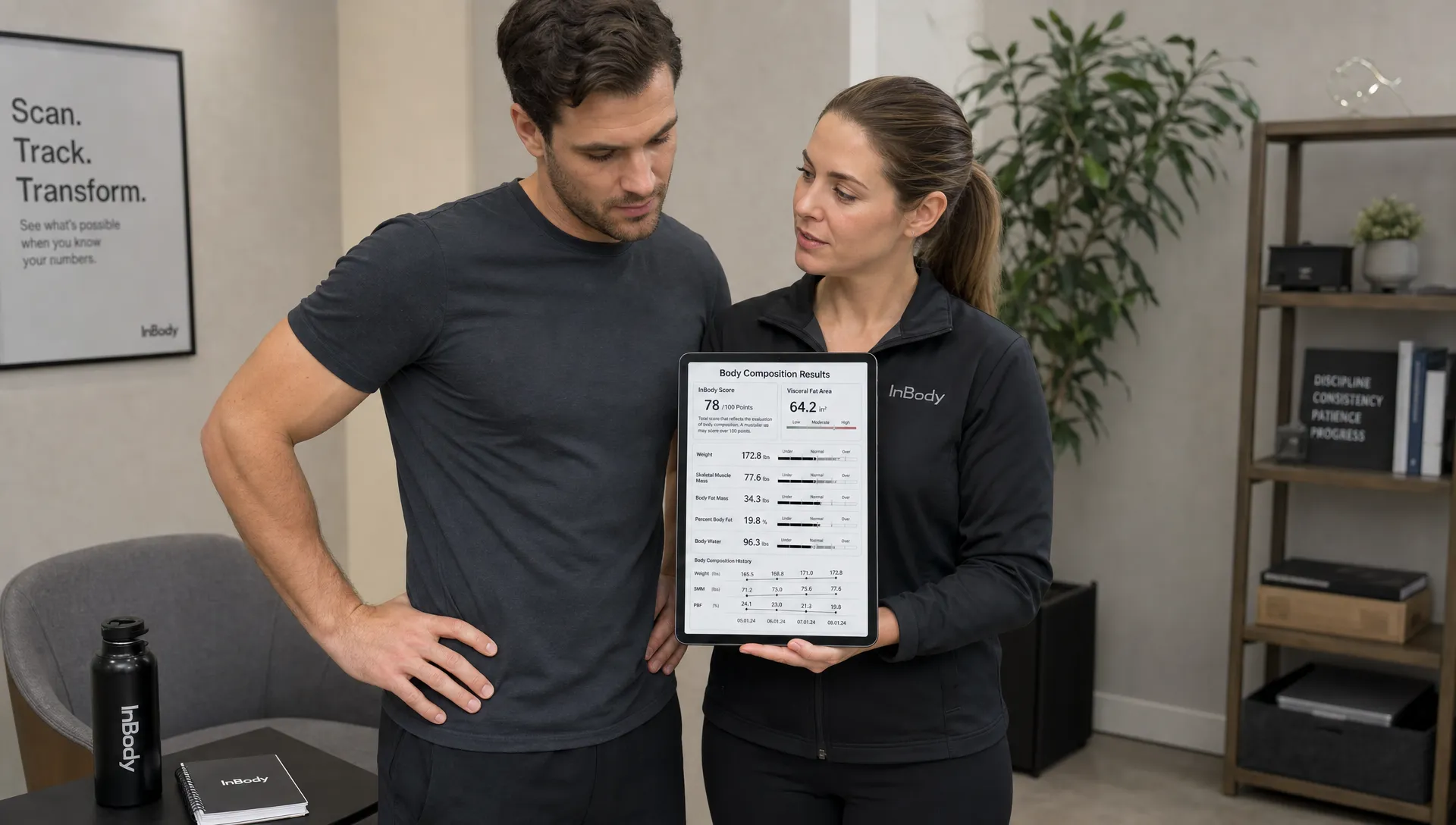
If you are searching for a body fat x ray, you are probably trying to answer a bigger question than “What do I weigh?” Scale weight can move up or down for reasons that have little to do with fat loss, muscle gain or health. A DEXA scan, which uses dual-energy X-ray absorptiometry, is designed to show what your weight is made of.
That distinction matters. Two people can weigh the same, fit into similar clothing and have very different amounts of fat mass, lean tissue, visceral fat and bone density. The number on a bathroom scale is easy to track, but it is too blunt to guide serious fitness, nutrition or health decisions by itself.
What a body fat x ray actually measures
A DEXA scan is not the same as a conventional medical X-ray used to look for a fracture or lung issue. A routine X-ray creates an image of dense structures, mainly bone. DEXA uses two low-dose X-ray energy levels to estimate how much of your body is bone mineral, lean mass and fat mass.
RadiologyInfo, a public resource from the American College of Radiology and the Radiological Society of North America, describes DEXA as a test that uses a small amount of ionizing radiation to assess bone density. In body composition testing, the same core technology is used to separate tissue compartments across the body.
So when people say body fat x ray, they usually mean a DEXA body composition scan rather than a standard diagnostic X-ray. That is an important difference. If you want a deeper comparison, DEXA SF’s guide to whether a body X-ray is useful for body composition goals explains why conventional X-rays are not built for this purpose.
Why body weight misses so much
Body weight is a total. It includes fat, muscle, bone, water, food in your digestive tract and short-term fluid shifts. A hard training session, salty dinner, travel day or hormonal change can move the scale without reflecting a meaningful change in body fat.
The CDC notes that BMI is a screening measure and does not directly measure body fat. That same limitation applies to body weight on its own. Weight can be useful for trend tracking, but it cannot tell you whether a 5-pound change came from fat, lean tissue, glycogen, water or a mix of all four.
What you can learn beyond the number on the scale
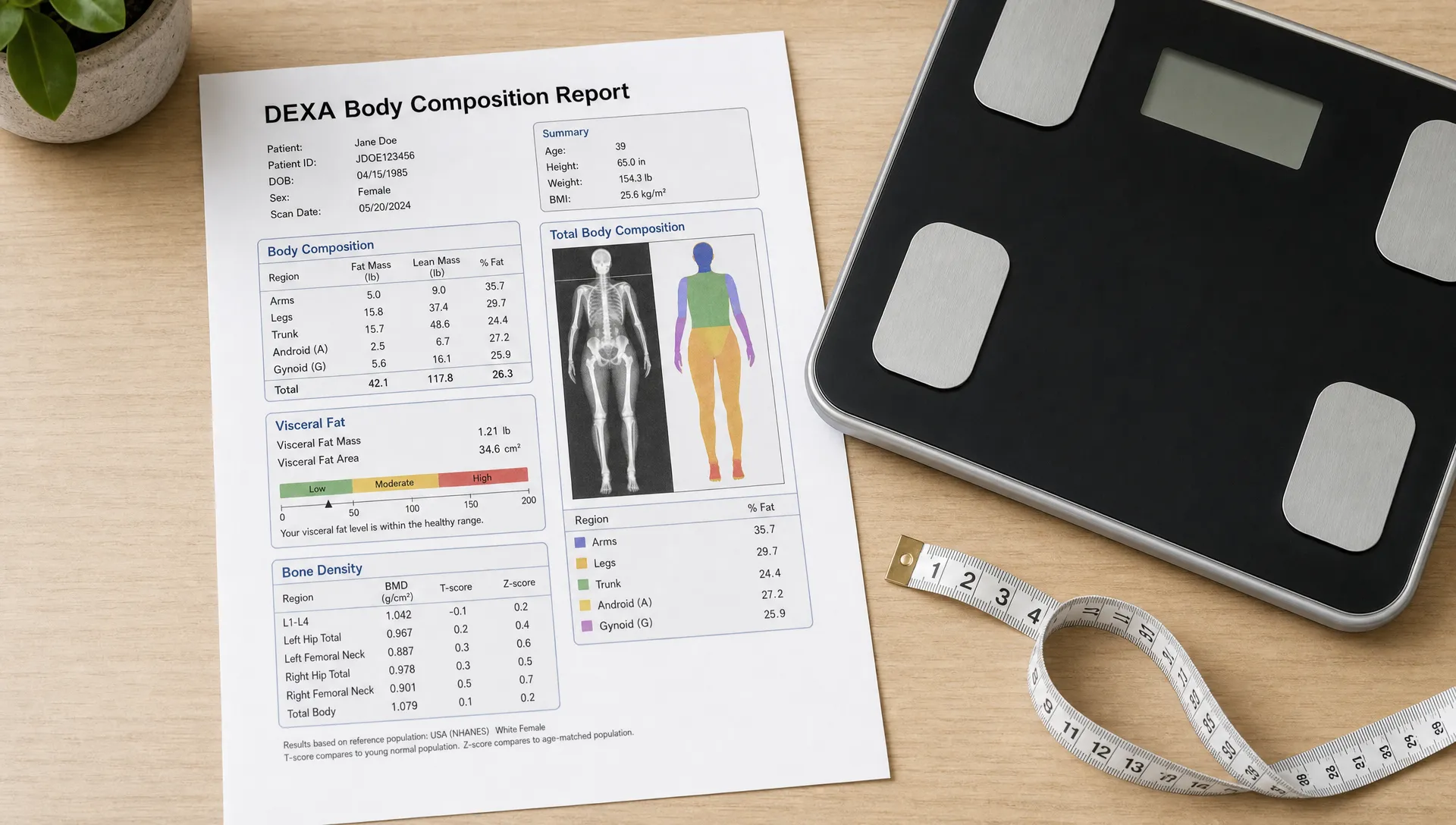
The real value of DEXA is that it breaks body weight into more actionable categories. A body fat x ray can show whether your current plan is changing the tissue you actually care about, not just moving your total weight.
| Metric | What it tells you | Why it matters |
|---|---|---|
| Total body fat percentage | The percentage of your total mass that is fat tissue | Helps put scale weight in context |
| Fat mass | The total pounds or kilograms of fat tissue | Useful for setting fat-loss goals |
| Lean mass | Non-fat, non-bone tissue, including muscle and organs | Helps track muscle gain or muscle retention |
| Regional lean mass | Lean tissue by arms, legs and trunk | Can reveal training imbalances |
| Visceral fat estimate | Fat stored deeper in the abdominal region | Relevant to cardiometabolic risk discussions |
| Bone mineral density | A measure of bone strength | Useful for long-term bone health awareness |
| Left vs. right asymmetry | Differences between sides of the body | Can inform training and injury prevention work |
These metrics are especially helpful when your body is changing in multiple directions at once. For example, someone starting resistance training might lose fat and gain lean mass during the same 12-week period. The scale may barely move, but body composition can improve substantially.
If you want to understand the most common report fields before your scan, DEXA SF’s guide to key DEXA body composition metrics walks through the numbers in more detail.
Fat mass and body fat percentage
Body fat percentage is often the headline number, but fat mass is just as important. A person who weighs 180 pounds at 25 percent body fat has about 45 pounds of fat mass. If they later weigh 176 pounds at 22 percent body fat, the scale shows a 4-pound loss, but the composition change is more meaningful than weight alone suggests.
A body fat x ray helps separate percentage changes from actual tissue changes. That matters because body fat percentage can change when fat mass changes, lean mass changes or both change together.
Lean mass and muscle distribution
Lean mass is not the same as pure skeletal muscle, but it is still one of the most useful indicators for training progress. DEXA can show lean mass by region, which makes it more informative than a single total-body number.
If your right leg carries noticeably more lean mass than your left, your coach or clinician may look more closely at past injury, movement strategy, sport demands or unilateral strength work. This does not diagnose a problem by itself, but it gives you better data for asking the right questions.
How the results can change fitness and nutrition decisions
The practical value of a body fat x ray is not the scan alone. It is what you do with the numbers afterward. If your weight is dropping but lean mass is dropping too, your plan may need more protein, more resistance training, better recovery or a smaller calorie deficit. If your weight is stable but fat mass is down and lean mass is up, your plan may be working better than the scale suggests.
This is why body composition data is useful for people who are already training consistently. It can reduce guesswork and prevent overreacting to short-term weight changes. A stalled scale does not always mean stalled progress.
Fat-loss goals become more specific
A weight-loss goal often sounds simple, such as “lose 15 pounds.” A composition-based goal is more precise. You might aim to reduce fat mass while preserving lean mass, or reduce visceral fat while keeping performance stable.
That framing changes how you eat and train. Instead of chasing the lowest possible scale number, you can focus on sustainable fat loss, strength progression, adequate protein and recovery. The goal becomes better tissue quality, not just less total mass.
Muscle-gain phases become easier to evaluate
During a muscle-gain phase, scale weight usually increases. Without body composition data, it is hard to know whether that gain is mostly lean mass, mostly fat or a reasonable mix.
A DEXA scan gives you a clearer trend line. If lean mass is rising and fat gain is modest, your nutrition surplus may be appropriate. If fat mass is climbing quickly with little lean mass change, your calories, training stimulus or recovery may need adjustment. DEXA SF’s article on how a body scan for fat and muscle guides training covers this training angle in more depth.
How it compares with smart scales, calipers and BMI
Compared with other common methods, a body fat x ray offers a more complete picture because it measures regional composition and bone mineral content, not just a whole-body estimate.
| Method | Main strength | Main limitation |
|---|---|---|
| Bathroom scale | Simple and inexpensive | Measures total weight only |
| BMI | Easy population-level screening tool | Does not directly measure fat or muscle |
| Smart scale | Convenient at-home trend tracking | Hydration and timing can affect readings |
| Skinfold calipers | Low cost when done well | Operator skill affects accuracy |
| Bod Pod or hydrostatic weighing | Estimates body density | Usually lacks regional fat, lean and bone detail |
| DEXA scan | Measures fat, lean mass, bone density and regional differences | Requires an appointment and uses low-dose radiation |
No test is perfect. Hydration, recent exercise and testing conditions can still influence body composition readings to some degree. The advantage of DEXA is that it provides a detailed, repeatable snapshot when you use the same scanner, similar pre-scan conditions and consistent testing intervals.
For people comparing options, DEXA SF also explains why a DEXA scan is considered one of the most accurate body fat tests for practical real-world tracking.
Who benefits most from a body composition scan?
A body fat x ray is especially useful for people whose goals cannot be judged by weight alone. That includes strength athletes, endurance athletes, people working on fat loss, people rebuilding after an injury, people starting a new training program and adults who care about long-term bone health.
It can also be helpful if your scale results feel confusing. If you are training hard and eating intentionally but your weight is flat, DEXA can show whether you are recomposing. If weight is dropping quickly, it can show whether you are losing too much lean mass along with fat.
For people in San Francisco who want a clearer baseline, DEXA SF provides professional DEXA body composition scans with expert interpretation, plus fitness and nutrition guidance based on the results.
How often should you repeat a scan?
The best interval depends on your goal and how quickly your plan is expected to create change. For fat loss or muscle gain, many people benefit from retesting after enough time has passed for real tissue change, often around 8 to 12 weeks. Testing too often can make normal measurement variation feel more meaningful than it is.
For longer-term health tracking, a less frequent schedule may be enough. The key is consistency. Try to scan under similar conditions each time, such as the same time of day, similar hydration status and similar exercise timing before the appointment.
What to know before booking
A DEXA scan is quick, non-invasive and low dose, but it still uses ionizing radiation. If you are pregnant, think you may be pregnant or have a medical condition that affects whether imaging is appropriate, ask a qualified healthcare professional before scheduling.
You should also remember that body composition data is not a full medical diagnosis. It is a measurement tool. The best results come when the data is interpreted in the context of your training history, nutrition habits, symptoms, medications, age, sex and health goals.
A body fat x ray can answer questions that a scale cannot, but it works best as part of a broader plan. Good data should make your next decision clearer, not create pressure to chase a single number.
Frequently Asked Questions
Is a body fat x ray the same as a regular X-ray? No. People often use that phrase to describe a DEXA body composition scan, but a regular diagnostic X-ray is not designed to measure body fat, lean mass or regional body composition.
Can DEXA tell me why my weight changed? It can show whether changes are coming from fat mass, lean mass, bone mineral content or a combination of tissue changes. It cannot explain every short-term weight fluctuation, since water, glycogen and digestion also affect scale weight.
Does DEXA measure visceral fat? Many DEXA body composition reports include an estimate of visceral fat in the abdominal region. This can be useful because visceral fat is more closely associated with metabolic health than subcutaneous fat alone.
Do I still need a scale if I get a DEXA scan? A scale can still be useful for simple trend tracking between scans. DEXA gives you the deeper context needed to understand what those weight trends may mean.
Is a DEXA scan only for athletes? No. Athletes use DEXA because it is precise and performance-relevant, but it is also useful for anyone working on fat loss, muscle gain, bone health, metabolic health or a clearer baseline.
Get more from your next body composition check
If you want to know more than your body weight, DEXA SF can help you see what is actually changing. A DEXA scan can measure body fat, lean mass, bone density, visceral fat and asymmetries, then connect those numbers to practical fitness and nutrition next steps.
Schedule your scan with DEXA SF and use better data to guide your training, nutrition and long-term health goals.