
X-Ray Absorptiometry Made Simple for First-Time Patients
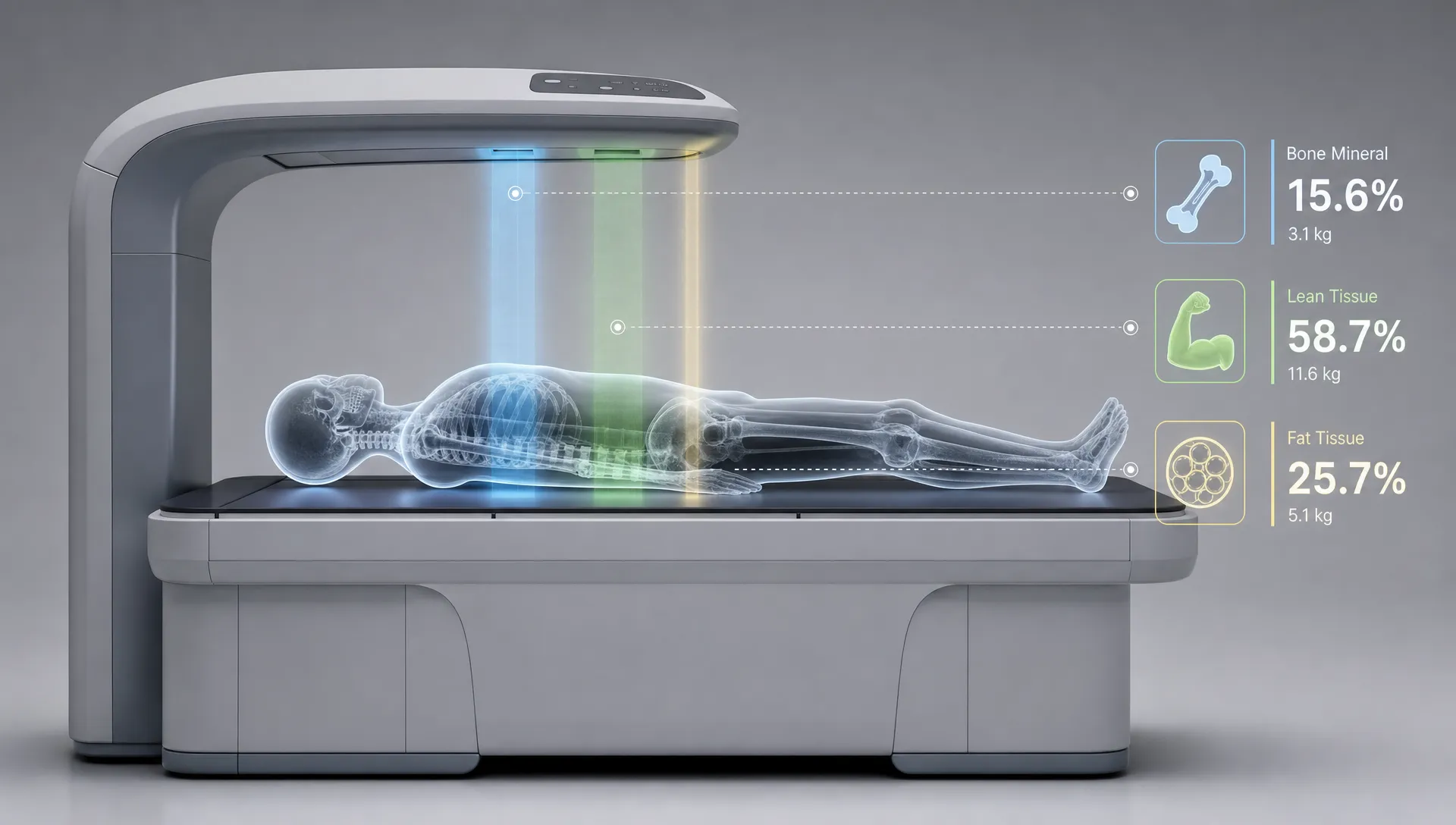
If you are booking your first DEXA scan, the name can make the appointment sound more technical than it feels. X ray absorptiometry is simply a method for measuring how different tissues respond to a very small amount of X-ray energy. In a DEXA scan, the scanner uses two energy levels and software calculations to estimate bone mineral, lean tissue and fat tissue.
For a first-time patient, the practical takeaway is straightforward: you lie still on a padded table for a short scan, the machine passes over your body and you leave with data that a scale or mirror cannot give you. The value comes from turning that data into a plan, whether your goal is fat loss, strength training, better bone health or a clearer baseline before changing your nutrition.
What x-ray absorptiometry means in plain English
DEXA stands for dual-energy X-ray absorptiometry. You may also see it written as DXA. The dual-energy part matters because the scanner uses two different X-ray energy levels, not one. Since bone, fat and lean soft tissue absorb those energy levels differently, the system can estimate how much of each tissue type is present.
A regular X-ray is mainly used to create an image of internal structures, often to evaluate bones, lungs or injuries. DEXA is different. It is designed to quantify tissue composition. That is why a DEXA body composition scan can report measurements such as body fat percentage, lean mass, bone mineral density, visceral fat and left-to-right balance.
This is also why DEXA is more useful than a bathroom scale for many health and performance goals. A scale can tell you that your body weight changed, but it cannot tell you whether the change came from fat, muscle, water, glycogen or normal day-to-day fluctuation. DEXA gives you a more detailed snapshot.
What the scan can tell you
A first scan is best viewed as a baseline. It gives you a measured starting point so future changes can be compared against something more precise than memory, clothing fit or a single body weight number.
| Measurement | What it means | Why first-time patients care |
|---|---|---|
| Body fat percentage | The estimated share of your body mass that is fat tissue | Helps you set fat loss or recomposition goals more accurately |
| Fat mass | The estimated total pounds of fat tissue | Shows whether weight loss is actually coming from fat |
| Lean mass | Muscle, organs, connective tissue and body water grouped as non-fat soft tissue | Helps strength athletes, fitness beginners and people tracking muscle gain |
| Bone mineral density | A measure of mineral content in specific bone areas | Supports conversations about bone health and fracture risk |
| Visceral fat | Fat stored around abdominal organs, typically estimated in the trunk region | Gives more context than waist size alone |
| Regional balance | Comparisons between arms, legs or left and right sides | Can reveal asymmetries that may matter for training or rehab planning |
| Metabolic estimates | Calculations often based on lean mass and body size | Can help frame calorie targets, though they are not the same as a lab metabolic test |
If you want a broader overview of what a short appointment can reveal, DEXA SF also explains what a DEXA body scan can tell you in 10 minutes without getting lost in medical jargon.
What happens during your first appointment
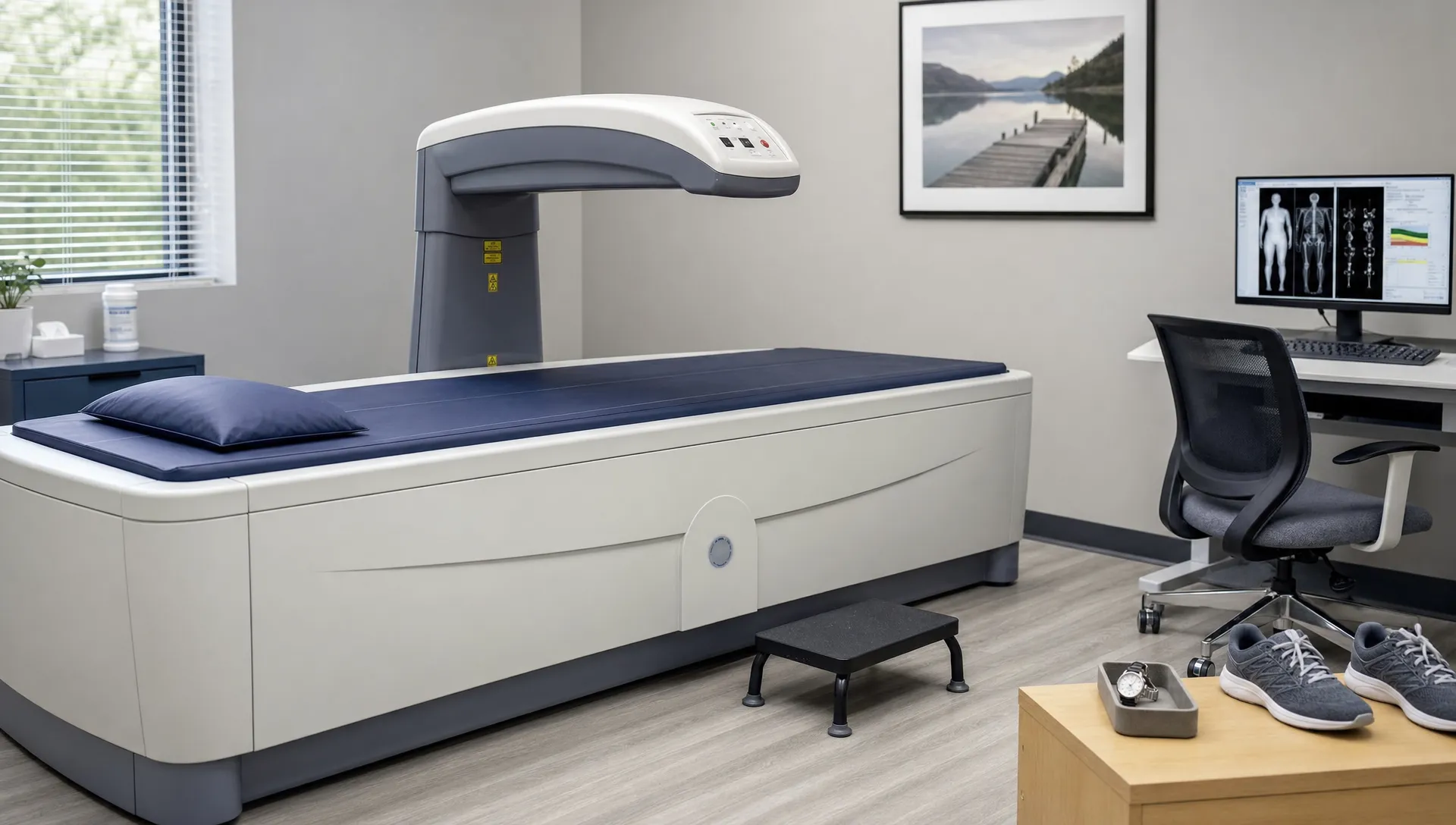
Most first-time patients are surprised by how simple the appointment feels. You usually remove metal items such as a watch, belt, jewelry or anything else that could interfere with the scan image. You may be asked to wear comfortable clothing without metal zippers, underwire or large buttons.
During the scan, you lie on your back on the scanning table. The scanner arm moves over your body, but it does not touch you and it is not a tunnel like an MRI. You stay still while the machine collects data. The scan itself is generally quick and painless.
After the scan, the most valuable part is the interpretation. A list of numbers is not the same as guidance. A qualified reviewer can explain which numbers matter for your goal, which numbers are less urgent and how to think about next steps in training or nutrition.
How to prepare without overthinking it
You do not need an intense prep routine for a DEXA scan. The best preparation is consistency, especially if you plan to repeat the scan later and compare results.
- Wear clothing with minimal metal so you do not need to change before the scan.
- Remove jewelry, watches, wallets, phones and other metal items before the scan begins.
- Arrive normally hydrated rather than dehydrating yourself to chase a lower number.
- Try to schedule follow-up scans under similar conditions, such as the same time of day.
- Tell the staff if you are pregnant, may be pregnant or recently had contrast imaging.
- Follow any specific instructions from the clinic or your referring clinician.
If your scan is being ordered for a medical bone density evaluation, ask your clinician whether any medication, supplement or recent imaging instructions apply to you. Fitness-focused body composition scans and diagnostic medical scans can have different goals, so the best prep advice depends on why you are being scanned.
Is DEXA safe?
DEXA uses ionizing radiation, but the dose is low compared with many other X-ray based imaging exams. RadiologyInfo.org, a patient education resource from the American College of Radiology and the Radiological Society of North America, describes bone densitometry as a quick, noninvasive exam that uses a very small dose of radiation.
That does not mean radiation should be ignored. It means the exposure is typically low and should be used for a clear purpose. The U.S. Food and Drug Administration recommends that medical X-ray imaging be justified by clinical or practical benefit and optimized to use the appropriate dose.
For most first-time body composition clients, the main safety steps are simple: disclose pregnancy status, mention recent imaging involving contrast and ask questions if you have a medical condition that may affect scanning or interpretation. If radiation is your biggest concern, DEXA SF has a separate guide to DEXA scan risks, radiation and safety facts.
How to understand your first results
Your first report may include several pages of numbers, charts and body region breakdowns. Do not try to treat every number as equally important. Start with the reason you booked the scan.
If your main goal is fat loss, body fat percentage, total fat mass and visceral fat may be the most relevant starting points. If you are strength training, lean mass by region may matter more because it can show whether your legs, arms or trunk are changing over time. If bone health is the priority, bone mineral density, T-score and Z-score deserve careful review, especially when a medical provider is involved.
A good interpretation also separates measurement from judgment. A number is not a moral score. It is feedback. For example, a higher body fat percentage may tell you that your current nutrition and activity plan needs adjustment. Low lean mass in a specific region may suggest that your program could use more targeted strength work. Asymmetry may encourage a trainer or physical therapist to look at movement patterns rather than simply adding more volume.
For a deeper walkthrough of the numbers, use DEXA SF’s guide to DEXA scan interpretation after your appointment. It can help you connect the report to practical decisions.
What DEXA does not tell you
DEXA is powerful, but it is not a complete picture of health by itself. It does not measure cardiovascular fitness, blood markers, hormones, sleep quality, movement skill or daily eating behavior. It also does not replace medical advice when your scan is related to osteoporosis, unexplained weight change or a health condition.
There are also normal sources of variation. Hydration, recent meals, glycogen levels and scan conditions can influence lean mass estimates. That is one reason trends are more useful than obsessing over tiny changes between two scans.
Use DEXA as one high-quality data point. Pair it with strength numbers, training consistency, waist measurements, bloodwork when appropriate and how you feel day to day. The scan can sharpen your decisions, but it should not become the only way you judge progress.
When to repeat a scan
Repeating too often can lead to noise chasing. Waiting too long can make it harder to connect changes to what you actually did. Many people tracking body composition choose a repeat scan after a meaningful training or nutrition block, often after several months rather than a few weeks.
The best timing depends on your goal. Someone starting a fat loss phase may want a follow-up after they have had enough time to lose measurable fat. Someone building muscle may need a longer window because lean mass changes usually happen gradually. A person monitoring bone health should follow the schedule recommended by a clinician, since bone density changes over a much longer timeline.
For clean comparisons, repeat the scan under similar conditions. Use the same facility when possible, scan at a similar time of day and avoid making your scan day artificially different from your normal routine.
Questions to ask before you leave
A first scan is more useful when you leave with clarity. Before the appointment ends, ask what the biggest takeaway is for your specific goal. Ask which metrics should be your primary markers and which ones are secondary. If anything looks unexpected, ask whether it is likely meaningful or whether it should be watched over time.
You can also ask how your results should influence your next training or nutrition phase. For example, a person with low lean mass may need a different plan than someone with high lean mass but elevated visceral fat. Someone with a major left-to-right difference may benefit from more careful programming than someone whose regional balance looks even.
That conversation is where professional interpretation matters. The scan provides the measurement, but the guidance helps you decide what to do next.
Frequently Asked Questions
Is x-ray absorptiometry the same as a regular X-ray? No. A regular X-ray is usually used to create an image for evaluating structures such as bones or the chest. DEXA uses two X-ray energy levels to estimate body composition and bone mineral density.
Does a DEXA scan hurt? No. The scan is noninvasive and painless. You lie still while the scanner arm passes over your body without touching you.
Can I eat before a DEXA body composition scan? Follow the instructions from the scan provider. For trend tracking, consistency matters, so try to keep food, fluids and appointment timing similar between scans.
Will DEXA tell me exactly how many calories to eat? Not exactly. Some reports include metabolic estimates, but calorie needs also depend on activity, goals, medical history, appetite, sleep and adherence. Use the data as a starting point for guidance rather than a fixed prescription.
Who should not get a DEXA scan? Tell the provider if you are pregnant, may be pregnant or recently had contrast imaging. If the scan is for a medical concern, ask your clinician whether it is appropriate for your situation.
How soon should I scan again? For body composition goals, many people wait until they have completed a meaningful training or nutrition block. For bone density monitoring, follow your clinician’s recommended interval.
Make your first scan count
A first DEXA scan is not just about collecting numbers. It is about getting a clear baseline, understanding what your body is made of and using that information to make better decisions.
At DEXA SF, first-time patients can get professional DEXA body composition measurements, including body fat, lean mass, bone density, visceral fat, asymmetry and metabolic insights, along with expert interpretation and practical fitness and nutrition guidance. If you are ready to replace guesswork with clearer data, schedule your scan and bring your questions with you.