
DEXA Scan Risks, Radiation, and Safety Facts
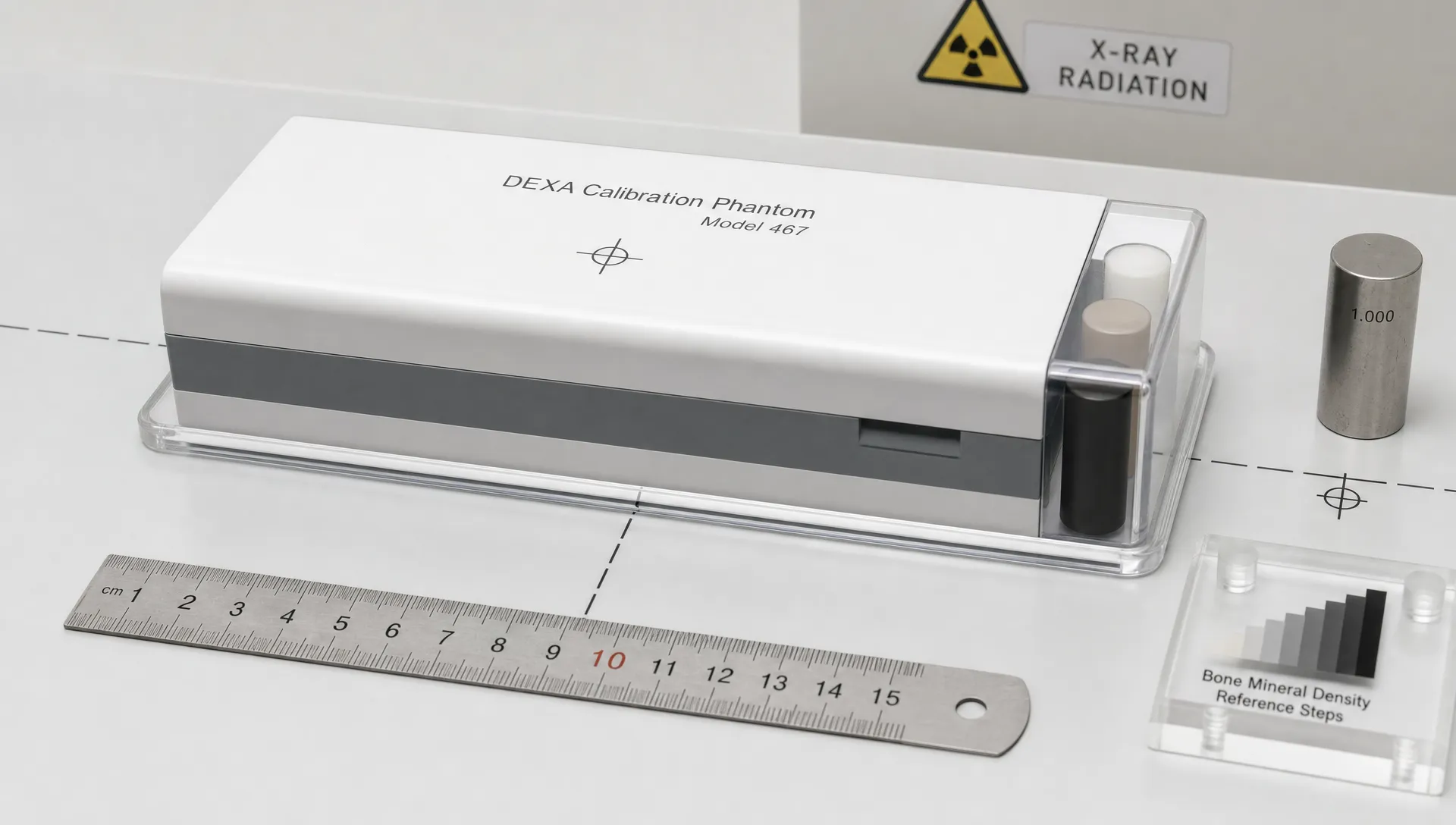
When people search for DEXA scan risks, the concern is usually simple: does the scan expose me to radiation, and is that exposure safe? The honest answer is that DEXA uses ionizing radiation, but at a very low dose compared with most medical imaging. For most adults, the risk is minimal when the scan is appropriate and performed correctly.
That said, safety is not just about a single number. Pregnancy status, recent contrast imaging, scan frequency, positioning needs and the reason for the scan all matter. A DEXA scan can be a powerful tool for understanding body fat, lean mass, visceral fat, bone density and muscle balance, but it should still be treated as a real medical imaging technology, not as a casual gadget.
The short answer on DEXA scan safety
DEXA, short for dual-energy X-ray absorptiometry, is generally considered safe for eligible adults because it uses a very small amount of X-ray radiation. The scan is noninvasive, does not require injections and typically takes only a short time. You lie still on the scanning table while the machine passes over the body and collects measurements.
The main safety facts are straightforward:
- DEXA uses ionizing radiation, but the dose is very low.
- The radiation dose is far below many common diagnostic imaging exams.
- Pregnant people should usually avoid elective DEXA scans unless a clinician specifically recommends one.
- Repeat scans should be timed around meaningful changes in body composition or bone health, not done so often that the data becomes less useful.
- The scan itself is painless, though some people may find lying flat uncomfortable.
For a deeper walk-through of the technology itself, DEXA SF has a first-time patient guide that explains how a DEXA X-ray works and how it differs from a standard X-ray.
What kind of radiation does a DEXA scan use?
A DEXA scan uses two low-dose X-ray beams at different energy levels. By measuring how those beams pass through bone, fat and lean tissue, the system estimates body composition and bone mineral density. This is why DEXA can report more than just body weight. It can separate total fat mass, lean mass, bone data, visceral fat estimates and left versus right side differences.
The word X-ray can sound alarming, but not all X-ray exams involve the same exposure. A CT scan, a chest X-ray and a DEXA scan all use ionizing radiation, but the dose, purpose and risk profile are very different. DEXA is designed to measure density and composition with a low radiation burden.
The key concept is effective dose, usually expressed in millisieverts, or mSv. Effective dose helps compare radiation exposure across different imaging exams and everyday sources. It is not a perfect personal risk calculator, but it is useful for putting a DEXA scan in context.
How much radiation is in a DEXA scan?
Radiation dose varies by scanner model, body area scanned and protocol. Still, DEXA is consistently placed in the very low-dose category. RadiologyInfo.org's patient dose reference lists bone densitometry at about 0.001 mSv, compared with about 0.1 mSv for a chest X-ray. That means a typical bone density DEXA dose is a small fraction of a chest X-ray dose.
Everyday background radiation gives another useful comparison. The U.S. Environmental Protection Agency estimates that the average person in the United States receives about 3.1 mSv per year from natural background sources such as cosmic radiation, soil and radon. A single DEXA scan is tiny relative to that annual background exposure.
| Exposure source | Approximate effective dose | Practical context |
|---|---|---|
| Bone density DEXA | About 0.001 mSv | Very low-dose medical imaging |
| One day of natural background radiation in the U.S. | About 0.008 mSv, based on 3.1 mSv per year | Normal daily environmental exposure |
| Chest X-ray | About 0.1 mSv | Roughly 100 times the 0.001 mSv DEXA reference dose |
| Annual natural background radiation in the U.S. | About 3.1 mSv | Average yearly environmental exposure |
The exact number for a whole-body body composition scan can differ from a simple hip and spine bone density scan, so the safest wording is this: DEXA radiation is very low, but it is not zero. That is why reputable providers still screen for pregnancy, ask about relevant medical history and use appropriate protocols.
The U.S. Food and Drug Administration emphasizes two principles for medical X-ray imaging: the exam should be justified by a real benefit and the exposure should be kept as low as reasonably achievable for the needed image quality. Those principles apply even when the dose is small.
The real DEXA scan risks to know
For most adults, the main DEXA scan risk is the small exposure to ionizing radiation. The theoretical concern with ionizing radiation is that it can damage DNA and slightly increase lifetime cancer risk. At DEXA levels, that risk is considered extremely small, especially when the scan provides useful health, fitness or bone data.
Other risks are not about radiation at all. They involve timing, scan accuracy, comfort and whether the results are interpreted in the right context.
| Risk or safety issue | What it means | How to reduce the risk |
|---|---|---|
| Low-dose radiation | DEXA uses ionizing radiation, even though the dose is very small | Scan when the results will guide a decision, not out of curiosity every few weeks |
| Pregnancy | Radiation exposure is usually avoided during pregnancy unless medically necessary | Tell the provider if you are pregnant or might be pregnant before the scan |
| Recent contrast imaging | Barium, contrast material or nuclear medicine studies can interfere with accuracy | Share recent imaging history and follow timing guidance from the scan provider |
| Positioning discomfort | You may need to lie flat and still for several minutes | Tell the staff about back pain, mobility issues or difficulty lying flat |
| Metal objects or implants | Clothing metal, jewelry or some hardware can affect regional measurements | Follow prep instructions and mention implants or surgical hardware |
| Misinterpretation | A DEXA report includes many numbers that can be misunderstood without context | Review results with a qualified professional and track trends over time |
A DEXA report can be especially valuable when it is interpreted as a pattern rather than a single score. For example, body fat percentage, visceral fat, lean mass distribution and bone density can tell different parts of the same story. One number rarely explains everything.
Who should postpone or avoid an elective DEXA scan?
The clearest reason to postpone an elective DEXA scan is pregnancy or possible pregnancy. In clinical medicine, some imaging may still be performed during pregnancy when the benefit is strong enough, but an elective body composition scan is usually not urgent. If there is any doubt, ask your clinician before scheduling.
You should also tell the scan provider if you recently had imaging that involved barium, iodinated contrast, radioactive tracers or nuclear medicine. This is often more about result accuracy than radiation danger, but it can affect whether the scan should be delayed.
Children and teens should only have DEXA when there is a clear medical reason and appropriate clinical oversight. Body composition curiosity is not the same as a medical indication in a growing child.
People with severe back pain, mobility limitations or difficulty lying flat should ask what positioning is required before the appointment. DEXA is not claustrophobic like some imaging tests, but you do need to stay still long enough for the scan to collect clean data.
Is it safe to get repeated DEXA scans?
Repeated DEXA scans can be safe when there is a good reason for them and the timing makes sense. Because the radiation dose is low, the bigger issue is often usefulness, not danger. If you scan too often, normal day-to-day variation, hydration shifts and small measurement differences can make the results harder to interpret.
For fitness and body composition tracking, many people choose intervals of several months so fat loss, muscle gain or visceral fat changes have time to show up. Athletes, physique competitors or people following structured nutrition and training plans may use DEXA to verify whether their plan is changing lean mass and fat mass in the intended direction.
Bone density usually changes more slowly. If the scan is being used for osteoporosis screening or monitoring, the timing should be guided by a clinician. Many medical follow-up intervals are measured in years rather than months, depending on age, risk factors, baseline results and treatment status.
If you are deciding how often to scan, the best question is not whether another scan is technically safe. It is whether the next scan will help you make a better decision. DEXA SF's broader DEXA scan guide for benefits, cost and timing covers how people commonly use scan timing for body composition and health tracking.
What to expect from a safe DEXA scan appointment
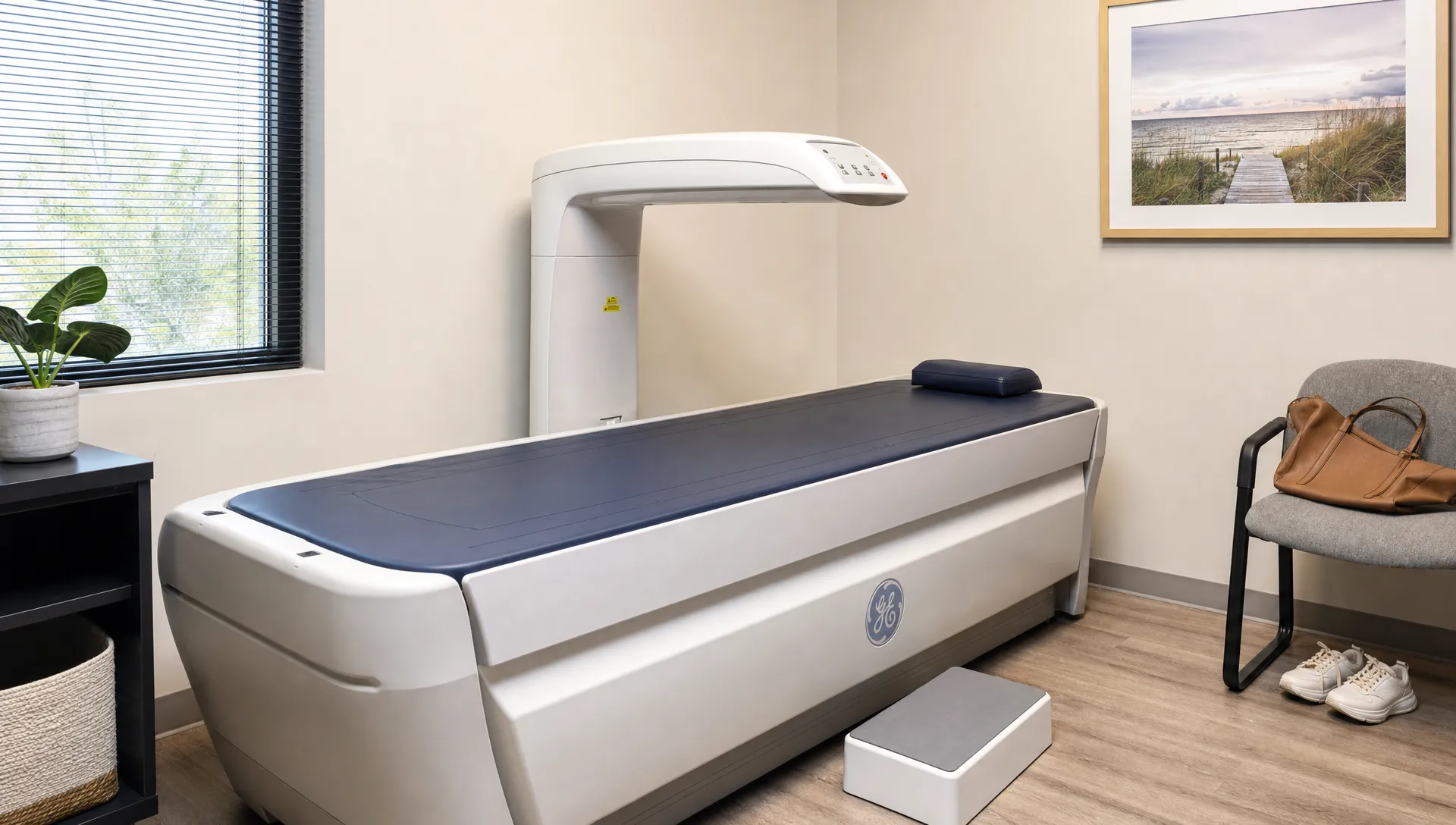
A typical DEXA appointment is simple. You check in, confirm basic safety information, remove metal items if needed and lie on the scanning table while the machine collects data. There are no needles and no enclosed tunnel. Most people can return to normal activities immediately afterward.
Good preparation improves both safety and accuracy. Wear comfortable clothing without metal zippers, snaps or thick hardware. Remove jewelry and empty pockets. Tell the staff about pregnancy status, recent imaging, implants, medical devices or anything that may affect positioning.
The scan itself should not hurt. The machine moves over you without touching you or with minimal contact depending on setup. The most important part is staying still, because movement can reduce image quality or affect the analysis.
If you want a step-by-step preview, this guide explains how a DEXA scan is done from check-in to results so you know what to expect before arriving.
DEXA safety compared with other body composition methods
DEXA is not the only way to estimate body composition. Some alternatives use no radiation, but they may be less detailed or more sensitive to user error. The safest method is the one that fits the question you need answered.
| Method | Ionizing radiation? | Main advantage | Main limitation |
|---|---|---|---|
| DEXA | Yes, very low dose | Measures fat, lean mass, bone data and regional distribution | Not used for elective scans during pregnancy |
| Bioelectrical impedance scales | No | Convenient and widely available | Results can shift with hydration, food intake and device quality |
| Skinfold calipers | No | Inexpensive and portable | Strongly depends on technician skill and equation choice |
| Hydrostatic weighing or air displacement | No | Useful for estimating body fat percentage | Does not provide the same regional lean mass and bone data |
| MRI | No | Excellent soft tissue detail | Expensive and less practical for routine body composition tracking |
| CT | Yes, typically higher than DEXA | Detailed medical imaging, including internal anatomy | Higher radiation dose and usually reserved for medical indications |
This is why DEXA is popular for people who want more detail than a scale can provide without using a higher-dose imaging method. It sits in a practical middle ground: far more detailed than most consumer body composition tools, with much lower radiation than many diagnostic imaging exams.
How to make your scan as safe and useful as possible
A safe DEXA scan starts before you lie on the table. The provider should know why you are getting scanned, whether you have any contraindications and whether anything might interfere with measurement quality. You should also know what decisions you plan to make based on the report.
For body composition, the most useful DEXA data often comes from consistent repeat conditions. Try to scan at a similar time of day, under similar hydration and meal conditions, and on the same scanner when possible. This helps make changes in fat mass, lean mass and visceral fat easier to compare.
For bone health, DEXA results should be considered alongside age, sex, fracture history, medications, family history, menstrual status, nutrition, resistance training and other clinical factors. A bone density number is important, but it is not the whole risk profile.
At DEXA SF, the goal is to pair precise body composition measurements with expert interpretation, fitness guidance and nutrition advice. That interpretation matters because a DEXA scan is only useful if you understand what the numbers mean and how to act on them.
DEXA scan risks in perspective
The risk profile of DEXA is favorable for most adults because the radiation dose is very low, the scan is noninvasive and the information can be actionable. A single scan can reveal body composition patterns that weight alone cannot show, including hidden visceral fat, lean mass distribution, muscle asymmetries and bone density status.
The main caution is that low risk does not mean no screening. If you are pregnant, may be pregnant, recently had contrast imaging or have a medical condition that could affect positioning or interpretation, speak up before the scan. A reputable provider would rather adjust timing than collect poor or inappropriate data.
For most people, the practical safety question is whether the scan will answer something meaningful. If it will help you monitor fat loss, preserve muscle, evaluate visceral fat, understand asymmetries or discuss bone health with a clinician, the very small radiation exposure is usually outweighed by the value of clear measurements.
Frequently Asked Questions
Does a DEXA scan expose you to radiation? Yes. DEXA uses low-dose X-ray radiation. The dose is very small compared with many common imaging exams, but it is still ionizing radiation.
Is a DEXA scan dangerous? For most eligible adults, a DEXA scan is considered very low risk. The main safety concern is the small radiation exposure, which is why scans should be done for a useful reason and avoided for elective purposes during pregnancy.
Can I get a DEXA scan while pregnant? Elective DEXA scans are generally postponed during pregnancy. If you are pregnant or might be pregnant, tell the provider before the scan and ask your clinician for guidance.
How often can I safely get a DEXA scan? The safe interval depends on why you are scanning. Body composition tracking often makes more sense every few months, while bone density monitoring is usually less frequent and should follow clinical guidance.
Are there side effects after a DEXA scan? Most people have no side effects. There is no injection, no sedation and no recovery period. Some people may feel mild discomfort from lying flat if they already have back or mobility issues.
Is DEXA safer than a CT scan? DEXA generally uses much less radiation than CT. CT is valuable for medical diagnosis when needed, but it is not typically used for routine body composition tracking because of the higher radiation dose.
Get precise data with a low-risk scan
If you want accurate measurements of body fat, lean mass, visceral fat, bone density and left versus right asymmetries, DEXA offers detailed insight with very low radiation exposure for most adults. The key is to scan at the right time, understand the safety considerations and use the results to guide real decisions.
Schedule your DEXA scan with DEXA SF to get professional body composition testing, expert interpretation and practical fitness and nutrition guidance based on your results.