
Why DEXA Is the Gold Standard for Body Fat Percentage
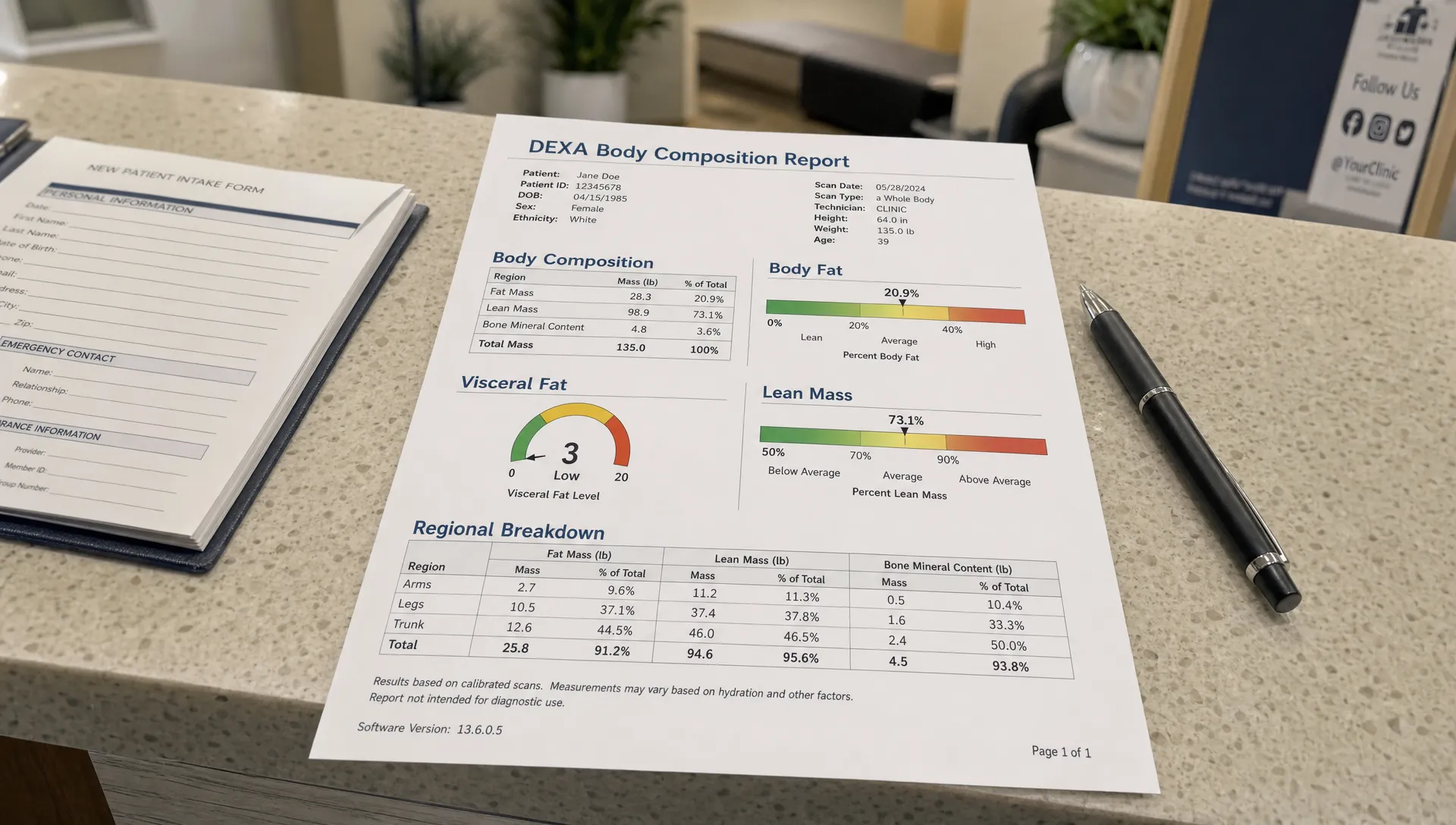
DEXA is often called the gold standard for body fat percentage because it uses imaging technology to measure body composition rather than estimating it from weight, height, electrical resistance, or tape measurements. If you are trying to lose fat, gain muscle, improve performance, or establish a health baseline, that difference matters.
A bathroom scale can tell you whether total weight changed, but it cannot tell you what changed. BMI can flag broad population risk, but it does not directly measure body fat. Smart scales can be useful for trends, yet hydration, meal timing and device algorithms can move the number around. DEXA gives you a more complete view by separating fat mass, lean mass and bone mineral content across the whole body.
What “gold standard for body fat percentage” Really Means
Calling a test a gold standard does not mean it is magic, flawless, or the only method used in research. In laboratory settings, multi-compartment models can be used as reference methods because they combine several measurements. In real-world fitness, longevity, weight management and clinical wellness settings, however, DEXA stands out because it is accurate, repeatable, widely available and far more informative than single-number estimates.
DEXA, short for dual-energy X-ray absorptiometry, was originally known for bone density testing. Its body composition application uses two low-dose X-ray energy levels to distinguish bone from soft tissue, then estimate how much soft tissue is fat and how much is lean mass. That makes it fundamentally different from tools that infer body fat from indirect signals.
This is why DEXA has earned its reputation as the gold standard for body fat percentage for people who want a practical, data-rich measurement they can repeat over time.
How DEXA Measures Body Fat Differently
Most body fat methods rely on assumptions. Skinfold calipers assume that fat under the skin represents total body fat in predictable ways. Bioelectrical impedance analysis, the technology in many smart scales, estimates body composition based on how electrical current moves through the body. BMI uses only height and weight, which is why the CDC notes that BMI is a screening measure and does not directly measure body fat.
DEXA takes a different approach. During the scan, you lie still while the scanner passes over your body and collects regional data. The scan estimates total fat mass, total lean mass, bone mineral content and where those tissues are located. Instead of treating the body as one uniform block, it reports composition by region, such as arms, legs, trunk and left vs. right sides.
That regional detail is a major reason DEXA is considered the gold standard for body fat percentage among athletes, people changing their training plan and anyone who wants more than a rough estimate.
Why DEXA Outperforms Common Body Fat Tests
The best body fat test is not just the one with the most advanced technology. It is the one that gives you information you can trust and use. DEXA performs well because it combines precision with practical access, a quick scan process and results that are easy to track across repeat visits.
Here is how DEXA compares with common alternatives:
| Method | What it relies on | Main limitation | Why DEXA is stronger |
|---|---|---|---|
| BMI | Height and weight | Does not measure fat or muscle directly | Separates fat mass, lean mass and bone data |
| Smart scale | Bioelectrical impedance | Sensitive to hydration, meals and algorithms | Uses imaging rather than electrical resistance |
| Skinfold calipers | Pinched subcutaneous fat | Operator skill and equation choice affect results | Measures whole-body and regional composition |
| Bod Pod or hydrostatic weighing | Body volume and density | Less regional detail | Shows where fat and lean mass are distributed |
| Tape measurements | Circumference changes | Cannot distinguish fat loss from muscle gain | Quantifies tissue compartments directly |
No consumer-accessible test should be treated as a perfect truth machine, but DEXA reduces many of the biggest sources of guesswork. If you want a deeper dive into measurement performance, DEXA SF has a separate guide on how accurate a DEXA scan is for body fat percentage.
When people call DEXA the gold standard for body fat percentage, they are usually pointing to this combination of precision, regional reporting and repeatability, not just one isolated metric.
What You Learn Beyond One Percentage
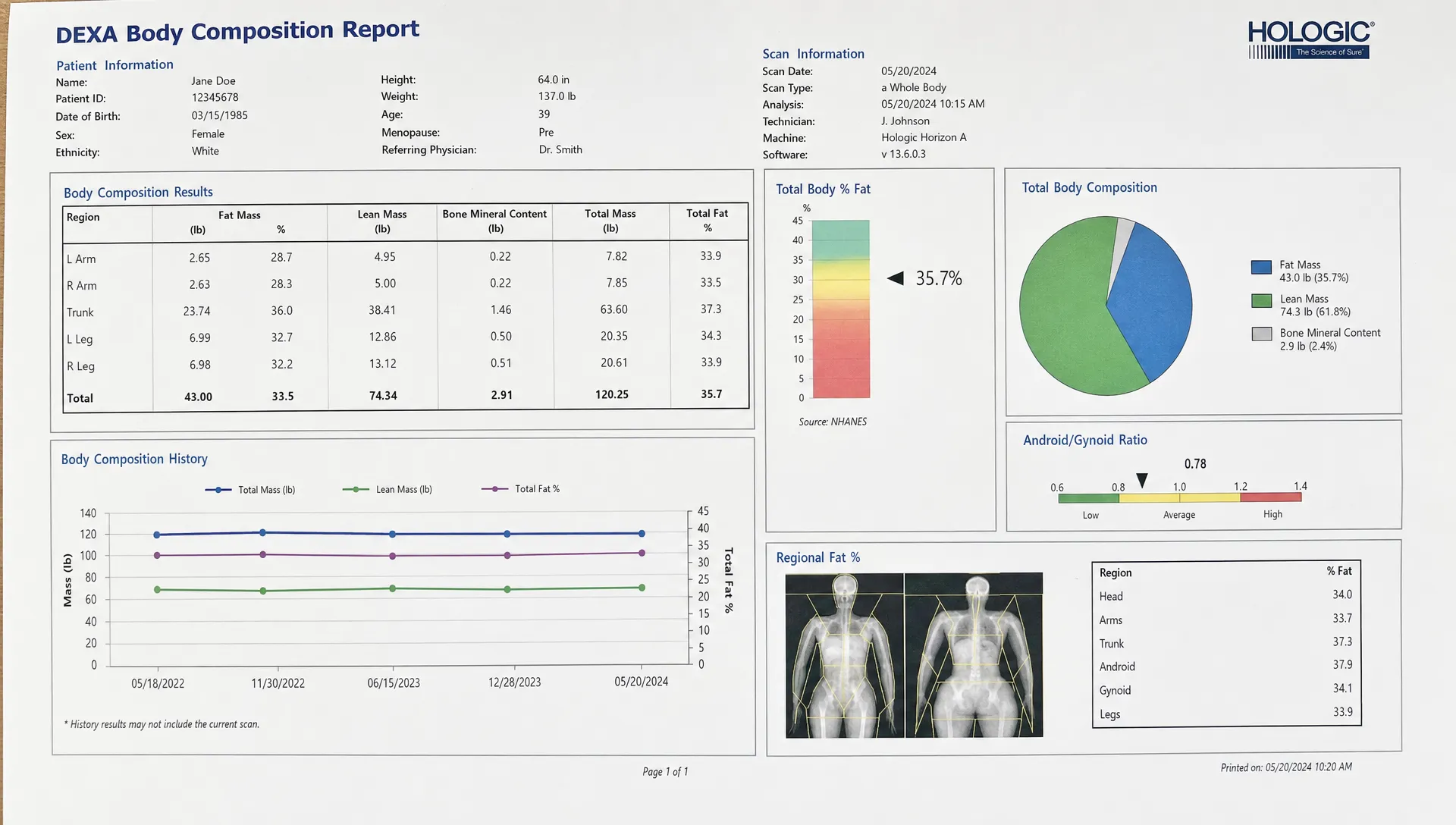
Body fat percentage is useful, but it can become misleading when it is viewed alone. Two people can have the same body fat percentage with very different muscle mass, bone density and fat distribution. DEXA helps you understand those differences.
A typical DEXA body composition report may include total body fat percentage, pounds of fat mass, pounds of lean mass, estimated visceral fat, bone density and regional measurements. The regional view is especially helpful because it can show whether you carry more fat in the trunk, whether one leg has less lean mass than the other, or whether a training block is adding muscle where you expect it to.
This broader context is another reason DEXA is the gold standard for body fat percentage in performance and health tracking. The percentage is only the headline number. The supporting metrics explain what is actually happening.
For example, if your weight stays the same after 12 weeks of strength training, a scale might suggest nothing happened. A DEXA scan might show that you gained lean mass and lost fat mass at the same time. That is a very different outcome, and it can change how you think about your nutrition, training and recovery plan.
If you want to understand the full report, this breakdown of key DEXA body composition metrics explains the numbers that matter most.
Why Precision Matters for Training and Nutrition
A precise body composition baseline can make decisions simpler. Instead of asking whether your plan is “working” based on scale weight alone, you can look at fat mass, lean mass and regional changes. That matters for people with very different goals.
Someone in a fat loss phase may want to preserve as much lean mass as possible. A strength athlete may want to confirm that weight gain is mostly lean tissue rather than excess fat. A runner may want to monitor whether aggressive dieting is compromising muscle. Someone focused on healthy aging may care about bone density and lean mass as much as fat percentage.
The gold standard for body fat percentage is valuable because better measurement can prevent the wrong adjustment. Without clear data, people often cut calories too aggressively, add unnecessary cardio, or assume a plateau when their body composition is quietly improving.
DEXA does not replace coaching, medical care, or consistent habits. It improves the feedback loop. When paired with expert interpretation, body composition data can help you decide whether to change calories, protein intake, resistance training volume, recovery, or the timeline of your goal.
For training-specific use cases, DEXA SF also explains how DEXA body composition analysis can support smarter training over repeated scan intervals.
How to Get the Most Reliable DEXA Results
DEXA is highly useful, but your testing routine still matters. The cleanest comparisons happen when repeat scans are done under similar conditions. That means using the same facility when possible, scanning at a similar time of day and keeping food, hydration and exercise timing reasonably consistent.
You do not need to overcomplicate preparation. The goal is simply to reduce noise so the changes you see are more likely to reflect real changes in body composition. If you train hard, diet aggressively, travel, or change hydration dramatically right before a scan, some metrics can be harder to interpret.
To use DEXA as the gold standard for body fat percentage in your own tracking, treat it as a repeatable benchmark rather than a one-time verdict. Many people get the most value from scanning at baseline, making a clear training or nutrition change, then retesting after enough time has passed to see meaningful tissue changes. For many body composition goals, that often means waiting several weeks rather than scanning every few days.
It is also worth remembering that DEXA uses low-dose X-ray technology. If you are pregnant, may be pregnant, or have a medical concern about imaging, ask the provider or your clinician before scheduling.
Who Benefits Most From DEXA Body Composition Testing?
DEXA is useful for anyone who wants objective body composition data, but it is especially helpful when the scale does not tell the full story. That includes people who lift weights, athletes in weight-class or endurance sports, people using nutrition plans for fat loss, individuals monitoring visceral fat and adults who want to track lean mass and bone density as they age.
It is also valuable for people who have been frustrated by inconsistent smart scale readings. If your body fat percentage changes several points overnight, the device is probably reacting to hydration and algorithm shifts rather than actual fat gain or loss. DEXA gives you a more stable reference point.
That is the practical case for why DEXA is the gold standard for body fat percentage. It gives you a clearer baseline, better progress data and more context than weight alone. For many people, that clarity turns vague goals into measurable next steps.
Frequently Asked Questions
Is DEXA the most accurate way to measure body fat percentage? DEXA is one of the most accurate and practical body composition methods available to consumers. In advanced research, multi-compartment models may be used as reference methods, but DEXA is widely valued because it is precise, accessible and provides detailed regional data.
How often should I get a DEXA scan for body fat tracking? It depends on your goal, but most people do not need very frequent scans. If you are changing training or nutrition, retesting after enough time for meaningful body composition change is more useful than scanning every week.
Can DEXA show muscle gain as well as fat loss? Yes. DEXA estimates lean mass by region, so it can show whether lean tissue is changing in your arms, legs, trunk and whole body. This makes it useful for strength training, recomposition and performance goals.
Why not just use a smart scale? Smart scales can be convenient for trends, but their body fat estimates are affected by hydration, food intake, skin temperature and proprietary algorithms. DEXA uses imaging and provides more detailed body composition data.
Does DEXA measure visceral fat? Many DEXA body composition reports include an estimate of visceral fat in the abdominal region. This can be useful because visceral fat is different from subcutaneous fat and may be more relevant for metabolic health discussions.
Get a Clearer Body Composition Baseline in San Francisco
If you want a more precise view of your body than a scale, BMI chart, or smart scale can provide, DEXA SF offers professional body composition scans in San Francisco with expert interpretation, metabolic insights, fitness guidance and nutrition advice.
Schedule your scan through DEXA SF and use your results to make training and nutrition decisions with better data.