
How Accurate Is a DEXA Scan for Body Fat Percentage?
If you are trying to lose fat, gain muscle, improve performance, or get a clearer picture of your health, your body fat percentage matters more than the number on the scale. The challenge is that not every test measures it equally well. Bathroom smart scales can swing with hydration. Skinfolds depend heavily on the tester. BMI ignores whether your weight comes from fat, muscle, or bone.
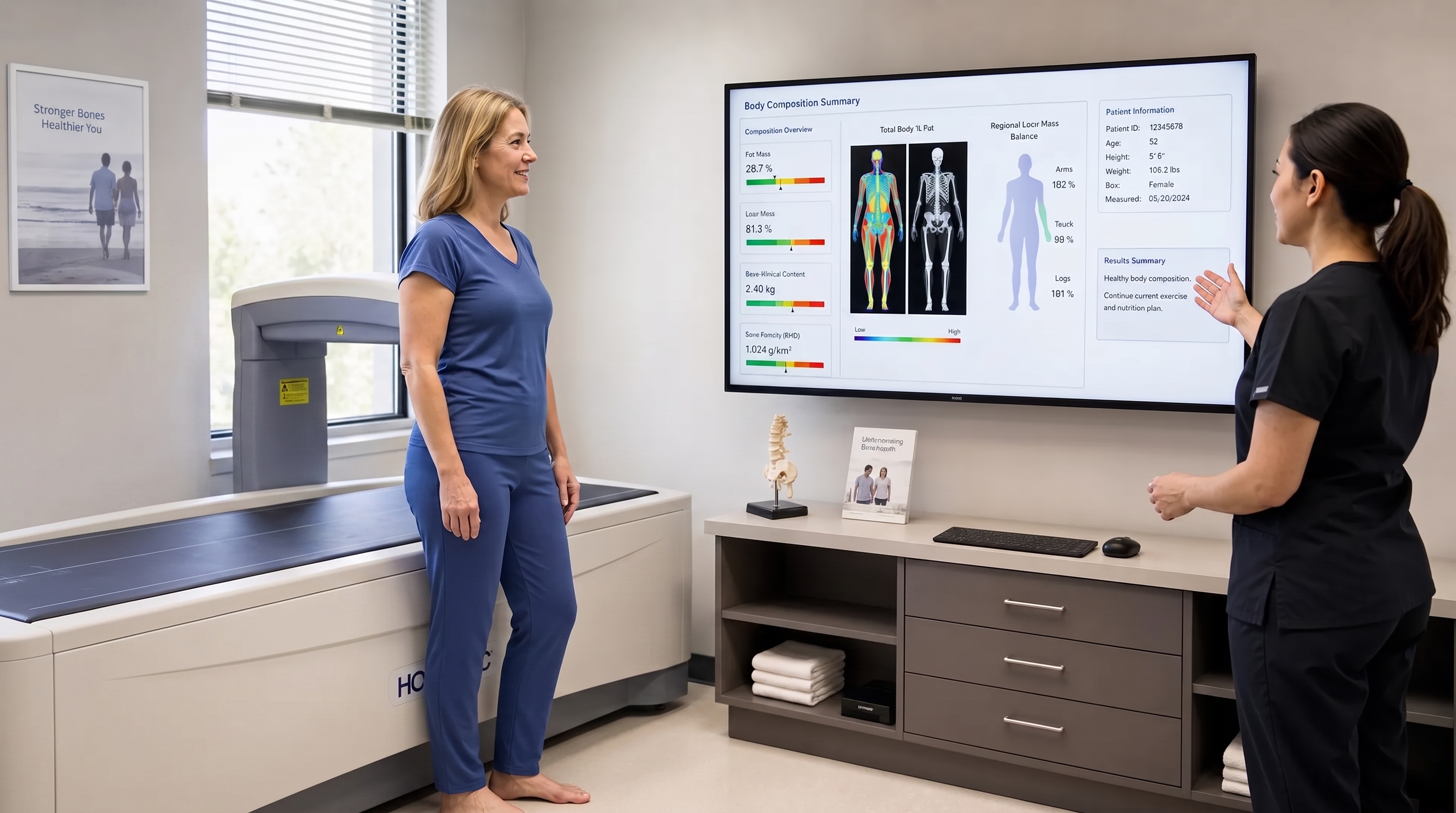
That is why many people look to a DEXA scan. DEXA, also written as DXA, is often described as the practical gold standard for body composition testing because it can estimate total body fat, regional fat, lean mass, bone mineral content, and more in one scan.
But how accurate is a DEXA scan for body fat percentage, really? The best answer is: very accurate compared with most accessible methods, but not perfect. Its value is strongest when you understand what it measures, what can affect the result, and how to use repeat scans consistently.
The short answer: DEXA is one of the most accurate body fat tests available
For most fitness, health, and performance purposes, a DEXA scan is among the most accurate ways to estimate body fat percentage outside of a research lab. It is usually more informative than BMI, more consistent than skinfold testing, and less sensitive to day-to-day hydration swings than many consumer bioelectrical impedance devices.
A reasonable practical expectation is that a well-performed DEXA scan can estimate body fat percentage within a few percentage points of more complex research methods, while repeat scans performed under the same conditions can be precise enough to track meaningful changes over time. In other words, if your report says 24.8 percent body fat, you should not treat that number as a flawless biological truth down to the decimal. You should treat it as a high-quality estimate and an excellent baseline.
This distinction matters. A single scan helps you understand where you are now. A series of scans, performed with the same scanner and similar preparation, helps you see whether your nutrition and training plan is actually changing fat mass, lean mass, visceral fat, and regional muscle balance.
What a DEXA scan actually measures
DEXA stands for dual-energy X-ray absorptiometry. The scan uses two low-dose X-ray beams at different energy levels to estimate how much of your body is bone mineral, fat tissue, and lean soft tissue. According to RadiologyInfo, a resource from the American College of Radiology and the Radiological Society of North America, DXA is widely used for bone density testing and can also be used for body composition assessment.
For body composition, DEXA does not directly remove and weigh fat from your body. Instead, it estimates tissue compartments based on how X-rays pass through different tissues. Your body fat percentage is then calculated from the scan data:
Body fat percentage = fat mass / total body mass x 100
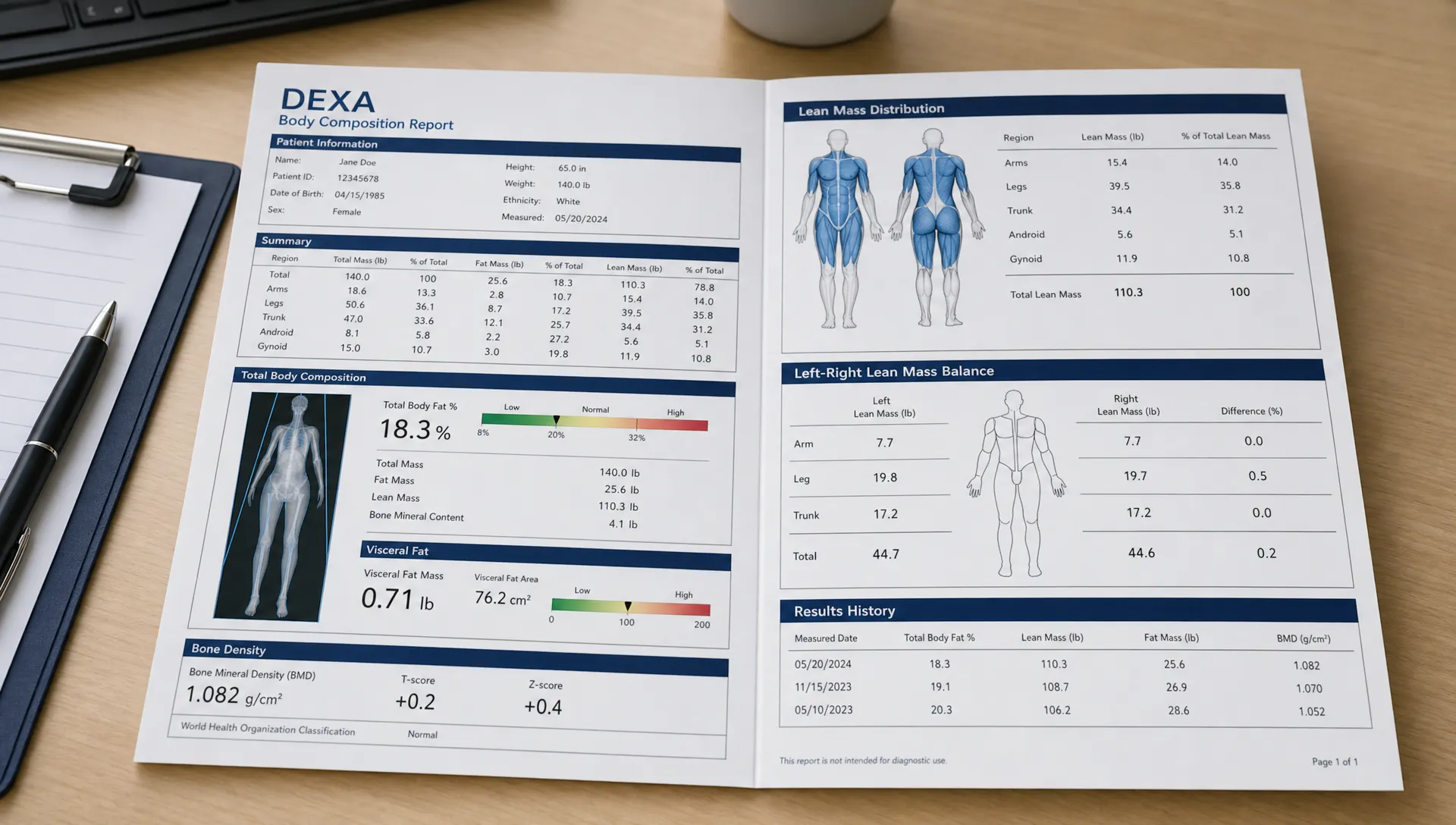
The reason DEXA is so useful is that it goes beyond a single whole-body number. A body composition scan can break results down by region, such as arms, legs, trunk, android area, and gynoid area. That is especially helpful if you want to know whether your weight loss is coming from fat or lean tissue, whether your training is building muscle evenly, or whether you carry a higher amount of abdominal or visceral fat.
If you want a broader overview of what DEXA can reveal beyond body fat alone, DEXA SF has a guide to measuring body fat, muscle, and visceral fat with a DEXA scan in San Francisco.
Accuracy vs. precision: the key difference most people miss
When people ask whether DEXA is accurate, they usually mean one of three things. These terms are related, but they are not the same.
| Term | What it means | Why it matters for body fat testing |
|---|---|---|
| Accuracy | How close the result is to your true body composition | Helps you trust your baseline body fat percentage |
| Precision | How repeatable the result is under the same conditions | Helps you track changes from scan to scan |
| Sensitivity to change | How well the method detects real changes over time | Helps you know whether fat loss or muscle gain is actually happening |
A DEXA scan can be both accurate and precise, but the biggest practical benefit is often precision over time. If you scan every few months under similar conditions, DEXA can show whether your total fat mass is decreasing, whether lean mass is being preserved, and whether one side of your body is gaining more muscle than the other.
That is much more useful than relying only on scale weight. For example, a person could lose 4 pounds of fat and gain 3 pounds of lean mass. The scale would show only a 1-pound change, but a DEXA scan may reveal a very different story.
How DEXA compares with other body fat percentage methods
No body composition method is perfect. Even sophisticated research models rely on assumptions about tissue density, hydration, and body compartments. Still, DEXA is one of the best combinations of accuracy, comfort, speed, and useful output for everyday decision-making.
| Method | Strengths | Main limitations | Best use |
|---|---|---|---|
| 4-compartment model | Often treated as a research-level criterion method | Expensive, time-consuming, rarely available to consumers | Research and validation studies |
| DEXA scan | High-quality estimate, regional data, bone and lean mass insights | Affected by scanner type, protocol, hydration, and positioning | Baseline and progress tracking |
| Hydrostatic weighing | Good whole-body estimate when performed well | Requires underwater testing and accurate lung volume estimates | Fitness testing where available |
| Bod Pod | Comfortable air-displacement method | Sensitive to clothing, hair, body temperature, and lung volume assumptions | Whole-body estimate without regional detail |
| Skinfold calipers | Affordable and portable | Highly tester-dependent and equation-dependent | Field testing with a skilled practitioner |
| BIA smart scale | Convenient for frequent home tracking | Very sensitive to hydration, food intake, and device algorithms | Directional trend tracking, not exact body fat percentage |
A major advantage of DEXA is that it separates bone mineral content from soft tissue instead of treating the body as one uniform compartment. That can make its body composition estimate more informative, especially for athletes, people with higher muscle mass, older adults monitoring lean mass, or anyone whose BMI does not reflect their actual body composition.
Research has also shown that newer DEXA technology can be highly useful for body composition analysis, although results still depend on device technology and standardized protocols. A review published in Obesity discussed the trueness and precision of DXA for assessing body composition, highlighting both its strengths and the importance of methodology.
What can affect DEXA scan body fat percentage accuracy?
A DEXA scan is advanced, but the result can still be influenced by how the scan is performed and what is happening in your body that day. Most of these factors are manageable if you prepare consistently.
Hydration and glycogen levels
Lean mass includes water, muscle tissue, organs, and other fat-free tissues. If you are dehydrated, overhydrated, or carrying unusually high or low glycogen levels, your lean mass estimate may shift slightly. This is one reason endurance athletes, bodybuilders, and people doing aggressive dieting should avoid comparing scans taken under very different conditions.
Recent meals
Food and fluid in your digestive tract can add mass that the scanner must account for. A large meal shortly before a scan may not dramatically change your result, but it can introduce noise, especially if you are trying to compare small changes between scans.
Exercise before the scan
Hard training can change fluid distribution, muscle inflammation, and glycogen storage. A heavy leg day or long run before your appointment could slightly affect regional lean mass readings. For progress tracking, it is best to scan in a similar training state each time.
Scanner model and software
Different DEXA machines and software versions may use different algorithms. A body fat percentage from one scanner should not always be compared directly with a result from another scanner. For the cleanest trend data, use the same facility and protocol whenever possible.
Positioning and movement
How you are positioned on the table matters. Small differences in arm placement, leg rotation, or body alignment can affect regional readings. Experienced technicians reduce this issue by following a consistent scan protocol.
Body size and tissue thickness
DEXA is generally strong across a wide range of body types, but very high body mass, unusual body proportions, or certain implants can make interpretation more complex. A qualified expert can help explain whether anything in your scan may have affected the result.
How to get the most reliable DEXA body fat results
You do not need to overcomplicate preparation, but consistency is important. If your goal is to compare results over time, your scan conditions should be as similar as possible.
Use these best practices before a body composition DEXA scan:
- Schedule repeat scans at a similar time of day when possible.
- Avoid a hard workout right before the scan.
- Keep your hydration routine normal rather than intentionally dehydrating or overhydrating.
- Avoid unusually large meals immediately before your appointment.
- Wear light clothing without metal, zippers, or thick seams.
- Remove jewelry and items that could interfere with the scan.
- Use the same scan location and protocol for follow-up testing.
The goal is not to manipulate the number. The goal is to reduce noise so the scan reflects real changes in fat mass, lean mass, and regional composition.
For many people, repeat testing every 8 to 12 weeks is a practical cadence for fitness or body composition goals, because it gives your training and nutrition plan enough time to create measurable change. If you are using DEXA for bone density or medical monitoring, follow guidance from a qualified healthcare professional. DEXA SF also has a practical article on what a DEXA scan is, cost considerations, and how often to get one in San Francisco.
When the DEXA number matters most
A DEXA scan body fat percentage result is helpful for almost anyone who wants better data, but it is especially valuable when the scale is misleading.
For example, strength training often increases lean mass while reducing fat mass. In that case, your weight may barely move even though your body composition improves. Similarly, someone using a calorie deficit may lose weight quickly, but a DEXA scan can help show whether that loss is mostly fat or whether too much lean tissue is being lost.
DEXA can also be valuable for people who look lean but carry more abdominal fat than expected. Body fat percentage alone does not tell the whole health story. Regional fat distribution, especially visceral fat around the organs, can matter for long-term metabolic health. DEXA body composition results can help identify these patterns more clearly than a scale or tape measure.
Athletes can use DEXA to look at left-right asymmetries and segmental lean mass. If one leg or arm carries noticeably less lean mass, that may reflect training history, injury compensation, or sport-specific movement patterns. The scan does not replace a coach, physical therapist, or clinician, but it gives better data for the conversation.
How to interpret your result without obsessing over decimals
One common mistake is treating DEXA body fat percentage as a competition score. The decimal point can create false precision. A result of 21.7 percent is not necessarily meaningfully different from 22.1 percent, especially if scan conditions were not identical.
Instead, focus on these higher-value questions:
- Is total fat mass trending down, up, or staying stable?
- Is lean mass being preserved during weight loss?
- Is lean mass increasing in the regions you are training?
- Is visceral fat improving over time?
- Are left-right differences changing in a useful direction?
This is where expert interpretation matters. The scan gives data, but the real value comes from connecting that data to your goals, training plan, nutrition habits, and timeline. A clear explanation can help you avoid overreacting to minor fluctuations while paying attention to changes that actually matter.
If your goal is not just testing but turning your results into action, DEXA SF explains how a precise body fat test can pair with custom nutrition coaching in San Francisco.
So, is DEXA accurate enough to guide your fitness or health plan?
Yes, for most people, DEXA is more than accurate enough to guide a serious body composition plan. It is one of the strongest tools available for understanding body fat percentage, lean mass, bone density, visceral fat, and asymmetries in a single appointment.
The key is to use it correctly. Do not chase tiny changes from one scan to the next. Do not compare results from different machines as if they are identical. Do not scan after wildly different hydration, meal, or exercise conditions and assume every difference is real.
Instead, use DEXA as a high-quality baseline and repeat it under consistent conditions. That is where it shines: showing whether your plan is working, whether your weight change is coming from the right tissue, and whether your health and performance metrics are moving in the direction you want.
Frequently Asked Questions
Is a DEXA scan the most accurate body fat test? For consumer-accessible testing, DEXA is one of the most accurate and informative options. Research-level 4-compartment models may be more comprehensive, but they are not practical for routine testing.
Can a DEXA scan body fat percentage be wrong? Yes, it can be off by a few percentage points depending on hydration, recent exercise, meals, scanner model, software, and positioning. That does not make it unreliable. It means the result should be interpreted as a strong estimate, not an exact chemical measurement.
Is DEXA more accurate than a smart scale? Usually, yes. Smart scales that use bioelectrical impedance can be useful for rough trends, but they are highly sensitive to hydration and device algorithms. DEXA provides more detailed and reliable body composition data, including regional fat and lean mass.
How often should I get a DEXA scan for body fat tracking? For fitness and body composition goals, many people choose every 8 to 12 weeks. This gives enough time for meaningful fat loss, muscle gain, or visceral fat changes to appear. Medical or bone density follow-up should be based on professional guidance.
Should I fast before a DEXA body composition scan? You do not always need a strict fast unless your scan provider instructs you to do so. For best consistency, avoid unusually large meals right before the scan and try to repeat future scans under similar conditions.
Does DEXA measure visceral fat too? Many body composition DEXA scans estimate visceral adipose tissue in the abdominal region. This can be helpful because two people with the same total body fat percentage may have very different fat distribution and metabolic risk profiles.
Get a clearer body fat baseline in San Francisco
If you want a more accurate view of your body than a scale, BMI chart, or smart scale can provide, DEXA SF offers professional DEXA body composition scans in San Francisco. Your scan can help measure body fat percentage, lean mass, bone density, visceral fat, metabolic metrics, and left-right asymmetries, with expert interpretation and personalized fitness and nutrition guidance.
Schedule your scan with DEXA SF and use better data to make better decisions about your body composition goals.