
Which Reason for a DEXA Scan Matters Most to You?
Your best reason for DEXA scan planning depends on the decision you want to make after you see the numbers. Some people need a reliable baseline before changing their training. Others want to know whether weight loss is coming from fat or muscle. Others are focused on visceral fat, bone health or left vs. right muscle balance.
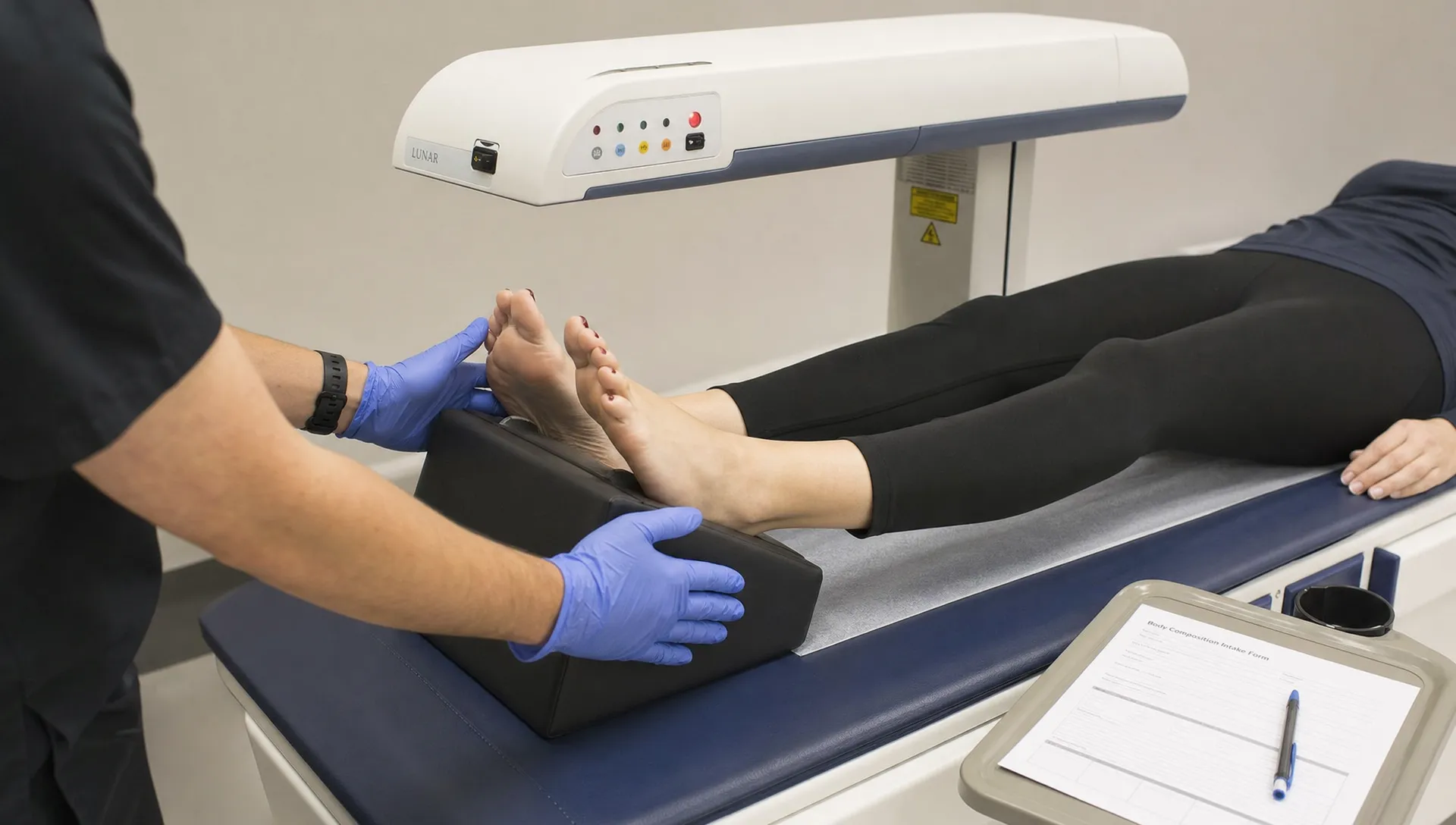
A DEXA scan can measure body fat, lean mass, bone density, visceral fat and regional differences with far more detail than a scale or tape measure. The most useful scan is not the one with the most data. It is the one that answers the question you care about enough to act on.
How to choose your main reason for DEXA scan
Start by naming the problem you are trying to solve. If your goal is vague, the report may feel interesting but hard to use. If your goal is specific, the same report becomes a decision tool.
| Your main question | DEXA data that helps most | What you can decide next |
|---|---|---|
| Am I losing fat without losing muscle? | Fat mass, lean mass, body fat percentage | Whether to adjust calories, protein or strength training |
| Is my training building muscle? | Total lean mass and regional lean mass | Whether your program is producing measurable change |
| Do I carry too much fat around my organs? | Visceral fat estimate | Whether to prioritize nutrition, activity and metabolic health habits |
| Am I balanced left to right? | Arm, leg and trunk lean mass by region | Whether to address asymmetries in training or rehab |
| Should I pay attention to bone health? | Bone density related measures | Whether to discuss bone screening or prevention with a clinician |
If more than one row applies, rank them. Your top reason determines how you prepare, which numbers you focus on and how soon you should repeat the scan.
If the scale is confusing, prioritize body composition
Scale weight can move for reasons that have little to do with fat loss. Water, food volume, glycogen, inflammation after hard training and normal daily variation can hide progress for days or weeks. A DEXA body composition scan separates fat mass from lean mass, so you can see what changed underneath the total weight.
If your main reason for DEXA scan data is fat loss, body fat percentage is only part of the story. Total fat mass tells you how many pounds of fat are present. Lean mass tells you whether your plan is preserving the tissue that supports strength, movement and resting energy needs. Regional results can also show whether changes are happening mostly in the trunk, legs or arms.
This is especially useful when weight loss stalls. A person may lose fat and gain lean mass at the same time, causing the scale to look flat. The opposite can also happen: rapid weight loss may look successful until the scan shows a meaningful drop in lean tissue. If you want help interpreting the numbers that matter most, this guide to DEXA body composition metrics is a helpful companion.
If you train hard, prioritize lean mass and asymmetry
For athletes, lifters and active adults, body weight alone is a blunt metric. A five pound gain could be muscle, fat, water or a mix. A five pound loss could improve performance or signal underfueling. DEXA helps clarify whether training is changing the tissue you intended to change.
A strong reason for DEXA scan testing is to measure lean mass by region. If your right leg carries noticeably more lean mass than your left, that may reflect sport demands, previous injury or training habits. If both legs are improving but trunk lean mass is flat, your program may be succeeding in one area but not another.
The scan does not write your workout plan for you, but it gives you a better audit of what your plan has produced. Combined with performance markers such as strength, pace, power or recovery, DEXA data can help you decide whether to keep pushing the same program or make a focused adjustment.
If metabolic health is your concern, look beyond body fat percentage
Two people can have the same body fat percentage and very different health profiles. Fat stored under the skin is not the same as fat stored deeper in the abdomen around internal organs. DEXA can estimate visceral fat, which makes it useful for people who care about metabolic health and not just appearance.
For many people, the most practical reason for DEXA scan results is that visceral fat gives them a clearer target. Harvard Health notes that excess visceral fat is associated with higher risk for conditions such as cardiovascular disease and type 2 diabetes, largely because this fat is metabolically active and linked with inflammation and insulin resistance. DEXA does not replace medical testing, but it can add useful context alongside blood pressure, glucose, lipids and waist measurement.
If visceral fat is your priority, the follow-up actions are usually behavior based: nutrition consistency, regular aerobic activity, resistance training, sleep and alcohol moderation. The scan helps you track whether those habits are changing the risk marker you care about.
If bone health is on your mind, know which scan you need
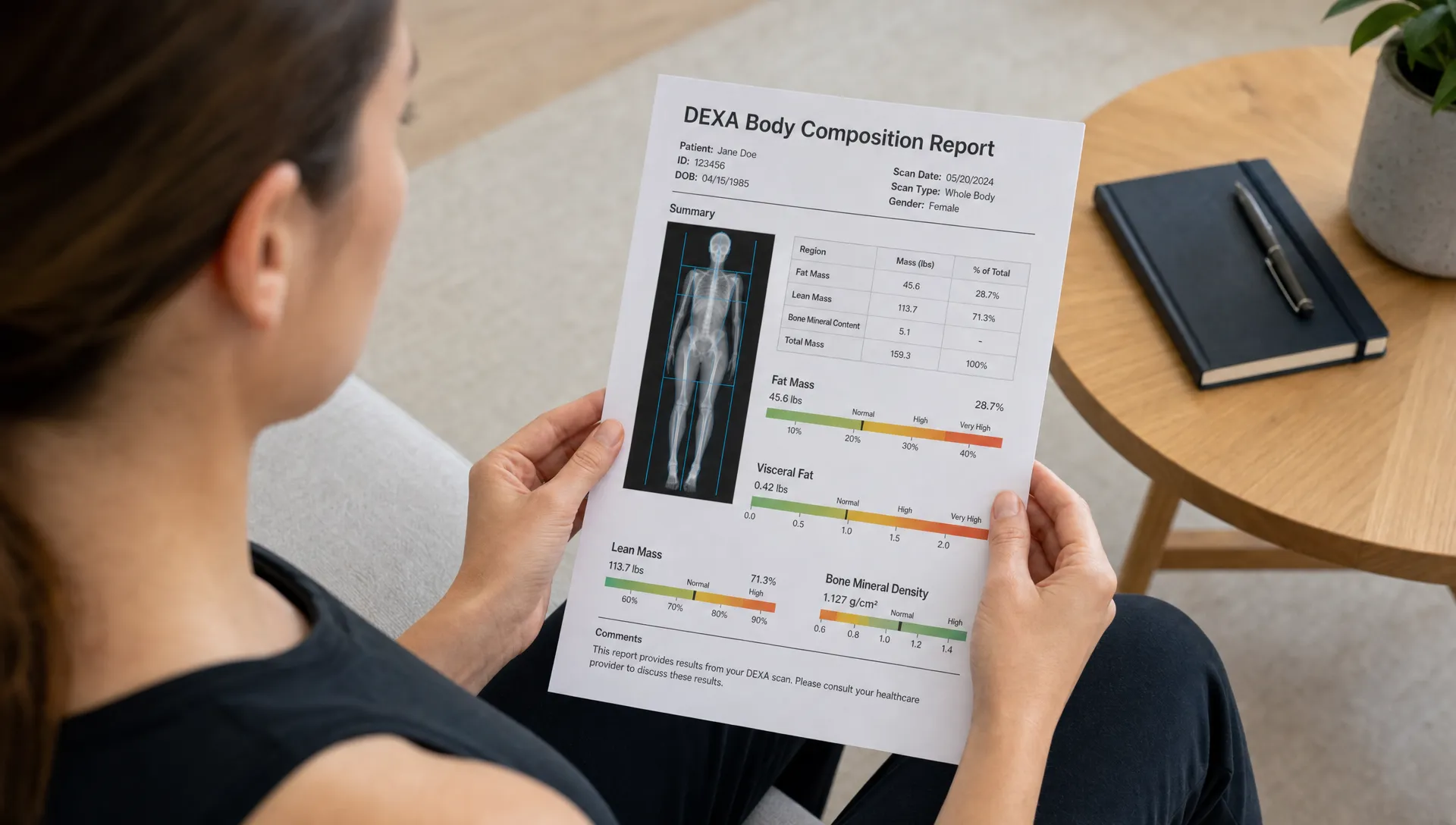
Bone density is one of the best known uses for DEXA technology. Medical bone density scans are commonly used to assess osteoporosis risk, especially for people with age, family history, medication use, hormonal changes or fracture history concerns. MedlinePlus explains that bone density testing measures the mineral content of bone and can help diagnose osteoporosis or low bone mass.
If your reason for DEXA scan booking is bone health, first clarify whether you need a fitness body composition scan, a medical diagnostic scan or both. A body composition scan may include bone related information, but a medical bone density exam is the standard route when a clinician is evaluating osteoporosis or fracture risk. If you are unsure which category fits you, the comparison of DEXA Fit and medical DEXA scans can help you understand the difference before you book.
Bone health can also matter to active people who are not currently worried about osteoporosis. Low energy availability, rapid weight loss, endurance training without enough fueling and certain medical histories can all make bone metrics worth discussing with a qualified professional.
If you want accountability, use DEXA as a baseline and checkpoint
A single scan gives you a baseline. A repeat scan shows whether your plan is working. That is why DEXA is often most valuable when you pair it with a timeline, not when you treat it as a one time curiosity.
The most underrated reason for DEXA scan tracking is accountability. When you know your starting fat mass, lean mass, visceral fat and regional balance, your next scan can show whether your habits are producing the intended outcome. This can prevent overreacting to short term scale changes or staying too long with a plan that is not working.
Timing matters. If you rescan too soon, normal variation may blur the signal. If you wait too long, you may miss an opportunity to adjust. The right interval depends on your goal, training status and how aggressively you are changing your routine, so it is worth thinking through when to schedule a DEXA scan before you start a new phase.
What your top reason changes about the scan
Your priority should shape how you use the entire process, from preparation to interpretation. Someone focused on fat loss should care about consistency between scans, such as similar hydration, food timing and training schedule. Someone focused on asymmetry should make sure they review regional lean mass carefully. Someone focused on bone health should be ready to discuss whether medical follow-up is appropriate.
| Top priority | What to focus on in the report | Best next step |
|---|---|---|
| Fat loss | Fat mass, body fat percentage, visceral fat | Adjust calorie intake, protein and activity based on trend |
| Muscle gain | Lean mass by total body and region | Review training volume, recovery and nutrition support |
| Performance | Regional lean mass and asymmetry | Compare scan data with sport or gym performance markers |
| Metabolic health | Visceral fat and trunk fat distribution | Pair results with labs and lifestyle changes |
| Bone health | Bone density related values | Ask a clinician whether medical evaluation is needed |
The best scan experience ends with interpretation, not just a printout. At DEXA SF, clients receive professional body composition scanning in San Francisco with expert interpretation, plus fitness and nutrition guidance based on the results. That matters because numbers are only useful when they lead to a clear next action.
Frequently Asked Questions
What is the most common reason for a DEXA scan? Many people get a DEXA scan to measure body composition more accurately than a scale, smart scale or handheld device can. Common goals include fat loss, muscle gain, visceral fat reduction, performance tracking and bone health awareness.
How do I know my best reason for DEXA scan testing? Choose the outcome you most want to improve in the next few months. If you are changing your diet, fat mass and lean mass may matter most. If you are training, regional lean mass and asymmetry may be more useful. If you are worried about long term health, visceral fat or bone related measures may deserve priority.
Can a DEXA scan tell me exactly what diet or workout to follow? No. A scan measures your current body composition and related metrics, but it does not replace coaching, medical care or personal judgment. It can make your diet and training decisions more informed by showing whether your current approach is changing fat, muscle and visceral fat in the intended direction.
How often should I repeat a DEXA scan? For body composition goals, many people wait long enough for meaningful change to occur, often after a focused training or nutrition block. The ideal timing depends on your goal and how quickly your routine is changing. Consistent preparation between scans is more important than frequent testing.
Is a DEXA scan only for athletes? No. Athletes may use it for performance and asymmetry, but DEXA can also help people focused on fat loss, healthy aging, strength building, metabolic health or bone awareness.
Turn your reason into a useful result
A DEXA scan can answer several questions, but the most valuable one is the question you are ready to act on. Before you book, decide whether you care most about fat loss, muscle gain, visceral fat, asymmetry, bone health or a reliable baseline.
If you want precise body composition data with expert interpretation in San Francisco, DEXA SF can help you connect the scan results to practical fitness and nutrition next steps.