
When to Get a Bone DEXA Scan and What It Shows
Bone loss is easy to miss because it usually does not hurt, slow you down, or change how you look until a fracture happens. That is why a bone DEXA scan can be so valuable: it measures bone mineral density before a minor fall or everyday movement turns into a major injury.
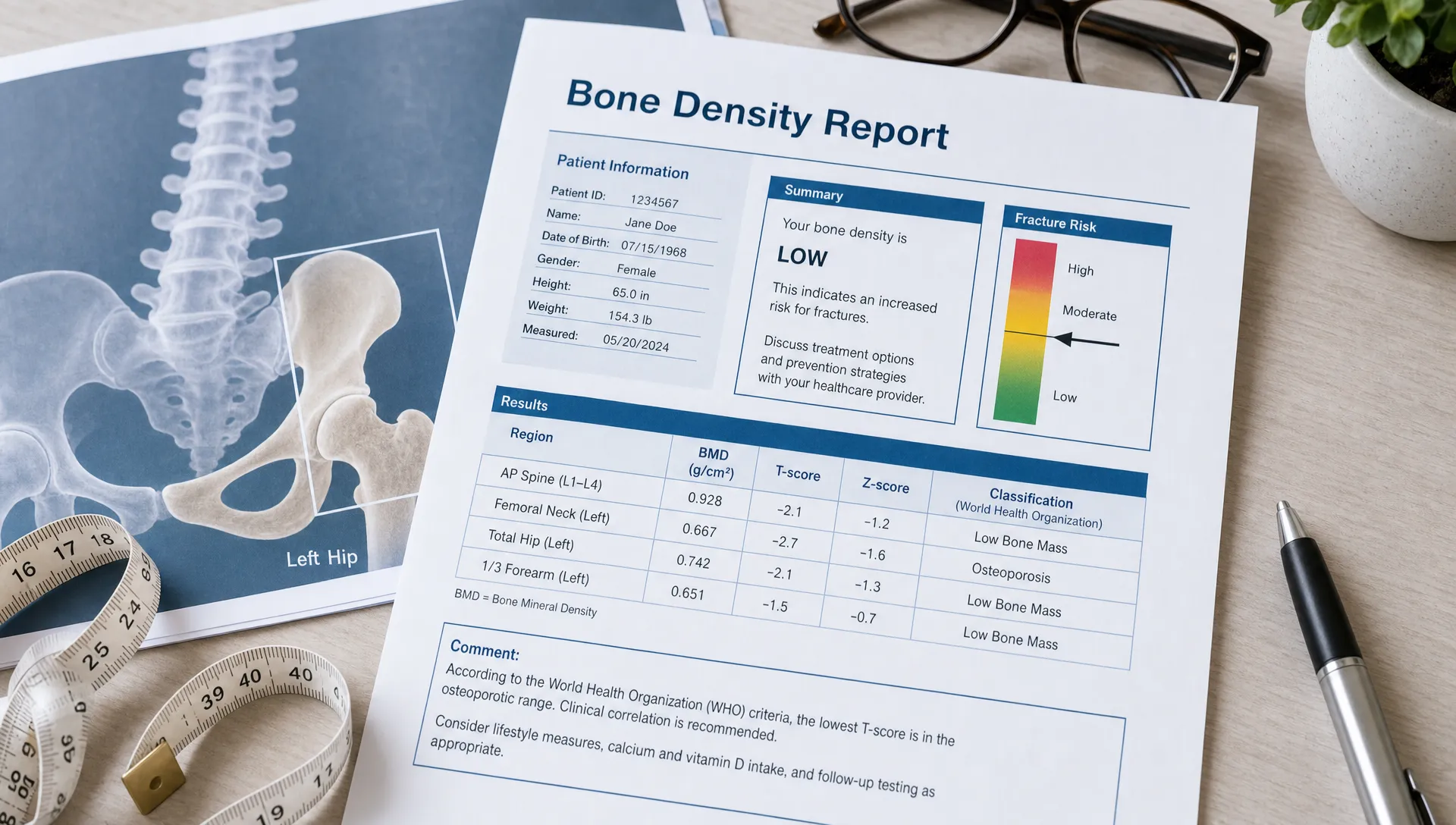
A DEXA scan, also called DXA, is the most widely used test for assessing bone density. It is quick, noninvasive, and uses a very low dose of X-ray energy to estimate how much mineral is packed into specific areas of bone. The result can help identify normal bone density, low bone mass, or osteoporosis, and it can also provide a baseline for tracking change over time.
Below is a practical guide to when a bone DEXA scan makes sense, what the scan can show, what it cannot tell you, and how to use the results to make better decisions about long-term bone health.
What is a bone DEXA scan?
A bone DEXA scan uses dual-energy X-ray absorptiometry to measure bone mineral density, often abbreviated as BMD. In clinical osteoporosis screening, the scan typically focuses on the hip and lumbar spine because those sites are strongly related to fracture risk. In some cases, the forearm may also be scanned, especially if the hip or spine cannot be measured reliably.
A full-body DEXA scan can also provide broader information, including body fat, lean mass, visceral fat, asymmetries, and bone-related metrics. At DEXA SF, the goal is not just to collect numbers, but to help you understand what those numbers mean in the context of fitness, nutrition, and health goals.
One important note: if a clinician specifically orders a diagnostic osteoporosis test, follow their instructions on the exact scan type and body sites needed. If you are comparing terminology, this overview of bone scan vs DEXA differences explains why the phrase bone scan can mean different things in medical settings.
When should you get a bone DEXA scan?
The right timing depends on age, sex, medical history, fracture history, medication use, and personal risk factors. Many people wait until they are older, but bone density can matter much earlier if your risk is elevated.
The U.S. Preventive Services Task Force recommends osteoporosis screening for women age 65 and older, and for postmenopausal women younger than 65 who are at increased risk. For men, evidence is less definitive at the population screening level, but many clinical organizations recommend evaluation when risk factors are present.
The Bone Health and Osteoporosis Foundation also emphasizes risk-based testing, including for adults over 50 with fractures or medical conditions and medications associated with bone loss. Its clinician guide is a useful reference for how osteoporosis prevention and treatment decisions are commonly approached.
Common reasons to consider a bone DEXA scan
| Situation | Why it matters |
|---|---|
| Women age 65 or older | Bone loss accelerates after menopause, and fracture risk rises with age. |
| Postmenopausal women under 65 with risk factors | Screening may be useful earlier when risk is above average. |
| Men around age 70 or older, or younger men with risk factors | Men can develop osteoporosis too, often later or after medical triggers. |
| A low-trauma fracture after age 50 | A fracture from a standing-height fall may signal fragile bones. |
| Long-term glucocorticoid use | Steroid medications can reduce bone density and increase fracture risk. |
| Low body weight or major weight loss | Lower body weight can be associated with lower bone mass. |
| Parent with a hip fracture | Family history can increase future fracture risk. |
| Smoking or heavy alcohol intake | Both are associated with poorer bone health. |
| Rheumatoid arthritis, celiac disease, inflammatory bowel disease, kidney disease, or endocrine disorders | Several chronic conditions can affect bone metabolism. |
| Aromatase inhibitors, androgen deprivation therapy, some seizure medications, or other bone-affecting drugs | Certain medications can accelerate bone loss. |
This table is not a substitute for medical advice, but it can help you decide whether to ask a clinician or qualified health professional about testing.
Signs you should not wait for routine screening age
Many people think of a bone DEXA scan as something to consider only after retirement age. That can be true for average-risk screening, but it is not the whole story.
You may want to discuss earlier testing if you have had a fracture from a minor fall, lost height, developed a stooped posture, or had unexplained back pain that could be related to vertebral compression fractures. You may also want earlier testing if you have a history of under-fueling, eating disorders, missed menstrual periods, early menopause, low testosterone, or long periods of limited weight-bearing activity.
Athletes and highly active people are not automatically protected. Resistance training and impact exercise can support bone health, but high training loads combined with inadequate calorie intake can work against bone maintenance. If performance, body composition, or nutrition goals have led to chronic under-fueling, bone density is worth paying attention to.
For a deeper look at why bone density matters before old age, see this guide to bone mineral density at every age.
What does a bone DEXA scan show?
A bone DEXA scan does more than produce a single pass or fail result. It gives measurable data that can be interpreted alongside age, sex, medical history, and fracture risk.
The most common bone density outputs include BMD, T-score, and Z-score. BMD is the measured bone mineral density at the scanned site. The T-score compares your result with the average bone density of a healthy young adult. The Z-score compares your result with what is expected for someone of your age, sex, and body size.
How bone density results are commonly categorized
| Result category | T-score range | What it generally means |
|---|---|---|
| Normal bone density | -1.0 or higher | Bone density is within the expected young-adult reference range. |
| Low bone mass, often called osteopenia | Between -1.0 and -2.5 | Bone density is below normal but not in the osteoporosis range. |
| Osteoporosis | -2.5 or lower | Bone density is low enough to meet the diagnostic threshold for osteoporosis in appropriate clinical contexts. |
A Z-score is especially useful for younger adults, premenopausal women, and men under 50. A Z-score of -2.0 or lower is often described as below the expected range for age, which may prompt evaluation for secondary causes of bone loss.
What your results can help you decide
The value of a bone DEXA scan is not just knowing your score. The value is using the result to decide what to do next.
If your bone density is normal, your scan can serve as a baseline. That baseline becomes useful later if you want to know whether your training, nutrition, hormones, medications, or aging process are changing your bone health.
If your scan shows low bone mass, it does not automatically mean you need medication. It may mean you should look more closely at calcium intake, vitamin D status, protein intake, strength training, balance training, fall risk, alcohol intake, smoking, and medical contributors. A clinician may also calculate fracture risk using tools such as FRAX, which considers clinical risk factors in addition to bone density.
If your scan shows osteoporosis-level bone density, it is a stronger signal to seek medical evaluation. Treatment decisions should be made with a licensed clinician, especially if you have already had a fracture or have other major risk factors.
A DEXA scan can also help people who are working on fitness or body composition goals. Alongside bone density, DEXA SF can provide insight into lean mass, body fat, visceral fat, left-right asymmetries, and metabolic data. That broader picture can help you avoid chasing scale weight alone while overlooking muscle, fat distribution, and skeletal health.
What a bone DEXA scan does not show
DEXA is highly useful, but it does not answer every bone-related question.
A bone DEXA scan does not show all aspects of bone quality, such as microarchitecture, bone turnover, or every factor that contributes to strength. It does not diagnose the cause of bone pain. It is not the same as an imaging test used to look for tumors, infections, acute fractures, or arthritis. It also does not predict with certainty whether you will or will not fracture.
Think of DEXA as a powerful risk-assessment and tracking tool. It measures density very well, but the result should be interpreted with the rest of your health profile.
How often should you repeat a bone DEXA scan?
There is no single interval that fits everyone. Repeat timing depends on your baseline result and whether you are trying to monitor a known issue.
If your bone density is normal and you have no major risk factors, you may not need another scan for several years. If you have low bone mass, osteoporosis, recent medication changes, a new medical condition, or you are monitoring response to treatment, your clinician may recommend a shorter interval, often around one to two years in higher-risk situations.
For body composition and performance tracking, some people scan more often, but bone density changes slowly. If your main question is bone health, the repeat schedule should be based on meaningful expected change, not curiosity alone.
How to prepare and what to expect
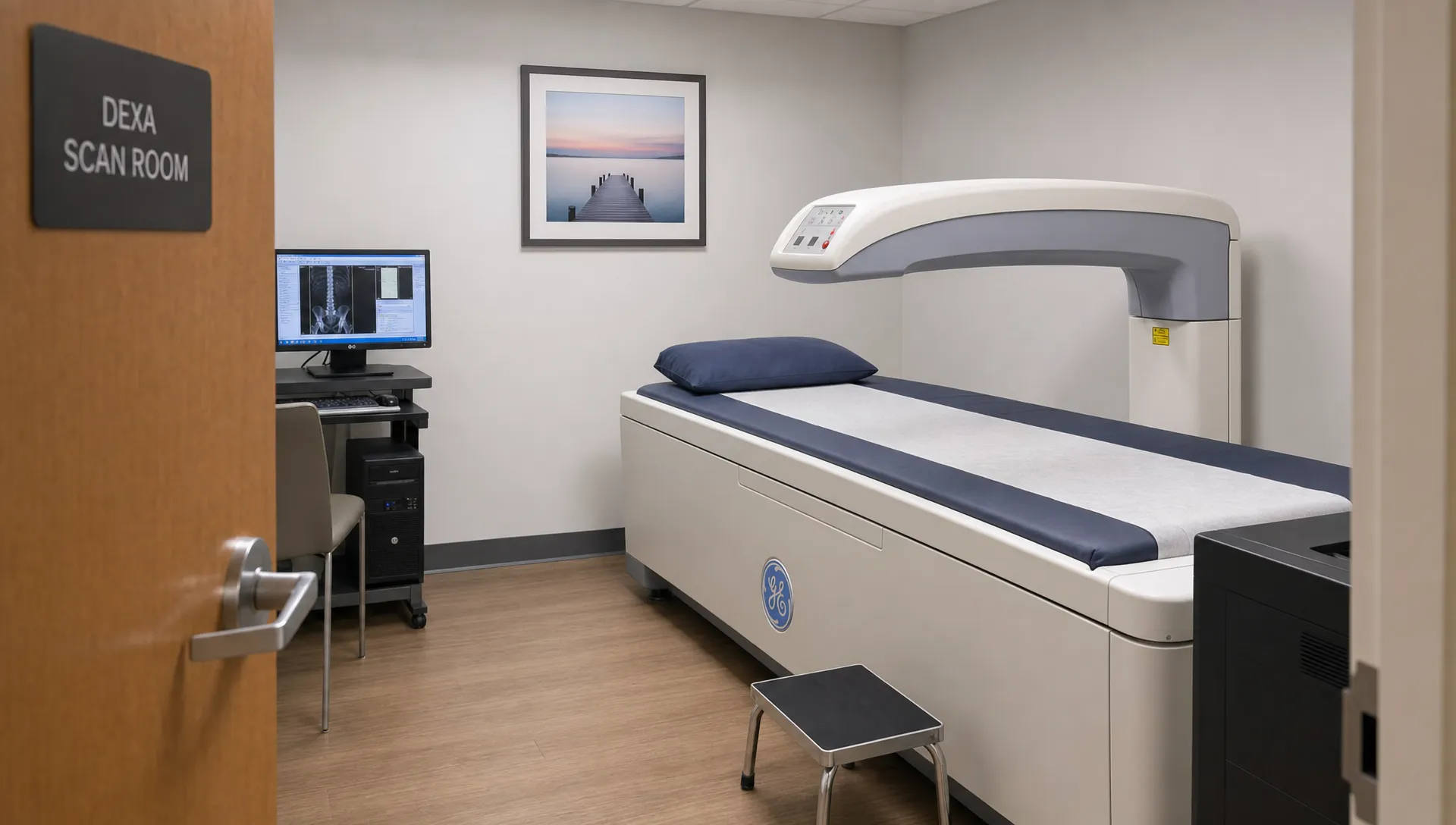
A DEXA scan is usually simple. You lie still on a padded table while the scanner passes over the body or targeted region. The test is noninvasive, and most people can return to normal activities immediately.
General preparation may include wearing comfortable clothing without metal hardware and avoiding calcium supplements shortly before the test if instructed by the scan provider or clinician. You should also mention if you are pregnant or might be pregnant, or if you recently had contrast imaging, since those factors may affect timing.
If you want a more detailed walkthrough of the appointment experience, this bone density scan guide covers what to expect before, during, and after the test.
How to make your scan results more useful
A bone DEXA scan is most valuable when you pair it with the right context. Before your appointment, it helps to write down relevant medical history, fracture history, medications, supplements, training routine, and nutrition patterns. Bring or save prior scan results if you have them, since trend data is often more informative than one measurement.
After the scan, focus on the questions that matter most:
- Is my bone density normal, low, or in the osteoporosis range?
- Are my results expected for my age and risk profile?
- Do I need medical follow-up or lab testing for secondary causes?
- What nutrition, strength training, or lifestyle changes would be most relevant?
- When should I repeat the scan to track meaningful change?
For many people, the scan becomes a turning point because it turns an invisible issue into measurable data. That data can support smarter choices about lifting, protein intake, calcium and vitamin D, recovery, fall prevention, and medical care when needed.
Frequently Asked Questions
Is a bone DEXA scan the same as a full-body DEXA scan? Not always. A diagnostic bone density DEXA often focuses on the hip and spine, while a full-body DEXA can also measure body composition, including fat mass, lean mass, visceral fat, and asymmetries. Ask your provider which scan is appropriate for your goal.
Does a low T-score always mean I need medication? No. Medication decisions depend on your T-score, fracture history, age, clinical risk factors, and overall fracture risk. A licensed clinician can help determine whether lifestyle changes, further testing, medication, or a combination is appropriate.
Can younger adults get a bone DEXA scan? Yes, especially when risk factors are present. Examples include low-trauma fracture, long-term steroid use, early menopause, low testosterone, chronic under-fueling, certain gastrointestinal conditions, or medications known to affect bone health.
How long does a DEXA scan take? The scan process is typically quick, although the total appointment time can vary by provider, scan type, and whether you receive interpretation or guidance afterward.
Can strength training improve bone density? Progressive resistance training and weight-bearing activity can support bone health, especially when paired with adequate energy, protein, calcium, vitamin D, and recovery. The right plan depends on your current fitness level and fracture risk.
Get clear data about your bones and body composition
If you are wondering whether your bone density, muscle mass, fat distribution, or metabolic metrics are moving in the right direction, a DEXA scan can give you objective data instead of guesswork.
DEXA SF provides professional DEXA scans in San Francisco with expert interpretation, body composition insights, bone density analysis, and practical fitness and nutrition guidance. Schedule a scan to understand where you are today and make more informed decisions for the years ahead.