
Bone Density Scan Guide: What to Expect and Why It Matters
A bone density scan is one of the simplest ways to see what is happening inside your bones before a fracture, injury, or loss of mobility forces the issue. For many people, bone health feels invisible until something goes wrong. A DEXA scan helps change that by turning bone strength into measurable data.
Also called a DEXA or DXA scan, this test is widely considered the gold standard for measuring bone mineral density. It can help identify low bone density, estimate osteoporosis risk, and, depending on the scan type, provide a detailed look at body composition, including lean mass, fat mass, visceral fat, and left-right muscle balance.
If you are considering a bone density scan in San Francisco, here is what to expect, how to prepare, what your results may mean, and why the information can be useful even if you feel healthy today.
What is a bone density scan?
A bone density scan uses low-dose X-ray technology to estimate how much mineral content is present in your bones. The most common technology is dual-energy X-ray absorptiometry, which is why the test is often called a DEXA scan or DXA scan.
In a medical osteoporosis evaluation, DEXA commonly focuses on areas that are most relevant to fracture risk, such as the hip and spine. In a whole-body DEXA scan, the scan can also measure body composition and provide bone-related data across the body. That makes it useful for people who want a broader picture of health, fitness, aging, and performance.
At DEXA SF, a scan can provide precise measurements related to body fat, lean mass, bone density, visceral fat, asymmetry, and metabolic data insights. The key advantage is that you are not relying on a bathroom scale or a visual estimate. You receive objective numbers that can be tracked over time.
Why bone density matters
Bone is living tissue. It constantly breaks down and rebuilds, responding to hormones, nutrition, training, medications, age, and overall health. When bone loss outpaces bone formation, bones can become more fragile.
The problem is that low bone density usually has no obvious symptoms. Many people do not realize they have osteoporosis or osteopenia until they experience a fracture from a fall, a minor accident, or even a movement that would not normally cause injury.
The Bone Health & Osteoporosis Foundation notes that osteoporosis is common and can significantly increase fracture risk, especially as adults age. Hip, spine, and wrist fractures can affect independence, training consistency, work, sleep, and long-term quality of life.
A bone density scan matters because it can help you:
- Detect low bone density earlier than symptoms would
- Establish a baseline for future comparison
- Track whether training, nutrition, or medical treatment is working
- Better understand fracture risk with your healthcare provider
- Make more informed decisions about strength training, diet, and lifestyle
If you want a deeper look at the long-term value of strong bones, DEXA SF has also covered why maintaining high bone density matters for mobility, injury prevention, and healthy aging.
Who should consider a bone density scan?
A bone density scan is commonly recommended for people at higher risk of osteoporosis, but it can also be valuable for athletes, active adults, people changing body composition, and anyone who wants a reliable baseline.
According to the U.S. Preventive Services Task Force, screening is recommended for women age 65 and older, as well as postmenopausal women under 65 who have increased risk for osteoporosis. For men, recommendations can vary, so it is best to discuss personal risk factors with a clinician.
You may want to ask about a scan if you have any of the following risk factors:
- A prior low-trauma fracture
- Family history of osteoporosis or hip fracture
- Long-term use of corticosteroids or certain other medications
- Low body weight or a history of significant weight loss
- Early menopause or low sex hormone levels
- Smoking or heavy alcohol use
- Low vitamin D, low calcium intake, or nutrient absorption issues
- Conditions such as rheumatoid arthritis, thyroid disorders, or gastrointestinal disease
- High training volume combined with under-fueling or missed periods
For fitness-focused adults, a DEXA scan can be useful even when osteoporosis is not the main concern. If you are strength training, losing weight, preparing for a race, or working on body recomposition, knowing your lean mass, fat mass, and bone density can help you make smarter adjustments.
How to prepare before your scan
A DEXA scan is usually straightforward, but a little preparation helps improve comfort and accuracy. Always follow the instructions provided by your scan center or medical provider, especially if your scan is part of a medical workup.
In general, you may be asked to wear comfortable clothing without metal zippers, snaps, or thick hardware. Metal can interfere with imaging, so you may need to remove belts, jewelry, watches, or items from your pockets. If you recently had a barium study, contrast imaging, or nuclear medicine test, tell the scan provider because it may affect scheduling.
You should also tell the staff if you are pregnant or might be pregnant. DEXA uses a very low radiation dose, but pregnancy requires extra caution and individualized guidance.
Some facilities advise avoiding calcium supplements for 24 hours before a bone density test. Do not stop prescribed medications unless your healthcare provider tells you to. If you have prior DEXA results, bring them or make sure they can be accessed. Comparisons over time are often more useful than a single scan in isolation.
What happens during a bone density scan?
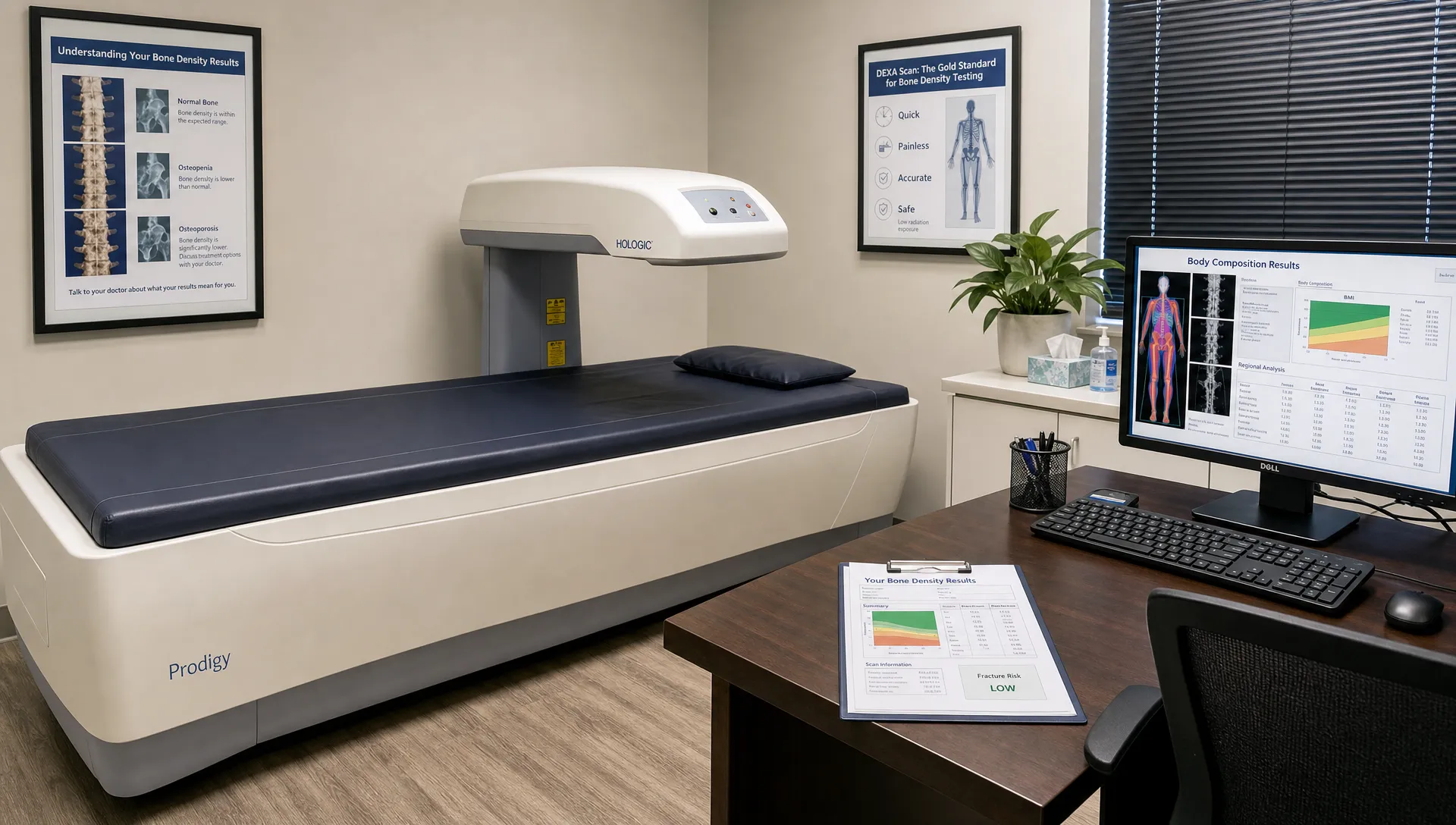
The scan itself is painless and noninvasive. You typically lie on a padded table while the scanner passes over the body or the area being measured. You do not go into a tunnel, and there are no injections.
The most important thing you do during the scan is stay still. Movement can blur results or require a repeat image. The technologist or scan professional will position you based on the protocol being used, then guide you through the process.
A DEXA scan uses low-dose radiation. RadiologyInfo describes DEXA as a quick, noninvasive test that uses a small amount of ionizing radiation to measure bone loss. If radiation exposure is your main concern, it is reasonable to ask the scan provider how the dose compares with other common imaging exams and whether the scan is appropriate for your situation.
For many people, the hardest part is not the scan itself. It is understanding what the results mean and what to do next.
How to understand your bone density results
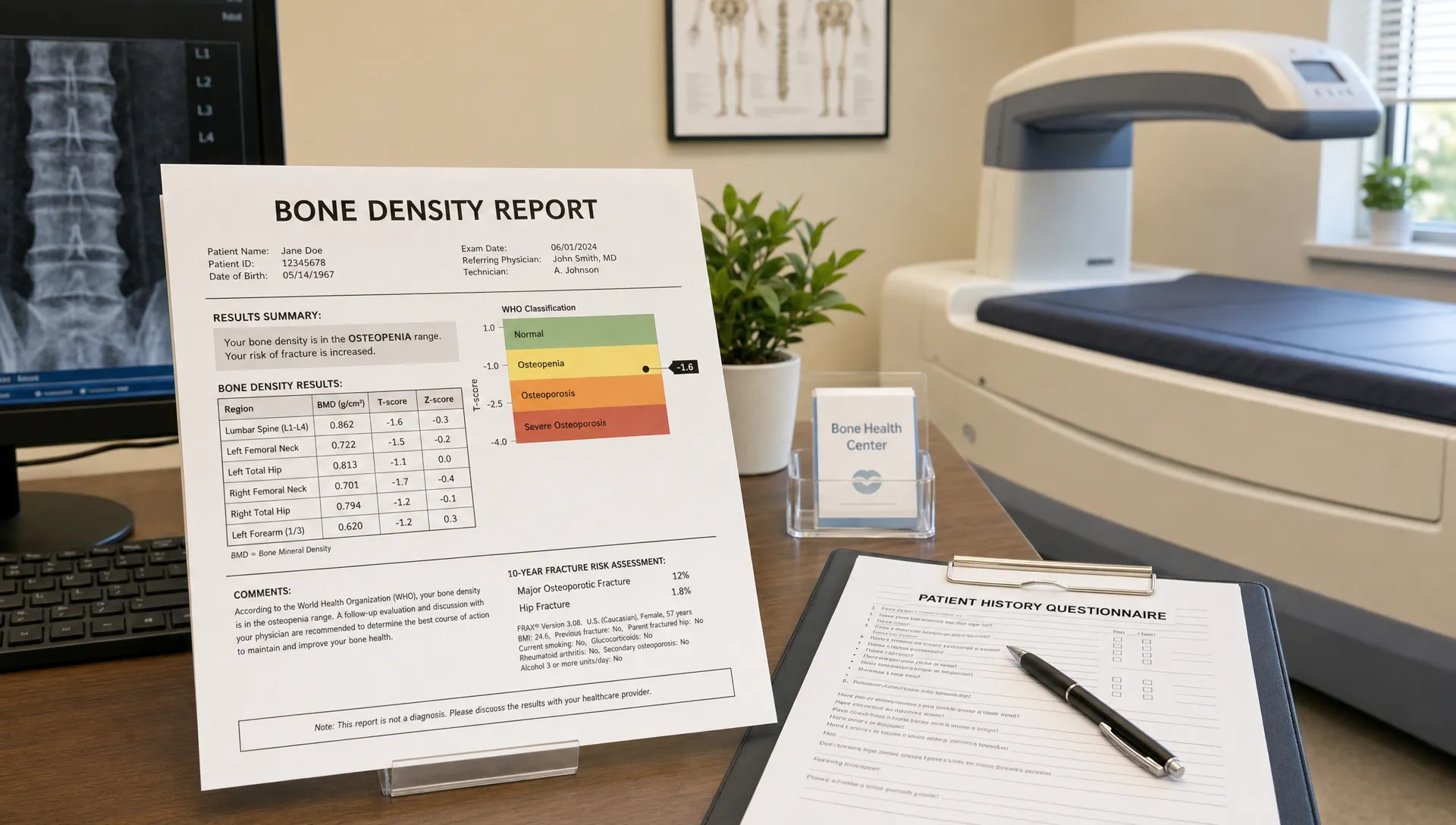
Bone density results are commonly reported using T-scores and sometimes Z-scores. These numbers compare your bone density with reference populations.
| Result type | What it compares | Common use |
|---|---|---|
| T-score | Your bone density compared with a healthy young adult reference | Used most often to classify normal bone density, osteopenia, or osteoporosis in adults |
| Z-score | Your bone density compared with people of similar age and sex | Often used when age, medical conditions, or unusual results need more context |
| Bone mineral density | The measured mineral content in a specific area | Useful for tracking changes over time, especially when measured consistently |
The World Health Organization classification commonly used for T-scores is:
| T-score range | General classification |
|---|---|
| -1.0 or above | Normal bone density |
| Between -1.0 and -2.5 | Low bone density, often called osteopenia |
| -2.5 or lower | Osteoporosis range |
These categories are important, but they are not the whole story. Fracture risk also depends on age, prior fractures, medications, fall risk, family history, smoking, alcohol intake, medical conditions, and other factors. Clinicians may use tools such as FRAX to estimate fracture risk based on multiple variables.
If your scan suggests low bone density, do not panic. Use the information as a starting point. Share the results with your physician, especially if the scan was not ordered as part of a medical evaluation. A clinician can determine whether additional testing, lab work, medication, or a treatment plan is appropriate.
What a whole-body DEXA scan can add beyond bone density
A traditional bone density scan answers a crucial question: how dense are key bones compared with reference standards? A whole-body DEXA scan can add another layer by showing how bone health fits into your broader body composition.
That broader picture can be especially helpful because muscle, fat distribution, and bone are connected. Strength training can support both lean mass and bone loading. Significant weight loss can improve metabolic health for some people, but rapid or poorly fueled weight loss may affect muscle and, in some cases, bone health. Visceral fat can provide insight into cardiometabolic risk, while left-right asymmetries can highlight imbalances that may matter for training and injury prevention.
This is where a DEXA scan can be more actionable than a scale weight. Two people can weigh the same and have very different amounts of lean mass, fat mass, visceral fat, and bone density. Even your own weight can stay stable while your body composition changes in meaningful ways.
For readers comparing local options, DEXA SF’s guide to a DEXA scan in San Francisco, including what it is and how often to get one, can help you think through timing and expectations.
What to do after your bone density scan
The value of a bone density scan is not just the report. It is what you do with the information. Your next steps should depend on your results, risk factors, age, goals, and whether you are scanning for medical screening, fitness tracking, or both.
For many people, the foundation includes progressive resistance training, weight-bearing movement, adequate protein, sufficient calcium and vitamin D, sleep, and avoidance of smoking or excessive alcohol. Balance training and fall prevention also matter, especially for older adults or anyone with prior fractures.
Nutrition deserves special attention because bone is built from raw materials your body has to obtain and absorb. Calcium and vitamin D are well known, but protein, magnesium, vitamin K, energy availability, and overall dietary quality also matter. If you need individualized help, working with a qualified nutrition professional, such as Tracey Warren Nutritionist, can help translate general bone-health advice into a practical plan that fits your lifestyle and medical context.
If your scan shows low bone density, it is wise to review the report with a healthcare provider. They may look for reversible contributors such as vitamin D deficiency, thyroid issues, low sex hormones, medication effects, or malabsorption. In some cases, medication may be recommended to reduce fracture risk.
If your results are normal, the scan is still valuable. You now have a baseline. If you repeat the scan later, you can see whether your habits are maintaining, improving, or reducing bone density and lean mass.
How often should you repeat a bone density scan?
There is no single best interval for everyone. Timing depends on your baseline result, age, risk factors, medications, and goals.
If you are being monitored for osteoporosis or treatment response, your clinician may suggest repeat testing on a defined schedule, often every one to two years depending on the situation. If your bone density is normal and your fracture risk is low, you may not need another scan for several years. If you are using DEXA for fitness or body composition tracking, you may choose a different schedule based on training blocks, weight-loss phases, or performance goals.
The most important principle is consistency. When possible, repeat scans should use the same technology, similar preparation, and similar conditions. That makes changes easier to interpret. A small difference may reflect normal measurement variation, while a larger change may indicate a meaningful shift.
Common mistakes to avoid
A bone density scan is powerful, but it is easy to misinterpret if you focus on one number alone.
First, do not treat a single T-score as your entire health story. It is a key data point, not a complete risk assessment. Second, do not ignore muscle. Maintaining strength and lean mass is one of the most practical ways to support healthy aging and reduce fall-related injury risk. Third, do not compare your results too casually with someone else’s. Age, sex, body size, training history, medical background, and scan protocol all affect interpretation.
Finally, do not wait until you have symptoms. Bone loss is often silent. A scan can give you time to act before a fracture changes your options.
Frequently Asked Questions
Is a bone density scan the same as a DEXA scan? In most cases, yes. A DEXA or DXA scan is the most common technology used for bone density testing. Some DEXA scans focus on clinical bone density sites such as the hip and spine, while whole-body DEXA can also measure body composition.
Does a bone density scan hurt? No. The scan is noninvasive and painless. You lie still on a table while the scanner collects measurements.
How long does it take to get results? Timing depends on the provider and scan type. Many DEXA services can review results soon after the scan, while medical reports may require interpretation by a qualified clinician.
Can a DEXA scan diagnose osteoporosis? DEXA is the standard test used to measure bone mineral density and classify results into normal, osteopenia, or osteoporosis ranges. A healthcare provider should interpret the results in context and determine any diagnosis or treatment plan.
Should younger adults get a bone density scan? Sometimes. Younger adults with risk factors such as prior fractures, long-term steroid use, hormonal issues, under-fueling, eating disorders, or certain medical conditions should discuss testing with a clinician. Active adults may also use whole-body DEXA to establish a baseline for body composition and bone health.
What should I wear to a DEXA scan? Wear comfortable clothing without metal when possible. Avoid belts, metal zippers, heavy snaps, and jewelry that could interfere with the scan.
Ready to understand your bone health with better data?
A bone density scan gives you objective insight into an area of health that is too important to guess. Whether your goal is osteoporosis prevention, stronger training decisions, better body composition tracking, or a clearer baseline for healthy aging, DEXA can help you move from assumptions to measurable data.
If you are in the Bay Area, schedule a professional DEXA scan in San Francisco with DEXA SF to measure bone density, body fat, lean mass, visceral fat, asymmetries, and metabolic metrics, with expert interpretation and practical fitness and nutrition guidance.