
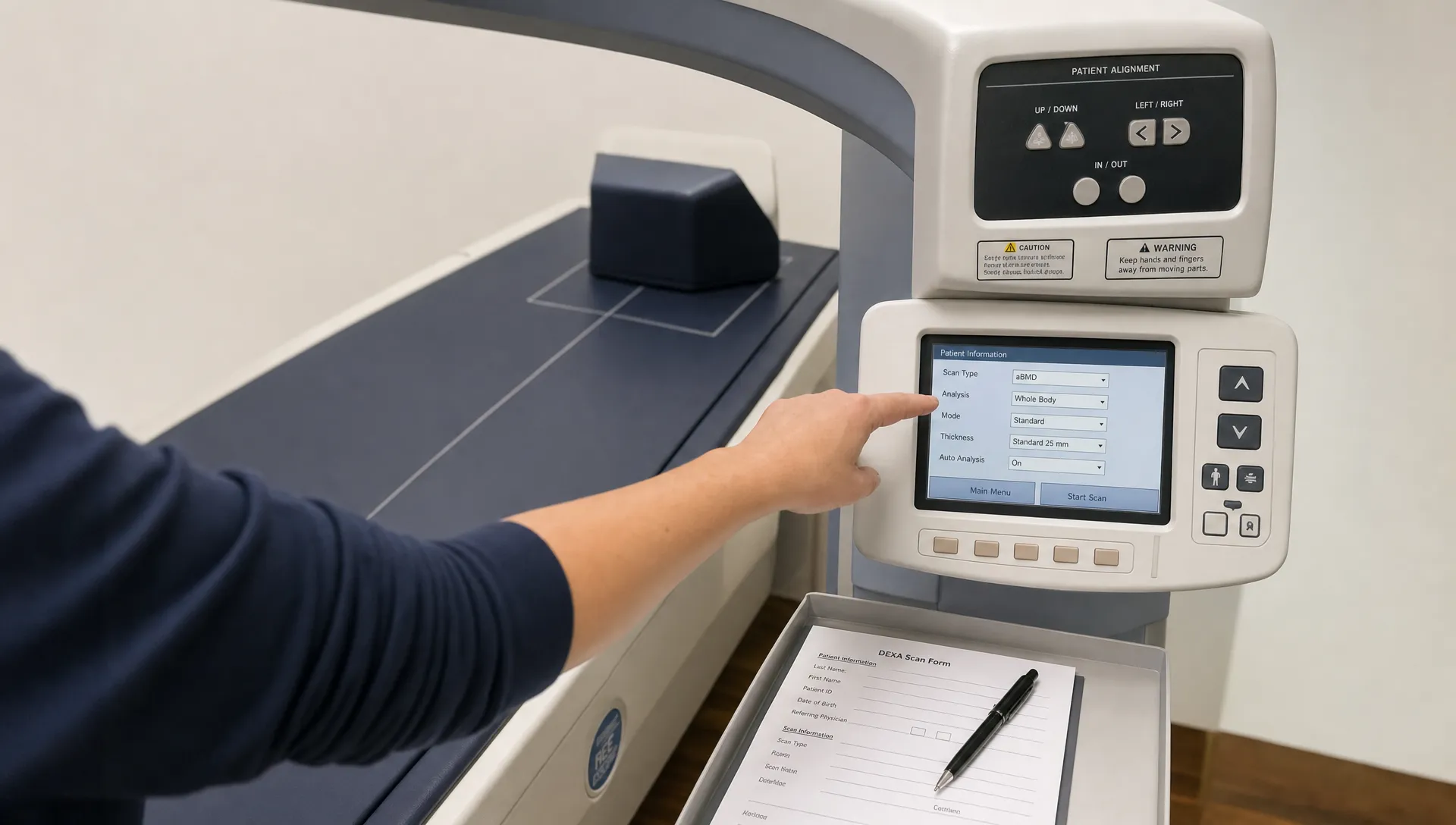
What to Know Before You Book a DEXA Scan
A DEXA appointment can be quick, but the decision to book a dexa scan should be thoughtful. The scan can give you a clearer view of body fat, lean mass, visceral fat, bone density and left-right differences than scale weight or handheld devices, but the value comes from knowing what you want to measure and how you will use the results.
DEXA stands for dual-energy X-ray absorptiometry. In a body composition setting, it uses low-dose X-ray technology to estimate how much of your body is fat mass, lean mass and bone mineral content. For people working on fat loss, muscle gain, performance or long-term health, it can serve as a baseline that makes progress easier to understand.
What to confirm before you book a dexa scan
Start with your goal. A first-time scan can answer several different questions, but not every question matters equally for every person. Someone starting a strength program may care most about lean mass by region. Someone losing weight may want to know whether the scale is dropping because of fat loss or muscle loss. Someone concerned about bone health may need a medical bone density evaluation interpreted in the right clinical context.
If you are still learning the basics, this overview of what a DEXA scan is and why people get one explains the core measurements in more detail.
| Your main goal | What to look for in the report | Why it matters |
|---|---|---|
| Fat loss | Total body fat percentage, fat mass and visceral fat estimate | Helps separate true fat loss from normal weight fluctuation |
| Muscle gain | Lean mass, regional lean mass and left-right balance | Shows whether training is building muscle where intended |
| Performance | Segmental lean mass and asymmetry | Can reveal side-to-side differences that affect training decisions |
| Bone health awareness | Bone mineral density or bone-related data | May help identify when medical follow-up is appropriate |
| Nutrition planning | Body composition and metabolic insights | Gives more context for calorie and protein targets |
A clear goal also helps you choose the right timing. A scan taken randomly after a hard training week, a long flight or a major diet change may be less useful as a baseline than one taken under normal conditions.
Know what DEXA can and cannot tell you
When you book a DEXA scan for body composition, you are getting a detailed estimate, not a complete medical biography. DEXA can measure or estimate several useful metrics, including total fat mass, lean tissue, bone mineral content, regional distribution and visceral fat. These numbers can make your progress more concrete than body weight alone.
The scan cannot tell you whether a specific training plan is perfect, diagnose every metabolic issue or replace medical care. It also does not explain behavior. Two people can have similar body fat percentages and very different sleep, stress, training, hormone status and nutrition patterns.
Consistency matters more than a single number
DEXA is most powerful when you compare scans under similar conditions. Hydration, recent exercise, food in the digestive tract and glycogen changes can influence lean mass estimates. That does not make the scan unreliable, but it does mean your trend matters more than overreacting to one decimal point.
For progress tracking, try to keep repeat scans consistent. Use the same provider when possible, scan at a similar time of day and follow similar food, fluid and exercise routines before each appointment. If you are deciding how far apart to space repeat appointments, this guide to when to schedule a DEXA scan for reliable progress data can help you avoid scanning too often or too late.
Choose the provider, not just the appointment slot
Before you book a DEXA scan, ask what happens after the machine finishes scanning. The technology matters, but so does positioning, technician experience, report clarity and interpretation. A useful appointment should leave you understanding the numbers, not just holding a printout.
Look for a provider that can explain what the scan includes, how long the appointment usually takes, what preparation is required and what kind of results review you will receive. If your goal is body composition, you want more than a bone density number. If your goal is medical osteoporosis screening, you may need a clinic or physician referral pathway designed for that purpose.
Questions worth asking before scheduling include:
- What body composition metrics are included in the report?
- Will someone explain body fat, lean mass, visceral fat and asymmetry results?
- Is the scan designed for fitness tracking, bone density evaluation or both?
- Should I avoid exercise, supplements, food or certain clothing before the scan?
- How should I time a follow-up scan if I want progress data?
If location is part of your decision, use practical criteria rather than distance alone. The right provider should match your goal, whether that is fat loss, muscle gain, body recomposition or bone-related monitoring. This guide on how to find the right DEXA scan location covers what to compare before you choose.
How to prepare for a more useful scan
After you book a DEXA scan, your preparation should focus on consistency and safety. Most appointments are simple. You typically lie still on the scanner while the arm passes over your body, and the scan itself is usually brief. The bigger issue is avoiding preventable variables that make your report harder to compare later.
Wear comfortable clothing without metal when possible. Zippers, underwire, large buttons and metal accessories may interfere with the scan area, so the provider may ask you to remove certain items. Bring prior DEXA results if you have them, especially if you are trying to compare changes over time.
For body composition tracking, avoid making the scan day unusual. If you normally eat breakfast, ask whether you should follow your usual routine or arrive fasted based on the provider’s protocol. Avoid scheduling immediately after an unusually intense workout if your goal is a clean baseline. Keep hydration normal rather than forcing extra water or restricting fluids.
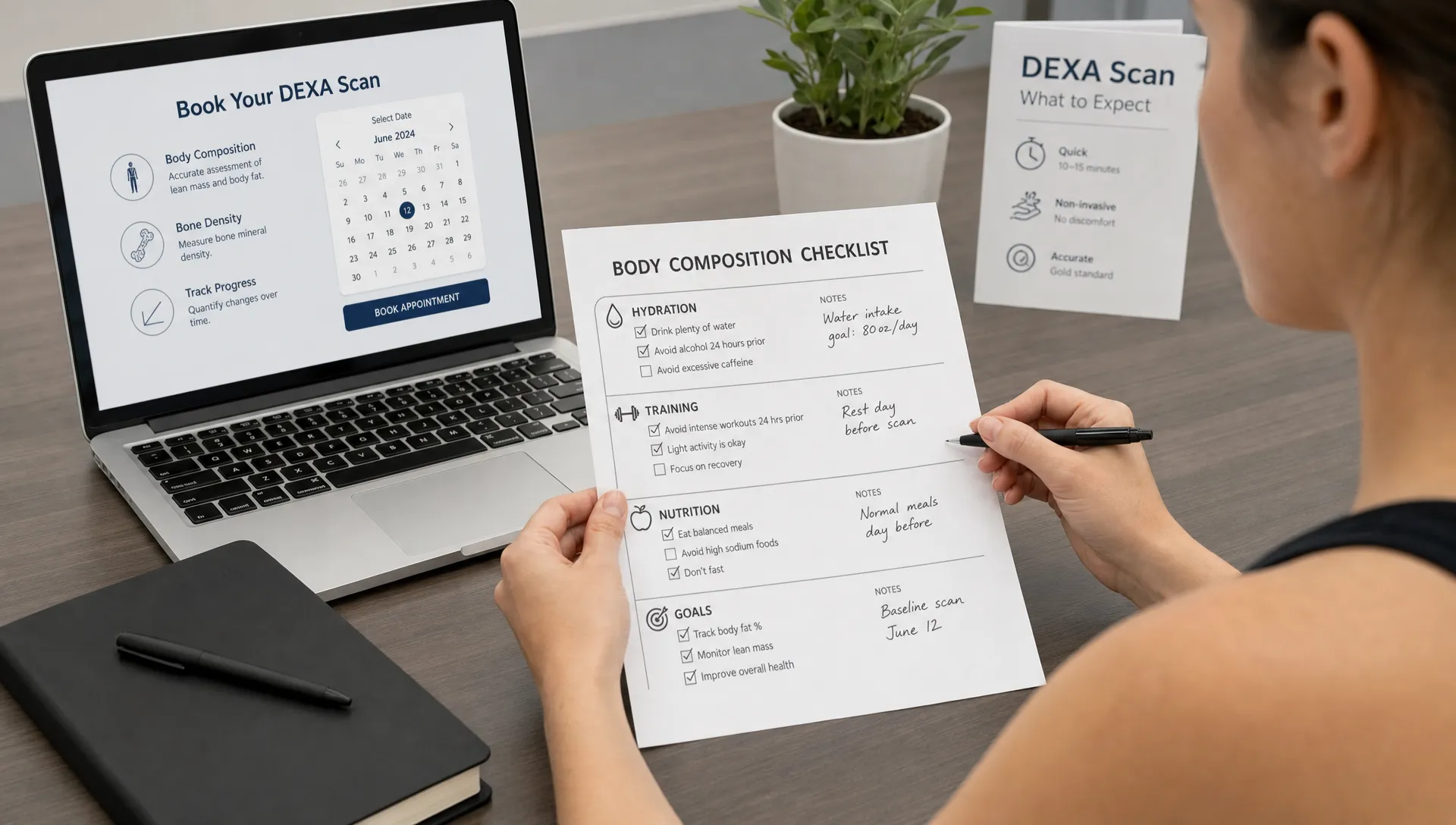
Tell the provider if you might be pregnant, if you recently had imaging with contrast or if you have implants, hardware or medical devices that could affect positioning or interpretation. You do not need to guess whether these details matter. Disclosing them allows the staff to give you the right instructions.
Safety, radiation and who should pause before scheduling
DEXA uses ionizing radiation, but the exposure is considered low compared with many diagnostic imaging procedures. The U.S. Food and Drug Administration explains that medical X-ray imaging should be used when the expected benefit outweighs the small radiation risk. For DEXA, the benefit is usually the ability to measure bone or body composition data that would be difficult to assess accurately with simpler tools.
If safety concerns are the reason you have not decided to book a DEXA scan, ask the provider to explain the dose, the scan protocol and whether any personal factors require special caution. Pregnancy is the most common reason to pause or seek medical guidance before exposure to X-ray imaging. If you are pregnant or think you could be, tell the provider before the appointment.
Bone density results can also have medical implications. The National Institute of Arthritis and Musculoskeletal and Skin Diseases describes DEXA as a common test used to assess bone mineral density in osteoporosis evaluation. If your goal is diagnosis, medication decisions or fracture risk assessment, discuss your results with a qualified healthcare professional.
Time your first scan around a real decision point
If your main reason to book a DEXA scan is fat loss, muscle gain or body recomposition, schedule it when the result will change what you do next. Good timing includes the start of a new training block, the beginning of a nutrition plan or a point when scale weight has stopped telling you the full story.
Avoid scanning every week. Meaningful changes in fat mass and lean mass take time, and normal short-term fluctuations can create noise. Many people get better information by scanning at the start of a plan and again after a consistent training or nutrition phase. The exact interval depends on your goal, your rate of change and the guidance of the provider reviewing your results.
Try to avoid major inconsistencies between appointments. If your baseline scan was in the morning before training, do not schedule your follow-up at night after a heavy leg day and a large meal unless your provider tells you it will not matter for your use case. Perfect conditions are less important than repeatable conditions.
Make sure you understand the results review
A good DEXA report should help you decide what to do next. For body composition, the review should cover total body fat percentage, fat mass, lean mass, regional distribution, visceral fat and asymmetries where available. These measurements can support more precise fitness and nutrition decisions than using body weight alone.
It is tempting to book a DEXA scan wherever the posted price is lowest, but the interpretation can be the difference between useful data and confusing data. If your report shows higher body fat than expected, the next step may not be aggressive dieting. If your lean mass is lower on one side, the answer may involve training adjustments rather than panic. If visceral fat is elevated, it may prompt a broader conversation about nutrition, activity and medical risk factors.
At DEXA SF, the service is built around professional body composition scanning in San Francisco, with measurements such as body fat, lean mass, bone density, visceral fat, asymmetry and metabolic data insights. Clients also receive expert interpretation, along with fitness and nutrition guidance based on the scan findings.
A simple pre-booking checklist
Use this checklist before scheduling so your appointment answers the right question:
- Define your primary goal, such as fat loss, muscle gain, performance tracking or bone health awareness.
- Ask which metrics are included and whether the report includes expert interpretation.
- Check preparation instructions for clothing, food, hydration, exercise and recent imaging.
- Tell the provider about pregnancy possibility, implants or other relevant medical details.
- Plan when you might repeat the scan so the first appointment becomes a useful baseline.
You are ready to book a DEXA scan once you know why you are scanning, what metrics you need and how you will use the report. That preparation turns a quick appointment into a meaningful measurement.
Frequently Asked Questions
Do I need a doctor’s referral to book a DEXA scan? It depends on the purpose and provider. Fitness-focused body composition scans are often available without a referral, while medical bone density testing for diagnosis or treatment decisions may involve a clinician.
What should I wear to a DEXA scan? Wear comfortable clothing without metal when possible. Avoid items with zippers, large metal buttons, underwire or heavy jewelry, and follow the provider’s instructions if they differ.
Can I exercise before my scan? For body composition tracking, it is usually best to avoid unusually intense exercise right before the appointment because it can affect fluid distribution and lean mass estimates. Ask your provider for its specific protocol.
How often should I repeat a scan? Repeat timing depends on your goal. For fitness progress, scanning after a consistent training or nutrition phase is usually more useful than scanning very frequently.
Is a DEXA scan only for athletes? No. Athletes use DEXA for performance tracking, but it can also be useful for people focused on fat loss, muscle preservation, body recomposition, visceral fat awareness or bone-related data.
Ready to schedule in San Francisco?
If you are ready to book a DEXA scan with clear goals and a plan for using the results, DEXA SF provides professional body composition scans with expert interpretation, fitness guidance and nutrition advice. Schedule your scan when the data can help you make better decisions, not just collect another number.