
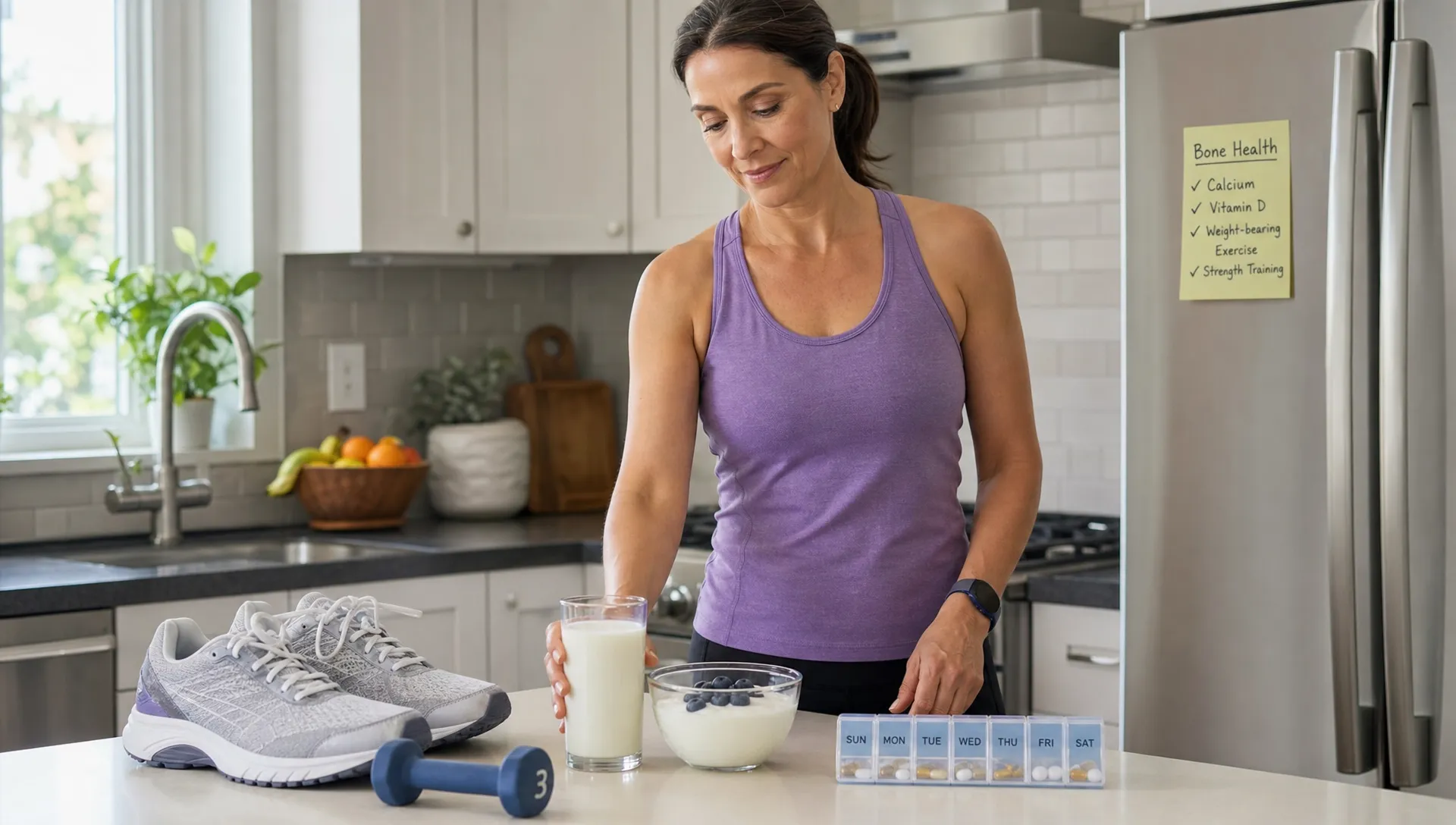
What Osseous Density Means for Bone Health
Osseous density is a medical way of describing how much mineralized bone is packed into part of your skeleton. In everyday language, most people call it bone density. The concept matters because bone is not just a rigid frame. It is living tissue that changes with age, hormones, training, nutrition, illness and medication use.
Bone Tissue, Minerals and Strength
Your bones are built from a protein framework, mainly collagen, strengthened by minerals such as calcium and phosphorus. That combination gives bone both flexibility and hardness. If the mineral portion becomes too low, the skeleton can lose strength even before a person feels pain or notices a change in posture.
Bone also remodels constantly. Specialized cells remove older bone and replace it with new bone. During childhood, adolescence and early adulthood, bone formation usually outpaces breakdown. Later in life, especially after major hormone changes, the balance can shift toward bone loss.
That is why osseous density is best understood as a measurable clue about skeletal resilience. It does not tell the whole story of bone quality, but it gives clinicians and individuals a reliable starting point for understanding whether bones are likely to handle normal stress or be more vulnerable to fracture.
| Term | What it means | Why it matters |
|---|---|---|
| Bone mineral density (BMD) | Mineral content measured over a scanned bone area | The main number used in DEXA bone density reporting |
| Bone mineral content (BMC) | Total mineral amount in the scanned region | Helps distinguish total mineral mass from density |
| T-score | Comparison with a healthy young adult reference group | Used to classify normal bone density, low bone mass or osteoporosis |
| Z-score | Comparison with people of similar age and sex | Helps flag results that are lower than expected for age |
How DEXA Measures Osseous Density
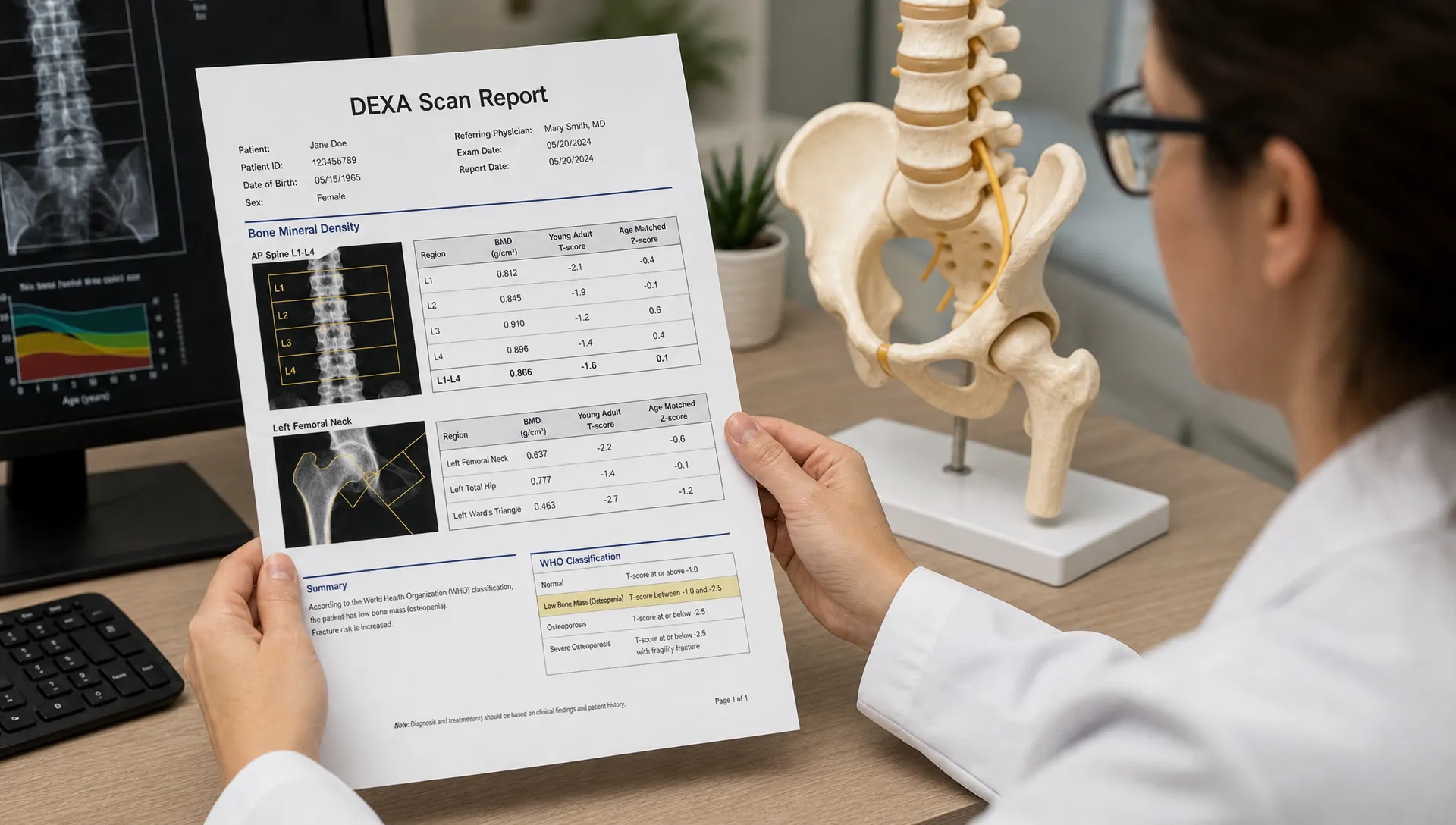
A DEXA scan, also called DXA, uses two low-dose X-ray beams to estimate the mineral content of bone. The scan commonly focuses on sites where osteoporosis-related fractures matter most, such as the hip and lumbar spine. Some reports may include forearm measurements, especially when the hip or spine cannot be interpreted clearly.
DEXA reports are usually based on areal bone mineral density, expressed in grams per square centimeter. That is different from a true three-dimensional measurement of bone volume, so scan site, positioning and anatomy all matter. Good technique and consistent follow-up testing help make the numbers more meaningful over time.
In a clinical context, osseous density is usually interpreted alongside age, sex, fracture history, medication use and other health factors. MedlinePlus explains that bone density testing is used to diagnose osteoporosis and help estimate fracture risk. For a practical preview of the appointment itself, DEXA SF's bone density scan guide walks through what to expect before and during the test.
DEXA can also provide body composition information, depending on the scan type. At DEXA SF, body composition scans can measure body fat, lean mass, visceral fat, left-to-right asymmetries and bone-related metrics in one quick appointment, followed by expert interpretation.
What Your Numbers Say About Bone Health
Your osseous density result becomes easier to understand once you know the common scoring system. The raw BMD number is useful, but T-scores and Z-scores translate that measurement into comparisons.
A T-score compares your result with the average peak bone density of a healthy young adult reference population. A Z-score compares your result with what is expected for someone closer to your age, sex and body size. Your clinician may care about both, but they answer different questions.
| Result category | T-score range | Plain-English meaning |
|---|---|---|
| Normal bone density | -1.0 or higher | Bone density is within the expected healthy range |
| Low bone mass, often called osteopenia | Between -1.0 and -2.5 | Bone density is below normal, but not in the osteoporosis range |
| Osteoporosis | -2.5 or lower | Bone density is low enough to meet the diagnostic threshold for osteoporosis |
The International Society for Clinical Densitometry notes in its adult official positions that Z-scores of -2.0 or lower may be described as below the expected range for age. This can be especially relevant for premenopausal women, men under 50 and children, where T-score categories may not be used the same way.
Because osseous density is only one piece of fracture risk, a slightly low score does not automatically mean a fracture is likely. A history of low-trauma fracture, frequent falls, certain medications, smoking, heavy alcohol use, low body weight and family history can all change the risk picture. If you already have results in hand, this guide to bone mineral density scan results explains BMD, BMC, T-scores and Z-scores in more detail.
Why Bone Density Changes Over Time
Bone density is not fixed. It responds to the same broad forces that shape overall health, including movement, nutrition, hormones, inflammation and medication exposure. Some of these factors are modifiable, while others help determine when testing or medical follow-up is appropriate.
Aging does not make lower osseous density inevitable for everyone, but bone loss becomes more common with time. Women often experience faster bone loss after menopause because estrogen helps regulate bone remodeling. Men can also lose bone density with age, low testosterone, chronic illness or medication use.
Lifestyle and nutrition factors
Bones adapt to mechanical loading. Resistance training, impact exercise and weight-bearing activity send signals that help maintain bone strength. People who are sedentary, immobilized after injury or under-fueled for long periods may lose bone more quickly.
Nutrition matters as well. Calcium provides key mineral building blocks, vitamin D supports calcium absorption and adequate protein helps maintain the collagen framework of bone. The NIH Office of Dietary Supplements provides consumer fact sheets for calcium and vitamin D, including recommended intakes by age and life stage.
Medical and medication factors
Certain conditions can affect bone metabolism, including hyperthyroidism, celiac disease, chronic kidney disease, rheumatoid arthritis and eating disorders. Long-term glucocorticoid use is also a well-known risk factor for bone loss. If your scan result is unexpectedly low for your age, that is a reason to discuss possible causes with a qualified healthcare professional rather than treating the number in isolation.
How to Support Better Bone Health
Improving osseous density is not usually about one supplement or one workout. The most effective approach is often a combination of progressive training, adequate nutrition, fall-risk reduction and medical care when needed.
A practical bone-support plan may include:
- Strength training that progressively challenges the hips, spine and major muscle groups
- Weight-bearing activity such as brisk walking, stair climbing, hiking or appropriate impact training
- Enough dietary calcium, vitamin D and protein for your age, body size and health status
- Avoiding smoking and limiting heavy alcohol intake
- Reviewing medications and medical conditions that may contribute to bone loss with a clinician
For athletes and active adults, the goal is not simply to chase a higher number. Bone health should fit into a larger picture that includes muscle mass, body fat distribution, recovery, energy availability and injury history. This is where DEXA can be useful beyond a single score, because the same scan visit may reveal lean mass distribution, visceral fat and asymmetry patterns that influence training decisions.
If you have already completed a scan, asking better follow-up questions can help you turn the report into action. DEXA SF's article on questions to ask after a bone density analysis is a useful next step before discussing results with a clinician, coach or nutrition professional.
When to Consider a DEXA Scan
For medical screening, osseous density testing is often considered when age or risk factors raise concern for osteoporosis. The U.S. Preventive Services Task Force recommends osteoporosis screening for women 65 and older, plus postmenopausal women younger than 65 who are at increased risk. Screening decisions for men are more individualized and should be discussed with a healthcare professional.
A DEXA scan may also be worth discussing if you have had a low-trauma fracture, take long-term steroids, have a condition linked with bone loss, have a strong family history of hip fracture or have experienced significant height loss. For body composition and performance tracking, people may use DEXA to establish a baseline and monitor changes in fat mass, lean mass and bone-related metrics over time.
Testing frequency depends on the reason for the scan, baseline results and whether treatment or lifestyle changes are underway. Repeating a scan too soon may not show meaningful change, but waiting too long can delay useful feedback. Consistency matters, so follow-up scans should ideally use the same technology, similar positioning and comparable scan regions.
Frequently Asked Questions
Is osseous density the same as bone mineral density? In most everyday health conversations, yes. Osseous density refers to bone density, and DEXA commonly reports bone mineral density as the measurable value used to assess skeletal health.
Can you have normal bone density and still break a bone? Yes. Bone density is important, but fracture risk also depends on falls, balance, vision, medications, bone quality, prior fractures and overall health.
Does strength training really help bones? Strength training can help maintain or improve bone strength because bones respond to mechanical load. The best approach depends on your baseline fitness, injury history and medical risk factors.
What should I do if my DEXA result is low? Review the result with a qualified healthcare professional. Ask about possible causes, fracture risk, nutrition, exercise, medications and whether additional testing or treatment is appropriate.
Get a Clearer Picture of Your Bones
A DEXA scan can turn a vague concern about bone health into a measurable baseline. If you are in the San Francisco area, DEXA SF provides professional DEXA scans with expert interpretation, body composition insights and personalized fitness and nutrition guidance.
Use your results as a starting point, not a label. The real value comes from understanding what the numbers mean, connecting them to your goals and making informed choices that support stronger bones over time.