
What a Metabolic Scan Can Tell You Alongside DEXA
A metabolic scan is most useful when it answers a practical question: what is your body doing with the calories, training and recovery you give it? A bathroom scale can show whether you weigh more or less, but it cannot tell you whether that change came from fat, muscle, bone mineral, fluid fluctuation or normal daily variation.
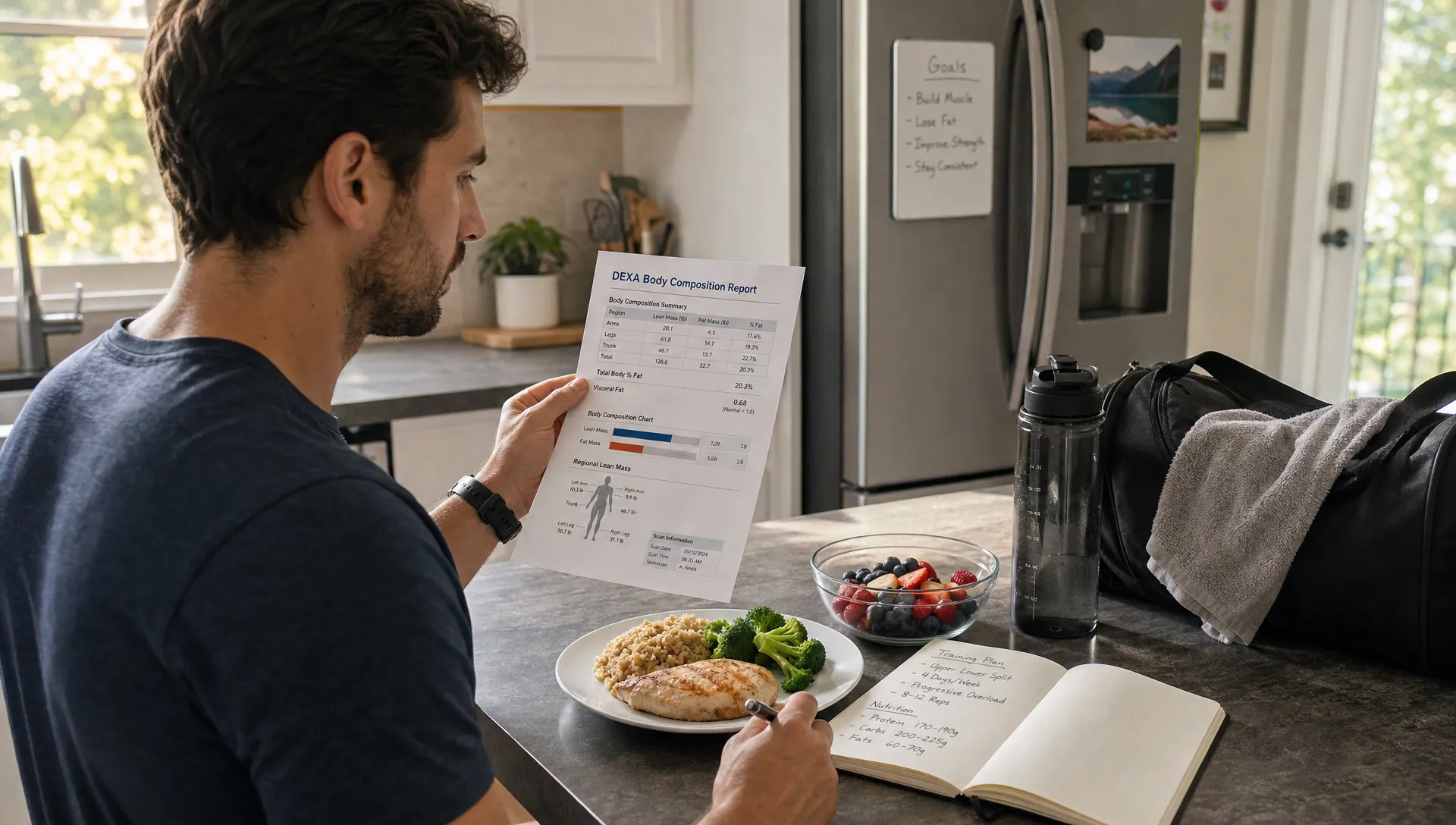
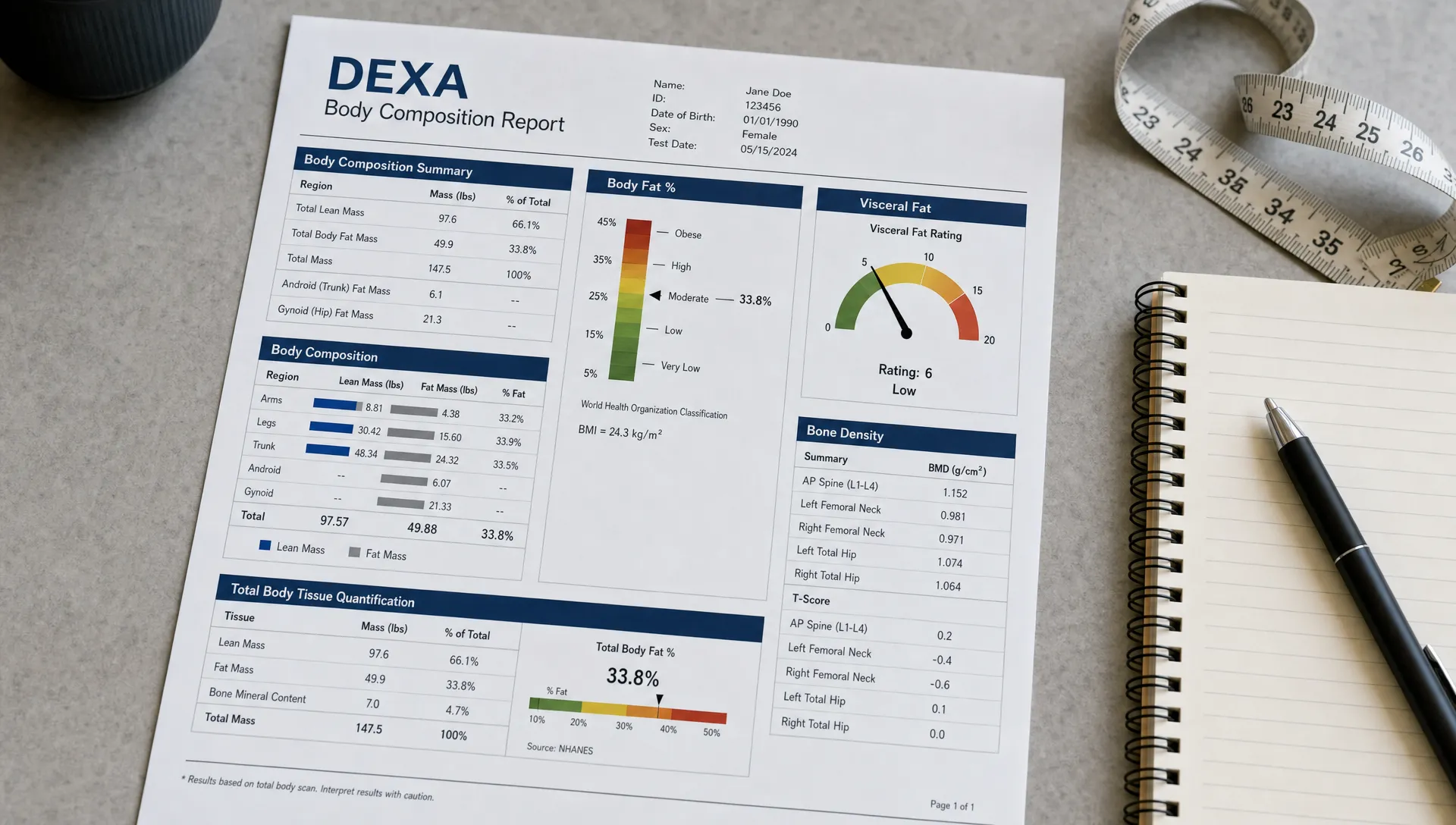
That is where DEXA adds context. A DEXA scan measures body composition with far more detail than weight or BMI, including body fat, lean mass, visceral fat estimates, bone density and left-to-right differences. When you look at metabolic data alongside DEXA, you get a clearer view of your energy needs, health risks and progress.
What people mean by a metabolic scan
The phrase metabolic scan is not always used the same way. In some settings, it refers to resting metabolic rate testing, often done with breath analysis to estimate how many calories your body burns at rest. In body composition settings, it may refer to metabolic insights derived from your scan data, such as how lean mass, body fat distribution and visceral fat relate to energy needs.
The distinction matters. A direct resting metabolic rate test estimates calorie burn from gas exchange. A DEXA scan does not measure oxygen use. Instead, it shows the tissue compartments that strongly influence metabolic demand, especially lean mass and fat mass. If your report includes estimated metabolic metrics, those numbers should be interpreted as estimates informed by your body composition, not as a diagnosis of your metabolism.
A good metabolic scan experience should help you understand patterns, not label you as fast or slow. The useful questions are more specific: Do you have enough lean mass for your goals? Is visceral fat trending down? Are you losing fat without sacrificing muscle? Is your nutrition plan matched to your body rather than a generic calculator?
Why DEXA makes metabolic data more useful
Two people can have the same weight, height and BMI yet very different metabolic profiles. One may carry more lean mass and less abdominal fat. The other may have less muscle, more total body fat and more visceral fat. Their scale weight is identical, but their training priorities, nutrition strategy and health risk picture are not.
The CDC explains that BMI is a screening measure and does not directly measure body fat. That does not make BMI useless at a population level, but it does make it limited for individual decision making, especially for athletes, strength trainees, people losing weight and anyone whose body composition has changed.
DEXA helps because it separates the big categories that weight combines into one number. If you want a quick overview of the core outputs, this guide to what a DEXA body scan can tell you in 10 minutes explains the major metrics, including fat mass, lean mass, visceral fat and asymmetry.
| Common question | What weight alone shows | What DEXA adds | Why it matters metabolically |
|---|---|---|---|
| Am I losing fat? | Total pounds up or down | Fat mass and body fat percentage | Confirms whether weight loss is actually fat loss |
| Am I preserving muscle? | Not visible from weight | Lean mass by region | Helps adjust protein, resistance training and recovery |
| Is abdominal fat changing? | Waist may give a clue | Visceral fat estimate | Adds context for cardiometabolic risk discussions |
| Are my calorie targets realistic? | Basic calculators only | Lean mass informed context | Refines energy needs beyond height, weight and age |
| Is my training balanced? | Not visible from weight | Left-to-right lean mass differences | Helps identify asymmetries that may affect performance |
What a metabolic scan can tell you alongside DEXA
Your lean mass gives calorie targets more context
Lean mass includes muscle, organs, bone, connective tissue and body water. Muscle is not the only tissue that burns energy, but it is one of the most actionable tissues because you can influence it through resistance training, nutrition and recovery.
If your metabolic scan includes an estimated resting metabolic rate, DEXA can make that estimate more personal. A person with more lean mass usually needs more energy to maintain body weight than someone of the same weight with less lean mass. That is why two people can follow the same calorie target and get different results.
DEXA also helps explain why aggressive dieting can backfire for body composition. If weight drops quickly but lean mass drops with it, your plan may need more protein, better strength training, a smaller calorie deficit or more recovery. The goal is not just to weigh less. For many people, the better goal is to lose fat while keeping or gaining lean tissue.
Visceral fat shows risk that total weight can miss
Visceral fat is stored deeper in the abdomen around internal organs. It is different from subcutaneous fat, which sits under the skin. A person can look relatively lean and still carry more visceral fat than expected, just as a heavier person can have less visceral fat than their weight might suggest.
DEXA can estimate visceral fat, giving your metabolic scan more clinical context than weight alone. This does not diagnose heart disease, diabetes or insulin resistance, but it can flag a body composition pattern worth taking seriously. If visceral fat is elevated, the next steps often involve nutrition quality, alcohol intake, sleep, aerobic conditioning, resistance training and, when appropriate, follow-up with a medical professional.
For a deeper dive into this specific metric, DEXA SF has a dedicated guide on what a DEXA scan for visceral fat can reveal.
You can see whether your plan is changing the right tissue
Many people start a metabolic scan because they feel stuck. They are eating carefully, training consistently and still not seeing the scale move the way they expected. DEXA can reveal whether the issue is actually a lack of progress or simply progress the scale cannot show.
For example, someone might lose five pounds of fat and gain three pounds of lean mass. The scale shows only a two-pound change, which can feel disappointing without body composition data. In another case, someone might lose eight pounds quickly, but DEXA shows that a meaningful share came from lean mass. The scale looks successful, but the body composition trend suggests the plan needs adjustment.
This is where metabolic scan data becomes practical. Instead of asking whether a diet worked, you can ask whether it produced the outcome you wanted. Fat loss, muscle gain, recomposition and maintenance all require different interpretations.
Bone density adds an often-missed layer
Metabolism is not only about calories. It is also about the body systems that respond to training, nutrition, hormones, age and recovery. Bone density belongs in that conversation, especially for people who diet frequently, train hard, are postmenopausal or have a family history of low bone density.
DEXA is widely used to assess bone mineral density. In a body composition context, bone data can help you avoid chasing short-term weight loss at the expense of long-term resilience. If someone is cutting calories hard, under-fueling training or losing weight repeatedly, bone health deserves attention alongside fat and lean mass.
A metabolic scan paired with DEXA can therefore support a more complete strategy: enough energy to reach your goal, enough protein to protect lean tissue, enough training stimulus to build strength and enough recovery to support bone and muscle adaptation.
Asymmetry data can improve training decisions
DEXA can also show regional lean mass differences, including left-to-right asymmetries. A small difference is normal. Larger or changing differences may matter if you are returning from injury, training for performance or trying to build muscle evenly.
This is not a diagnosis of movement quality, and it does not replace an evaluation from a physical therapist, sports medicine clinician or qualified coach. It does give you a measurable clue. If one leg has consistently less lean mass than the other, your training plan may need unilateral work, technique review or a closer look at old injuries.
How to use the results without overreading them
The value of a metabolic scan alongside DEXA is not in one isolated number. It is in the relationship between numbers. Body fat percentage, lean mass, visceral fat, bone density and estimated energy needs should be read together.
A few principles help keep the interpretation grounded:
- Use the first scan as a baseline, not a final verdict.
- Compare future scans under similar conditions when possible.
- Focus on trends in fat mass, lean mass and visceral fat rather than tiny changes.
- Treat calorie estimates as a starting point, then adjust based on real progress.
- Bring medical concerns, abnormal symptoms or lab questions to a licensed clinician.
Hydration, recent training, food intake and normal biological variation can affect body composition readings. DEXA is precise, but no single scan should be treated as a complete story. The bigger benefit comes from repeat measurements and consistent interpretation.
If you plan to rescan after a training or nutrition block, this article on how to compare DEXA analysis results between scans can help you avoid overreacting to small changes and focus on the metrics that matter.
Who benefits most from pairing metabolic insights with DEXA?
A metabolic scan alongside DEXA can be useful for anyone who wants more than generic advice, but it is especially valuable when decisions depend on precision.
People pursuing fat loss can see whether weight changes are coming from fat rather than lean tissue. Strength athletes and recreational lifters can track whether training is building lean mass regionally. Endurance athletes can monitor whether they are under-fueling. People concerned about abdominal fat can track visceral fat more directly. Adults focused on long-term health can watch bone density, lean mass and fat distribution together.
It can also be helpful during maintenance. Many people only measure when they want to lose weight, but maintenance is where body composition can quietly improve or decline. A stable weight with increasing lean mass and decreasing fat mass is very different from a stable weight with the opposite trend.
What to ask during your scan review
The best scan is the one you understand well enough to act on. When you review results, ask questions that connect the data to your real routine.
Useful questions include:
- What is my lean mass telling us about my training and calorie needs?
- Is my body fat distribution affecting my health priorities?
- Is my visceral fat in a range that deserves focused lifestyle changes?
- Are there meaningful left-to-right differences in lean mass?
- What should we compare on my next scan?
- Which changes would be large enough to matter?
These questions keep the conversation practical. Instead of leaving with a stack of numbers, you leave with a plan for training, nutrition and follow-up measurement.
Frequently Asked Questions
Is a metabolic scan the same as a DEXA scan? Not always. A metabolic scan may refer to resting metabolic rate testing, metabolic estimates or a broader body composition review. DEXA measures body fat, lean mass, visceral fat estimates, bone density and asymmetries, which can make metabolic insights more useful.
Can DEXA tell me if I have a slow metabolism? DEXA cannot diagnose a slow metabolism, thyroid condition or hormone issue. It can show lean mass, fat mass and fat distribution, which help explain energy needs and make calorie targets more personal.
Why does lean mass matter for metabolism? Lean mass is closely tied to daily energy needs. More lean tissue generally supports higher calorie requirements, and preserving muscle during fat loss can improve strength, performance and long-term weight management.
Can a metabolic scan show visceral fat? A DEXA scan can estimate visceral fat, which adds important context because visceral fat is linked with cardiometabolic risk. It should be interpreted alongside lifestyle factors, medical history and, when needed, lab work.
How often should I repeat a DEXA scan? The right interval depends on your goal. Many people rescan after a meaningful training or nutrition phase rather than week to week. Consistency matters, so compare scans taken under similar conditions when possible.
Get metabolic context from a DEXA scan in San Francisco
If you want clearer answers than a scale or calculator can provide, DEXA SF offers professional DEXA body composition scans in San Francisco with expert interpretation, fitness guidance and nutrition advice. You can measure body fat, lean mass, visceral fat, bone density and asymmetries, then use those results to make smarter decisions about your plan.
Schedule your scan through DEXA SF and use your results as a practical baseline for your next phase of training, nutrition or health tracking.