
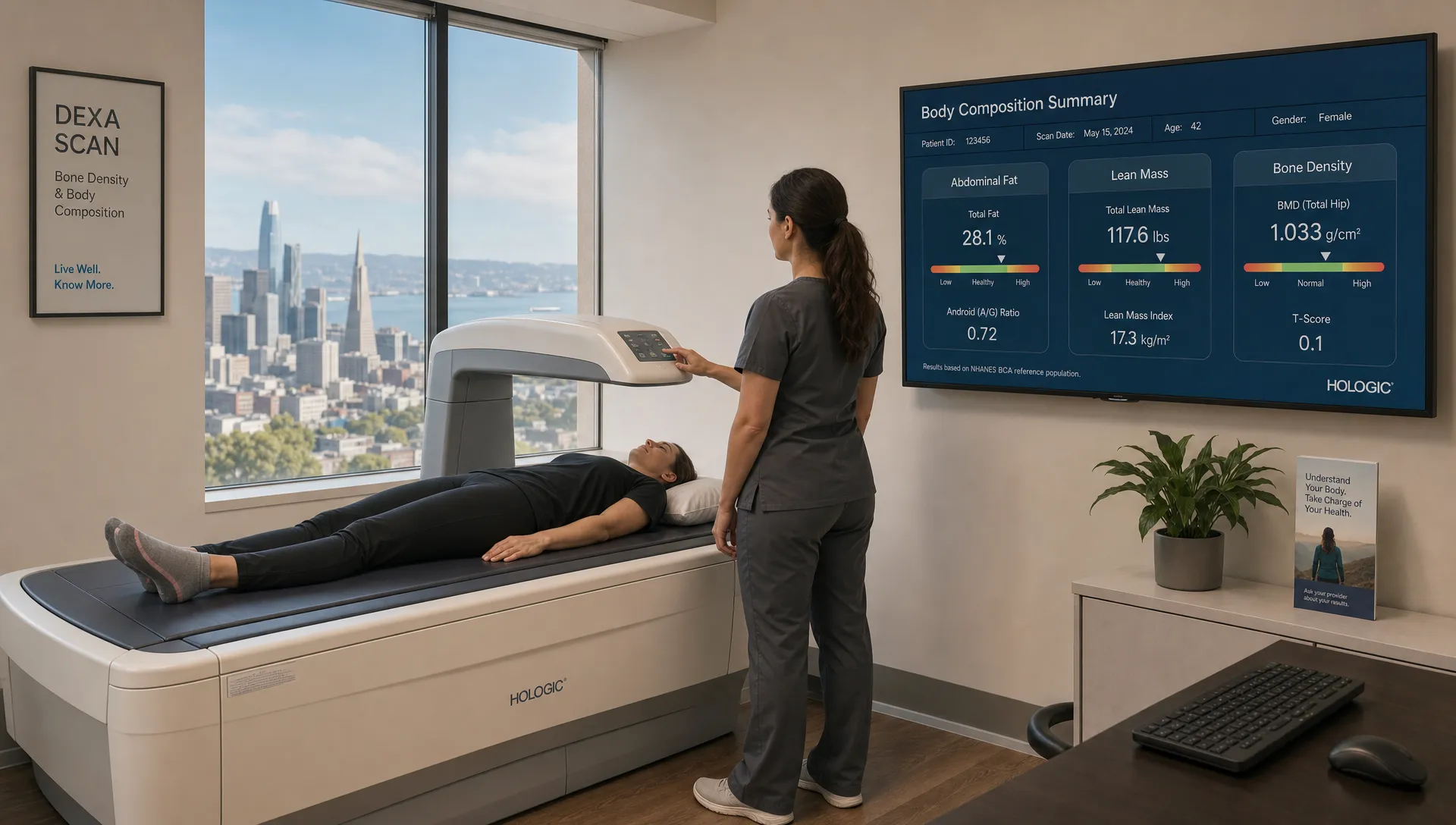
What a DEXA Scan for Visceral Fat Can Reveal
A bathroom scale can tell you whether your weight changed. It cannot tell you whether that weight is coming from fat, muscle, water, or bone. More importantly, it cannot show where fat is stored.
That is why a DEXA scan for visceral fat can be so useful. Visceral fat is the fat stored deep inside the abdomen, around organs such as the liver, intestines, and pancreas. Unlike the subcutaneous fat you can pinch under the skin, visceral fat is closely tied to metabolic health and can be easy to miss if you rely only on weight or BMI.
A DEXA scan gives you a clearer view of the body composition behind the number on the scale. It can reveal how much abdominal fat you carry, how that compares with your total body fat, how much lean mass you have, whether you have left-to-right muscle imbalances, and how your results are changing over time.
Why visceral fat deserves special attention
Body fat is not all the same. Subcutaneous fat sits beneath the skin and is the type most people notice visually. Visceral fat sits deeper, inside the abdominal cavity. Because it is metabolically active, it can release inflammatory signals and fatty acids that affect insulin sensitivity, blood lipids, blood pressure, and liver health.
Harvard Health notes that abdominal fat, particularly visceral fat, is associated with a higher risk of conditions such as cardiovascular disease and type 2 diabetes. That does not mean a DEXA result diagnoses those conditions. It means visceral fat is an important signal to understand alongside blood work, blood pressure, family history, waist size, and lifestyle factors.
This is where many people get surprised. Someone can have a normal BMI but still carry a higher proportion of fat around the abdomen. Another person can weigh more because they have more muscle, not because they have excess visceral fat. Without measuring body composition directly, both people may receive misleading feedback from the scale.
How a DEXA scan measures visceral fat
DEXA stands for dual-energy X-ray absorptiometry. The scan uses two low-dose X-ray energy levels to estimate different tissues in the body, including fat mass, lean mass, and bone mineral content. For visceral fat, DEXA systems analyze the abdominal region and estimate how much fat is stored deep inside the abdomen versus closer to the skin.
For medical imaging, CT and MRI are often treated as reference methods for directly visualizing abdominal fat compartments. However, they are not always practical for routine body composition tracking. DEXA offers a more accessible way to measure visceral fat as part of a broader body composition assessment. A validation study published in Obesity found that DEXA can quantify visceral fat with strong agreement compared with CT-based measurement, supporting its use as a practical assessment tool in appropriate settings.
That broader context matters. A DEXA scan is not only asking, how much visceral fat do you have? It is also asking, what does that amount mean in relation to your total fat, muscle mass, bone density, and body symmetry?
| Measurement method | What it can tell you | What it misses |
|---|---|---|
| Scale weight | Total body weight | Fat versus muscle, fat location, bone density |
| BMI | Weight relative to height | Body composition, athletic muscle mass, visceral fat |
| Waist measurement | Central size estimate | Fat type, lean mass, bone data, body symmetry |
| Bioelectrical impedance | Estimated body fat percentage | Regional accuracy can vary with hydration and device quality |
| DEXA scan | Fat mass, lean mass, bone density, visceral fat, regional distribution | It is not a standalone medical diagnosis |
| CT or MRI | Detailed internal imaging of fat compartments | Less practical for routine fitness tracking |
If your main goal is precision, it also helps to understand how accurate a DEXA scan is for body fat percentage compared with common alternatives.
What a DEXA scan for visceral fat can reveal
A strong DEXA report is more than a single visceral fat number. The value comes from seeing how multiple measurements work together.
Your estimated visceral adipose tissue
The most direct insight is your estimated visceral adipose tissue, often shortened to VAT. This gives you a more specific picture than total body fat percentage alone. Two people can have the same body fat percentage while storing that fat in very different places. If more fat is concentrated deep in the abdomen, the health and performance implications may be different.
Because DEXA devices and reporting systems can vary, it is best to interpret VAT with a qualified expert rather than treating one number as universally good or bad. The most useful question is often: is your visceral fat level appropriate for your age, sex, body size, training status, and health goals?
Whether your fat is mostly central or peripheral
DEXA can show regional fat distribution, including the trunk, arms, legs, and abdominal area. This matters because central fat storage is often more relevant to metabolic risk than fat stored in the hips or limbs.
This can be especially useful for people who feel their weight is stable but notice their waistline changing. Your total pounds may not move much if you are losing muscle and gaining central fat at the same time. DEXA can help separate those changes.
The truth behind a normal BMI
BMI is useful for population-level screening, but it is not a body composition test. The CDC explains that BMI does not measure body fat directly. It also cannot show whether fat is stored under the skin or around organs.
A DEXA scan can reveal whether a normal-weight person has higher-than-expected body fat, low lean mass, or central fat accumulation. This is sometimes called being metabolically unhealthy despite appearing lean, although only a healthcare professional can assess your full metabolic status.
Whether your fat-loss plan is protecting muscle
If you are dieting, training, or using a medically supervised weight-loss plan, the scale may go down quickly. That is not always the same as improving body composition. A DEXA scan can show whether weight loss is coming mostly from fat mass or whether you are also losing lean mass.
This matters because muscle is metabolically important. Preserving or building lean mass can support strength, performance, glucose control, and long-term weight maintenance. If visceral fat is decreasing while lean mass is stable, that is a very different story than losing weight while muscle drops and visceral fat barely changes.
Hidden muscle imbalances
DEXA can also reveal left-versus-right lean mass differences in the arms and legs. While this is not a direct visceral fat measurement, it can help explain training plateaus, movement limitations, or performance asymmetries.
For example, someone recovering from an injury may unknowingly favor one leg for months. A DEXA scan can make that imbalance visible, allowing a coach, physical therapist, or trainer to adjust programming more intelligently.
Bone density context
One advantage of DEXA is that it can measure bone density along with body composition. This is helpful because aggressive weight loss, under-fueling, low protein intake, hormonal changes, and lack of resistance training can affect both muscle and bone over time.
Seeing visceral fat, lean mass, and bone density in one assessment gives you a more complete view of health than a scale-based goal. If your plan improves waist size but compromises muscle or bone, it may need adjustment.
Metabolic direction, not just appearance
A DEXA scan does not replace blood tests, but it can complement them. If your report shows elevated visceral fat, that may be a reason to discuss fasting glucose, A1C, cholesterol, triglycerides, liver markers, or blood pressure with your clinician.
At DEXA SF, scan results can be paired with expert interpretation and personalized fitness and nutrition guidance, helping you connect your body composition data to practical next steps. You can also explore how scan results fit into a broader metabolic profile from DEXA scan results.
How to interpret the results without overreacting
A DEXA scan gives data, not a moral judgment. The goal is not to panic over a number. The goal is to understand your starting point and make better decisions.
There is no single visceral fat cutoff that applies perfectly to everyone. Risk varies by age, sex, ethnicity, menopause status, training history, medications, family history, sleep, stress, alcohol intake, and lab markers. That is why expert interpretation matters. A qualified professional can help you understand whether your visceral fat level is a mild improvement target or a more urgent signal to discuss with your healthcare provider.
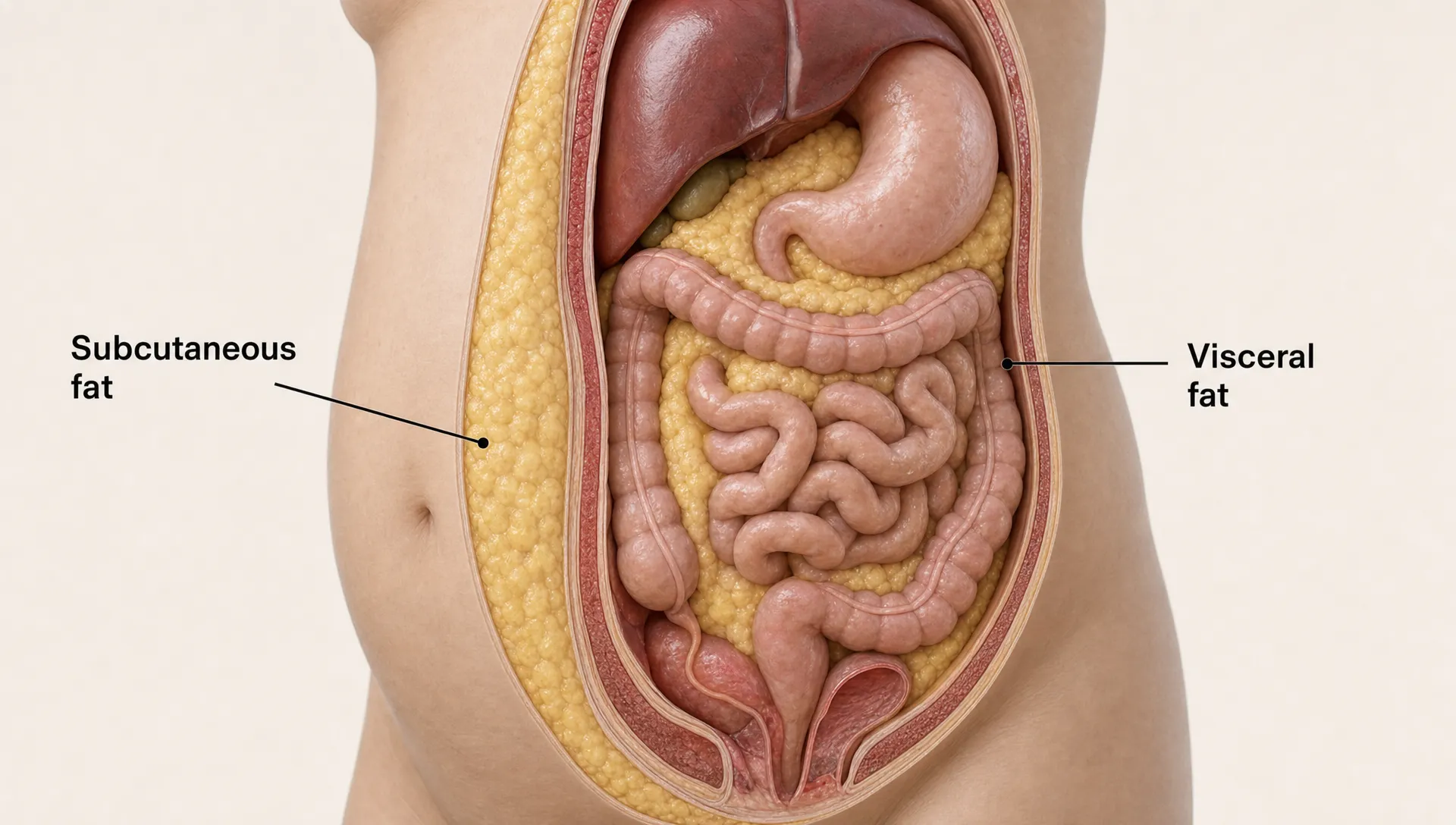
Common result patterns include:
- High total body fat and high visceral fat: A structured fat-loss plan may be the priority, especially if blood pressure, glucose, or lipids are also elevated.
- Normal body weight with higher visceral fat: The focus may shift toward resistance training, protein intake, aerobic fitness, sleep, and reducing central fat rather than simply losing pounds.
- Lower visceral fat with higher subcutaneous fat: The health priority may be different from the aesthetic goal, since not all fat distribution carries the same implications.
- Weight loss with lean mass loss: Your plan may need more strength training, better recovery, or improved nutrition to protect muscle.
- Improving visceral fat with stable weight: This can be a positive recomposition sign, especially if lean mass is increasing.
The best interpretation is trend-based. A single scan gives you a baseline. Follow-up scans can show whether your plan is actually moving visceral fat, lean mass, and total fat in the right direction.
What can help reduce visceral fat?
You cannot spot-reduce visceral fat with crunches or abdominal exercises. However, visceral fat often responds well to consistent changes in overall energy balance, fitness, and recovery.
The most effective plan is usually not extreme. It is repeatable. For many people, the biggest levers are regular resistance training, enough weekly aerobic activity, a protein-forward diet, higher fiber intake, improved sleep, moderation with alcohol, and a sustainable calorie deficit if fat loss is needed.
Strength training is important because the goal is not just to weigh less. The goal is to reduce excess fat while preserving or building lean mass. Aerobic training helps improve cardiovascular fitness and supports energy expenditure. Nutrition supports both sides of the equation, especially when it includes enough protein, minimally processed foods, and a plan you can maintain in real life.
Your DEXA results can help personalize this. If visceral fat is high but muscle mass is low, an aggressive diet may not be the best first move. If lean mass is strong but trunk fat is elevated, the plan may emphasize fat loss while maintaining performance. If bone density is a concern, resistance training and nutrition become even more important.
When should you repeat a DEXA scan?
A repeat scan is most useful after you have given your body enough time to change. Many people choose to scan every 8 to 16 weeks during an active fat-loss, muscle-gain, or performance phase. Others scan a few times per year to monitor long-term trends. The right timing depends on your goal, training status, and whether you are making a meaningful change to nutrition or exercise.
Consistency improves the quality of your comparisons. Try to scan under similar conditions each time, such as a similar time of day, hydration pattern, food timing, and training schedule. Body composition is not as volatile as daily scale weight, but consistency still makes trends cleaner.
If you are pregnant or think you may be pregnant, ask a healthcare professional before scheduling any X-ray-based scan. If you have known medical conditions, use DEXA as part of a broader plan that includes your clinician.
Who benefits most from a DEXA scan for visceral fat?
A DEXA scan can be valuable for anyone who wants more accurate body composition data, but it is especially useful when the scale is not answering your real question.
You may benefit if you are trying to lose abdominal fat, improve metabolic health, build muscle while staying lean, monitor changes during a training plan, understand why your waist changed despite stable weight, or establish a precise baseline before starting a new program.
It can also be helpful for people who already exercise regularly. Athletes and active adults often have higher body weight because of muscle, which can make BMI misleading. DEXA can show whether weight reflects lean tissue, fat mass, visceral fat, or a combination.
For busy professionals in San Francisco, the value is clarity. Instead of guessing whether your nutrition and training are working, you can see measurable changes in visceral fat, lean mass, bone density, and regional distribution.
Frequently Asked Questions
Is a DEXA scan better than BMI for visceral fat? Yes, for individual body composition insight. BMI estimates weight relative to height, but it does not measure fat directly or show where fat is stored. DEXA can estimate visceral fat and show it in context with total fat, lean mass, and bone density.
Can a DEXA scan diagnose heart disease or diabetes? No. A DEXA scan can reveal body composition patterns associated with metabolic risk, including visceral fat, but it does not diagnose disease. Use the results alongside blood work, blood pressure, medical history, and clinician guidance.
Can someone look lean and still have elevated visceral fat? Yes. Some people have a normal body weight but relatively low muscle mass and higher central fat storage. DEXA can help reveal this pattern when the scale and mirror do not.
How fast can visceral fat change? Meaningful changes often take weeks to months, depending on nutrition, training, sleep, stress, alcohol intake, and starting point. Follow-up DEXA scans are most useful after enough time has passed to detect real body composition changes.
Does DEXA measure belly fat directly? DEXA estimates regional abdominal fat and visceral adipose tissue using scan data and validated algorithms. It is more informative than waist size alone, but it should still be interpreted by someone qualified to explain the result in context.
Turn visceral fat data into a smarter plan
A DEXA scan for visceral fat can reveal what the scale hides: where fat is stored, how much lean mass you carry, whether your plan is protecting muscle, and how your body composition is changing over time.
If you are ready for a clearer baseline, DEXA SF provides professional DEXA body composition scans in San Francisco with expert interpretation, visceral fat measurement, bone density analysis, metabolic data insights, and personalized fitness and nutrition guidance. Use the data to stop guessing and start making more informed decisions about your health and performance.