
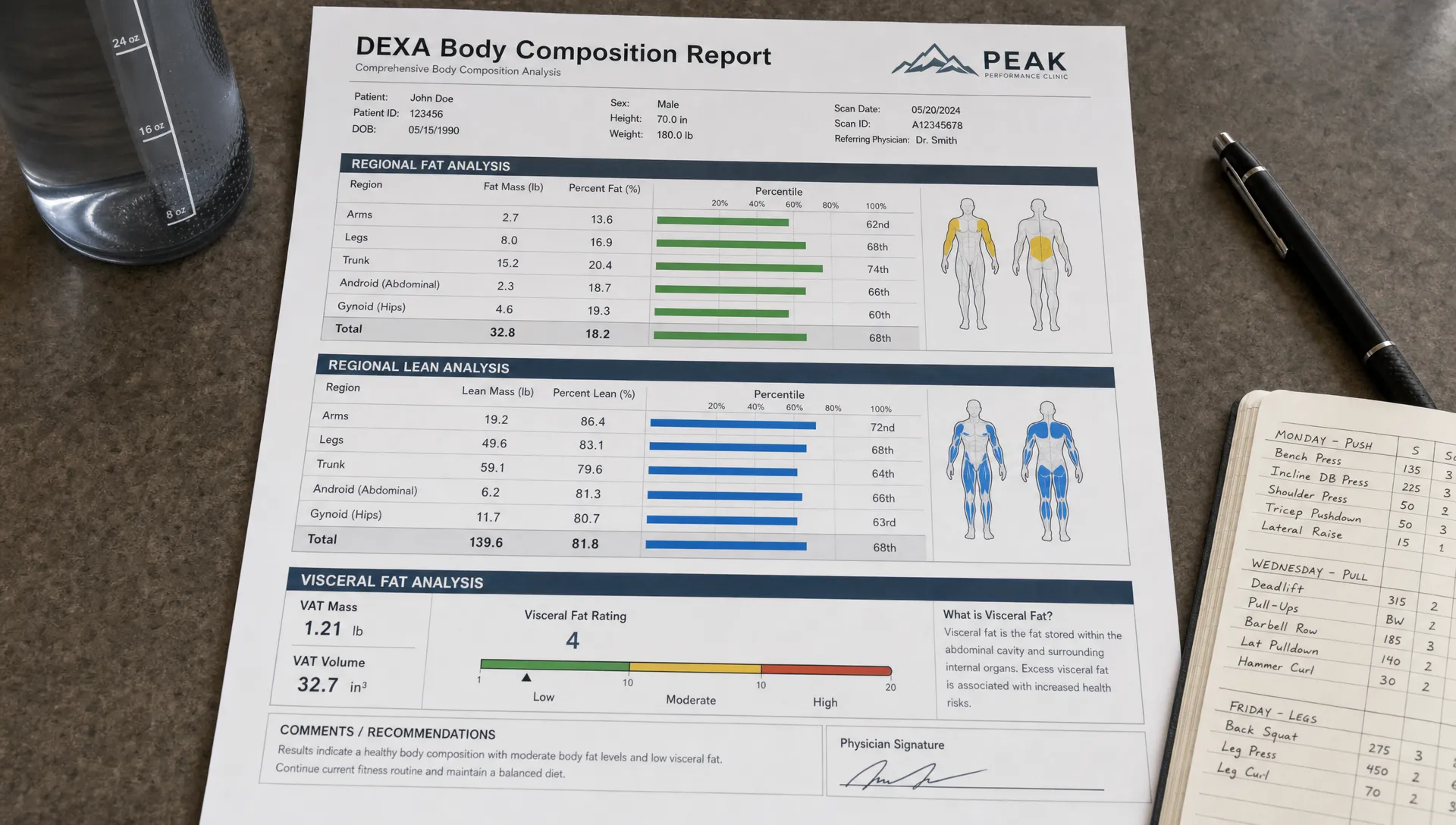
What a Body Scan for Visceral Fat Can Add to Your Plan
A body scan for visceral fat can turn a vague goal like “lose belly fat” into a clearer plan built around measurable body composition data. Instead of relying only on scale weight, waist size or how your clothes fit, you can see whether the fat stored deeper in the abdomen is changing alongside body fat, lean mass and other metrics that affect long-term health and performance.
That matters because visceral fat is not just a cosmetic issue. It sits around internal organs and is more metabolically active than the fat stored under the skin. Harvard Health notes that excess visceral fat is associated with higher cardiometabolic risk, which is one reason a better measurement can be useful when you are making decisions about nutrition, training and lifestyle.
Why visceral fat changes how you read progress
Many people judge progress with a bathroom scale. The scale can tell you whether total body weight went up or down, but it cannot tell you what changed. A 5-pound drop could include fat loss, water loss, muscle loss or some combination of all three. A stable weight could hide a meaningful shift if you gained lean mass while losing fat.
Visceral fat adds another layer. Two people can have the same weight and similar waist measurements but carry different amounts of fat deeper in the abdomen. That is why a plan based only on weight can miss the specific change you care about most.
A body scan for visceral fat gives your plan a more objective starting point. It helps you separate “I weigh less” from “I reduced the type of fat I am trying to reduce while preserving muscle.” That distinction can change how you eat, train and evaluate whether your current approach is working.
How a body scan for visceral fat improves your baseline
A baseline is useful only if it answers the right questions. If your goal is better health, improved body composition or more targeted fat loss, a DEXA-based scan can add context that simple measurements cannot provide.
At DEXA SF, a professional scan can measure body fat, lean mass, bone density, visceral fat and side-to-side asymmetries. The value is not just having more numbers. The value is knowing which numbers should influence your next decision.
| Question your plan needs to answer | Scan metric that helps | How it can change your next step |
|---|---|---|
| Am I losing fat or just losing weight? | Total fat mass and body fat percentage | Helps you judge whether your calorie target is working |
| Is abdominal fat changing? | Visceral fat estimate and regional fat data | Helps track a deeper fat-loss goal beyond appearance |
| Am I preserving muscle? | Lean mass by region | Helps guide protein intake and strength training volume |
| Do I have imbalances? | Side-to-side lean mass comparison | Helps identify areas to address in training |
| Should I pay attention to bone health? | Bone density analysis | Adds a longer-term health metric to your plan |
If you want a deeper look at what this specific metric can show, DEXA SF has a related guide on what a DEXA scan for visceral fat can reveal. This article focuses on what to do with that information once you have it.
What it adds to your nutrition plan
Most nutrition plans begin with estimates. You choose calories, set a protein target, adjust meal timing and wait to see what happens. That can work, but without body composition data, it is easy to misread the result.
A body scan for visceral fat can help you decide whether your nutrition plan is producing the kind of loss you want. If weight is dropping but lean mass is falling too, the issue may be an overly aggressive deficit, low protein intake, poor recovery or insufficient resistance training. If weight is stable but visceral fat and total fat mass are trending down, your plan may be working better than the scale suggests.
Calorie targets become easier to audit
A scan does not write your meal plan for you, but it can make your calorie target easier to evaluate. If fat mass is not changing after a consistent period, your intake, activity level or adherence may need adjustment. If fat is falling quickly but lean mass is falling too, the plan may need a smaller deficit and better strength-training support.
Protein and meal quality get clearer context
Lean mass data can make protein goals feel less abstract. Instead of eating more protein because it is a common recommendation, you can connect that choice to a measurable goal, preserving or building lean tissue while reducing fat.
You can also use scan data to refine habits that influence abdominal fat, such as alcohol intake, fiber intake, sleep consistency and overall energy balance. For a broader nutrition framework, DEXA SF’s guide on how to use a body scan to build a better nutrition plan is a useful next step.
What it adds to your training plan
Training decisions often depend on visible results, workout performance and how your body feels. Those inputs matter, but they do not always reveal whether your program is changing the right tissue.
A body scan for visceral fat can help you connect your training routine to measurable changes in fat and lean mass. For example, if visceral fat is trending down but lean mass is flat, you may continue the current fat-loss plan while improving strength progression. If lean mass is dropping, you may need more resistance training, more recovery or a less aggressive nutrition approach.
Cardio also becomes easier to place in the plan. For visceral fat reduction, aerobic work can be useful, but it should not crowd out the strength training needed to protect lean mass. The right balance depends on your baseline, your goals and how your body responds over time.
A scan can also identify regional differences. If one side has meaningfully less lean mass, that does not automatically mean something is wrong, but it can inform exercise selection, single-leg work, single-arm work and conversations with a qualified trainer or clinician. DEXA SF covers this training angle in more detail in its article on DEXA scan measurements that can improve your training.
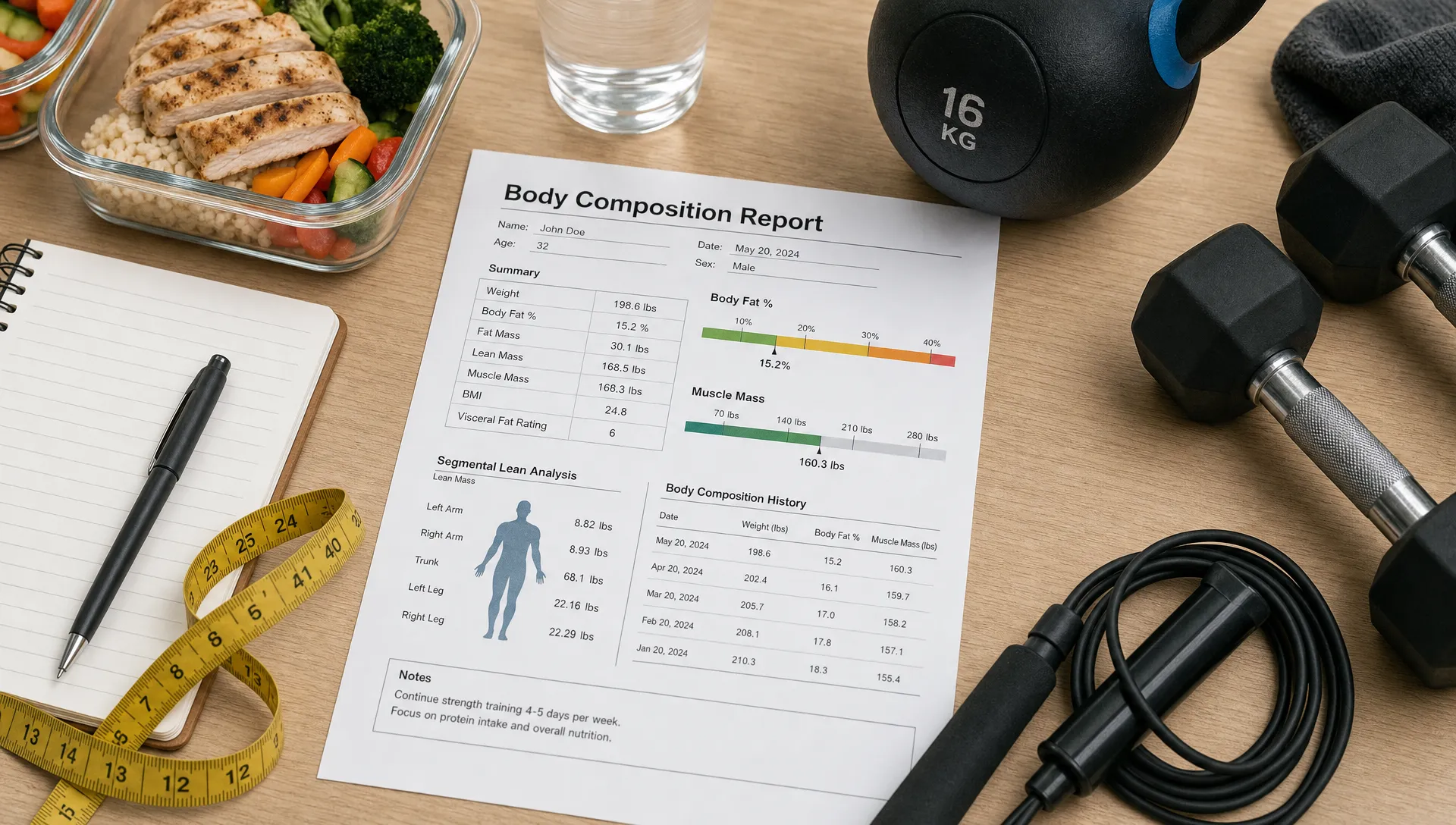
How to use repeat scans without overreacting
The first scan gives you a baseline. The second scan tells you whether your plan is moving you in the right direction. The mistake is testing too often and reacting to normal short-term variation.
For many body composition goals, people wait several weeks between scans so training and nutrition changes have enough time to show up. The right timing depends on the goal, the size of the change you are making and whether you are using the data for fitness, performance or health monitoring.
A body scan for visceral fat is most useful when you compare it against a consistent plan, not a week of unusually hard workouts or unusually low calories. Before retesting, keep the basics steady enough that the result means something.
| Goal | What to watch between scans | What scan results can help you adjust |
|---|---|---|
| Fat loss | Calories, protein, steps and training consistency | Whether fat loss is happening without unnecessary lean mass loss |
| Muscle gain | Strength progress, recovery and protein intake | Whether lean mass is increasing in the target regions |
| Health-focused abdominal fat reduction | Waist trend, sleep, cardio and nutrition quality | Whether visceral fat is moving in the desired direction |
| Recomposition | Strength performance and body measurements | Whether fat mass is decreasing while lean mass is maintained or gained |
The key is to decide in advance what you will change based on the result. If every possible result leads to the same plan, you may not need a scan yet. If the result will guide calories, training volume, cardio, recovery or coaching conversations, retesting can be worth it.
What a scan cannot do for your plan
A scan can add precision, but it should not be treated as a diagnosis or a complete health assessment. Visceral fat is one important marker, not the only marker that matters.
A body scan for visceral fat cannot explain every reason your body stores fat, replace bloodwork, diagnose a medical condition or account for every lifestyle factor affecting your health. If you have concerns about diabetes, cardiovascular disease, hormone changes or unexplained weight change, scan data should be discussed with a licensed healthcare professional.
It also cannot make the plan for you automatically. The data becomes valuable when it is interpreted in context: your training history, food habits, sleep, stress, medical background and goals. This is where expert interpretation matters. A number on a report is more useful when someone helps you understand what it means and what should happen next.
Who benefits most from adding this measurement?
Not everyone needs advanced body composition data. If you are just starting to move more and eat better, basic habits can take you far. But a scan becomes more useful when you are ready to make more specific decisions.
You may benefit from a body scan for visceral fat if you are trying to reduce abdominal fat, improve metabolic health markers, preserve muscle during weight loss, compare progress beyond the scale or build a more precise plan after months of inconsistent results.
It can also help people who already train consistently. Many active people assume their body composition matches their performance, but that is not always true. Endurance athletes may need to protect lean mass. Strength-focused clients may want to confirm that weight gain is not mostly fat gain. Busy professionals may want a clear baseline before committing time and energy to a new plan.
How DEXA SF fits into a realistic plan
The best scan is not the one with the most impressive report. It is the one that helps you make a better decision. DEXA SF provides professional DEXA body composition scans in San Francisco, including measurements for body fat, lean mass, bone density, visceral fat, metabolic insights and asymmetry detection.
The practical benefit is interpretation. When you understand what your numbers mean, your plan can become less reactive and more targeted. Instead of chasing daily weight fluctuations, you can focus on the behaviors most likely to change the metrics that matter.
If you are building a plan around fat loss, muscle retention or long-term body composition, a scan can help you establish a baseline, choose the right priorities and measure whether your strategy is working.
Frequently Asked Questions
Is visceral fat the same as belly fat? Not exactly. Belly fat can include subcutaneous fat under the skin and visceral fat deeper in the abdomen around internal organs. Waist size can be a useful clue, but it does not separate those two compartments.
How often should I get scanned? It depends on your goal and how quickly your plan is changing. Many people wait long enough for nutrition and training changes to produce measurable results rather than scanning every few weeks without a clear reason.
Can I reduce visceral fat without losing muscle? Yes, many people aim to reduce fat while preserving lean mass. A plan usually needs adequate protein, resistance training, recovery and a calorie deficit that is not unnecessarily aggressive.
Does a scan replace bloodwork or a medical visit? No. A scan adds body composition context, but it does not diagnose disease or replace lab testing, medical evaluation or advice from your healthcare provider.
What should I do before booking a scan? Come with a clear question. For example, you may want to know whether your current plan is reducing fat, preserving muscle or changing abdominal fat specifically. A clearer question makes the results more actionable.
Turn the measurement into a plan
A body scan for visceral fat is valuable because it can help you act with more precision. It gives you a clearer baseline, shows whether your current habits are changing the right metrics and helps you adjust nutrition and training before months pass with unclear results.
If you are in San Francisco and want objective body composition data with expert interpretation, you can schedule a DEXA scan with DEXA SF and use the results to build a plan that is specific to your body, your goals and your next decision.