
DEXA Scan Measurements That Can Improve Your Training
Most training programs are judged by visible changes, workout numbers and scale weight. Those signals matter, but they can also hide what is really happening. A 5-pound weight loss could mean fat loss, muscle loss, water loss or some mix of all three. A stronger squat could come with better muscle balance or with a compensation pattern you have not noticed yet.
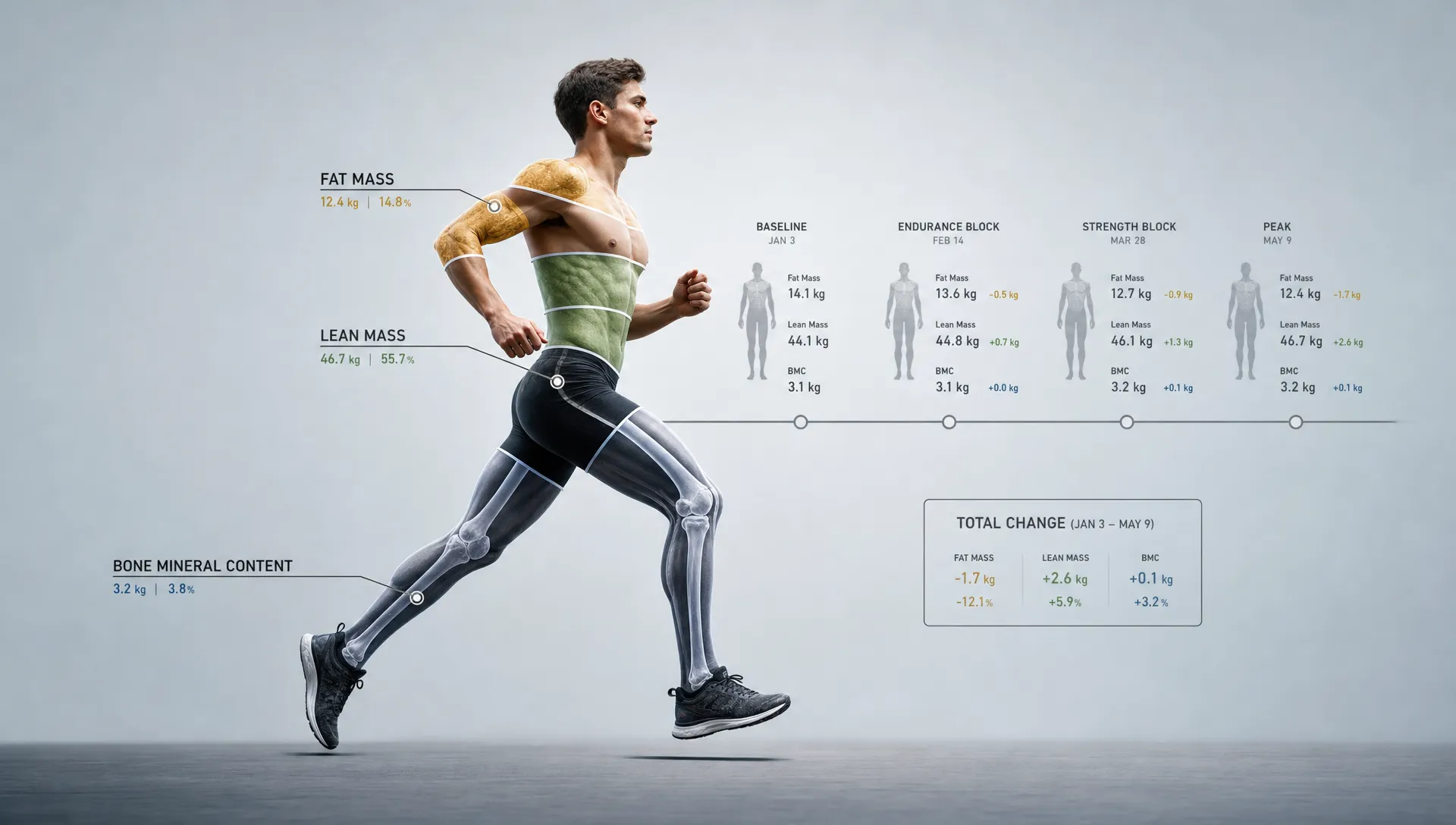
That is where DEXA scan measurements become useful. A DEXA scan, also written as DXA, separates body composition into fat mass, lean soft tissue and bone mineral measurements. For training, the real value is not only knowing your body fat percentage. It is seeing where changes are happening, whether your plan is preserving muscle, how much visceral fat you carry and whether one side of your body is developing differently than the other.
Used well, DEXA turns your training block into a measurable experiment. You set a baseline, train with intent, then compare the right measurements over time.
Why DEXA measurements matter for training
The scale measures total body weight. It cannot tell you whether weight came from fat, muscle, bone, fluid or stored glycogen. BMI has the same limitation, especially for athletes and people who lift weights. Two people with the same weight and height can have completely different body composition profiles.
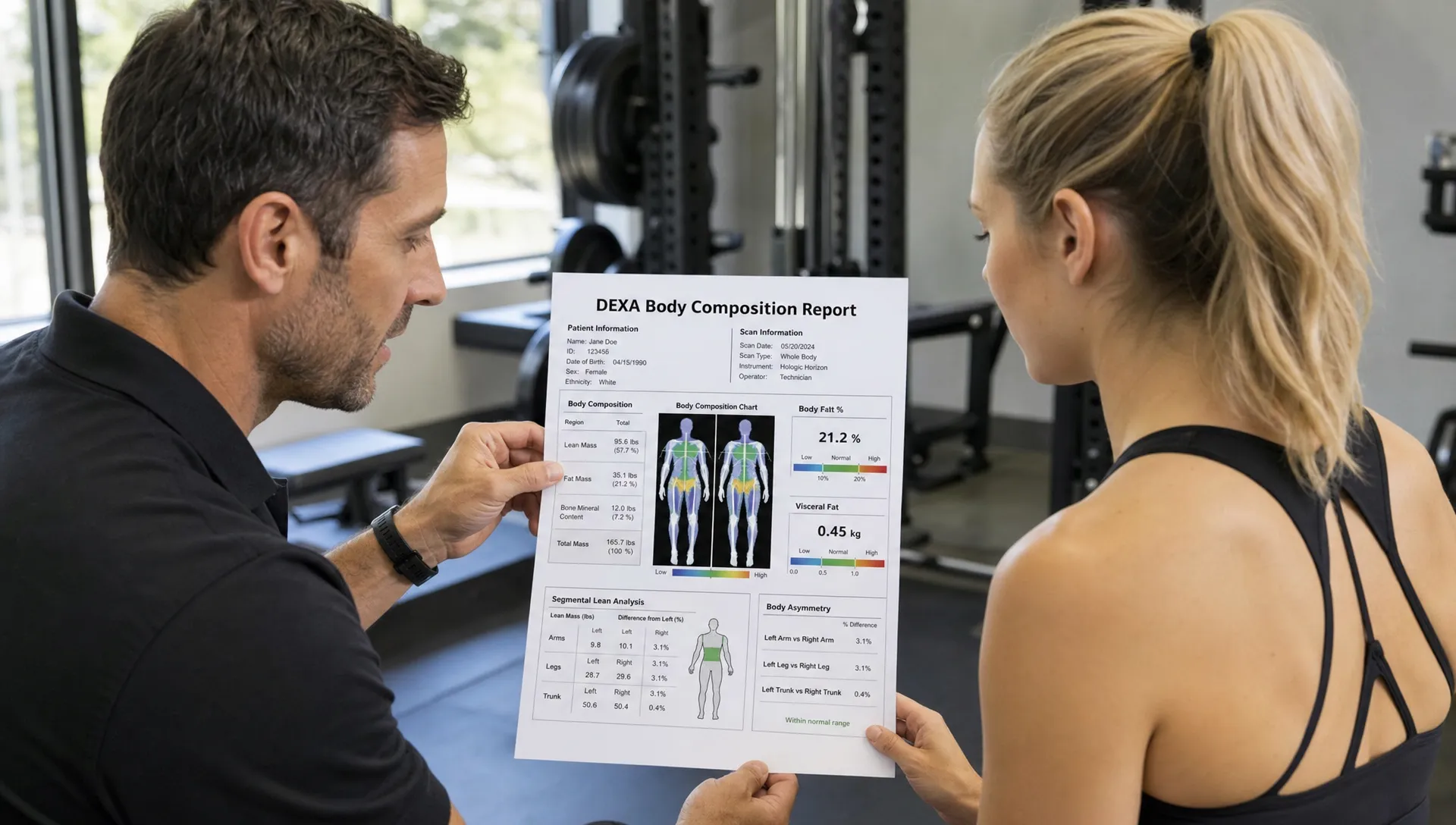
DEXA provides a more useful training snapshot because it estimates body composition by tissue type and body region. That means you can look at your whole-body trend, then zoom in on arms, legs, trunk, left side and right side. If you want a broader primer on the performance angle, DEXA SF has also covered how DEXA body composition analysis supports smarter training.
The point is not to replace coaching, workout logs or how you feel. DEXA works best as an objective layer that helps you interpret those signals more accurately. If your performance is improving but lean mass is dropping during a cut, your nutrition may need adjustment. If your body weight is stable but fat mass is down and lean mass is up, the scale missed a successful recomposition.
The DEXA scan measurements that can improve your training
Body fat percentage and total fat mass
Body fat percentage is the DEXA number most people notice first. It tells you what portion of your total body mass is fat. For training decisions, total fat mass is just as important because it shows the actual amount of fat tissue you are carrying.
This matters during fat loss phases. A lower body fat percentage is not automatically a win if you lost meaningful lean mass at the same time. A productive cut usually shows fat mass trending down while lean mass stays relatively stable. If fat mass is falling but workouts are crashing, hunger is high and recovery is poor, the deficit may be too aggressive.
For muscle gain phases, body fat percentage helps you check whether your calorie surplus is controlled. Some fat gain is normal for many people trying to build muscle, but DEXA can show whether most of the change is lean mass or whether the surplus is mainly becoming fat mass.
Regional lean mass
Lean mass on a DEXA report includes muscle plus other non-fat, non-bone soft tissue such as water and connective tissue. It is not a direct muscle biopsy, but it is one of the most practical ways to track lean tissue changes over time, especially when scan conditions are consistent.
Regional lean mass is especially valuable for training because it shows where tissue is changing. A strength athlete may want to know whether a hypertrophy block increased leg lean mass. A runner may want to make sure weight loss is not stripping too much lean mass from the lower body. Someone returning from injury may want to see whether the affected limb is rebuilding tissue compared with the other side.
If your main goal is hypertrophy, the most useful question is not simply, did my weight go up? It is, did lean mass increase in the regions I trained, and did that happen without unnecessary fat gain? DEXA SF goes deeper into this topic in its guide on how a DEXA scan tracks muscle mass progress.
Visceral fat measurement
Visceral fat is stored deeper in the abdomen around internal organs. It is different from subcutaneous fat, which sits under the skin. For many people, visceral fat is one of the most actionable DEXA scan measurements because it connects training, nutrition and long-term health.
A waist measurement can give you a rough external signal, but DEXA can estimate visceral fat more directly. If your training goal includes improving metabolic health, reducing visceral fat may be more meaningful than chasing a specific look in the mirror.
The training response is usually not exotic. Consistent resistance training, aerobic work, nutrition quality, adequate protein, sleep and alcohol moderation can all matter. DEXA helps you confirm whether those habits are moving deep abdominal fat in the right direction.
Left vs. right asymmetry
Most people are not perfectly symmetrical. A small difference between the left and right arm or leg is normal, especially if you have a dominant side or play rotational sports. The issue is whether an asymmetry is large, increasing or tied to pain, performance limitations or injury history.
DEXA can identify left-right differences in lean mass and fat mass by region. For training, this can help you decide whether to add more unilateral work such as split squats, step-ups, single-arm rows or single-leg hinges. It can also help you evaluate whether a rehab or return-to-sport phase is restoring tissue on the previously injured side.
DEXA does not diagnose movement problems, and it should not replace a qualified clinician if pain is involved. It does give your coach, physical therapist or trainer another objective data point when designing a balanced plan.
Bone mineral density and bone mineral content
DEXA is widely used for bone density testing. The National Institute of Arthritis and Musculoskeletal and Skin Diseases explains that bone mineral density testing helps assess bone strength and fracture risk. For training, bone measurements matter more than many athletes realize.
Bone health is relevant if you are doing high-volume endurance training, cutting weight, returning from stress fractures or training through life stages where bone density becomes a bigger concern. Resistance training and impact loading can support bone, but underfueling and chronic low energy availability can work against it.
Bone density changes slowly, so this is not a metric to judge every few weeks. It is a longer-term signal that can help you make better decisions about strength training, nutrition and recovery.
Metabolic insights from body composition
A DEXA scan does not directly measure how many calories you burn at rest. That requires indirect calorimetry. However, body composition data can improve estimates because lean mass is a major contributor to resting energy needs.
This is useful when setting calorie targets. A muscular 180-pound athlete and a sedentary 180-pound person may need very different nutrition plans. If your scan includes metabolic estimates, treat them as informed starting points rather than fixed rules. Adjust based on training output, hunger, recovery, body composition trends and performance.
| DEXA measurement | What it tells you | Training decision it can inform |
|---|---|---|
| Body fat percentage | The proportion of total mass that is fat | Whether a fat loss or recomposition phase is working |
| Total fat mass | The amount of fat tissue in pounds or kilograms | Whether weight change is mostly fat or something else |
| Regional lean mass | Lean tissue distribution in arms, legs and trunk | Whether targeted training blocks are producing regional changes |
| Visceral fat | Estimated deep abdominal fat | Whether health-focused nutrition and training habits are improving |
| Left-right asymmetry | Differences between sides of the body | Whether unilateral work, rehab focus or coaching review is needed |
| Bone density | Bone strength-related measurement | Whether long-term loading, recovery and nutrition support bone health |
How to use DEXA results to adjust your program
The most common mistake is treating a scan like a grade. A better approach is to treat it like feedback. Your results should help you refine training volume, conditioning, nutrition and recovery.
If you are losing weight and DEXA shows lean mass dropping quickly, consider a smaller calorie deficit, more protein, better sleep or a more structured resistance program. If you are trying to build muscle and most weight gain is fat mass, your surplus may be too large or your progressive overload may not be strong enough. If your left leg has noticeably less lean mass than your right, your plan may need more unilateral lower-body work or a closer look at movement quality.
Performance data still matters. A DEXA scan cannot tell you whether your sprint mechanics improved, whether your deadlift technique is efficient or whether your cycling threshold increased. Pair the scan with training logs, subjective recovery, strength numbers, pace, power output and health markers when relevant.
How often should you repeat a DEXA scan?
For most training goals, repeating a DEXA scan every 8 to 12 weeks makes sense. That gives your program enough time to create measurable changes while limiting noise from normal day-to-day variation. People in longer muscle-building phases may wait 12 to 16 weeks. Bone density changes are slower, so they are better evaluated over longer periods.
Consistency matters. DEXA is precise, but body composition measurements can still be influenced by recent food intake, hydration, glycogen, hard workouts and scan timing. Try to scan under similar conditions each time. For example, use the same time of day, keep pre-scan meals similar and avoid comparing a post-vacation scan with a scan taken after several tightly controlled days.
When comparing follow-up scans, look at patterns rather than one number in isolation. DEXA SF has a useful guide on how to compare DEXA analysis results between scans without overreacting to normal fluctuations.
A simple comparison framework works well:
- Start with the goal of the training block, such as fat loss, lean mass gain, performance maintenance or recovery from injury.
- Compare the matching DEXA measurements, not every number equally.
- Check whether performance, recovery and body composition are telling the same story.
- Adjust one or two major variables at a time so you can tell what worked.
Matching DEXA measurements to common training goals
Different goals require different priorities. Someone training for a powerlifting meet should not interpret results the same way as someone improving metabolic health or preparing for a marathon. The table below shows how to focus your attention.
| Training goal | Most useful DEXA measurements | What you want to see | Possible adjustment |
|---|---|---|---|
| Fat loss | Fat mass, body fat percentage, visceral fat, lean mass | Fat mass down with lean mass relatively preserved | Keep resistance training, avoid extreme deficits and monitor recovery |
| Muscle gain | Total and regional lean mass, fat mass | Lean mass up in trained regions with manageable fat gain | Use progressive overload and a controlled calorie surplus |
| Strength or power | Regional lean mass, asymmetry, bone measures | Balanced development and stable or improving lean mass | Add unilateral work or adjust volume by region |
| Endurance performance | Leg lean mass, fat mass, bone density | Improved body composition without excessive lean or bone loss | Fuel training, include strength work and watch recovery |
| Health and longevity | Visceral fat, body fat, lean mass, bone density | Lower visceral fat, adequate lean mass and stable bone health | Combine resistance training, aerobic work and sustainable nutrition |
What DEXA cannot tell you
DEXA is powerful, but it is not a complete training plan. It will not tell you whether your exercise technique is safe, whether your program has the right periodization or whether your nutrition choices fit your lifestyle. It also cannot measure motivation, stress load or sleep quality.
It is also possible to chase the wrong number. Lower body fat is not always better, especially if performance, hormones, mood, recovery or bone health suffer. More lean mass is not always better for every sport. A distance runner and a football lineman need different bodies for different jobs.
The best use of DEXA is context. Start with your goal, read the measurements through that goal, then make targeted changes.
Frequently Asked Questions
Which DEXA scan measurements are most useful for training? The most useful measurements are body fat percentage, total fat mass, regional lean mass, visceral fat, left-right asymmetry and bone density. Which one matters most depends on whether your goal is fat loss, muscle gain, performance, injury recovery or long-term health.
Can a DEXA scan show if I gained muscle? DEXA estimates lean soft tissue, which includes muscle and other non-fat tissue. When scans are done under consistent conditions, changes in regional lean mass can be a strong indicator of muscle gain or loss over time.
How often should athletes get a DEXA scan? Many athletes and active adults benefit from scanning every 8 to 12 weeks during focused training phases. Longer intervals may be better for slower goals such as bone density improvement or gradual muscle gain.
Does DEXA measure visceral fat? Yes, many DEXA body composition reports include an estimate of visceral fat in the abdominal region. This can be useful for health-focused training and nutrition goals.
Is DEXA better than a scale for tracking progress? DEXA gives more detail than a scale because it separates fat mass, lean mass and bone measurements. The scale still has value, but DEXA helps explain what weight changes actually mean.
Turn your training data into better decisions
If you train hard, your measurements should be as specific as your goals. DEXA SF provides professional DEXA body composition scans in San Francisco with measurements for body fat, lean mass, visceral fat, asymmetry, bone density and related metabolic insights.
Schedule a scan with DEXA SF to set a baseline, review your results with expert interpretation and make your next training block more measurable.