
How to Use a DEXA Scan for Fitness Goals
A fitness goal becomes easier to manage when you can measure what is actually changing. Scale weight can tell you whether your body is heavier or lighter, but it cannot show whether that change came from fat, muscle, water or bone. That is why a DEXA scan for fitness goals can be so useful: it turns a broad goal like get leaner, build muscle or improve performance into a set of measurable markers.
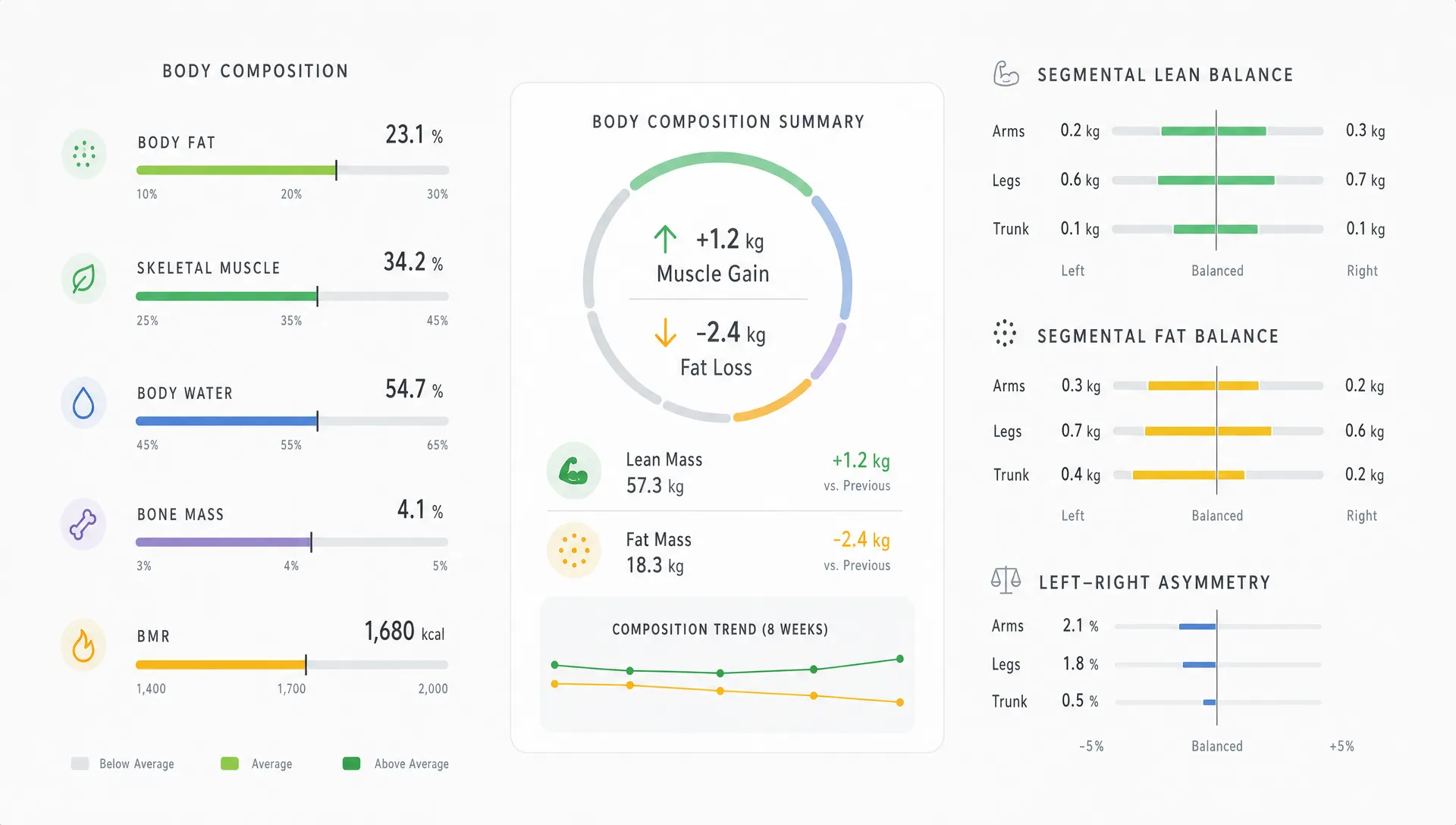
DEXA is best known for bone density testing, but full-body DEXA scans can also provide detailed body composition data. For fitness, that usually means total body fat, lean mass, regional muscle distribution, visceral fat, bone density and left to right differences. Used well, the scan is not just a report. It becomes a feedback tool for your training and nutrition plan.
Start with a specific fitness question
Before booking a scan, decide what decision you want the data to support. A DEXA scan is most valuable when it answers a clear question, not when it is used as a one-time curiosity check.
Useful fitness questions include:
- Am I losing fat while preserving muscle?
- Is my muscle-gain phase actually increasing lean mass?
- Is my body fat distributed in a way that raises health or performance concerns?
- Do I have left to right differences that may affect strength, movement or injury risk?
- Is my current plan improving my body composition or just changing my weight?
If you are still deciding whether DEXA fits your situation, this guide to which health goals make a DEXA scan most useful can help you clarify the purpose before you test.
The goal is to connect the scan to an action. If your result will not change how you train, eat, recover or monitor progress, you may not need the scan yet. If the result will help you make a better decision, it can be an excellent baseline.
Know which DEXA numbers matter for fitness
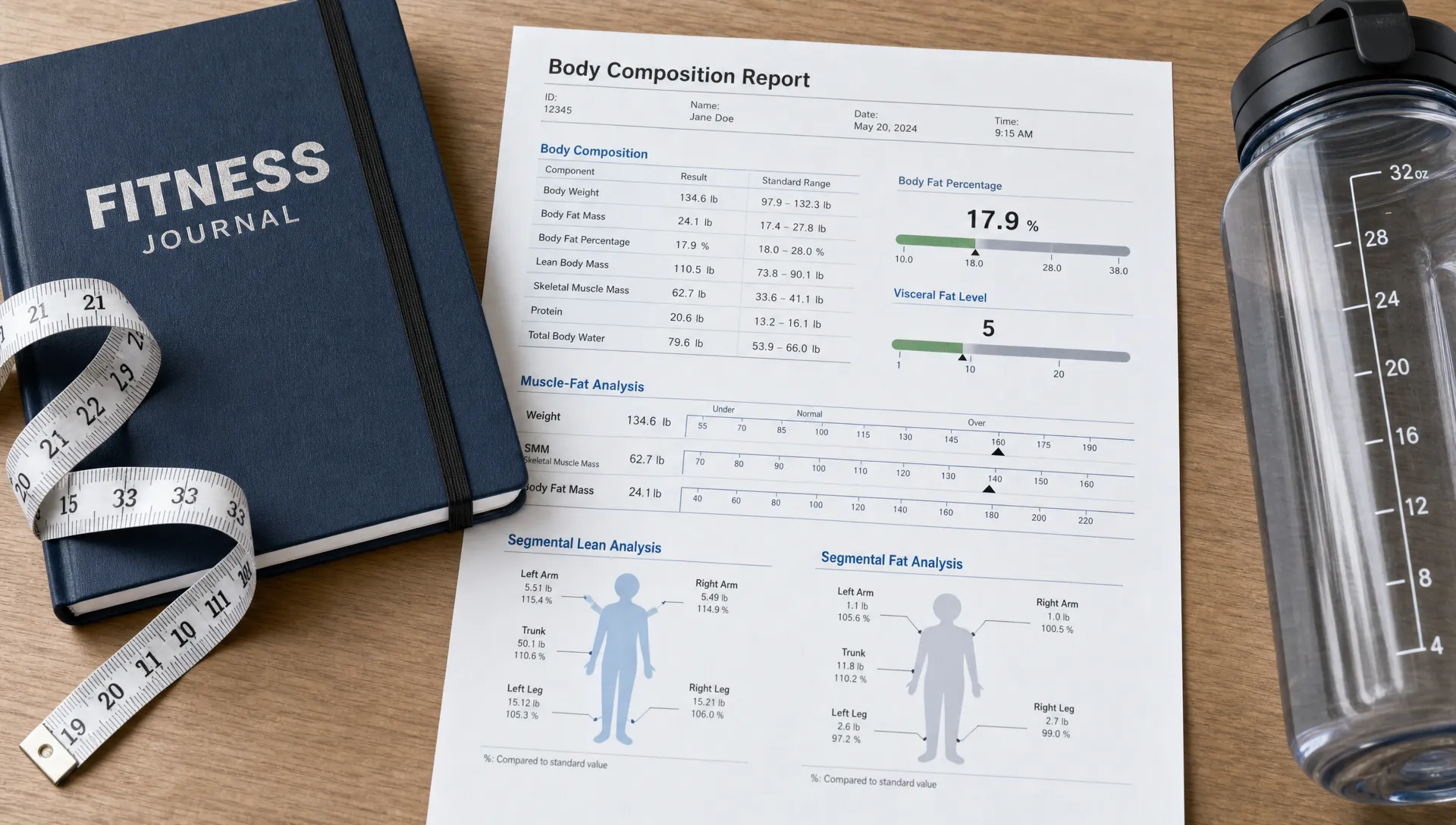
A DEXA scan separates your body into components such as fat mass, lean mass and bone mineral content. It also shows where those tissues are distributed. That regional detail is what makes DEXA more useful than a bathroom scale or many handheld body fat devices.
For a deeper technical overview, DEXA SF has a separate guide on using DEXA body composition analysis for smarter training. For day-to-day fitness planning, focus on the numbers that can guide behavior.
| DEXA metric | What it tells you | How to use it for fitness |
|---|---|---|
| Total fat mass | The amount of fat tissue on your body | Track whether a fat-loss phase is working beyond scale weight |
| Body fat percentage | The share of total weight that is fat | Use as a context metric, but do not judge progress by percentage alone |
| Lean mass | Mostly muscle, organs, water and connective tissue | Watch whether training supports or preserves lean tissue |
| Regional lean mass | Lean mass by arms, legs and trunk | Identify whether muscle gain is balanced across the body |
| Visceral fat estimate | Fat stored around internal organs | Monitor a marker often tied to metabolic health risk |
| Bone mineral density | A marker of bone strength | Use as a signal for bone-health conversations and long-term monitoring |
| Left to right differences | Side-to-side differences in lean mass | Inform strength programming, rehab conversations or sport-specific work |
The key is to avoid treating one number as the whole story. A person can lose scale weight and also lose muscle. Another person can gain weight in a productive way if lean mass rises faster than fat mass. DEXA helps you see those differences.
Prepare for your baseline scan
A baseline scan is the reference point for future progress. The cleaner and more repeatable your setup, the more useful your comparisons will be later.
DEXA uses low-dose X-ray technology. RadiologyInfo, a patient education site from the American College of Radiology and the Radiological Society of North America, notes that patients should tell the technologist if there is any chance of pregnancy before a DEXA exam. You can review their general overview of DEXA bone densitometry if you want more context on the scan process.
For fitness tracking, consistency matters. Hydration, recent meals, intense training and glycogen levels can affect lean mass readings because lean mass includes water. You do not need to make the day complicated, but you should try to repeat similar conditions each time.
A practical pre-scan routine might look like this:
- Schedule scans at a similar time of day when possible.
- Avoid a very hard workout right before the scan.
- Keep meal timing and hydration reasonably consistent between scans.
- Wear simple clothing without metal when instructed by the scan provider.
- Bring notes on your current training block, diet phase and recent body weight trend.
The scan is only one data point. Your training log, nutrition adherence, sleep, stress and performance numbers give the result more meaning.
Turn your DEXA results into a fitness plan
The most useful part of a DEXA scan happens after the report is reviewed. Once you know your fat mass, lean mass, regional distribution and other markers, you can adjust your plan with more confidence.
If your goal is fat loss
For fat loss, the scale can be misleading. A five-pound drop looks good at first, but the quality of that weight loss matters. If DEXA shows that most of the change came from fat while lean mass stayed stable, your plan is likely moving in the right direction. If a large share came from lean mass, your deficit, protein intake, resistance training or recovery may need attention.
A DEXA scan can also help you avoid chasing body fat percentage without context. Body fat percentage can fall because fat mass drops, but it can also move because lean mass changes. Track total fat mass alongside percentage so you know what is actually happening.
For many people, a productive fat-loss plan includes resistance training, adequate protein, a sustainable calorie deficit and enough recovery to train consistently. The Physical Activity Guidelines for Americans from the U.S. Department of Health and Human Services recommend muscle-strengthening activity on at least two days per week for adults, along with regular aerobic activity. Those basics still matter, even when you have advanced body composition data.
If your goal is muscle gain
During a muscle-gain phase, body weight often rises. DEXA helps you see whether that increase is mostly lean mass, mostly fat mass or a mix of both. That can prevent two common mistakes: eating too little because you fear the scale or eating too aggressively because any weight gain is assumed to be muscle.
Regional lean mass can be especially helpful. If your trunk, legs and arms are not changing in the way your training predicts, your program may need a different exercise selection, more effective volume or better progression. For example, if lower-body lean mass is flat after a leg-focused training block, that is worth reviewing with your coach or fitness professional.
If your goal is body recomposition
Body recomposition means losing fat and gaining lean mass over the same general period. It is common for scale weight to change very little during recomposition, which can make people feel stuck even when the plan is working.
DEXA is useful here because it can show progress the scale hides. If your total weight is stable but fat mass has decreased and lean mass has increased, that is meaningful progress. In this case, using scale weight alone could push you to change a plan that is already doing its job.
If your goal is performance
Performance goals depend on the sport or activity. A powerlifter, runner, cyclist, martial artist and recreational strength trainee may all interpret DEXA results differently. The useful question is not simply whether a number is good, but whether your body composition supports your performance demands.
An endurance athlete may care about preserving lean mass while reducing unnecessary fat mass. A strength athlete may focus on increasing lean mass in key regions without moving too far outside a weight class. A field or court athlete may want to monitor asymmetries that could affect sprinting, jumping, cutting or force production.
If your goal includes bone health
Fitness is not only about fat and muscle. Bone density matters for long-term training capacity, injury prevention and healthy aging. Resistance training, impact loading where appropriate, sufficient energy intake, calcium, vitamin D and hormonal health all play a role in bone health.
A fitness DEXA scan can provide bone density information, but results that raise concern should be discussed with a qualified healthcare professional. If your main reason for testing is diagnosis, osteoporosis screening or medical follow-up, it is worth understanding the difference between a fitness scan and a medical scan. DEXA SF explains this distinction in its guide to DEXA Fit or medical DEXA scans.
Decide when to rescan
A DEXA scan is not meant to be repeated every few days or used like a daily weigh-in. Body composition changes take time. Scanning too often can create noise, while waiting too long can delay useful adjustments.
A good interval depends on the goal, the size of the expected change and how aggressively you are changing training or nutrition.
| Fitness situation | Common rescan timing | Why it works |
|---|---|---|
| Starting a new training and nutrition plan | Baseline, then after 8 to 12 weeks | Gives the plan enough time to create measurable change |
| Fat-loss phase | Every 8 to 12 weeks | Helps confirm fat loss while checking lean mass retention |
| Muscle-gain phase | Every 12 to 16 weeks | Muscle gain is slower and needs a longer window |
| Maintenance phase | Two to four times per year | Tracks trends without overreacting to short-term fluctuation |
| Return from injury or training interruption | After a complete training block | Helps compare regional lean mass and asymmetry after rebuilding |
These are practical ranges, not strict rules. If your program, health status or provider recommendations call for a different schedule, follow that guidance.
Use DEXA data with other fitness metrics
DEXA is powerful, but it should not replace the basics of coaching, training observation and lifestyle tracking. A strong plan uses DEXA alongside other evidence.
Pair your scan results with:
- Average body weight over several days, not one weigh-in.
- Strength numbers, conditioning markers or sport performance tests.
- Waist measurement or other circumference trends.
- Nutrition consistency, including protein and overall energy intake.
- Sleep, stress and recovery notes.
This broader view keeps you from overreacting. For example, if DEXA shows lean mass is down slightly after a hard training week, but strength is stable and you arrived dehydrated, the result may need cautious interpretation. If two scans in a row show declining lean mass during a diet, and gym performance is also falling, that is a stronger signal to adjust.
Avoid common DEXA mistakes
The biggest mistake is treating the scan like a grade. A body fat percentage is information, not a moral score. The point is to make better decisions, not to attach your self-worth to a number.
Another mistake is comparing your result to someone else. Age, sex, training history, sport, genetics, injury background and goal all affect what a useful body composition looks like. A lean mass target that makes sense for one athlete may be irrelevant for another person who wants better metabolic health or sustainable fat loss.
It is also easy to focus only on the headline number. Total body fat percentage may be the most familiar metric, but your actual next step might depend more on lean mass retention, visceral fat, regional distribution or asymmetry. Read the report as a system.
Finally, do not change everything at once after one scan. If the data suggests a problem, adjust the most likely lever first. That might mean adding resistance training, tightening nutrition consistency, increasing protein, improving recovery or slowing the rate of weight loss. Then rescan after enough time has passed to evaluate the change.
Frequently Asked Questions
How accurate is a DEXA scan for fitness goals? DEXA is widely used because it provides detailed body composition data, including fat mass, lean mass and regional distribution. Like any measurement, it is most useful when scan conditions are consistent and results are interpreted in context.
Can a DEXA scan tell me exactly how many calories to eat? Not by itself. DEXA can provide body composition and metabolic insights that help inform calorie and protein targets, but your actual needs depend on activity level, goals, training load, adherence and progress over time.
Will DEXA show whether I am gaining muscle? It can show changes in lean mass, including regional changes. Lean mass is not pure muscle because it includes water and other non-fat tissue, so trends across multiple scans are more useful than a single reading.
How often should I get a DEXA scan for fitness? Many people rescan after 8 to 12 weeks during fat loss or after 12 to 16 weeks during a muscle-gain phase. The right interval depends on your goal and how quickly meaningful change is expected.
Is DEXA useful if my scale weight is not changing? Yes. DEXA can show whether stable scale weight is hiding fat loss, lean mass gain or a mix of changes. This is especially helpful during body recomposition.
Make your next scan a decision point
A DEXA scan for fitness goals is most useful when it leads to a clear next step. Start with a baseline, connect the results to your training and nutrition plan, then repeat the scan after a meaningful block of work.
DEXA SF provides professional DEXA body composition scans in San Francisco, including measurements for body fat, lean mass, bone density, visceral fat, asymmetry and metabolic data insights. Clients also receive expert interpretation with fitness and nutrition guidance, so the numbers are easier to turn into action.
If you are ready to measure what is really changing, you can schedule a DEXA scan in San Francisco and use your results to train with more precision.