
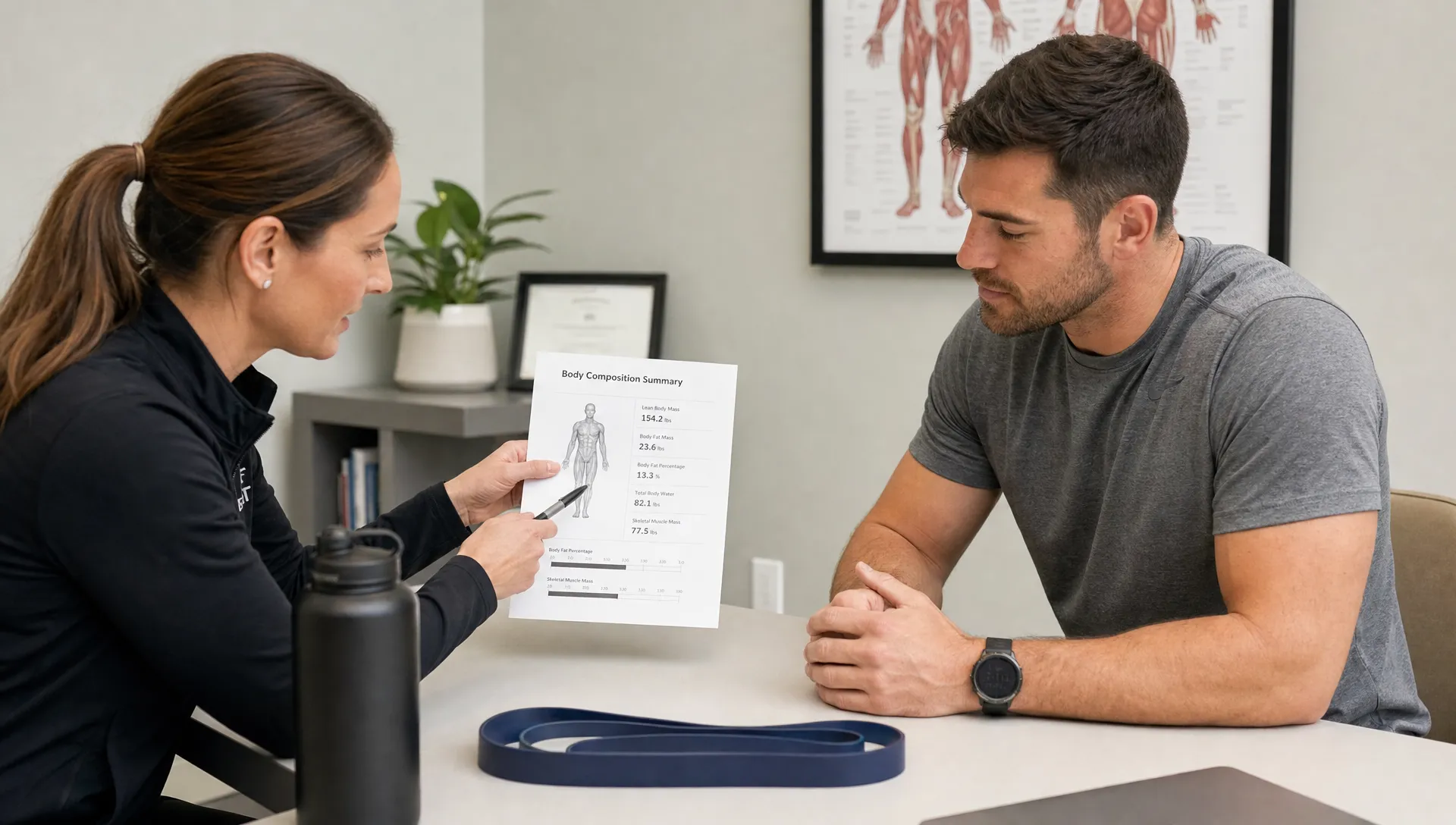
When a Body Composition Scan Beats a Bathroom Scale
A bathroom scale is useful because it is simple. Step on, get a number, move on. For many people, that number becomes the daily scorecard for fitness, health and diet decisions.
The problem is that weight is a blunt measurement. It combines fat, muscle, bone, organs, water, food in your digestive tract and normal day-to-day fluid shifts into one total. If your goal is to look leaner, get stronger, reduce health risk or understand whether your training plan is working, the scale often cannot answer the question you are actually asking.
That is where a body composition scan can beat a bathroom scale. Not because weight is useless, but because the best measurement depends on the decision you need to make. A scale tells you how heavy you are today. A body composition scan shows what that weight is made of.
What the bathroom scale gets right
The bathroom scale is not the enemy. It is inexpensive, quick and helpful for tracking broad trends over time. If your weight is changing steadily for several weeks, that trend can tell you whether your energy intake and activity level are moving you in the direction you expected.
Scale weight can also be useful for medical monitoring when a clinician asks you to track weight changes, for example during pregnancy, heart failure management or medication adjustments. In those cases, the simplicity of daily or weekly weighing is a strength.
The issue starts when people treat a small weight change as a complete body composition report. A two-pound increase may come from muscle gain, water retention, salty food, a later dinner, soreness after hard training or menstrual cycle changes. A two-pound decrease may come from fat loss, water loss, lower glycogen stores or even lean tissue loss during aggressive dieting.
In other words, the scale is good at trend detection. It is weak at explaining the trend.
What a body composition scan adds
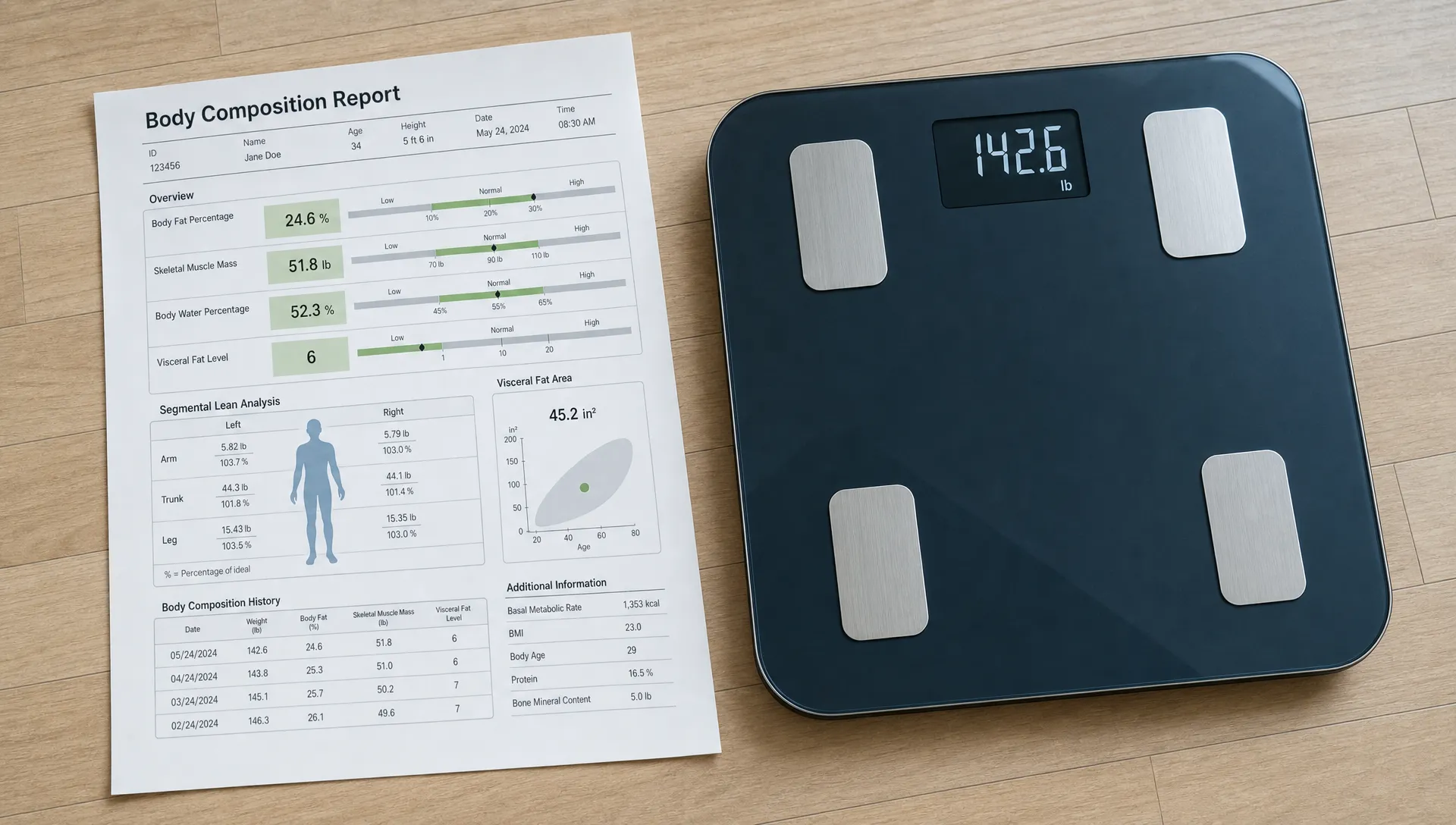
A body composition scan gives context to your weight by separating it into more meaningful categories. With DEXA technology, the scan can estimate total body fat, lean mass, bone mineral content, visceral fat and regional differences between the left and right sides of the body.
That matters because two people can weigh the same and have very different health and performance profiles. One may have more lean mass and lower visceral fat. The other may have less muscle, higher body fat and lower bone density. The bathroom scale sees both people as identical. A DEXA scan does not.
DEXA is widely used for bone density testing, and DEXA body composition analysis applies the same imaging technology to distinguish fat mass, lean tissue and bone. It is not magic and it is not a substitute for medical diagnosis, but it provides far more detail than weight alone or most at-home devices.
If you want to understand the specific outputs before booking, DEXA SF has a deeper guide to the DEXA body composition metrics that matter most, including body fat percentage, lean mass and visceral fat.
| What you want to know | Bathroom scale | Body composition scan |
|---|---|---|
| Total body weight | Yes | Yes |
| Body fat percentage | No | Yes |
| Fat mass in pounds | No | Yes |
| Lean mass | No | Yes |
| Visceral fat estimate | No | Yes |
| Bone density or bone mineral content | No | Yes |
| Left vs. right muscle asymmetry | No | Yes |
| Whether weight change came from fat or lean tissue | No | Yes, with repeat scans |
When a body composition scan beats the scale
A body composition scan is most valuable when the scale gives you a number but not enough information to act. These are the situations where more detail can prevent bad decisions.
You are strength training and the scale is not moving
This is the classic scale trap. You start lifting consistently, improve your protein intake and feel stronger. Your clothes fit differently. Your waist looks smaller. Then you step on the scale and see almost no change.
That can feel like failure, even when your body is improving.
Strength training often changes body composition before it changes total weight. If you lose four pounds of fat and gain three pounds of lean mass, the scale only shows a one-pound difference. A body composition scan can show whether that apparent plateau is actually recomposition.
This is especially useful for people who are new to lifting, returning after time off or increasing training volume. Early changes in muscle glycogen and water can also mask fat loss on the scale. A scan gives you a cleaner before-and-after comparison than body weight alone.
You hit a fat loss plateau
A plateau is not always a plateau. Sometimes your body fat is still going down while water weight fluctuates. Other times, your weight is dropping but you are losing more lean mass than you want.
Those two situations require different responses. If fat mass is decreasing and lean mass is stable, the plan may be working even if the scale is noisy. If lean mass is falling quickly, you may need to reassess calorie intake, protein, recovery or training load with a qualified professional.
A body composition scan helps you avoid changing a plan just because the bathroom scale had a bad week. It also helps you recognize when weight loss is coming from the wrong place.
You are using BMI as your main health marker
BMI can be a useful population-level screening tool, but it does not directly measure body fat. The CDC explains that BMI is calculated from height and weight, not from fat, muscle or bone.
That limitation matters for muscular people, older adults and anyone whose weight does not match how they look or perform. A strong athlete can be categorized as overweight by BMI because muscle contributes to body weight. Someone else may fall into a normal BMI range but have low muscle mass and higher body fat than expected.
A body composition scan gives a more individualized view. Instead of asking whether your height-weight ratio fits a category, it shows how much fat, lean tissue and bone you carry.
You care about visceral fat, not just appearance
Subcutaneous fat sits under the skin. Visceral fat is stored deeper in the abdomen around internal organs. A bathroom scale cannot distinguish between them, and a mirror cannot reliably tell you how much visceral fat you carry.
Visceral fat is relevant because higher amounts are associated with cardiometabolic risk. Waist circumference can provide a rough clue, but a body composition scan gives a more direct estimate of visceral fat than weight alone.
For someone who looks only mildly overweight, this can be eye-opening. For someone who has lost weight, it can show whether the plan is improving a health-relevant marker beyond the number on the scale.
You are losing weight quickly and want to protect muscle
Fast weight loss can look rewarding on a scale. The concern is that a rapid drop may include lean mass, especially if the plan lacks resistance training, adequate protein or enough calories to support recovery.
Muscle matters for strength, mobility, metabolic health and long-term weight maintenance. Losing scale weight at the expense of lean tissue can make future progress harder.
A body composition scan can help you monitor whether your weight loss plan is preserving lean mass. If repeat scans show fat mass decreasing while lean mass stays relatively stable, that is a stronger sign than scale weight alone. If lean mass is dropping more than expected, it may be time to slow the pace and adjust the plan.
You are training for performance, not just weight loss
Athletes often need more than a lighter number. A runner may want enough lean mass for power without carrying excess nonfunctional weight. A cyclist may care about power-to-weight ratio. A field sport athlete may need symmetry, durability and strength across both sides of the body.
The bathroom scale cannot show whether a training block added lean mass in the legs, whether one side is lagging or whether a weight gain came mostly from fat. A body composition scan can provide regional data that supports smarter training decisions.
For Bay Area athletes comparing testing options, DEXA SF also breaks down InBody vs. DEXA for athletes, including why measurement method and repeatability matter.
You are returning from injury or noticing asymmetry
After an injury, surgery or long break from training, the body often compensates. You may load one leg more than the other, favor one side during lifts or rebuild muscle unevenly.
A scale cannot detect that. Even a tape measure may miss subtle side-to-side differences. A body composition scan can show left vs. right lean mass differences, which can help guide conversations with a trainer, physical therapist or clinician.
The scan does not diagnose the cause of an imbalance, but it can make the imbalance visible. That visibility can be valuable when you are trying to rebuild evenly and reduce the chance of repeating the same pattern.
You need a baseline before making changes
Many people start a new fitness or nutrition plan with only a goal weight. That can work for simple weight loss, but it is less useful if the real goal is lower body fat, more muscle, better bone health or reduced visceral fat.
A baseline scan gives you a starting point. After several weeks of consistent training and nutrition, a follow-up scan can show what changed. This is a stronger feedback loop than relying on memory, mirror checks and inconsistent scale readings.
For people who like objective data, the value is psychological too. Clear numbers can make progress easier to trust, especially when daily weight fluctuations are frustrating.
When the scale is still enough
You do not need a body composition scan for every fitness question. If your goal is simple weight maintenance, a bathroom scale used consistently may be enough. Weighing at the same time of day, under similar conditions and looking at weekly averages can reduce the noise of daily fluctuations.
A scale may also be enough if you are just starting and need a low-friction habit. The best measurement is the one you can actually use. If daily weighing helps you stay aware without becoming obsessive, it can be a practical tool.
The scale becomes less useful when it changes your behavior in the wrong direction. If a normal water-weight increase makes you cut calories too aggressively, skip strength training or assume a good plan has failed, you need better feedback.
How to combine a scale and a body composition scan
The best approach is not scale vs. scan. It is using each tool for the job it does well.
Use the bathroom scale for short-term trend monitoring. Use a body composition scan for periodic checkpoints that answer deeper questions. For fat loss or muscle gain goals, many people benefit from scanning every 8 to 12 weeks, since that gives the body enough time to produce meaningful changes. For maintenance or general health tracking, less frequent scans may be enough.
Try to keep scan conditions consistent. Schedule repeat scans at a similar time of day when possible, avoid unusual meals or workouts right before testing and compare results to your previous scan rather than to someone else’s numbers.
If you are comparing DEXA with smart scales, this guide on why DEXA body fat measurement beats smart scales explains the difference between a direct imaging-based assessment and estimates from consumer devices.
What to look for in your results
A good body composition scan should help you make decisions, not just hand you a report. The most useful results depend on your goal.
For fat loss, look at fat mass, body fat percentage and visceral fat. For muscle gain, look at total lean mass and regional lean mass changes. For performance, look at side-to-side balance and where lean mass is changing. For long-term health, bone density and visceral fat may deserve more attention.
One scan is a snapshot. Two or more scans create a trend. That trend is where the real value appears, because it shows whether your plan is changing your body in the direction you intended.
Frequently Asked Questions
Is a body composition scan better than weighing yourself? It is better when you need to know what changed inside your weight. A scale is fine for simple weight trends, but a body composition scan is more useful for tracking fat loss, muscle gain, visceral fat, bone metrics and asymmetry.
How often should I get a body composition scan? For active fat loss or muscle gain goals, every 8 to 12 weeks is a practical interval for many people. If you are maintaining or checking general trends, you may not need scans as often.
Can a bathroom scale show muscle gain? Not directly. If your weight increases, the scale cannot tell whether the gain came from muscle, fat, water or food volume. A repeat body composition scan can estimate changes in lean mass and fat mass.
Is DEXA the same as a smart scale? No. Smart scales estimate body composition using bioelectrical impedance, which can be affected by hydration, recent meals and other variables. DEXA uses imaging technology to estimate fat, lean tissue and bone separately.
Do I still need to track weight if I get DEXA scans? Often, yes. Weight tracking can show short-term trends between scans. DEXA scans add periodic detail so you can understand whether those trends reflect fat loss, muscle gain or other changes.
Get better feedback than the scale can give
If your bathroom scale is giving you more confusion than clarity, a DEXA scan can help you see what is actually changing. DEXA SF provides professional body composition scans in San Francisco with measurements for body fat, lean mass, bone density, visceral fat and asymmetry, along with expert interpretation to help you understand your results.
Schedule your scan with DEXA SF and use better data to guide your fitness and nutrition decisions.