
Is Bone Mass Percentage a Useful Health Metric?
If you have seen a “bone mass percentage” number on a smart scale or body composition report, it is reasonable to wonder whether it deserves your attention. Body fat percentage gets discussed constantly. Lean mass is a major target for strength training and healthy aging. Bone mass sounds important too, so a percentage attached to it can feel like another score you should optimize.
The reality is more nuanced. Bone mass percentage can be mildly useful as a body composition context metric, but it is not the best way to judge bone health. For most people, bone mineral density, T-scores, Z-scores and changes in lean mass tell a clearer story than the percentage of body weight attributed to bone.
That does not mean the number is worthless. It means you need to know what it represents, what it cannot show and when a more precise test such as DEXA is the better tool.
What does bone mass percentage mean?
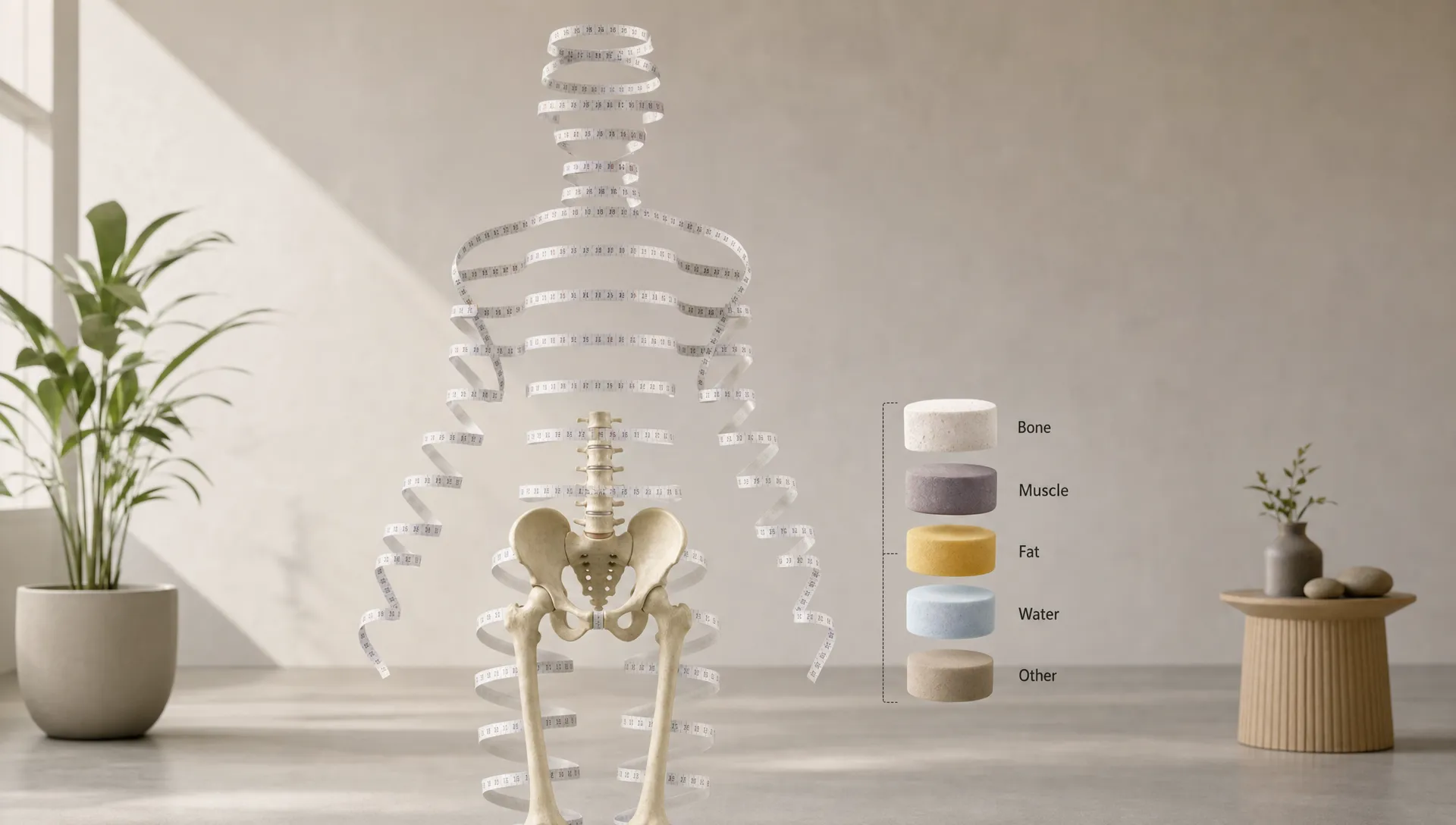
Bone mass percentage is usually an estimate of how much of your total body weight comes from bone mineral content. In simplified terms, it answers this question: “What percentage of my body weight is bone mineral?”
Some consumer scales estimate bone mass using bioelectrical impedance analysis, which sends a small electrical signal through the body and applies equations to estimate fat, lean tissue, water and bone. A DEXA scan, by contrast, directly estimates bone mineral content and bone mineral density using dual-energy X-ray absorptiometry.
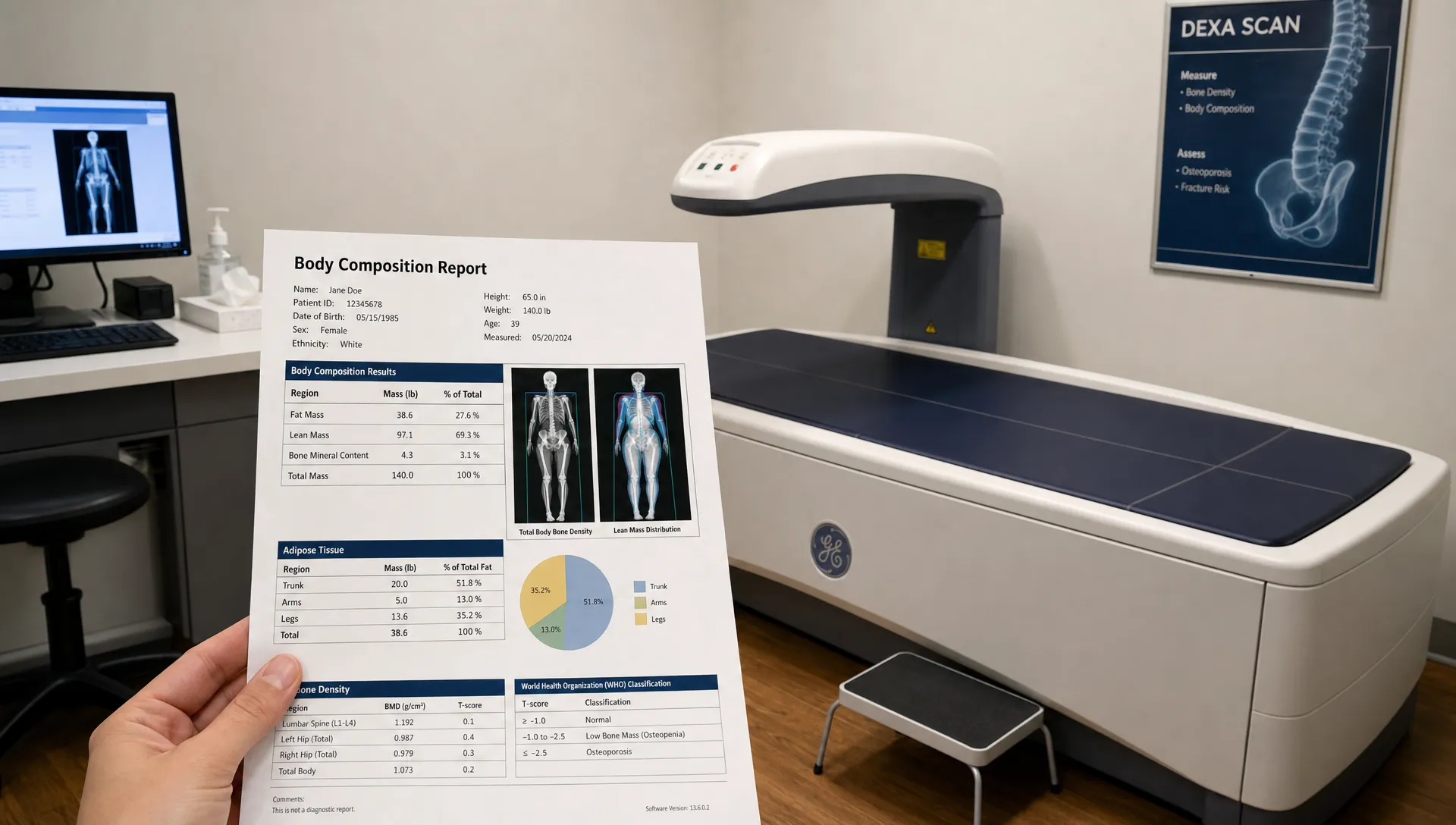
On a DEXA report, the more useful bone-related numbers are usually:
- Bone mineral content, often abbreviated as BMC
- Bone mineral density, often abbreviated as BMD
- T-score, commonly used in osteoporosis assessment
- Z-score, which compares results to people of similar age and sex
If you want a deeper breakdown of those terms, DEXA SF has a dedicated guide on how bone mass differs from bone density and what each report value actually means.
Is bone mass percentage useful?
Yes, but only in a limited way. Bone mass percentage can help you understand that body weight is made of different compartments, including fat, lean tissue and bone mineral. It can also be a conversation starter if the number looks unusually low or changes unexpectedly.
The problem is that the percentage alone does not tell you whether your bones are strong, dense or at risk. A percentage is affected by the denominator, which is total body weight. If your fat mass or muscle mass changes, your bone mass percentage can shift even if your actual bone mineral content stays the same.
For example, imagine someone has the same amount of bone mineral before and after losing weight. If they lose mostly fat, their bone mass percentage may rise because total body weight decreased. That does not automatically mean their bones became denser. Conversely, if they gain muscle, their bone mass percentage may fall even though their bones did not weaken.
This is why the phrase “body bone mass percentage” can be misleading when it appears as a single score in an app. It sounds like a direct bone health grade, but in practice it is often a rough body composition ratio.
Bone mass percentage vs. bone density: the key difference
Bone mass and bone density are related, but they are not interchangeable.
Bone mineral content is the amount of mineral in bone, often measured in grams on a DEXA scan. Bone mineral density is mineral content adjusted for the scanned bone area, usually expressed as grams per square centimeter. Bone density is the metric used in clinical contexts because it better reflects skeletal strength and fracture risk than total bone mass alone.
According to the International Society for Clinical Densitometry, osteoporosis diagnosis by bone density testing is based on specific skeletal sites, typically the lumbar spine, total hip, femoral neck and sometimes the 33 percent radius. This matters because a whole-body percentage can hide regional differences. You could have a normal-looking total number but still have low density at a clinically important site.
Here is a simple way to compare common bone metrics:
| Metric | What it tells you | Best use | Main limitation |
|---|---|---|---|
| Bone mass percentage | Estimated bone mineral as a share of body weight | General body composition context | Can change because fat or muscle changed |
| Bone mineral content (BMC) | Total amount of bone mineral measured | Tracking total bone mineral over time | Does not adjust for bone size in the same way BMD does |
| Bone mineral density (BMD) | Bone mineral adjusted for scanned area | Assessing bone strength and bone health trends | Site-specific results matter |
| T-score | Comparison with a young adult reference population | Osteoporosis and osteopenia classification in appropriate adults | Not usually the main metric for younger adults |
| Z-score | Comparison with an age-matched reference population | Evaluating whether bone density is lower than expected for age | Interpretation depends on clinical context |
Why bone mass percentage can be misleading during weight loss or muscle gain
Bone changes slowly. Fat and lean mass can change much faster. That creates a problem when you use bone mass percentage as a progress marker during a fitness or weight loss program.
A person who loses 20 pounds of fat may see their bone mass percentage improve even when their bone mineral content is essentially unchanged. Another person who adds 10 pounds of lean mass through training may see the percentage decline because their total body weight increased. Neither change necessarily reflects better or worse skeletal health.
This is also why a bathroom scale or smart scale can create false confidence. Many devices estimate bone mass rather than measuring it directly. Hydration, recent exercise, food intake and device equations can all affect body composition estimates. Even when a trend is directionally useful, it should not be treated as a diagnosis.
A DEXA scan provides a more detailed picture because it separates fat mass, lean mass, bone mineral content and regional distribution. For people tracking fat loss, muscle gain or health changes over time, the most useful interpretation comes from looking at several metrics together rather than isolating bone mass percentage.
When bone mass percentage may still be worth tracking
Bone mass percentage has some value when it is measured consistently and interpreted modestly. It can be useful if you understand that it is not a clinical bone strength score.
It may be worth noting when:
- You are tracking body composition trends with the same testing method over time
- You want a broad view of how body weight is distributed across fat, lean tissue and bone mineral
- You notice an unexpected shift and want to ask better questions about your scan results
- You are comparing it with more meaningful metrics such as BMD, lean mass and visceral fat
The key is consistency. If you compare a smart scale estimate from one brand to a DEXA measurement from another setting, the numbers may not line up. If you compare DEXA scans over time under similar conditions, the trend is more meaningful.
For a fuller picture of what to prioritize on a report, the guide to DEXA body composition metrics explains which numbers tend to matter most for fat loss, muscle gain, performance and health tracking.
What should you track instead?
If your goal is bone health, bone mass percentage should not be the lead metric. Track bone mineral density and the relevant score for your age and clinical context. If you are reviewing a DEXA report, ask about BMD, T-score, Z-score and whether any site-specific results deserve follow-up.
If your goal is body composition, prioritize body fat percentage, total fat mass, lean mass, visceral fat and regional distribution. These numbers tend to be more actionable for fitness and nutrition planning. For example, losing fat while preserving lean mass is very different from losing the same amount of weight from both fat and muscle.
If your goal is long-term health, the best approach is to connect the dots. Bone, muscle and fat are not separate concerns. Muscle supports mobility and balance. Bone density affects fracture risk. Visceral fat is associated with cardiometabolic risk. A scan that shows all of these in one place can help you make more informed decisions about training, nutrition and follow-up care.
That combined view is one reason many people choose to assess body and bone health in one scan rather than relying on weight alone.
When should you pay closer attention to bone metrics?
Bone metrics matter more if you have risk factors for low bone density or fracture. The U.S. Preventive Services Task Force recommends screening for osteoporosis in women 65 and older, as well as postmenopausal women younger than 65 who are at increased risk. Clinical decisions should always be made with a qualified healthcare professional.
You may also want to discuss bone density testing with a clinician if you have a history of low-trauma fracture, long-term glucocorticoid use, early menopause, very low body weight, certain endocrine conditions or a strong family history of osteoporosis. Nutrition, training history and medications can also influence bone health.
Age matters too. The National Institute of Arthritis and Musculoskeletal and Skin Diseases notes that most people reach peak bone mass around age 30, after which maintaining bone becomes a long-term priority. That does not mean bone health is fixed after 30. It means training, nutrition and medical care become increasingly important for slowing loss and reducing risk.
How to support better bone-related outcomes
You do not need to chase a higher bone mass percentage as a standalone goal. Focus on behaviors that support bone density, muscle and overall metabolic health.
Resistance training is one of the most practical places to start. Bones respond to loading, and strength training also helps preserve or build lean mass. Weight-bearing activities such as walking, hiking, stair climbing and appropriate impact exercise may also support bone health, depending on your fitness level and medical situation.
Nutrition matters as well. Adequate protein supports muscle tissue, and calcium and vitamin D are central to bone metabolism. The NIH Office of Dietary Supplements provides calcium intake guidance by age and life stage, but individual needs can vary. If you have a medical condition, dietary restriction or supplement question, it is best to discuss it with a clinician or registered dietitian.
Other basics are less exciting but still relevant: avoid smoking, limit heavy alcohol intake, sleep enough to recover from training and address medical issues that can affect bone. The goal is not to improve one percentage on a report. The goal is to build and maintain a body that is strong, resilient and metabolically healthier over time.
How to interpret your number in practice
If you see bone mass percentage on a report, treat it as a supporting detail. Ask three questions before giving it too much weight.
First, where did the number come from? A smart scale estimate and a DEXA-derived value are not the same. Second, did the absolute bone mineral content or bone mineral density change, or did only the percentage change? Third, what happened to the rest of your body composition during the same period?
A rising bone mass percentage during fat loss may simply reflect a smaller total body weight. A falling percentage during muscle gain may not be a problem. A low or declining BMD result, however, deserves more attention and may require medical follow-up depending on your age, risk factors and scan site.
The most useful interpretation is contextual. Bone mass percentage can sit in the background. Bone density, lean mass, fat distribution and visceral fat should usually guide the conversation.
Frequently Asked Questions
Is a higher bone mass percentage always better? Not necessarily. A higher percentage may mean you have more bone mineral relative to body weight, but it can also rise because you lost fat or total weight. Bone mineral density is usually more useful for judging bone health.
Can a smart scale accurately measure bone mass percentage? Smart scales estimate bone mass percentage using equations, often based on bioelectrical impedance. They can be convenient for rough trends, but they should not be used to diagnose low bone density or osteoporosis.
Does DEXA measure bone mass percentage? A DEXA scan can estimate bone mineral content and body composition, which can be used to understand bone as part of total body mass. For bone health, DEXA-derived BMD, T-scores and Z-scores are more important than percentage alone.
Why did my bone mass percentage change after losing weight? If your total body weight decreased while your bone mineral content stayed similar, your bone mass percentage can increase. That does not automatically mean your bones became stronger.
Should I worry if my bone mass percentage is low? A low estimate is not enough by itself to diagnose a problem. If you have risk factors for low bone density or fracture, ask a healthcare professional whether a bone density evaluation is appropriate.
Get a clearer view of bone and body composition
Bone mass percentage can add context, but it should not be the main score you use to judge your health. A professional DEXA scan gives you a more complete look at body fat, lean mass, visceral fat, asymmetry and bone-related metrics in one appointment.
If you are in San Francisco and want precise body composition data with expert interpretation, schedule a DEXA scan with DEXA SF. You will leave with clearer numbers and a better understanding of what to focus on next.