
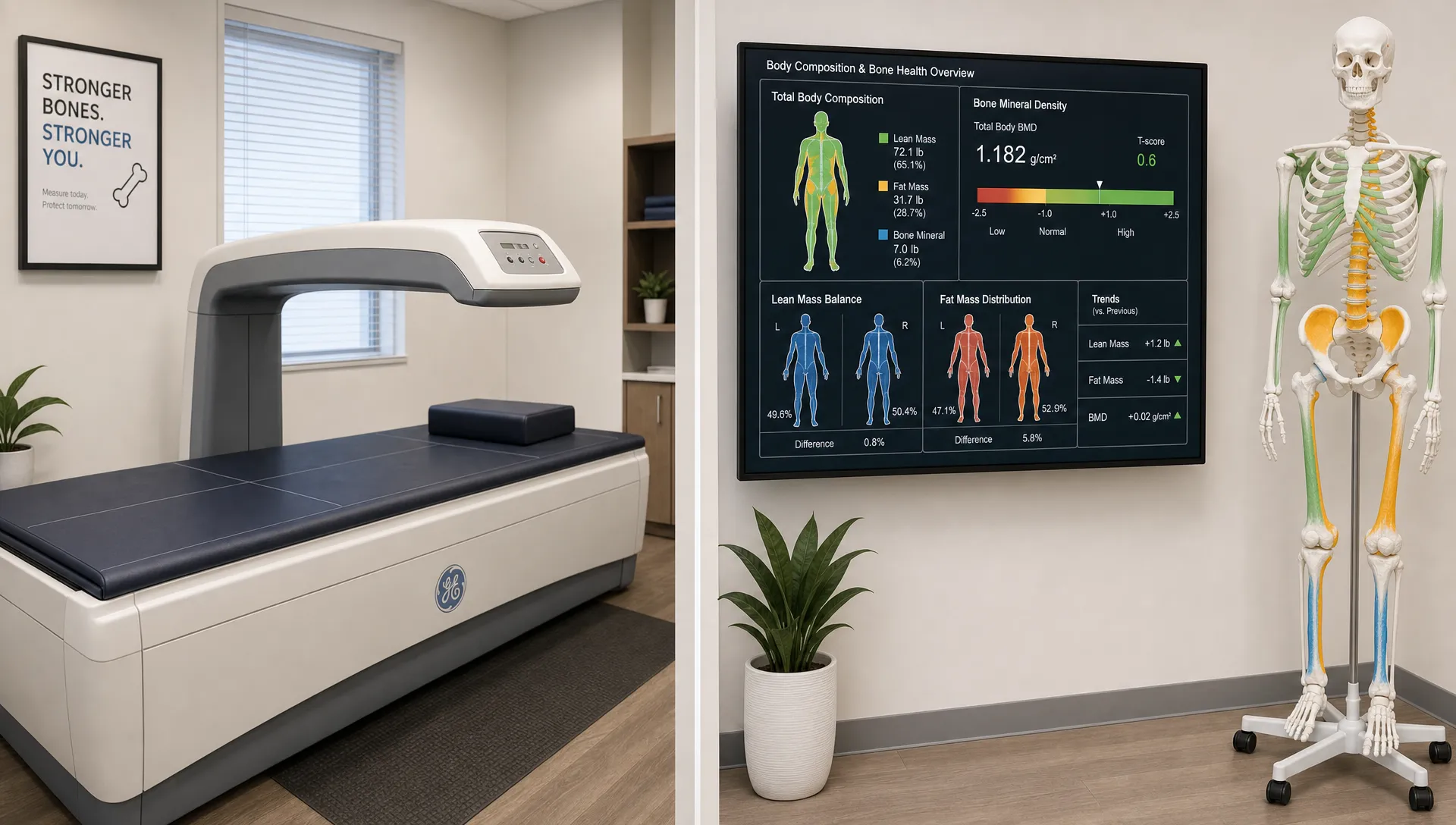
Body and Bone Health: What One Scan Can Show
Most health tracking separates the body into isolated numbers: weight, BMI, cholesterol, workout performance, maybe a bone density test later in life. But your body and bone health are connected. Muscle supports the skeleton. Fat distribution affects metabolic risk. Bone density changes quietly, often without symptoms.
That is why a DEXA scan can be so useful. In one scan, you can see much more than whether your weight went up or down. You can understand how much of your body is fat, how much is lean mass, where fat is stored, whether one side is stronger than the other, and what your bone density looks like.
If you are new to the technology, DEXA stands for dual-energy X-ray absorptiometry. It is widely used to assess bone mineral density, and it is also one of the most precise tools available for body composition analysis. For a primer on the basics, DEXA SF has a helpful guide to what a DEXA scan is and why people get one.
Why body and bone health belong together
Body composition and bone health are often treated as separate topics, but they influence each other throughout life.
Lean muscle mass places healthy stress on bone, especially when you lift, sprint, climb, jump, or carry load. That mechanical stimulus helps your skeleton adapt. At the same time, nutrition that supports muscle, including adequate protein and key micronutrients, often overlaps with nutrition that supports bone.
Fat mass also matters, not just in quantity but in location. Higher visceral fat, the fat stored deeper in the abdomen around internal organs, is associated with greater cardiometabolic risk than fat stored under the skin. A scale cannot show that difference. BMI cannot show it either.
Bone health can be even easier to overlook. According to the National Institute of Arthritis and Musculoskeletal and Skin Diseases, osteoporosis may not cause symptoms until a fracture occurs. In other words, your bones can be losing density while you still feel strong, active, and healthy.
A DEXA scan brings these pieces together. Instead of guessing from weight, mirror changes, or gym performance alone, you get objective measurements that can guide smarter training, nutrition, and health decisions.
What one DEXA scan can show
A DEXA scan does not reduce your health to one score. Its value comes from showing several layers of information at once. At DEXA SF, scans are used to assess body fat, muscle mass, bone density, visceral fat, asymmetry, and metabolic insights, with expert interpretation to help you understand what the numbers mean.
| Measurement | What it tells you | Why it matters |
|---|---|---|
| Body fat percentage | How much of your total mass is fat | Helps you track fat loss more accurately than weight alone |
| Regional fat | Where fat is stored across the body | Shows patterns that BMI and the scale miss |
| Visceral fat | Estimated fat stored deep in the abdominal area | Provides insight into metabolic risk patterns |
| Lean mass | Muscle and other non-fat soft tissue | Helps you track strength, aging, recovery, and performance goals |
| Left-right asymmetry | Differences between sides of the body | Can reveal imbalances that may affect training or movement |
| Bone density | Mineral density of bone in scanned regions | Helps evaluate skeletal health and potential need for follow-up |
| Metabolic insights | Context based on body composition data | Supports more personalized nutrition and fitness planning |
The exact way you use these results depends on your goals. Someone focused on longevity may care most about preserving muscle and bone. An athlete may look closely at lean mass distribution and asymmetry. Someone working on fat loss may focus on body fat percentage and visceral fat while making sure lean mass is protected.
Body fat: more than a percentage
Body fat percentage is often the first number people look for, but the real insight comes from pairing it with location.
Two people can have the same body fat percentage and very different fat distribution. One may store more fat around the hips and thighs, while another stores more around the abdomen. From a health perspective, those patterns are not identical.
DEXA can help show whether a plan is actually reducing fat mass or simply lowering total weight. This distinction matters because rapid weight loss can include water and lean tissue loss. If the goal is better body composition, the ideal outcome is usually fat reduction while maintaining, or ideally increasing, lean mass.
This is where DEXA becomes more useful than the scale. Your weight may stay the same while you lose fat and gain muscle. Or your weight may drop while muscle drops too, which may not be the result you wanted. For a deeper look at interpreting these patterns, see DEXA SF’s breakdown of what DEXA body results say about your health.
Lean mass: the number behind strength, metabolism, and aging
Lean mass includes muscle and other non-fat soft tissue. For most people, muscle is the most actionable part of that number because it responds to strength training, protein intake, recovery, and consistency.
Lean mass matters for more than aesthetics. It supports movement, balance, insulin sensitivity, athletic output, and daily function. As people age, preserving muscle becomes increasingly important because age-related muscle loss can affect independence and injury risk.
A DEXA scan can show lean mass by region, such as arms, legs, and trunk. That makes it useful for people who want to understand whether their training is balanced. If one leg has noticeably less lean mass than the other, that may reflect old injury patterns, sport-specific demands, or movement habits worth discussing with a coach, physical therapist, or qualified health professional.
Bone density: the quiet metric you cannot feel
Bone density is one of the clearest examples of a health marker you cannot reliably judge by appearance or effort. You can be lean, active, and strong in the gym while still having lower-than-expected bone mineral density.
DEXA is widely recognized as the standard test for measuring bone mineral density. RadiologyInfo, a patient resource from the American College of Radiology and Radiological Society of North America, describes DEXA as a commonly used test for diagnosing osteoporosis and assessing fracture risk.
Bone density results are especially relevant for postmenopausal women, men as they age, people with a history of low-trauma fracture, those with family history of osteoporosis, and anyone with medical or lifestyle factors that may affect bone health. Still, bone density is not only a late-life topic. Building and preserving bone is a lifelong process, which is why it helps to understand why bone mineral density matters at every age.
A body and bone scan can help you see whether your current routine is supporting your skeleton, not just your appearance or performance.
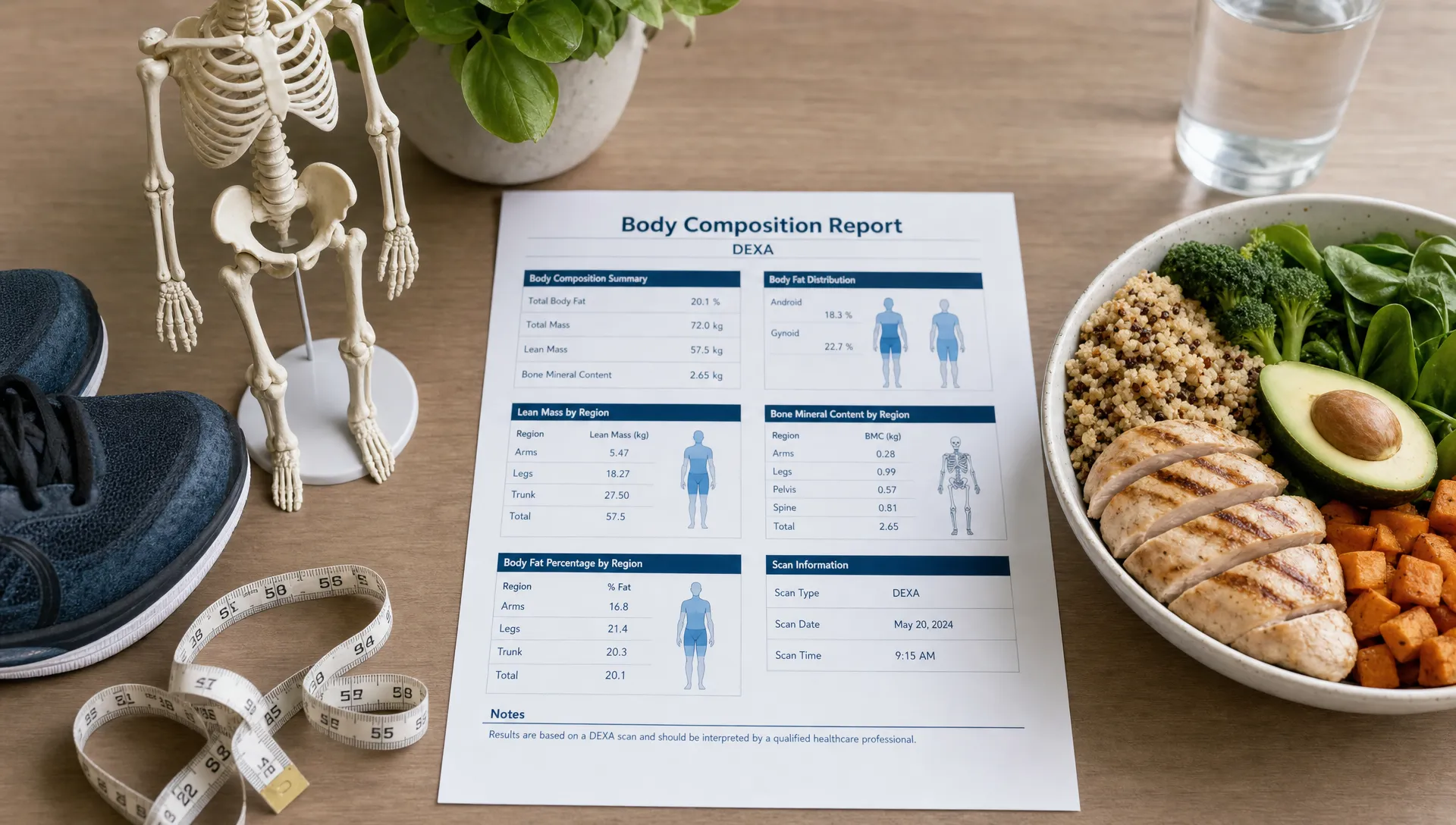
The patterns that make DEXA results valuable
The power of one scan is not just the individual measurements. It is the relationships between them.
Weight loss with muscle loss
If weight is dropping but lean mass is dropping too, your plan may need adjustment. That could mean reviewing protein intake, resistance training, calorie deficit size, sleep, recovery, or overall training load. The goal is not always to lose weight faster. Often, it is to improve the quality of the weight you lose.
Normal weight with high visceral fat
A person can have a normal BMI and still carry more abdominal or visceral fat than expected. This is one reason body composition is more informative than weight categories alone. DEXA can help reveal hidden risk patterns that may not be obvious from appearance.
Strength gains without balanced development
If your performance is improving but your scan shows significant left-right lean mass differences, it may be worth looking at movement patterns. This is common after injuries, in one-sided sports, or when daily habits favor one side. The scan does not diagnose the cause, but it gives you data to investigate.
Low bone density despite high activity
Not all exercise stresses bone the same way. Swimming and cycling can be excellent for cardiovascular fitness but are not as bone-loading as resistance training or impact-based activity. If bone density is lower than expected, your next step may be a conversation about strength training, nutrition, vitamin D status, calcium intake, hormones, medications, or medical history.
How to turn scan results into better decisions
A scan is only useful if you understand how to act on it. That is why interpretation matters. Numbers without context can be confusing, especially when body composition, bone density, and metabolic health point in different directions.
At DEXA SF, clients receive expert interpretation along with fitness and nutrition guidance. The goal is to connect your results to practical next steps, whether you are training for performance, improving long-term health, managing fat loss, or establishing a baseline.
| If your scan shows... | It may be time to consider... | Who may help |
|---|---|---|
| Fat loss with lean mass loss | More resistance training, higher protein, or a less aggressive calorie deficit | Fitness coach, dietitian, clinician |
| Higher visceral fat | Nutrition changes, activity consistency, sleep, stress, and relevant lab follow-up | Clinician, dietitian, health coach |
| Low lean mass for your goals | Progressive strength training and recovery planning | Strength coach, trainer, dietitian |
| Left-right asymmetry | Movement assessment or rehab-informed training | Physical therapist, coach |
| Lower bone density | Medical follow-up, bone-supportive training, and nutrition review | Physician, dietitian, qualified trainer |
The scan should not be treated as a standalone diagnosis for every issue. It is a measurement tool. For medical concerns, especially low bone density or fracture risk, results should be reviewed with a qualified healthcare professional.
Who should consider a body and bone scan?
A DEXA scan can be useful for many types of people, but the strongest reason to get one is when the information will change what you do next.
You may benefit from a scan if you are actively trying to lose fat and want to protect muscle. It can also help if you are strength training and want objective proof that your program is building lean mass. Endurance athletes may use it to monitor whether training volume is affecting muscle or bone. Adults entering midlife may want a baseline for body composition and bone density before age-related changes accelerate.
It can also be valuable if you feel stuck. If your weight has not changed, a scan may show that progress is still happening through recomposition. If your workouts are improving but your body composition is not moving, the scan may reveal where your plan needs attention.
For bone health specifically, you should speak with a healthcare professional about testing if you have risk factors such as a prior fragility fracture, family history of osteoporosis, long-term steroid use, early menopause, or other conditions that may affect bone metabolism.
How often should you repeat a scan?
The best timing depends on what you are tracking.
Body composition can change within weeks to months, especially when training and nutrition are consistent. Many people choose to repeat DEXA after a meaningful training block rather than scanning too frequently. This gives your plan enough time to produce measurable change.
Bone density changes more slowly. If you are monitoring bone health for clinical reasons, your healthcare provider can recommend an appropriate interval based on your age, risk factors, medications, and prior results.
The key is consistency. When comparing scans, try to keep conditions as similar as possible, including hydration, recent exercise, food intake, and time of day when practical. This helps make changes more meaningful.
What to expect from the scan experience
A DEXA scan is a quick, noninvasive process. You lie still while the scanner collects data. Afterward, the real value comes from understanding the report.
Instead of walking away with a pile of numbers, you want to know what the results mean for your goals. Is your fat loss plan preserving muscle? Is your visceral fat moving in the right direction? Are your left and right sides balanced? Does your bone density deserve more attention?
That combination of measurement and interpretation is what makes a DEXA scan different from a scale, smartwatch, or body fat estimate from a consumer device. It gives you a clearer baseline and a better way to measure change over time.
Frequently Asked Questions
Can one DEXA scan measure both body composition and bone health? Yes. DEXA technology can measure body composition, including fat mass and lean mass, and it is also widely used to assess bone mineral density. The exact report details depend on the scan type and protocol.
Is a DEXA scan the same as a regular bone scan? No. A DEXA scan measures bone density and body composition using low-dose X-ray technology. A nuclear medicine bone scan is a different test used for different medical purposes, such as detecting certain bone abnormalities.
Can DEXA tell me if my workout plan is working? It can provide strong objective feedback. If your lean mass is increasing, fat mass is decreasing, or asymmetries are improving, those are useful signs. It should be interpreted alongside performance, recovery, nutrition, and how you feel.
Can DEXA diagnose osteoporosis? DEXA is the standard test used to measure bone mineral density and help diagnose osteoporosis in appropriate clinical settings. If low bone density is a concern, review your results with a qualified healthcare professional.
Is DEXA useful if I already know my weight and BMI? Yes, because weight and BMI cannot separate fat, muscle, bone, or fat distribution. DEXA provides a more detailed picture of what your weight is made of and where changes are happening.
See what your body and bones are really telling you
If you want a clearer picture of your health than a scale can provide, a DEXA scan can show how fat, muscle, visceral fat, asymmetry, and bone density fit together.
DEXA SF provides professional DEXA body composition scans in San Francisco with expert interpretation, fitness guidance, and nutrition advice. When you are ready to replace guesswork with precise data, you can schedule a DEXA scan with DEXA SF.