
Is Body Fat Density Important When Reading DEXA Results?
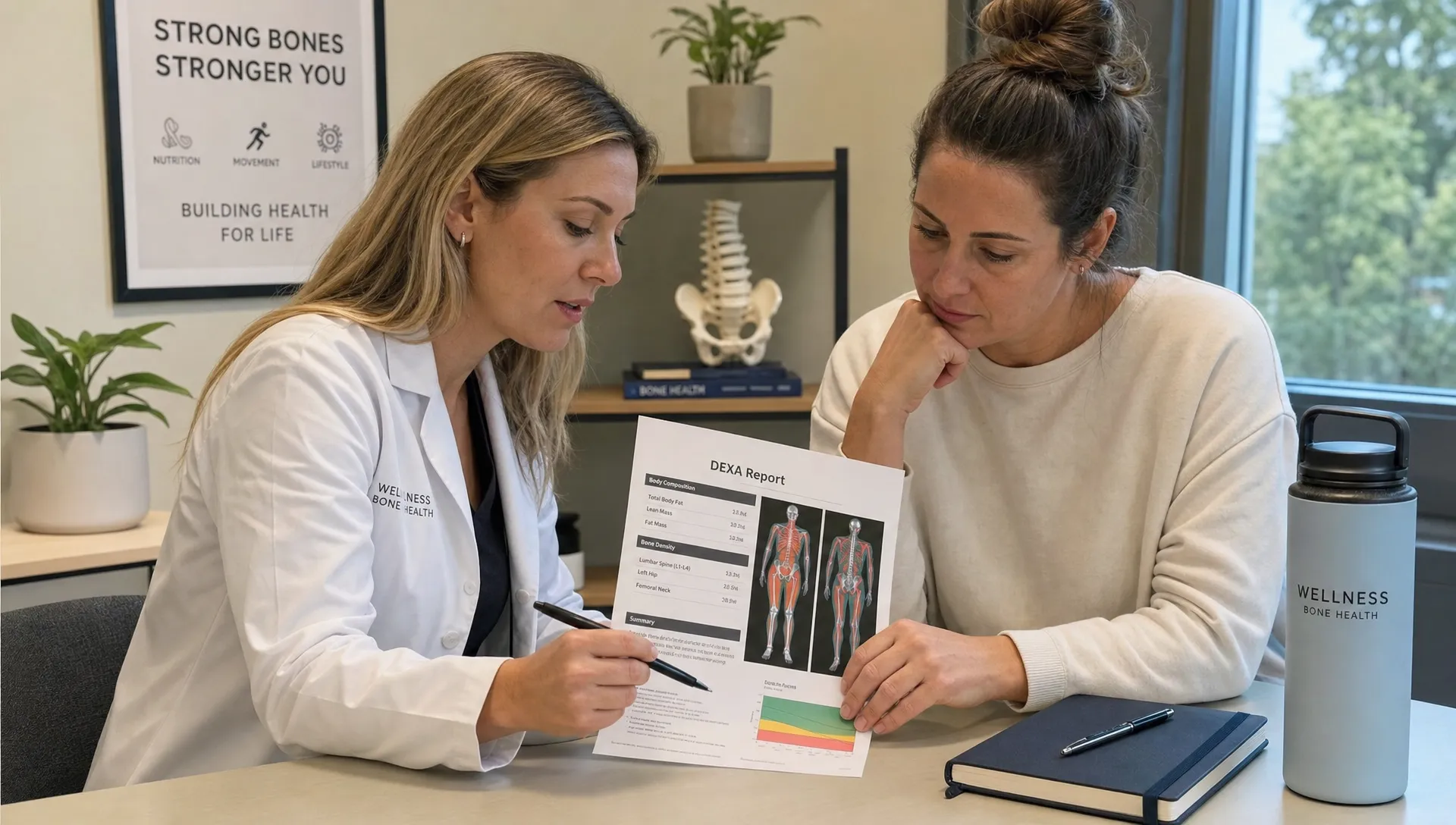
Body fat density can sound like a hidden setting that explains everything in a body composition report. It does matter, but not in the way many people expect. When you read a DEXA result, body fat density is best understood as background physics behind how fat, lean tissue and bone are estimated, not as a separate score you should optimize. A DEXA scan is designed to show actionable body composition measures such as total fat mass, body fat percentage, lean mass, visceral fat, bone density and regional balance. If your goal is better training, better nutrition or a clearer health baseline, those metrics deserve more attention than trying to reverse engineer the density of your fat tissue.
What body fat density means in a DEXA result
Density is simply mass divided by volume. Fat tissue is less dense than muscle and bone, which is why two people can weigh the same but look and perform very differently. A person with more lean mass generally occupies less space at a given body weight than someone with more fat mass.
Human adipose tissue is also not pure oil. It contains stored lipids, water, connective tissue, blood vessels and living cells. That mix can vary by body region, age, hormones and overall health. If you want the deeper physiology, DEXA SF has a separate guide on why human fat density varies, but the key point for reading your scan is simpler: density helps explain why body composition is more informative than scale weight.
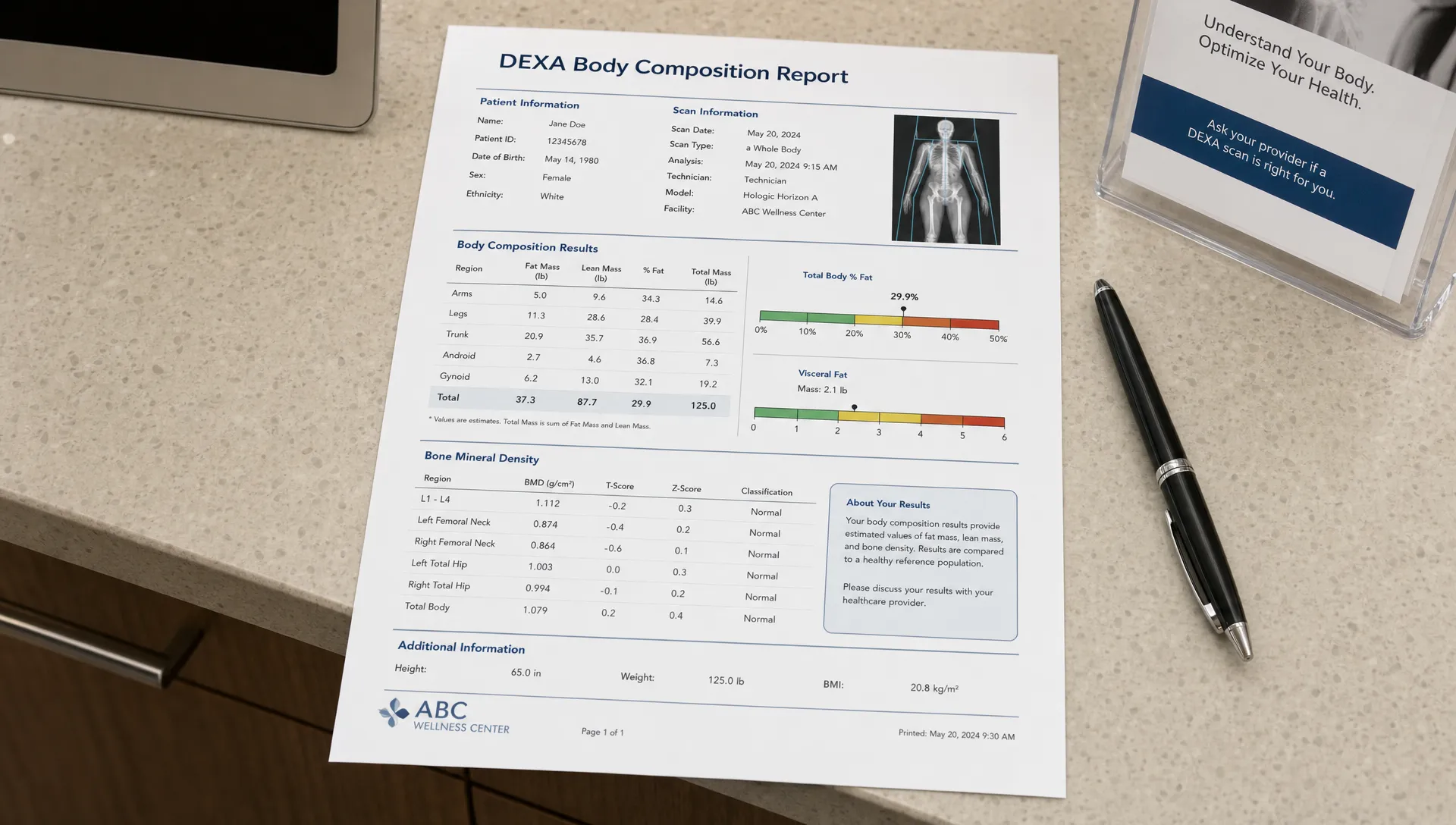
A DEXA report usually does not list the density of your fat as a standalone line item. Instead, it estimates how much of your body mass is fat, lean soft tissue and bone mineral content.
How DEXA estimates fat without asking you to know tissue density
DEXA, also called DXA, uses two X-ray energy levels. Different tissues absorb those X-rays differently. Bone mineral, lean tissue and fat tissue each have distinct attenuation patterns, so the scanner can estimate tissue composition across the whole body and by region. The FDA describes DXA as a low-dose X-ray method widely used for bone density, and whole-body DEXA is also used for body composition assessment.
This is where body fat density is useful context: every body composition method depends on physical assumptions. Hydrostatic weighing estimates body fat from whole-body density. Skinfold equations estimate fat from subcutaneous thickness. Bioelectrical impedance estimates body water and uses equations to infer fat-free mass. DEXA uses X-ray attenuation, which makes it less dependent on whole-body density than classic underwater weighing.
What the assumptions mean in practice
DEXA is not a chemical dissection of the body, so it is still an estimate. Scanner model, software version, hydration, positioning and recent food intake can all affect small changes. That does not make DEXA unreliable. It means the best interpretation comes from consistent testing conditions and a focus on meaningful trends.
| Concept | What it means | Practical impact on your DEXA result |
|---|---|---|
| Tissue density | How much mass fits into a given volume | Explains why weight alone can be misleading |
| X-ray attenuation | How tissues absorb DEXA energy beams | Drives the scanner estimate of fat, lean tissue and bone |
| Fat mass | The estimated pounds or kilograms of fat tissue | More useful for fat-loss goals than body weight alone |
| Lean mass | Muscle, organs, water and other non-fat soft tissue | Helps you see whether training is preserving or building lean tissue |
| Bone mineral density | Mineral content relative to scanned bone area | Useful for skeletal health context and long-term tracking |
When density differences can affect interpretation
For most people, density differences do not change the main takeaway from a DEXA scan. If your report shows a clear decrease in fat mass, an increase in lean mass or a change in visceral fat, those are more actionable than trying to calculate a personal fat density value.
Body fat density becomes more relevant when you compare DEXA with other methods. A smart scale, Bod Pod, underwater weighing test and DEXA scan can give different body fat percentages because each method measures different signals and makes different assumptions. The disagreement does not automatically mean one test is useless. It often means the methods are not interchangeable.
Density also comes up when people make very small comparisons. A change of a few tenths of a percent in body fat may not mean much if the scan conditions were different. A larger shift in fat mass, lean mass or visceral fat is easier to interpret, especially when it matches changes in training, nutrition, waist measurements or performance.
What to focus on before worrying about fat density
For most readers, body fat density should sit in the background while the core DEXA metrics do the heavy lifting. A good scan interpretation answers practical questions: How much fat mass do you carry? Where is it distributed? Are you maintaining lean mass? Do you have left-to-right asymmetries? How does your bone density look for long-term health?
If you want a broader breakdown, this guide to the DEXA body composition metrics that matter most walks through the major numbers on a report. The table below summarizes how to prioritize them when you are reading your own results.
| DEXA metric | Why it matters | How to use it |
|---|---|---|
| Total fat mass | Shows the actual amount of fat tissue | Track fat loss without confusing it with water or muscle change |
| Body fat percentage | Shows fat mass as a share of total body mass | Use alongside lean mass, not as the only goal |
| Visceral fat | Estimates fat stored around abdominal organs | Monitor cardiometabolic risk context and lifestyle response |
| Regional lean mass | Shows lean tissue by arms, legs and trunk | Identify training response and asymmetries |
| Bone mineral density | Reflects skeletal health status | Track long-term bone health and discuss concerns with a clinician |
| Android and gynoid distribution | Compares central and hip or leg fat patterns | Understand where fat is stored, not just how much exists |
How to make repeat DEXA scans easier to read
You do not need to manipulate body fat density before a scan. What you can control is consistency. DEXA is most useful when you compare scans taken under similar conditions, ideally on the same machine and with the same preparation routine.
A practical repeat-scan routine is simple:
- Use the same testing location when possible.
- Schedule scans at a similar time of day.
- Keep food, hydration and caffeine intake similar before each scan.
- Avoid unusually intense training right before testing if it causes soreness or fluid shifts.
- Note major context, such as illness, travel, menstrual cycle timing, creatine use or a major diet change.
These habits make it easier to tell whether your plan is working. They also reduce the temptation to overexplain tiny changes that may come from normal measurement variability. For a more step-by-step view of report interpretation, see DEXA SF's guide on how to read DEXA scan body fat results.
If your main concern is measurement accuracy, the more useful question is not whether DEXA is perfect. No practical body composition test is perfect. The better question is whether it is precise, repeatable and detailed enough to guide decisions. DEXA is one of the strongest consumer-accessible options because it separates fat, lean mass, visceral fat, bone measures and regional distribution in a single scan.
Common mistakes when thinking about fat density
The biggest mistake is treating body fat density as a correction factor you can apply to your report. A DEXA result is produced by scanner-specific acquisition and analysis software. You should not take a generic density value from the internet and use it to recalculate your body fat percentage.
Mistake 1: confusing fat volume with fat mass
DEXA reports estimated mass, not the physical volume of fat tissue. If two people have the same fat mass, their body shapes can still look different because of height, bone structure, muscle distribution and where fat is stored. This is why regional results matter.
Mistake 2: overreacting to small changes
A small body fat percentage shift can be less meaningful than a clear change in total fat mass or lean mass. If the goal is to lose fat while preserving muscle, a report showing lower fat mass and stable lean mass is more useful than a tiny percentage change in isolation.
Mistake 3: comparing every method as if it measured the same thing
A smart scale may be convenient, but it is heavily influenced by hydration and prediction equations. Calipers depend on technician skill and measure only pinchable subcutaneous fat. DEXA gives a more complete view, but the cleanest comparison is still DEXA to DEXA under similar conditions.
A practical way to read your DEXA report
Body fat density belongs in the explanation of how body composition science works, not at the center of your decision-making. A more useful reading sequence is to start with total fat mass and lean mass, then look at body fat percentage, visceral fat, regional distribution, asymmetries and bone density.
From there, connect the numbers to your current goal. Someone trying to lose fat should watch fat mass and visceral fat while protecting lean mass. Someone training for performance may care more about regional lean mass and left-to-right balance. Someone focused on longevity may look closely at visceral fat, bone density and whether weight changes are coming from the right tissue.
The scan becomes most valuable when it leads to better choices after you leave the appointment. That is where expert interpretation matters: the same body fat percentage can mean different things depending on your age, training history, goals and health context.
Frequently Asked Questions
Is body fat density shown on a DEXA report? Usually no. A DEXA report typically shows body fat percentage, fat mass, lean mass, visceral fat estimates, regional distribution and bone measures. Density is part of the science behind body composition, not normally a displayed result.
Does denser fat make a DEXA scan inaccurate? Normal variation in adipose tissue does not usually change the main interpretation of a DEXA scan. For most people, scan consistency, positioning, hydration and the size of the observed change matter more than individual fat tissue density.
Why does my DEXA result differ from my smart scale? DEXA and smart scales use different measurement methods. DEXA uses X-ray attenuation to estimate tissue compartments, while smart scales use electrical impedance and equations. Differences are expected, especially if hydration changes.
Can I change body fat density with diet or training? You can change body composition, including fat mass, lean mass and visceral fat, through training, nutrition and lifestyle. Trying to target body fat density itself is not a practical goal for most people.
What DEXA number should I care about most? It depends on your goal, but total fat mass, lean mass, visceral fat and regional balance are often more actionable than body fat percentage alone. Bone density is also important for long-term health context.
Get a clearer read on your body composition
If you are getting a DEXA scan in San Francisco, the goal is not to chase an invisible density number. The goal is to get a precise baseline, understand what your results mean and use that information to make better training and nutrition decisions.
DEXA SF provides professional DEXA body composition scans with measurements for body fat, lean mass, bone density, visceral fat, asymmetries and metabolic insights, along with expert interpretation and practical guidance. Schedule a scan when you want a clearer answer than the scale can give you.