
How to Choose a DEXA Body Composition Scan Provider
Searching for a dexa body composition scan near me usually means you want more than a number on a scale. You want a provider who can measure body fat, lean mass, visceral fat, bone density and body asymmetries with enough precision to guide real decisions about training, nutrition and health tracking.
The challenge is that DEXA providers can look similar from the outside. Many offer quick appointments and polished reports, but the quality of the experience depends on the scanner, the protocol, the clarity of the results and the person interpreting them. A good provider helps you understand what changed, why it may have changed and what to do next.
Use this guide as a practical checklist before you book. It is written for people comparing local options, especially if you plan to use DEXA as a repeatable measurement tool rather than a one-time curiosity.
Why the right provider matters
DEXA, also written as DXA in medical settings, uses low-dose X-ray technology to estimate tissue composition and bone mineral density. According to RadiologyInfo.org, a DXA exam is typically quick, noninvasive and commonly used for bone density assessment. In a body composition setting, it can also break down fat mass, lean mass and regional distribution.
That does not mean every appointment gives you the same value. The scan itself is only one part of the process. Your results also depend on consistent positioning, a clear pre-scan protocol, understandable reporting and guidance that connects the data to your goals.
If you are tracking fat loss, muscle gain or athletic performance, consistency matters even more. Switching providers, machines or preparation routines can make it harder to know whether your body changed or the testing conditions changed.
How to evaluate a dexa body composition scan near me
When you compare a dexa body composition scan near me, start with the basics: what is measured, how results are explained and whether the provider is set up for repeat testing. The best choice is not always the closest appointment or the lowest advertised price.
A strong provider should be able to explain the scan process before you arrive, tell you what to expect during the appointment and show you how the report translates into practical next steps. If their answers are vague, keep looking.
Look for a complete body composition report
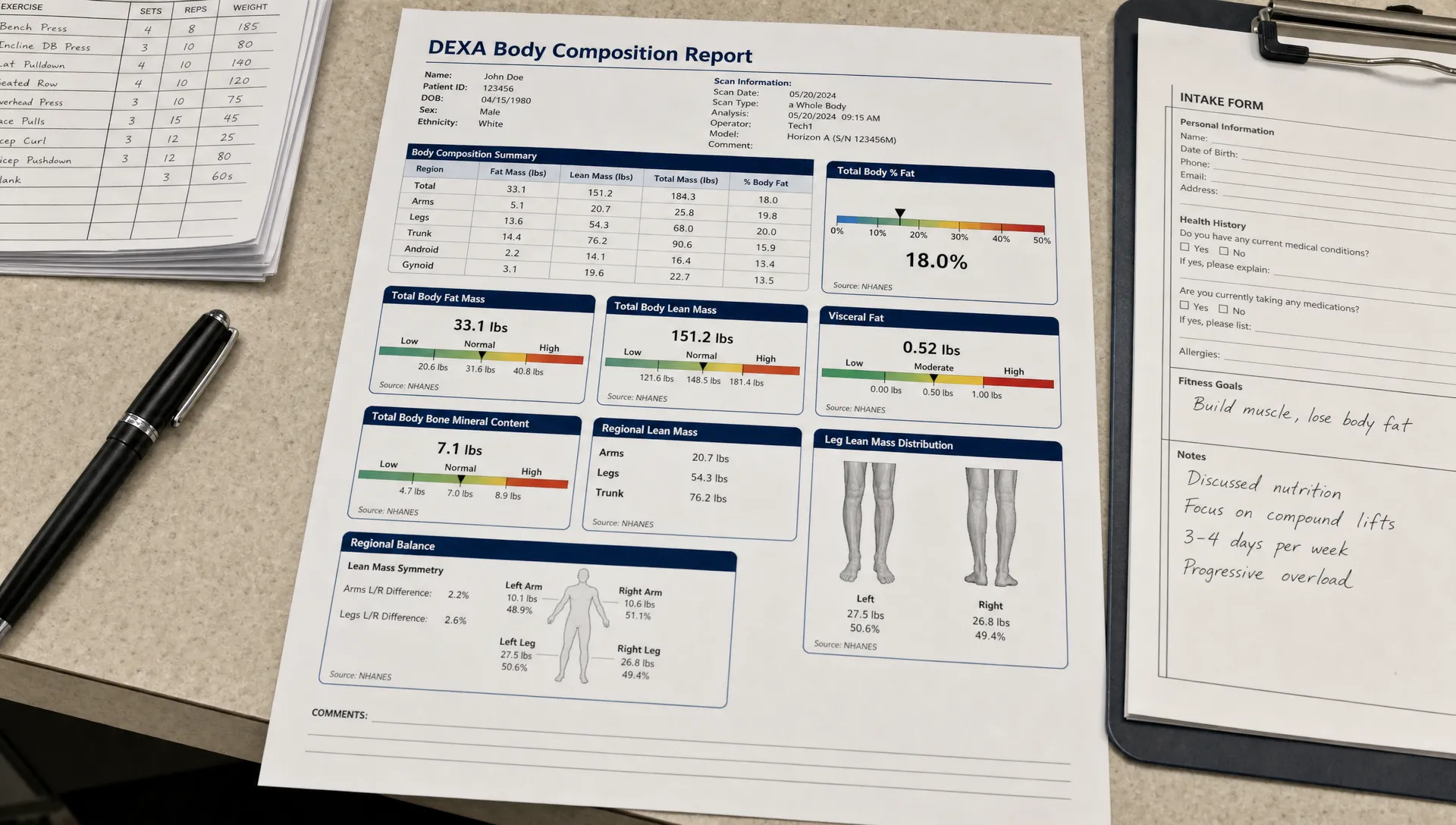
A useful DEXA report should include more than total body fat percentage. At minimum, ask whether the report includes fat mass, lean mass, bone measures and regional analysis. For many people, visceral fat and left vs. right lean mass differences are especially helpful because they highlight risk patterns and asymmetries that scale weight cannot show.
If you are choosing a dexa body composition scan near me for training decisions, regional data can be more useful than a single total-body number. For example, a strength athlete may care about lean mass balance between limbs, while someone focused on metabolic health may care more about visceral fat trends.
Ask about scan consistency
Repeatability is the hidden advantage of DEXA. One scan gives you a baseline, but two or more scans can show whether a plan is working. Ask whether the provider uses a consistent scanning protocol, including positioning, clothing guidance and instructions around food, exercise and hydration.
Small changes in preparation can affect interpretation. You do not need a complicated routine, but you do need a repeatable one. If a provider cannot explain how to make future scans comparable, the data may be less useful over time.
Prioritize expert interpretation
A report can be accurate and still confusing. Expert interpretation helps you understand which numbers matter most for your situation. A good provider should explain the difference between fat mass and fat percentage, why lean mass can shift with hydration and how to interpret regional changes without overreacting to normal variation.
This is especially important if you are using the scan to make decisions about calorie intake, strength programming or health goals. Data should reduce guesswork, not create new anxiety.
Match the provider to your goal
Before booking a dexa body composition scan near me, define the reason you want the scan. A provider that works well for one person may not be ideal for another. The right fit depends on whether you are focused on fat loss, muscle gain, bone health, performance or accountability.
| Goal | What to look for in a provider | Why it matters |
|---|---|---|
| Fat loss | Clear fat mass, body fat percentage and visceral fat reporting | Scale weight can hide body composition changes |
| Muscle gain | Lean mass by region and repeat scan support | Total weight gain may include fat, water or muscle |
| Athletic performance | Asymmetry detection and practical training interpretation | Imbalances can affect performance and injury risk |
| Bone health awareness | Bone density analysis and appropriate referral guidance | Bone metrics may require clinical follow-up |
| Long-term tracking | Consistent protocol and easy comparison between scans | Trends are more useful than isolated numbers |
If you are still deciding whether DEXA is the right test for you, this guide on what to know before you book a DEXA scan covers preparation and expectations in more detail.
Questions to ask before booking
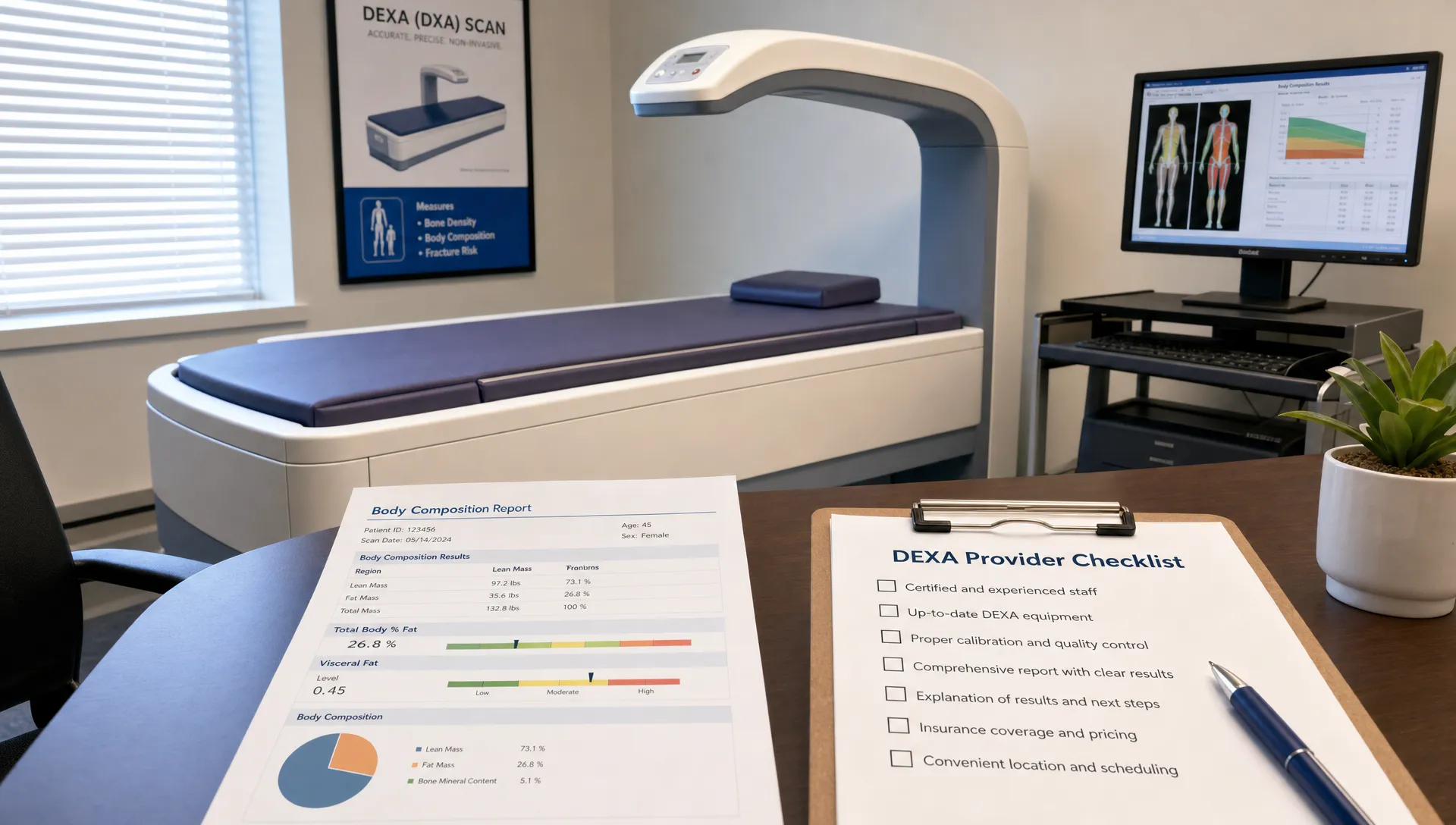
Once you have narrowed your options, use a short set of questions to separate a polished listing from a provider that can actually help you. A dexa body composition scan near me should be easy to schedule, but it should also come with enough information to trust and use the results.
Ask these before you book:
- What measurements are included in the scan report?
- Will someone explain the results after the scan?
- Do you provide visceral fat and regional lean mass data?
- How should I prepare so my scan is comparable next time?
- Can I use the same scanner and protocol for future scans?
- What is included in the listed price?
The last question matters because a cheap scan is not always affordable if the report is incomplete or interpretation costs extra. For a deeper pricing checklist, review what an affordable DEXA scan should include before comparing local providers.
Check safety, scope and referrals
DEXA body composition scans use low-dose radiation, but you should still choose a provider that treats safety and scope seriously. They should ask basic screening questions, explain the process clearly and avoid making medical claims outside their role.
Bone density results deserve special care. A body composition provider can measure and explain bone-related metrics, but diagnosis and treatment decisions belong with a licensed healthcare professional. The International Society for Clinical Densitometry publishes positions on bone densitometry standards, which is a useful reminder that quality and interpretation matter.
If you have a medical condition, are pregnant or may be pregnant, or need diagnostic evaluation for osteoporosis, speak with your clinician before scheduling. For fitness and nutrition tracking, choose a provider who can clearly distinguish between performance guidance, wellness education and medical care.
Compare convenience without lowering your standards
Convenience matters, especially if you plan to scan every few months. The best dexa body composition scan near me is one you can realistically repeat under similar conditions. Location, appointment availability, parking, transit access and visit length all influence whether you stick with the process.
Still, convenience should not be the only factor. A nearby provider with unclear reporting may be less valuable than a slightly farther option that offers better interpretation and repeatability. If your goal is trend tracking, the friction of each appointment matters, but so does the quality of the trend data.
In San Francisco, people often compare dedicated body composition providers, gyms, wellness clinics and medical imaging locations. Dedicated providers may be more focused on body composition education and fitness applications, while medical locations may prioritize diagnostic imaging. Neither category is automatically better. The question is which one fits your goal.
Look for guidance that connects data to action
A DEXA scan should not end with a PDF you never open again. The provider should help you identify the two or three metrics that matter most and explain how to use them between scans.
For example, if your goal is fat loss, body fat percentage alone can be misleading when lean mass is changing. Fat mass, visceral fat and waist-related trends may tell a clearer story. If your goal is muscle gain, total lean mass is useful, but regional lean mass can reveal whether your training is balanced.
This is where qualified interpretation makes a difference. DEXA SF, for example, provides professional DEXA body composition scans in San Francisco with measurements such as body fat, lean mass, bone density, visceral fat, asymmetry and metabolic insights, along with fitness and nutrition guidance from qualified experts.
Red flags when choosing a provider
When comparing a dexa body composition scan near me, pay attention to what the provider does not say. Vague descriptions often signal a limited report or a rushed appointment.
Watch for these warning signs:
- The provider advertises body composition but does not list what metrics are included.
- There is no mention of result interpretation or follow-up explanation.
- The report focuses only on body fat percentage.
- The provider cannot explain how to prepare for a repeat scan.
- Pricing is unclear or key services are not included.
- The provider makes extreme promises about rapid fat loss, metabolism or disease prevention.
A trustworthy provider will be specific. They should explain what DEXA can measure, what it cannot prove and how to use the results responsibly.
How often should you return to the same provider?
The right scan frequency depends on your goal and how quickly your plan is changing. Many people do not need monthly scans because meaningful body composition changes take time. A common approach is to scan at baseline, follow a consistent training or nutrition plan, then return after enough time has passed to evaluate the trend.
If you are making major changes to training, nutrition or body weight, ask your provider what interval makes sense. The key is to return to the same provider when possible, follow similar preparation steps and compare like with like. For a closer look at trend analysis, see this guide on how to compare DEXA analysis results between scans.
Frequently Asked Questions
Is the closest DEXA provider always the best choice? No. Location is helpful, but reporting quality, scan consistency and expert interpretation matter more if you want results you can act on.
What should a DEXA body composition report include? A strong report should include body fat, fat mass, lean mass, regional breakdowns, bone measures and ideally visceral fat and asymmetry insights.
How should I prepare for a DEXA body composition scan? Follow the provider's instructions, wear appropriate clothing, keep food and exercise conditions consistent and use the same preparation routine for repeat scans.
Can I use DEXA results to change my nutrition or training plan? Yes, but the data is most useful when interpreted in context. Look for a provider who can explain which metrics should guide your next steps.
What if I am searching for a dexa body composition scan near me in San Francisco? Choose a provider that combines precise measurement with clear interpretation, practical guidance and a repeatable process for future scans.
Choose a scan provider that helps you use the data
A DEXA scan is most valuable when it becomes a decision-making tool. The right provider gives you precise measurements, explains the results in plain language and helps you connect the numbers to your training, nutrition and long-term health goals.
If you are in San Francisco and want a professional scan with expert interpretation, you can schedule with DEXA SF to get detailed body composition, bone density, visceral fat, asymmetry and metabolic insights in a quick appointment.