
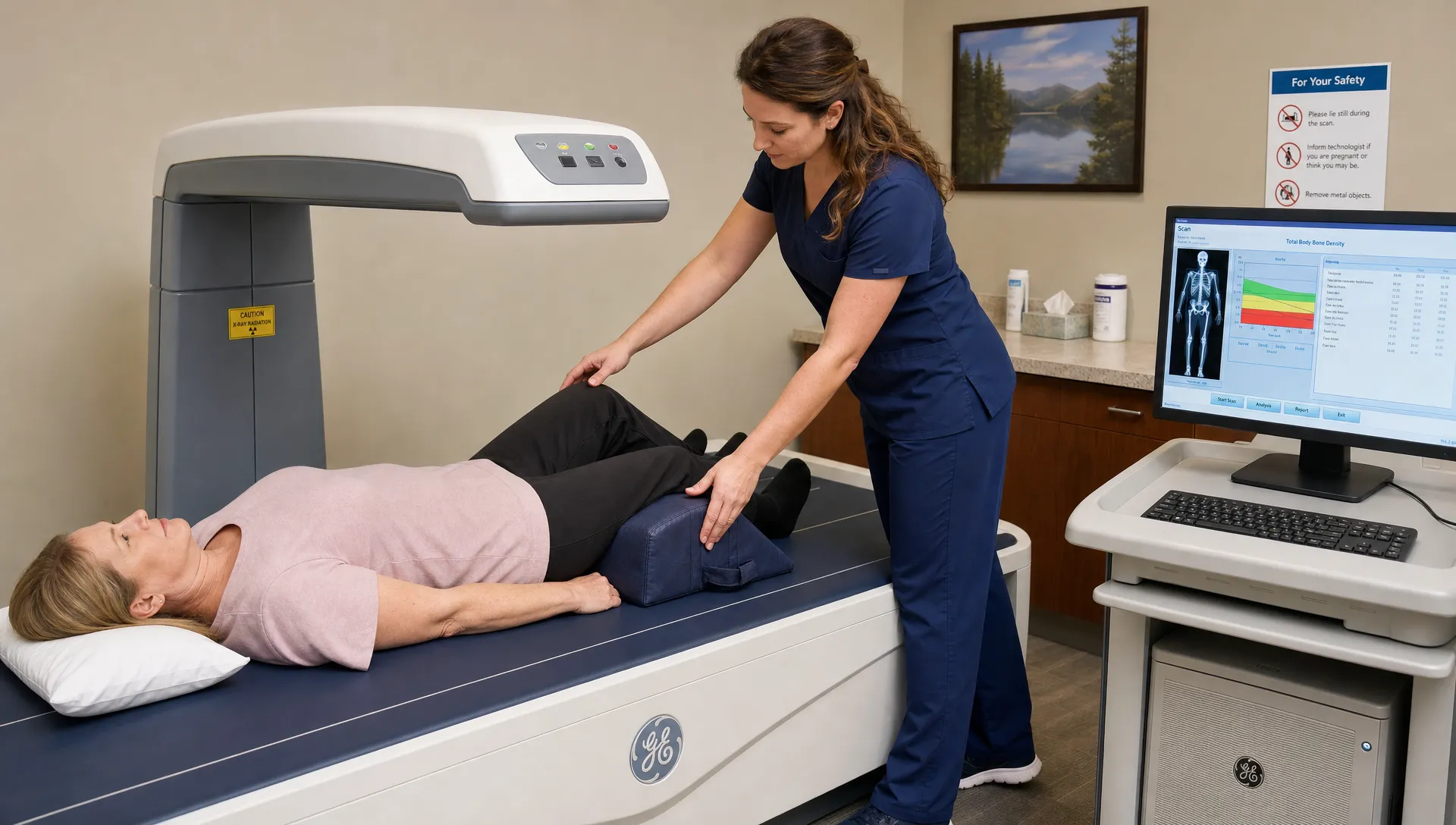
How DEXA Measures Bone Mass and Density
DEXA is best known as the clinical gold standard for bone density testing, but it can also help explain what people often mean when they search for mass bone: how much mineralized bone is present and how that relates to skeletal strength. A DEXA scan does this without guessing from weight, BMI or visual appearance. It uses low dose x-ray technology to separate bone mineral from soft tissue, then reports measurements that can help you and a qualified professional understand bone health, body composition and changes over time. That distinction matters because bone mass and bone density sound similar, but they answer slightly different questions.
What "mass bone" Means in a DEXA Report
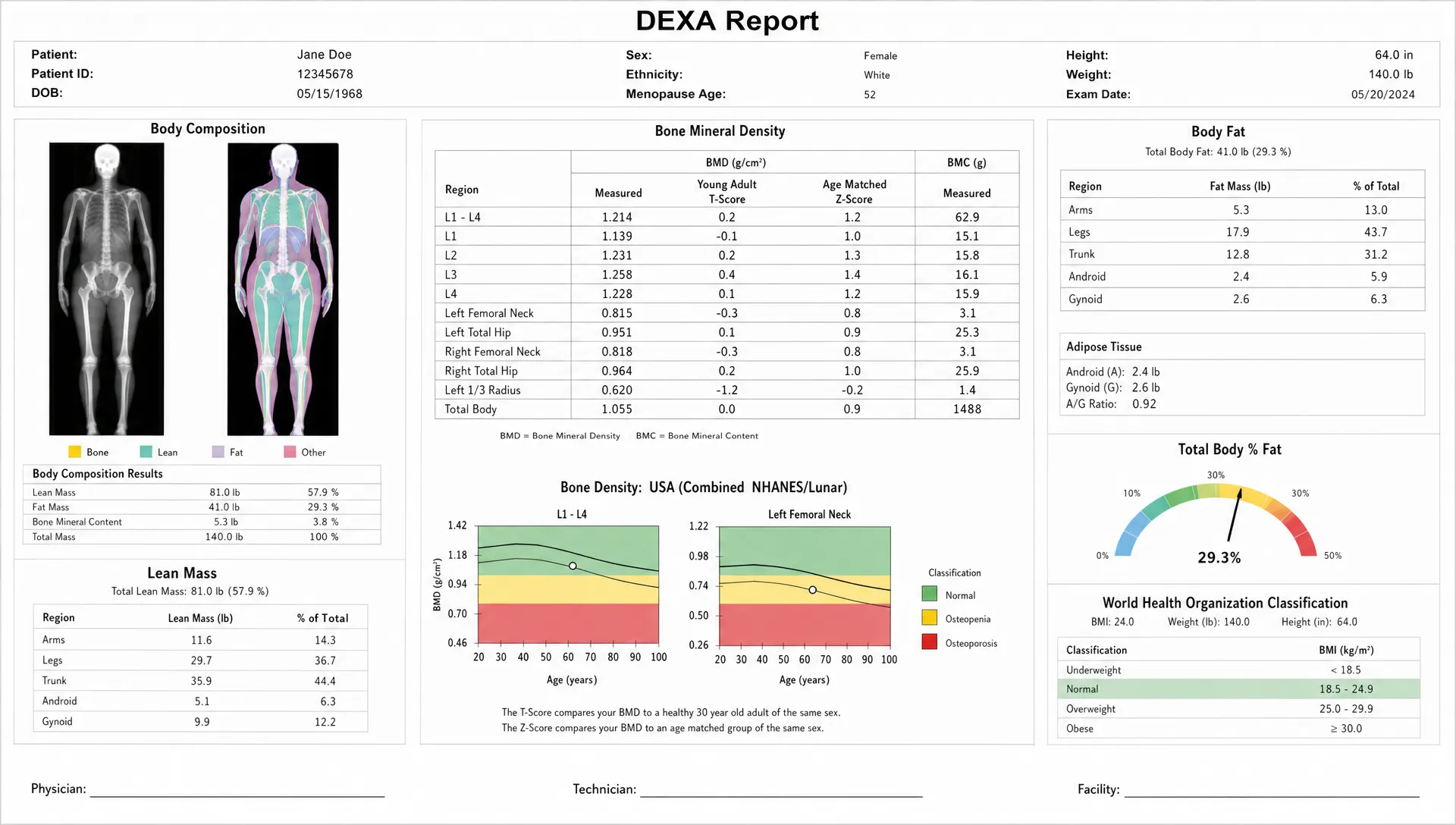
In everyday language, people often say “bone mass” when they mean the amount of bone they have. In DEXA terminology, the closer technical term is bone mineral content, usually shown in grams. Bone mineral content estimates how much mineralized bone is present in a scanned region.
Bone density is different. DEXA reports bone mineral density, often abbreviated as BMD, as grams per square centimeter. This number adjusts bone mineral content for the projected area of the bone being measured. That adjustment is why density can be more useful for comparing results across people, age groups or clinical thresholds.
| Term | What it describes | Common unit | Why it matters |
|---|---|---|---|
| Bone mineral content | The amount of mineral in a bone region | Grams | Helps quantify mineralized tissue |
| Bone mineral density | Mineral content adjusted for bone area | g/cm² | Used to assess low bone density risk |
| T-score | Your BMD compared with a young adult reference | Standard deviations | Used in adult osteoporosis classification |
| Z-score | Your BMD compared with age matched norms | Standard deviations | Helps flag results that may need context |
So when someone refers to a mass bone result, the DEXA report is usually pointing toward bone mineral content, while the density result gives the more standardized view of bone strength risk.
How DEXA Uses Two X-ray Energies to Measure Bone
DEXA stands for dual-energy x-ray absorptiometry. The “dual-energy” part is the key. The scanner sends two low dose x-ray beams through the body at different energy levels. Bone, fat and lean tissue absorb those beams differently, which lets the system estimate how much of each tissue type is present.
For bone assessment, DEXA measures how much x-ray energy is attenuated, or weakened, as it passes through mineralized bone. Dense mineralized tissue absorbs more energy than soft tissue. The software then uses calibration data and a defined measurement area to calculate bone mineral content and bone mineral density.
The National Institute of Arthritis and Musculoskeletal and Skin Diseases explains that bone mass measurement is most often used to detect low bone density, predict fracture risk and monitor changes over time. DEXA is widely used because it is fast, noninvasive and involves much less radiation than many diagnostic imaging tests.
From scan image to numbers
During the scan, the system does not simply “see” bone as a solid object. It captures a two dimensional projection and divides the image into regions of interest. In a clinical bone density exam, those regions commonly include the hip and lumbar spine, with the forearm used in some cases.
In a whole-body body composition scan, DEXA can also estimate total and regional bone mineral content. That is why a single scan can be useful for people who want to understand both skeletal health and body composition. If you want the broader view, DEXA SF’s guide to body and bone health in one scan explains how these measurements fit together.
A mass bone measurement becomes more meaningful when it is tied to a specific region, because the hip, spine, arms and legs do not all carry the same clinical interpretation.
Bone Mass vs Bone Density: Why Both Matter
Bone mass and bone density are related, but they are not interchangeable. A larger person may have more total bone mineral content simply because they have a larger skeleton. That does not automatically mean their bones are denser or that their fracture risk is lower.
Bone mineral density adjusts the mineral amount to the scanned area, which makes it more useful for interpreting whether bone is unusually low for a person’s age or for adult diagnostic thresholds. This is also why changes in positioning, scan region and machine calibration can affect interpretation.
A mass bone value by itself answers “how much mineral is present,” while BMD gets closer to “how concentrated is that mineral in the measured bone area.” Both numbers can be helpful, but density is usually the metric used for formal low bone density assessment.
T-scores and Z-scores in plain English
For adults, DEXA bone density results often include a T-score. A T-score compares your bone mineral density with the average value for a healthy young adult reference population. According to widely used clinical criteria, a T-score of -1.0 or above is considered normal, between -1.0 and -2.5 is classified as low bone mass and -2.5 or below is consistent with osteoporosis when measured at appropriate sites.
A Z-score compares your result with what is expected for someone of your age, sex and body size. It is especially useful for younger adults, children and people whose results may need more individualized interpretation.
What a Whole-body DEXA Can Show Beyond Density
One reason DEXA is valuable for fitness and health tracking is that it can measure more than bone. A whole-body DEXA scan can estimate body fat percentage, lean mass, visceral fat, regional muscle distribution and left vs. right asymmetry. That makes it useful for people who want a more complete picture than a scale or BMI can provide.
On a whole-body report, mass bone information sits alongside lean and fat measurements, so you can see how your skeletal metrics relate to training, nutrition and overall body composition. For example, someone gaining lean mass during strength training may want to monitor whether body fat, visceral fat and regional muscle balance are also changing.
DEXA SF provides professional DEXA body composition scans in San Francisco with expert interpretation, which can help translate these numbers into practical fitness and nutrition guidance. For a deeper look at body composition metrics, see this explanation of what DEXA body results say about your health.
What Can Affect DEXA Bone Measurements?
DEXA is precise, but it is still a measurement, not a magic snapshot. The quality of the result depends on proper positioning, accurate region selection and consistent scan technique. Metal hardware, severe spinal arthritis, vertebral compression changes or prior contrast imaging can also influence some readings.
For serial tracking, consistency matters. If you are comparing results over time, it is best to use the same facility when possible and compare the same scan type and anatomical region. A hip and spine bone density test should not be treated as identical to a whole-body composition scan, even though both use DEXA technology.
For that reason, mass bone changes should be interpreted with context, especially if the difference is small. Meaningful trends are easier to identify when scans are performed under similar conditions and reviewed by someone who understands the limits of the method.
Preparation can influence scan quality
Preparation is usually simple. You may be asked to avoid calcium supplements shortly before certain bone density exams, remove metal objects and tell the technologist if you recently had contrast imaging. Clothing without metal zippers or snaps can also reduce the chance of artifacts.
If your main goal is bone health screening, a dedicated bone density protocol may be the right choice. If your goal is body composition plus skeletal metrics, a whole-body DEXA scan may be more useful. This bone density scan guide walks through what to expect before and during the appointment.
How to Read Bone Results With Context
A DEXA number is most useful when it is interpreted with your age, sex, medical history, medication use, training background and nutrition status. Low bone density may be influenced by menopause, low energy availability, certain endocrine conditions, long-term glucocorticoid use, smoking, heavy alcohol intake or a family history of osteoporosis.
The International Society for Clinical Densitometry publishes official adult positions on DEXA interpretation, including guidance on measurement sites and reporting standards. This matters because a technically accurate scan still needs an appropriate interpretation.
The most useful mass bone discussion is not just “high” or “low.” It asks whether the measurement matches your risk profile, whether the right site was scanned and whether follow-up testing or lifestyle changes should be considered.
When repeat scans are helpful
Repeat DEXA scans can help show whether bone density is stable, improving or declining. The interval depends on why you are testing, your baseline results and whether you are making medical, nutrition or training changes that may affect bone. People at higher risk may need closer follow-up than people testing for general wellness or performance tracking.
For body composition, some clients repeat scans to evaluate changes in fat mass, lean mass and visceral fat over a training block. For bone density, changes usually happen more slowly, so interpretation should focus on clinically meaningful trends rather than tiny short-term fluctuations.
Getting a DEXA Scan in San Francisco
If you want to understand bone and body composition with more precision than a scale can offer, DEXA is one of the most informative options available. At DEXA SF, scans can measure body fat, lean mass, visceral fat, asymmetry, metabolic data and bone density related metrics, with expert interpretation to help you understand what the numbers mean.
If your goal is to clarify a mass bone result, track fitness progress or get a baseline for long-term health, a DEXA scan can turn vague questions into measurable data. The value comes from combining the scan with thoughtful interpretation, not from looking at a single number in isolation.
Frequently Asked Questions
Does DEXA measure bone mass or bone density? DEXA can report both bone mineral content, which reflects the amount of mineralized bone in a region, and bone mineral density, which adjusts that mineral content for the measured bone area.
Is bone mineral content the same as bone mineral density? No. Bone mineral content is usually measured in grams, while bone mineral density is reported in grams per square centimeter. Density is the more common metric for assessing low bone density.
Can a whole-body DEXA diagnose osteoporosis? A whole-body DEXA can provide useful skeletal and body composition data, but osteoporosis assessment typically relies on specific clinical sites such as the hip and lumbar spine. Ask a qualified healthcare professional which scan type is appropriate for your situation.
How often should I repeat a DEXA scan? The right interval depends on your goals, baseline results and risk factors. Body composition scans may be repeated more often for fitness tracking, while bone density follow-up usually focuses on longer-term trends.
What should I do if my DEXA shows low bone density? Review the results with a qualified clinician who can consider your medical history, medications, nutrition, activity level and fracture risk. The next step may include lifestyle changes, lab testing or medical treatment depending on the findings.
Ready to Understand Your Bone and Body Composition Data?
DEXA SF offers professional DEXA scans in San Francisco for people who want precise insight into body fat, lean mass, bone density and related health metrics. Schedule a scan through DEXA SF to get measured data and expert interpretation you can actually use.