
What DEXA Body Results Say About Your Health
Your scale can tell you whether your body weight changed. It cannot tell you whether that change came from fat, muscle, water, or bone. That is why DEXA body results can be so useful: they separate your body into meaningful health markers instead of compressing everything into one number.
A DEXA scan, also called DXA, uses low-dose X-ray technology to estimate body composition and bone density. For people working on fat loss, muscle gain, athletic performance, healthy aging, or metabolic health, the value is not just precision. The value is context.
A strong DEXA report helps answer better questions: Are you losing the right kind of weight? Is your visceral fat trending down? Are you maintaining lean mass as you age? Is one side of your body carrying noticeably less muscle? Is bone density something you should discuss with a clinician?
Why DEXA body results matter more than weight alone
Body weight is a blunt metric. Two people can weigh the same and have very different health profiles. One may have higher lean mass and lower visceral fat, while the other may have lower muscle mass and more abdominal fat. Their scale number looks identical, but their health priorities are not.
BMI has a similar limitation. The CDC notes that BMI does not measure body fat directly, and it does not distinguish between fat mass and lean mass. That does not make BMI useless at a population level, but it can be misleading for individuals, especially athletes, people doing strength training, or anyone changing body composition without major scale movement.
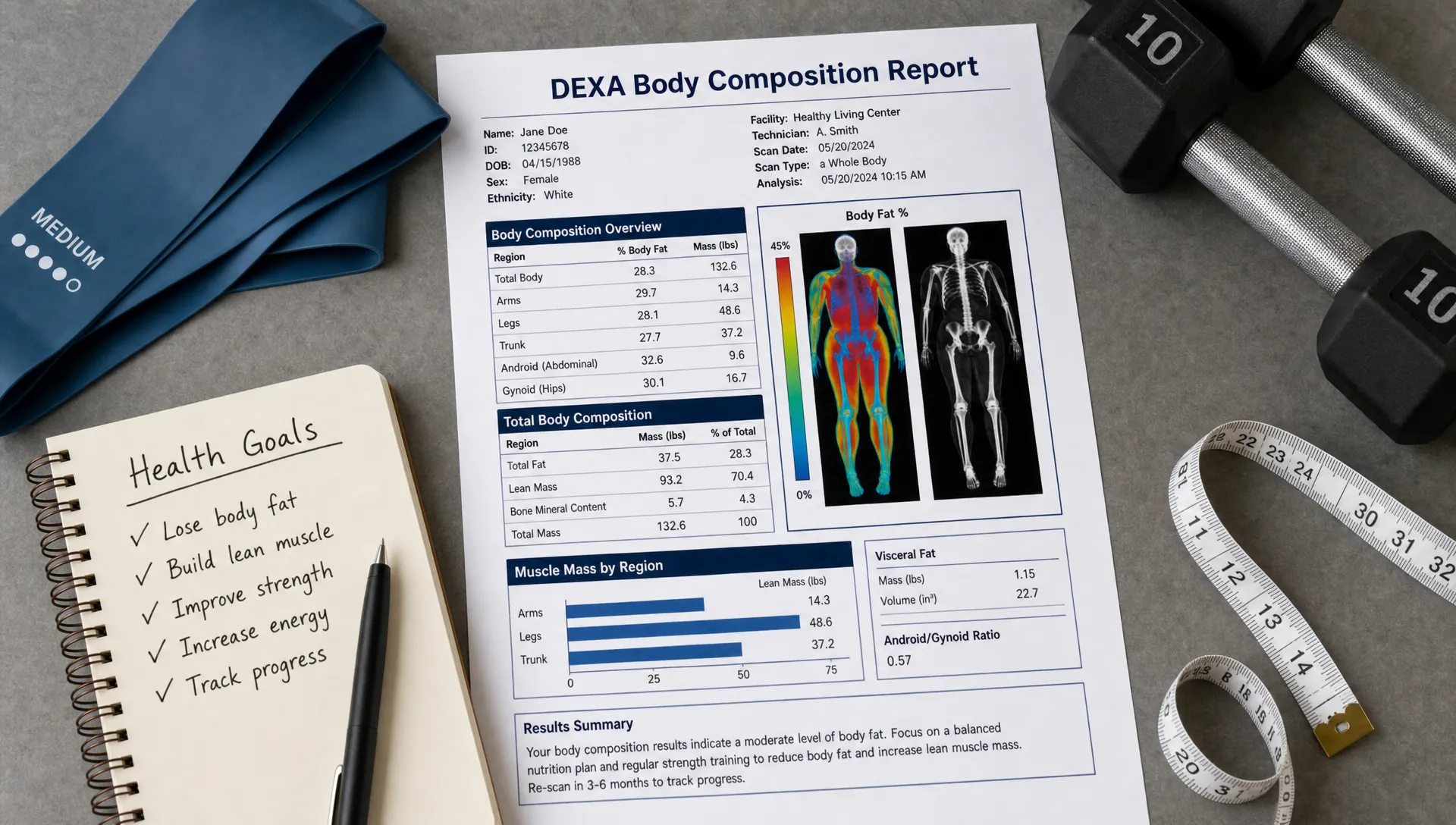
DEXA body results go deeper by showing the estimated amount and location of fat, lean tissue, and bone mineral content. For a detailed report-level walkthrough, DEXA SF has a guide on how to read DEXA scan body fat results. This article focuses on what those numbers may suggest about your overall health and what actions they can inform.
The key DEXA body results and what they can tell you
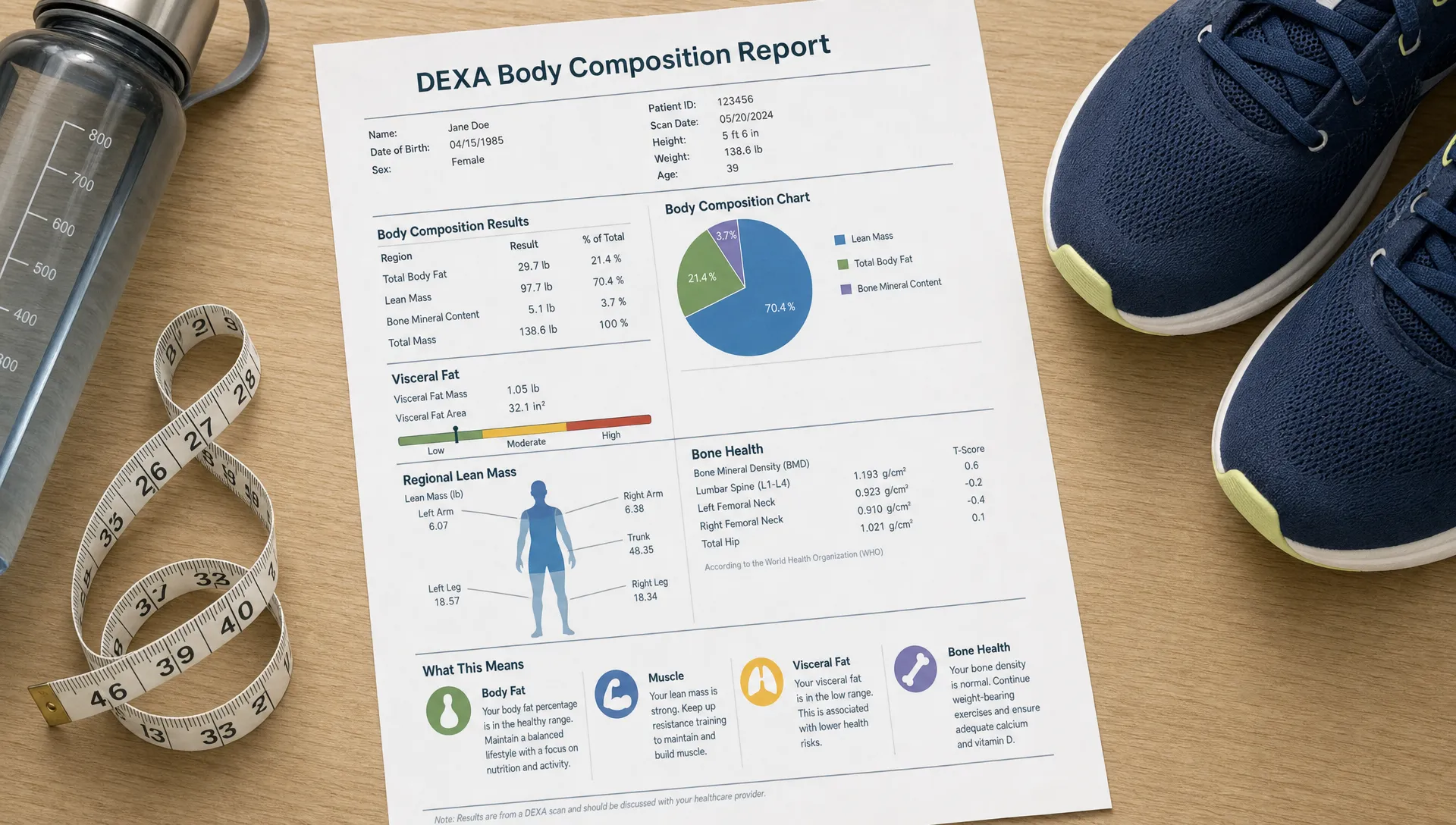
A DEXA report usually contains several categories of data. The most useful insights come from reading them together rather than treating one number as the whole story.
| DEXA result | What it measures | What it may say about health | What to watch over time |
|---|---|---|---|
| Body fat percentage | The percentage of total body mass made up of fat | General fat level relative to lean mass | Whether fat percentage is moving in the direction of your goal |
| Fat mass | Total pounds or kilograms of fat tissue | More specific than percentage alone | Whether weight loss is primarily fat loss |
| Visceral fat | Fat stored deep in the abdomen around organs | A stronger metabolic risk signal than total fat alone | Whether abdominal fat is decreasing with training and nutrition |
| Lean mass | Non-fat, non-bone tissue, including muscle, organs, water, and connective tissue | A proxy for muscle and functional reserve | Whether you are preserving or building lean tissue |
| Regional lean mass | Lean mass by arms, legs, trunk, and left vs. right sides | Muscle distribution and possible imbalances | Whether asymmetries are improving or widening |
| Bone mineral density | Bone strength estimate in scanned regions | Bone health and osteoporosis risk context | Whether bone density is stable, improving, or declining |
| Resting metabolic estimate | Estimated daily energy needs at rest, often influenced by lean mass | A starting point for nutrition planning | Whether calorie targets should change as body composition changes |
These numbers do not replace medical evaluation, blood work, or a clinician’s advice. But they can make conversations with your doctor, coach, dietitian, or trainer much more specific.
Body fat percentage: useful, but not the whole story
Body fat percentage is often the first number people look for, and it is easy to understand why. It gives a clearer picture than weight because it shows how much of your body mass is fat rather than lean tissue.
Still, body fat percentage should be interpreted in context. A healthy range depends on sex, age, training status, medical history, and goals. An endurance athlete, a postmenopausal adult, a strength-focused lifter, and someone starting a weight-loss program should not all evaluate the same percentage in the same way.
A DEXA scan becomes especially useful when you track fat percentage alongside fat mass and lean mass. For example, if your weight drops 10 pounds but your lean mass also drops significantly, that is a different result than losing 10 pounds mostly from fat. The first pattern may suggest your calorie deficit is too aggressive, protein intake is too low, resistance training is insufficient, or recovery is lacking. The second pattern suggests your plan is more likely supporting body composition change.
Body fat percentage is a scorecard, not a verdict. It tells you where you are now and whether your current strategy is working.
Visceral fat: the number to take seriously
Visceral fat is stored deep in the abdomen around internal organs. Unlike subcutaneous fat, which sits under the skin, visceral fat is more closely tied to metabolic health. Higher levels are associated with increased risk for insulin resistance, type 2 diabetes, fatty liver disease, cardiovascular disease, and chronic inflammation.
This is why two people with the same body fat percentage may have different risk profiles. If one person stores more fat around the hips and thighs and another stores more in the abdominal cavity, their DEXA body results may point to different priorities.
Visceral fat is also a useful marker because it can improve with consistent lifestyle changes. Strength training, aerobic exercise, better sleep, reduced alcohol intake, and a nutrition plan that supports gradual fat loss can all help. The exact strategy should be personalized, but the DEXA result gives you a baseline that is more informative than waist size alone.
If your report shows higher visceral fat, it does not mean panic. It means pay attention. Pair the scan data with blood pressure, fasting glucose, A1C, cholesterol, triglycerides, and guidance from a qualified health professional.
Lean mass: your reserve for strength, metabolism, and aging
Lean mass is one of the most important DEXA body results, especially if your goal is long-term health rather than short-term weight loss. Lean mass includes more than muscle, but changes in lean mass are still a helpful proxy for whether you are building or preserving muscle.
Muscle supports daily function, athletic performance, glucose control, joint stability, and resting energy expenditure. It also becomes more important with age. Many adults gradually lose muscle over time, especially without resistance training and adequate protein. A DEXA scan can help show whether your body composition plan is protecting that lean tissue.
For fat loss, lean mass can tell you whether the plan is too aggressive. If your weight is dropping quickly but lean mass is falling along with it, you may need a more sustainable deficit, more strength training, better recovery, or more protein. If your scale weight is stable but lean mass is increasing while fat mass is decreasing, the scale may look “stuck” even though your health and performance are improving.
For muscle gain, lean mass helps you separate productive weight gain from excess fat gain. A modest increase in scale weight can be positive if DEXA results show that much of the gain is lean tissue and visceral fat remains controlled.
Asymmetry: what left vs. right differences can reveal
Many DEXA reports show left vs. right lean mass comparisons in the arms and legs. Some asymmetry is normal. Most people have a dominant side, and sport-specific training can create predictable differences.
The question is whether the difference is large, new, or connected to pain, weakness, injury history, or performance issues. For example, a runner recovering from a knee injury may have less lean mass in one leg. A tennis player may show more lean mass in the dominant arm. A person returning from surgery may see a clear gap between sides.
DEXA does not diagnose the cause of an asymmetry. It simply makes the imbalance visible. From there, a physical therapist, strength coach, or medical professional can help decide whether the pattern matters and how to address it.
Bone density: the quiet marker that deserves attention
DEXA is widely used for bone density testing, and bone health is easy to overlook because bone loss is often silent. You usually do not feel low bone density until a fracture occurs.
Bone mineral density results can help identify whether you should discuss osteopenia or osteoporosis risk with a clinician. According to the National Institute of Arthritis and Musculoskeletal and Skin Diseases, osteoporosis makes bones weak and more likely to break, and many people do not know they have it until a fracture happens.
Your bone density picture depends on age, sex, hormones, nutrition, training history, medications, family history, and medical conditions. Resistance training, impact exercise when appropriate, adequate calcium and vitamin D, and overall nutrition can all matter. But if your DEXA results show low bone density or a downward trend, it is worth getting professional guidance instead of guessing.
If bone health is one of your main reasons for testing, you may also find DEXA SF’s article on who should consider DEXA bone density testing useful.
Metabolic insights: turning body composition into a better plan
Some DEXA reports include metabolic estimates, such as resting metabolic rate or calorie needs. These are estimates, not direct measurements from a metabolic chamber or indirect calorimetry test. Even so, they can be helpful for planning because lean mass is a major driver of resting energy expenditure.
This matters because many people set calorie targets based only on height, weight, age, and activity level. DEXA adds more personalization by showing how much lean tissue you carry. Someone with more lean mass may require more energy to maintain weight than someone of the same weight with less lean mass.
Metabolic data is most useful when combined with real-world tracking. If your estimated intake should produce fat loss but your DEXA results show no meaningful fat change over time, your actual intake, activity, recovery, or consistency may need review. If you are losing fat but also losing lean mass, the plan may need adjustment.
For a deeper look at how scan data can support energy and nutrition planning, see DEXA SF’s guide to unlocking your metabolic profile with DEXA scan results.
Common health patterns DEXA results can reveal
The best insights often come from patterns, not isolated numbers. Here are several examples of what DEXA body results might suggest.
| Pattern in results | What it may indicate | Practical next step |
|---|---|---|
| Weight is normal, but body fat and visceral fat are elevated | BMI may be underestimating metabolic risk | Focus on strength training, nutrition quality, and cardiometabolic markers |
| Weight is high, but lean mass is also high and visceral fat is moderate | Scale weight or BMI may be overstating risk | Track fat distribution, labs, blood pressure, and performance instead of weight alone |
| Fat mass is decreasing, but lean mass is decreasing too | Weight loss may be too aggressive or poorly supported | Reassess protein, resistance training, sleep, and calorie deficit |
| Lean mass is increasing while scale weight is stable | Body recomposition may be happening | Continue tracking DEXA trends rather than relying only on the scale |
| One leg has noticeably less lean mass | Possible training imbalance, injury compensation, or side dominance | Review with a coach, physical therapist, or clinician if relevant |
| Bone density is low or declining | Bone health may need attention | Discuss results with a medical professional and review training and nutrition |
These patterns are not diagnoses. They are decision points. They help you decide what to investigate, what to change, and what to monitor next.
How often should you repeat a DEXA scan?
The right timing depends on your goal. If you are actively changing nutrition, training, or medication under professional supervision, repeating a scan every 3 to 6 months may be useful. That gives your body enough time to show meaningful changes while keeping feedback timely.
If you are monitoring long-term health or maintenance, less frequent scans may be enough. Bone density follow-up should be guided by a clinician, especially if you have osteopenia, osteoporosis, a fracture history, or risk factors that require medical monitoring.
The key is consistency. For better comparisons, try to scan under similar conditions each time: similar hydration, similar meal timing, similar training schedule, and the same scanning provider when possible.
Questions to ask when reviewing your DEXA body results
A good DEXA review should turn data into direction. Instead of asking only, “Is this good or bad?” ask questions that lead to action:
- Is my fat loss coming mostly from fat mass, or am I losing lean mass too?
- Is my visceral fat level consistent with my health goals and lab markers?
- Are my left and right sides balanced enough for my sport, training, or recovery needs?
- Is my bone density where it should be for my age and risk profile?
- Does my nutrition plan match my lean mass, activity level, and metabolic estimate?
- What should I change before my next scan, and what result would count as progress?
The most useful scan is not the one with the “best” numbers. It is the one that helps you make better choices.
Frequently Asked Questions
Are DEXA body results the same as a medical diagnosis? No. DEXA results provide detailed body composition and bone density data, but they should be interpreted alongside symptoms, health history, lab work, and professional medical advice.
What is the most important number on a DEXA scan? It depends on your goal. For metabolic health, visceral fat may be especially important. For body recomposition, fat mass and lean mass trends matter. For aging and fracture risk, bone density deserves close attention.
Can DEXA show that I am healthier even if my weight has not changed? Yes. If fat mass decreases and lean mass increases, your scale weight may stay similar while your body composition improves. This is one of the main reasons people use DEXA instead of relying only on weight.
Does DEXA measure muscle mass directly? DEXA estimates lean mass, which includes muscle along with water, organs, and connective tissue. It is not a direct muscle biopsy or strength test, but it is a useful way to monitor lean tissue trends.
How should I prepare for a DEXA body scan? Follow the instructions from your scan provider. In general, consistent hydration, similar meal timing, and avoiding unusual workouts right before repeat scans can help make comparisons more meaningful.
Turn your DEXA body results into a clearer health plan
DEXA data is most powerful when it leads to action. Body fat percentage, visceral fat, lean mass, asymmetry, bone density, and metabolic estimates can help you understand what your body needs next, whether that is better fat-loss strategy, more muscle-focused training, bone health follow-up, or more personalized nutrition.
At DEXA SF, clients can schedule professional DEXA body composition scans in San Francisco and receive expert interpretation, plus fitness and nutrition guidance based on their results. If you want a more complete picture than the scale can provide, a DEXA scan is a smart place to start.