
How a DEXA Fat Scan Can Refine a Weight-Loss Plan
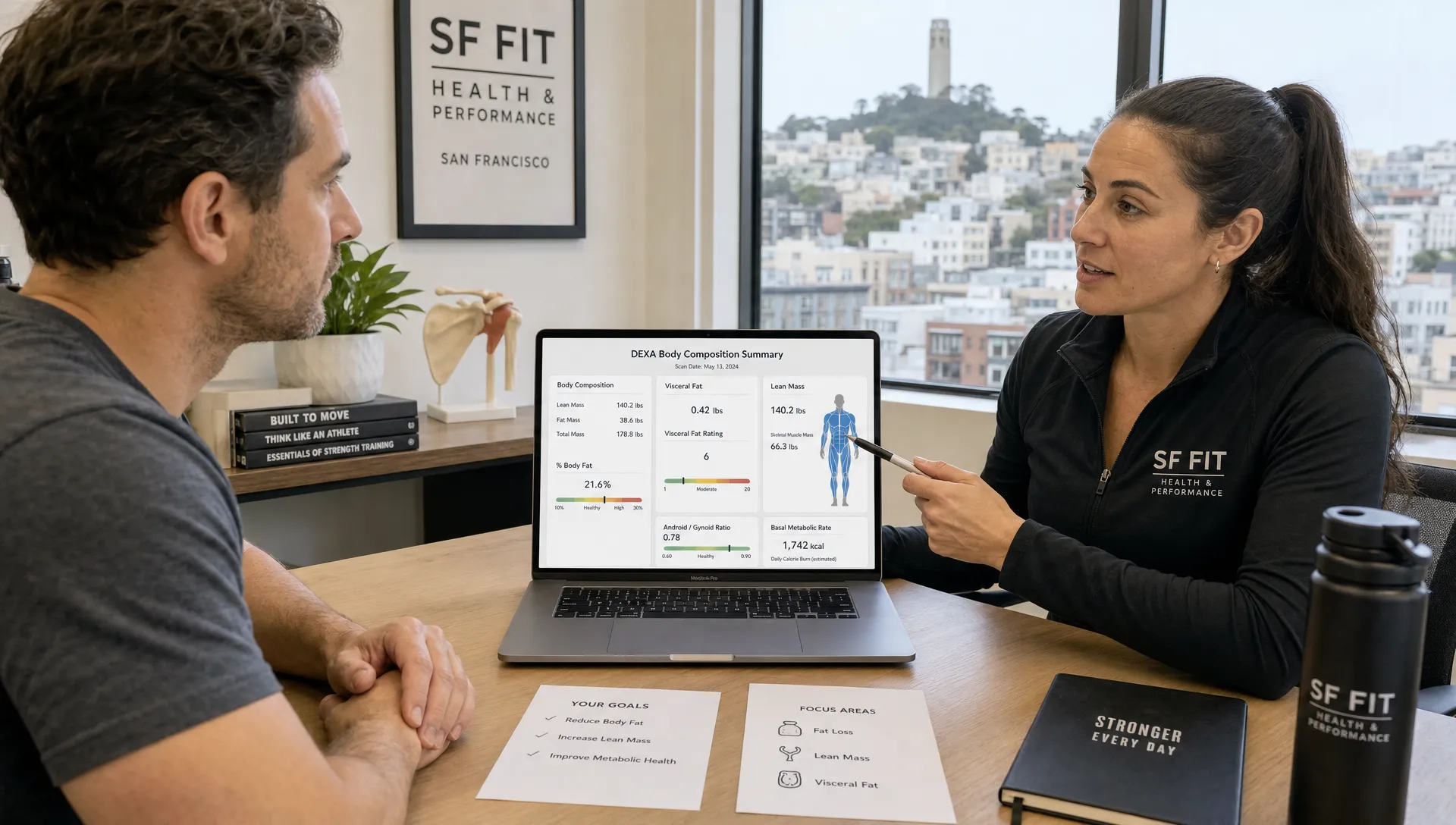
Most weight-loss plans are built around a scale, a calorie target and a weekly weigh-in. A DEXA fat scan changes the measurement layer by showing whether the weight you lose is coming from fat, lean tissue or both, which makes it easier to adjust your plan instead of guessing.
DEXA stands for dual-energy X-ray absorptiometry. It is widely used to assess bone density and, in body composition settings, to estimate fat mass, lean mass, visceral fat and regional distribution. RadiologyInfo.org explains that DXA uses a very low dose of ionizing radiation, and the scan itself is typically quick.
For weight loss, the value is not just a more precise body fat percentage. The real advantage is better decision-making: how aggressive your calorie deficit should be, whether your training is preserving muscle and whether health-related fat markers are moving in the right direction.
Why scale-only weight loss plans drift
Scale weight is useful, but it compresses several different tissues into one number. A drop on the scale can reflect fat loss, water change, less food in the digestive tract or loss of lean mass. A flat scale can still hide meaningful fat loss if you are gaining muscle at the same time.
BMI has a similar limitation. The CDC describes BMI as a screening measure, not a direct measure of body fat or body composition. That matters because two people at the same height and weight can have very different levels of muscle, body fat and visceral fat.
| Measurement | What it tells you | What it misses |
|---|---|---|
| Scale weight | Total body weight trend | Fat versus lean tissue changes |
| BMI | Weight relative to height | Muscle mass, fat distribution and bone density |
| Tape measurements | Size changes at specific sites | Internal fat and tissue composition |
| Progress photos | Visual change over time | Small changes and hidden visceral fat |
| DEXA body composition | Fat mass, lean mass, bone density and regional patterns | Daily water shifts and exact causes of change |
What a DEXA fat scan adds to a weight-loss plan
A DEXA fat scan gives you a baseline that is more specific than total pounds. Instead of aiming to lose a vague amount of weight, you can set targets around fat mass, lean mass preservation, visceral fat and regional changes.
That is helpful because weight loss is not always the same as fat loss. If a plan creates too large a deficit, lacks enough protein or skips resistance training, some of the weight lost may come from lean tissue. For a deeper look at this distinction, DEXA SF has a separate guide on setting better goals around fat mass on a DEXA scan.
| DEXA metric | Why it matters for weight loss | How it can refine your plan |
|---|---|---|
| Total fat mass | Shows pounds of fat tissue, not just percentage | Sets a clearer fat-loss target |
| Body fat percentage | Shows fat relative to total mass | Helps compare changes over time |
| Lean mass | Reflects muscle and other non-fat tissue | Flags whether your plan is too aggressive |
| Visceral fat | Estimates fat stored around abdominal organs | Adds a health-focused target beyond appearance |
| Regional fat | Shows where fat is distributed | Helps track trunk, arm and leg changes separately |
| Bone density | Gives context for long-term health | Keeps weight loss from becoming the only goal |
Start with a baseline before changing the plan
Your first DEXA fat scan is not a grade. It is a reference point. The goal is to understand where you are starting so your next 8 to 12 weeks of nutrition and training can be based on measurable needs.
A useful baseline review should answer a few practical questions. How much fat mass are you trying to lose? How much lean mass do you want to preserve? Is visceral fat high enough to deserve special attention? Are there left-to-right differences that might affect training choices?
At DEXA SF, clients can receive expert interpretation along with fitness and nutrition guidance. That matters because raw numbers are only useful when they turn into actions, such as adjusting calorie intake, protein targets, strength training volume or cardio frequency.
Use the data to adjust calories without overreacting
A calorie deficit drives fat loss, but the right deficit depends on the person. Someone with higher fat mass and stable lean mass may tolerate a larger deficit for a period. Someone already lean, highly active or losing lean mass may need a smaller deficit and more attention to recovery.
DEXA results can also help you separate a real plateau from normal scale noise. If body weight is not moving but fat mass is lower and lean mass is higher, the plan may be working. If weight is lower but lean mass is dropping quickly, the plan may need more food, more protein or a different training structure.
Protect lean mass while losing fat
If a DEXA fat scan shows weight is down but lean mass is also down, that is a signal to look beyond calories. Common fixes include increasing protein intake, adding or improving resistance training and avoiding excessive cardio volume that interferes with recovery.
This is where body composition can make weight loss more sustainable. Preserving lean mass supports strength, daily function and long-term weight maintenance. It may also help keep your estimated energy needs higher than they would be after a more muscle-depleting diet.
For a more nutrition-focused breakdown, see DEXA SF’s guide on how to use a body scan to build a better nutrition plan.
Watch visceral fat, not just visible fat
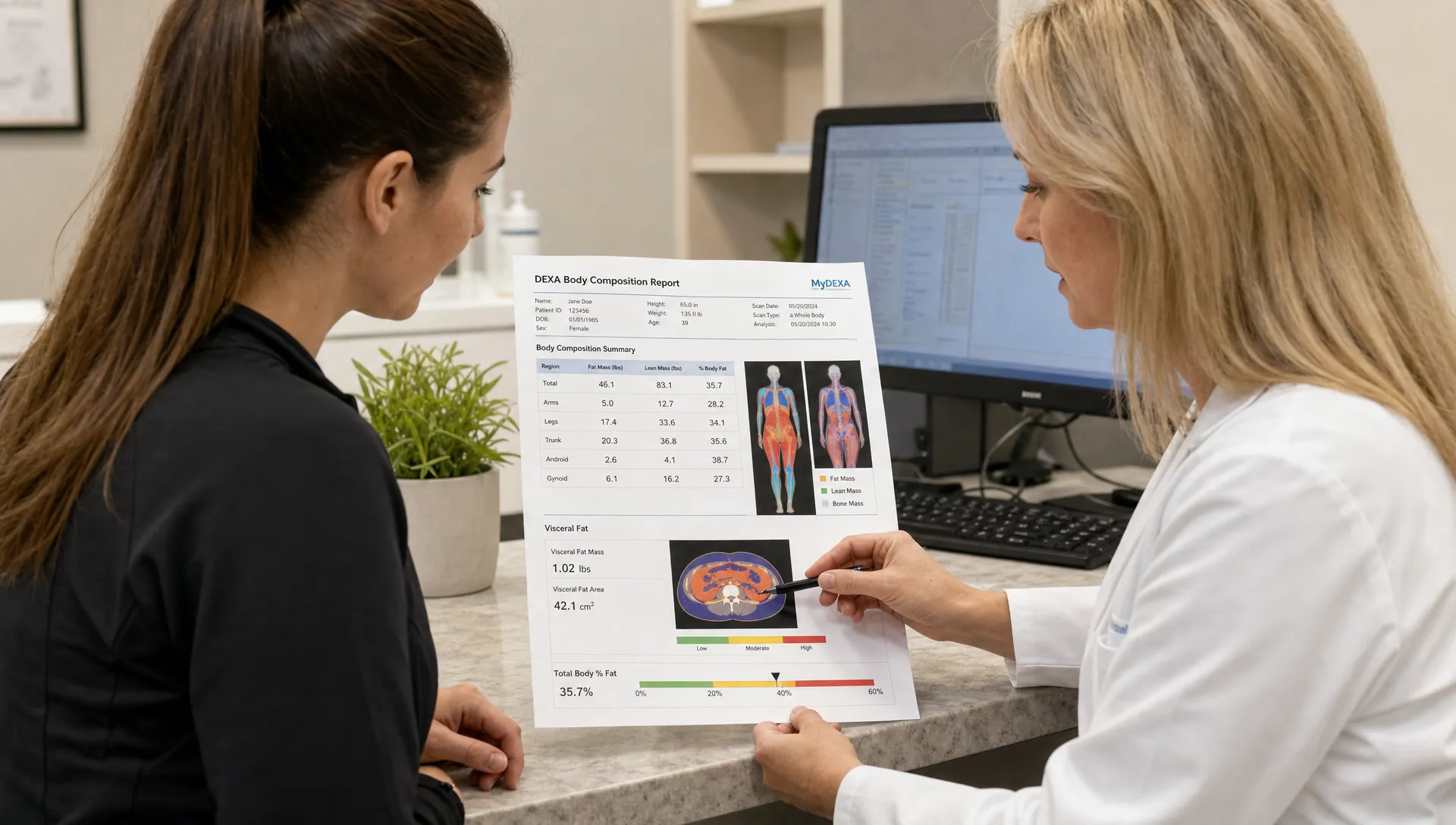
Visceral fat is stored deeper in the abdomen around internal organs. It is different from the pinchable subcutaneous fat under the skin. For many people, reducing visceral fat is one of the most meaningful health-related outcomes of a weight-loss plan.
A DEXA body composition report can make this goal more concrete by estimating visceral adipose tissue. If visceral fat is elevated, the plan may prioritize consistent fat loss, regular aerobic work, resistance training, sleep and nutrition habits that support metabolic health. DEXA SF covers this topic in more detail in its article on what a body scan for visceral fat can add to your plan.
Use regional results without chasing spot reduction
Regional DEXA data can show how fat and lean mass are distributed across the trunk, arms and legs. This is useful for tracking patterns, but it should not be confused with spot reduction. Training a body part does not reliably burn fat from that exact area.
The smarter use is trend tracking. If trunk fat is decreasing and lean mass is stable, your plan is likely moving in a productive direction. If one side shows notably less lean mass than the other, your training plan may need more unilateral work, better technique or a professional movement assessment.
Compare two people with the same scale result
The value of a DEXA fat scan becomes clearer when two people lose the same amount of scale weight but need different next steps.
| Scenario after 10 pounds lost | Likely interpretation | Better next step |
|---|---|---|
| 9 pounds fat lost, 1 pound lean mass lost | Strong fat-loss response with limited lean loss | Continue with small adjustments |
| 5 pounds fat lost, 5 pounds lean mass lost | Deficit may be too aggressive or training is insufficient | Increase protein, improve lifting and reassess calories |
| 3 pounds fat lost, 2 pounds lean mass gained, 5 pounds water or other change | Recomposition may be happening | Use body composition trend, not scale alone |
| Weight unchanged, fat down and lean mass up | Scale plateau may be misleading | Continue plan if energy, recovery and metrics are good |
These examples show why a single scale target can be too blunt. The right plan depends on the tissue change underneath the weight change.
Rescan at the right interval
Plan your next DEXA fat scan after enough time has passed for meaningful change. For many weight-loss plans, 8 to 12 weeks is a practical interval. Shorter intervals can be less useful because normal hydration, glycogen and training-related changes may blur the trend.
Try to keep scan conditions consistent. Similar time of day, similar hydration, similar meal timing and similar training timing can make your comparisons cleaner. You do not need perfect lab conditions, but consistency reduces avoidable noise.
When reviewing your follow-up scan, focus on direction and pattern. Did fat mass fall? Did lean mass hold steady? Did visceral fat improve? Did regional changes match your training and nutrition goals? Those questions are more useful than obsessing over one small number.
Avoid common interpretation mistakes
One mistake is treating a DEXA fat scan as a verdict instead of a tool. The scan can show what changed, but it does not automatically explain every cause. You still need to interpret the data in the context of food intake, training, sleep, stress, medication changes and adherence.
The most common mistakes are easy to avoid:
- Comparing your numbers to someone else instead of your own baseline
- Focusing only on body fat percentage while ignoring fat mass and lean mass
- Making drastic diet changes after one scan instead of looking at trends
- Forgetting that bone density and long-term health also matter
A good weight-loss plan uses DEXA data as feedback. If the plan is working, the scan confirms it. If it is not working, the scan helps identify which lever to adjust.
Who benefits most from this approach?
DEXA body composition testing is especially useful for people who want to lose fat while preserving muscle, those who feel stuck despite consistent habits and anyone who wants a more objective baseline before starting a new program.
It can also be useful for athletes, strength trainees and people pursuing body recomposition. In those cases, the scale may move slowly even when the body is changing. DEXA data can reveal progress that a bathroom scale misses.
If your goal is simply to lose a few pounds without tracking details, you may not need frequent scans. But if you want a weight-loss plan that is measurable, adjustable and tied to body composition rather than guesswork, DEXA can add clarity.
Frequently Asked Questions
How often should I get a DEXA fat scan during weight loss? Many people use an 8 to 12 week interval. That gives your nutrition and training plan enough time to create measurable changes while avoiding overreaction to short-term fluctuations.
Can a DEXA scan tell me exactly how many calories to eat? Not by itself. It can provide body composition and metabolic context, but calorie targets should also consider activity, goals, adherence, hunger, recovery and health history.
Is losing weight always a good sign on a DEXA report? Not always. Weight loss is most useful when most of the loss comes from fat mass while lean mass is preserved as much as possible.
Can DEXA show belly fat? DEXA can estimate visceral fat and regional fat distribution, including trunk fat. That can help you track abdominal fat changes more objectively than waist measurements alone.
Make your weight-loss plan measurable
If you are in the Bay Area and want clearer feedback than a scale can provide, a DEXA fat scan at DEXA SF can help you understand your fat mass, lean mass, visceral fat, bone density and asymmetries before you make your next plan adjustment.
Use the scan as a baseline, then pair it with consistent nutrition, progressive training and expert interpretation. When you are ready to measure what is actually changing, you can schedule a professional DEXA body composition scan in San Francisco.