
Having a DEXA Scan? Use This Simple Prep Checklist
If you are having a DEXA scan soon, a little preparation can make the appointment smoother and help your results reflect your real baseline. The scan itself is usually quick, but clothing, supplements, recent imaging, hydration and timing can all matter depending on whether your goal is body composition, bone density or both.
A DEXA scan can measure body fat, lean mass, visceral fat, bone density and side-to-side differences with a level of detail that a scale cannot provide. Good prep is not about trying to “improve” the number overnight. It is about removing avoidable variables so you and your provider can interpret the report with confidence.
Having a DEXA Scan: Your Simple Prep Checklist
Use this checklist as a practical guide, then follow any instructions from your scan provider if they differ. A body composition scan and a clinical bone density exam can have slightly different requirements.
The quick timeline
| When | What to do | Why it helps |
|---|---|---|
| 1 week before | Confirm the appointment type and ask about recent contrast imaging if relevant | Some imaging agents can interfere with accurate results |
| 24 hours before | Avoid calcium supplements if your provider gives that instruction, especially for bone density testing | Calcium tablets can affect certain bone density exam instructions |
| 12 to 24 hours before | Keep food, fluids and exercise habits normal and consistent with future scans | Consistency improves trend tracking |
| Appointment day | Wear metal-free, comfortable clothing | Metal can interfere with the scan image |
| Right before | Empty your pockets, remove jewelry and use the restroom | Small details can reduce artifacts and improve comfort |
| After | Review your report and plan your next scan interval | DEXA is most useful when results guide action |
What to know before you book a DEXA scan is a helpful companion if you are still deciding which metrics matter most for your goals.
One Week Before: Check Anything That Could Affect the Scan
When you are having a DEXA scan for the first time, start by confirming what kind of report you are getting. A fitness-focused body composition scan usually emphasizes fat mass, lean mass, visceral fat and regional muscle balance. A bone-focused scan emphasizes bone mineral density, often at specific sites such as the hip or spine.
Tell the provider if you recently had an imaging test with barium or contrast material. RadiologyInfo, a patient resource from the American College of Radiology and the Radiological Society of North America, advises patients to mention recent barium exams or contrast injections before a DEXA exam because these can affect imaging accuracy.
This is also the right time to find prior DEXA reports if you have them. Bring the full report when possible, not just a screenshot of one number. Prior results help your provider compare trends in body fat percentage, lean mass, bone density or asymmetry over time.
24 Hours Before: Keep Your Routine Boring
The goal before having a DEXA scan is not to hack the result. Do not dehydrate, crash diet, take diuretics without medical direction or do an unusually hard workout just to look different on paper. Those choices can make the scan less useful for long-term tracking.
For body composition, consistency is the main principle. If you plan to repeat DEXA scans every few months, try to schedule each scan under similar conditions. That might mean the same time of day, similar meal timing, similar hydration and no unusually intense training session right before the appointment.
If your scan includes bone density, ask whether you should avoid calcium supplements for 24 hours. This is a common instruction for bone density exams, but you should not stop prescribed medication unless a qualified clinician tells you to do so.
Appointment Day: What to Wear
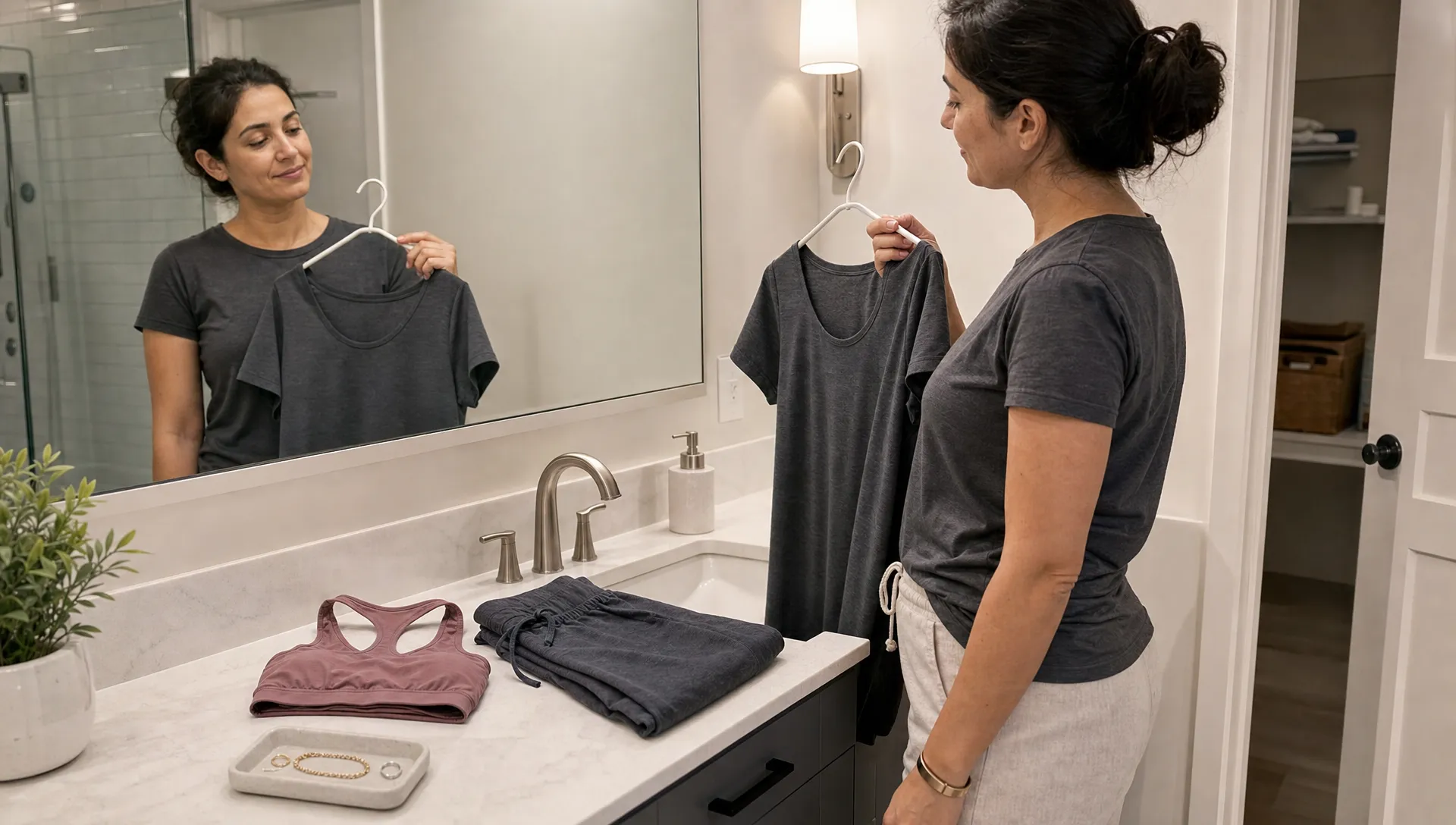
Choose soft, comfortable clothing without metal. Good options include leggings, joggers, shorts, T-shirts, sports bras without underwire and sweatshirts without zippers. Avoid jeans, belts, metal buttons, underwire bras, large snaps, jewelry and clothing with metallic threads.
If you arrive wearing metal, the staff may ask you to change or remove the item. That is not a big deal, but wearing scan-friendly clothing saves time and keeps the appointment simple.
If you are having a DEXA scan during a workday, bring a change of clothes if needed. Many people can return to normal activities immediately afterward, so the main clothing goal is simply to avoid metal during the scan.
What to Eat and Drink Before the Scan
Unless your provider gives you fasting instructions, you usually do not need to skip meals for a DEXA scan. For body composition tracking, the better approach is to avoid extremes. A very large meal right before the scan, unusual sodium intake or intentional dehydration can shift short-term body water and make trend comparisons harder.
Drink water normally. Do not overhydrate to compensate for poor habits and do not restrict fluids to chase a lower number. Lean mass estimates can be influenced by hydration status, so a normal routine gives you the cleanest baseline.
If you take daily medications, keep taking them unless your healthcare provider has told you otherwise. DEXA prep should not override medical instructions.
What to Bring With You
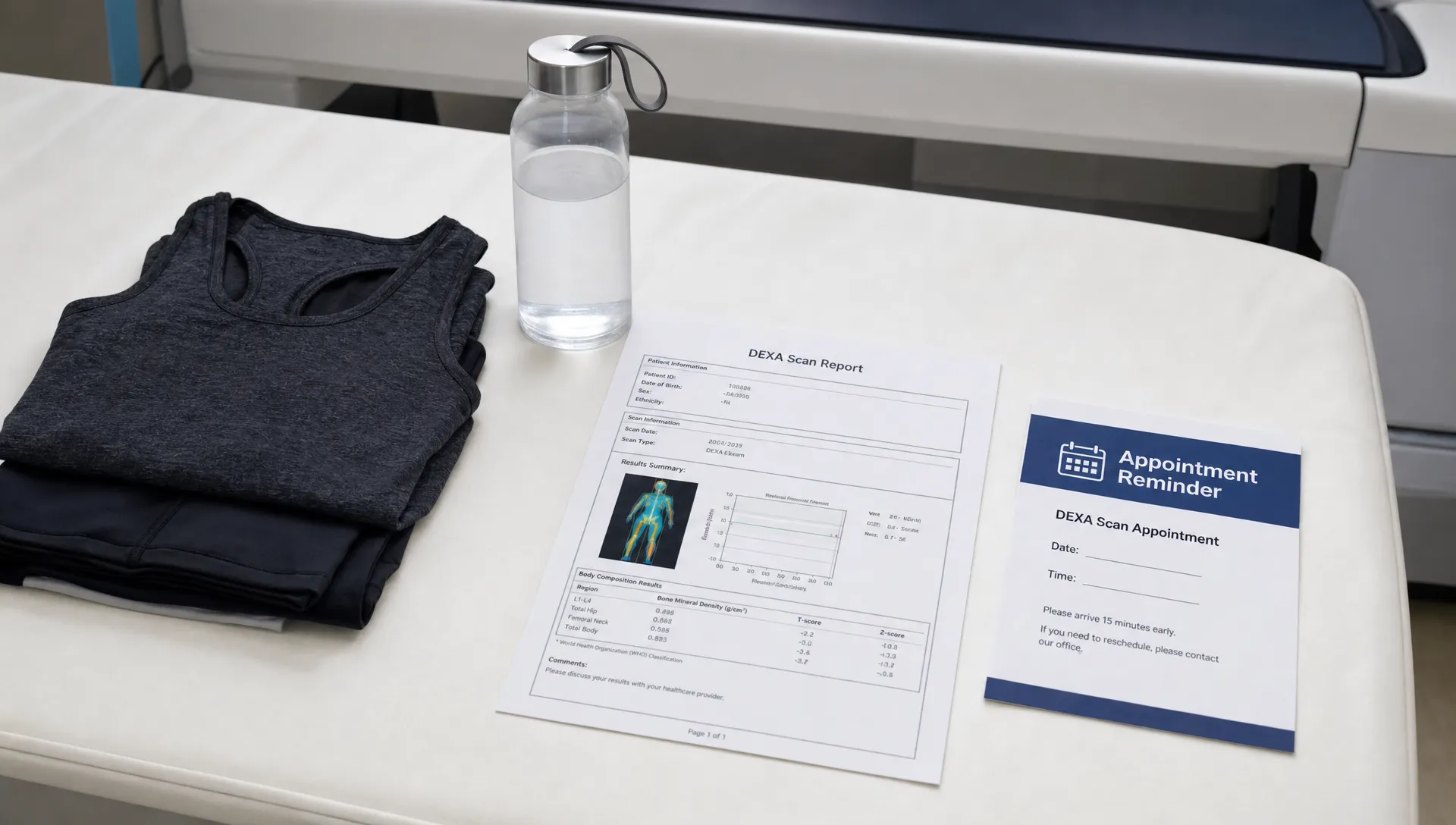
Bring a photo ID if your provider requires one, plus any prior DEXA reports you want reviewed. If you are tracking a fitness or nutrition plan, it can also help to bring context about your current routine, such as your training schedule, recent weight changes and main goal.
You do not need to bring elaborate data to have a useful appointment. A clear goal is often enough. For example, you might want to know whether weight loss is coming mostly from fat, whether a strength program is adding lean mass or whether visceral fat is moving in the right direction.
If you want to connect your scan results to training decisions, this guide on using a DEXA scan for fitness goals explains which metrics tend to matter most for fat loss, muscle gain and body recomposition.
Safety Notes to Share Before You Scan
Tell the staff if you are pregnant or think you might be pregnant. DEXA uses low-dose X-rays, and elective scans are generally avoided during pregnancy unless a clinician determines that imaging is medically necessary.
You should also mention implants, surgical hardware, mobility limitations or anything that could affect positioning. Most people can complete the scan comfortably, but the staff needs accurate information to position you properly and interpret any artifacts.
If radiation exposure is your main concern before having a DEXA scan, review the practical safety context in DEXA scan risks, radiation and safety facts. For most eligible adults, the exposure from a DEXA scan is considered very low, but personal medical factors still matter.
During the Appointment: What Actually Happens
The scan itself is simple. You lie still on the scanning table while the machine passes over your body. The technologist may adjust your position so the images and measurements are captured correctly. Movement can blur results, so staying relaxed and still is the main job.
A body composition scan is typically quick, and there is no recovery time. You can usually go back to work, training or normal errands afterward unless your provider tells you otherwise.
The most valuable part often comes after the scan, when someone helps you understand the report. Numbers like body fat percentage and lean mass are useful, but they become more actionable when they are connected to your goal, habits and next measurement date.
How to Make Your Results Easier to Compare Later
A single DEXA scan can give you a strong baseline. Repeat scans are where the data becomes especially useful. To compare results fairly, try to make your future scan conditions match the first one as closely as possible.
Use the same location when you can, since different machines and protocols can make small differences more difficult to interpret. Schedule at a similar time of day, wear similar clothing and avoid unusual food, hydration or exercise patterns before each appointment.
If you are having a DEXA scan to track progress, avoid overreacting to tiny changes. Look for meaningful trends in fat mass, lean mass, visceral fat and regional balance. A qualified interpretation can help separate real progress from normal variation.
Common Prep Mistakes to Avoid
One common mistake is treating the scan like a weigh-in contest. A DEXA report is more useful than a scale because it shows what changed, not just whether total body weight moved. Trying to manipulate the result can make the data less valuable.
Another mistake is ignoring clothing details. Metal buttons, zippers and underwire can create unnecessary issues, especially when they are easy to avoid.
People also forget to mention recent contrast imaging, possible pregnancy or prior surgeries. These details are not embarrassing or unusual. They are part of making sure the scan is appropriate and interpreted correctly.
Frequently Asked Questions
Can I work out before a DEXA scan? For best comparison over time, avoid unusually intense exercise right before the appointment. A normal routine is usually fine, but hard training can affect short-term hydration and muscle fluid balance.
Do I need to fast before a DEXA scan? Not usually, unless your provider specifically instructs you to. For body composition tracking, avoid a very large meal right before the scan and try to keep meal timing consistent across future scans.
Can I drink coffee before a DEXA scan? In most cases, yes. The bigger issue is consistency. If you usually have coffee before morning appointments, do the same for future scans when possible.
What should I wear for a DEXA scan? Wear comfortable clothing without metal, such as leggings, shorts, joggers and a T-shirt. Avoid zippers, belts, underwire bras, metal buttons and jewelry.
Is having a DEXA scan painful? No. The scan is noninvasive. You lie still on a table while the scanner passes over you, and you can typically resume normal activities afterward.
Ready for a Clearer Baseline?
Good prep helps your scan answer the questions you actually care about: how much fat you carry, where lean mass is distributed, whether visceral fat is changing and how your bone density looks. If you are in San Francisco, DEXA SF provides professional DEXA body composition scans with expert interpretation, fitness guidance and nutrition advice so your results can turn into a practical next step.