
DEXA X Ray Explained for First-Time Patients
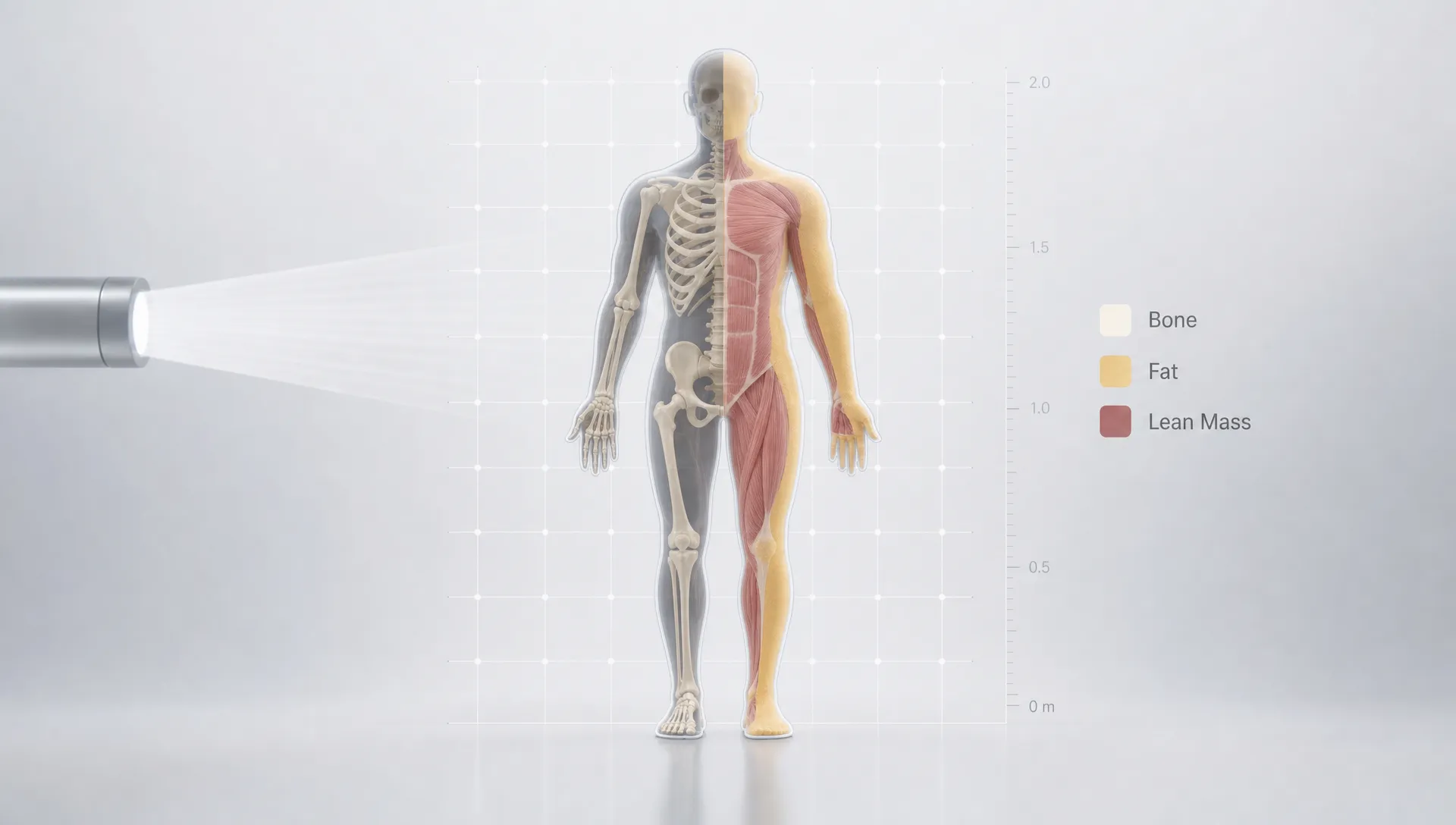
If you are preparing for your first DEXA X-ray, the name can sound more intimidating than the experience actually is. A DEXA scan, also called DXA, is a quick, noninvasive imaging test that uses very low-dose X-rays to measure what your body is made of, including bone mineral density, body fat, lean mass, visceral fat, and regional differences between the left and right sides of your body.
For many first-time patients, the most common questions are simple: Will it hurt? Is the radiation safe? What should I wear? What do the results actually mean? This guide walks through the process in plain English so you can arrive prepared, understand the value of the data, and know what to do with your results afterward.
What is a DEXA X-ray?
DEXA stands for dual-energy X-ray absorptiometry. “Dual-energy” means the scanner uses two different low-energy X-ray beams. Because bone, fat, and lean tissue absorb those beams differently, the system can estimate how much of each tissue type is present in different areas of your body.
DEXA was originally developed and widely adopted for bone density testing, especially for evaluating osteoporosis risk. Today, it is also considered one of the most useful clinical tools for body composition analysis because it can provide more detail than a scale, tape measure, BMI calculation, or many consumer body fat devices.
A first-time DEXA patient may come in for different reasons. Some want to understand their body fat percentage more accurately. Others want to track muscle gain, evaluate bone health, measure visceral fat, or establish a baseline before a nutrition or training program. At DEXA SF, scans are paired with expert interpretation and practical fitness and nutrition guidance so the numbers are easier to understand and apply.
How DEXA is different from a regular X-ray
A standard X-ray is designed to create an image of structures inside the body, commonly bones, joints, or the chest. It can help diagnose fractures, lung issues, or certain injuries, but it is not designed to give a detailed breakdown of fat, lean mass, bone density, and metabolic insights.
A DEXA X-ray is different because it measures tissue composition. Instead of only producing a diagnostic image, it quantifies how much bone mineral, fat mass, and lean mass you have, and where those tissues are distributed.
If your goal is body composition, a regular X-ray is usually not the right test. DEXA is much better suited for that purpose because it can separate body mass into meaningful categories. For a deeper comparison, DEXA SF has a helpful explainer on whether a body X-ray is useful for body composition goals.
What a DEXA scan can measure
One of the biggest advantages of DEXA is that it gives you more than one number. Weight alone can tell you whether your body is heavier or lighter, but it cannot tell you whether that change came from fat, muscle, water, or bone. DEXA provides a more complete picture.
| Measurement | What it tells you | Why first-time patients care |
|---|---|---|
| Body fat percentage | The percentage of your total mass that is fat tissue | Helps create a more accurate baseline than BMI |
| Fat mass | The total amount of fat tissue measured in pounds or kilograms | Useful for tracking fat loss over time |
| Lean mass | Non-fat, non-bone tissue, largely muscle and organ tissue | Helps monitor muscle gain or loss |
| Bone mineral density | A measure of bone strength and mineral content | Important for bone health and osteoporosis risk awareness |
| Visceral fat | Fat stored around internal organs in the abdominal area | Relevant to metabolic health risk discussions |
| Regional composition | Fat and lean mass by body region, such as arms, legs, and trunk | Helps identify imbalances or training effects |
| Left vs. right asymmetry | Differences between sides of the body | Useful for athletes, injury recovery, and strength planning |
This is why DEXA is often used by people with very different goals. A strength athlete may focus on lean mass distribution. A runner may care about bone density and asymmetries. Someone starting a weight loss program may want to know whether they are losing fat while preserving muscle.
Is a DEXA X-ray safe?
DEXA uses ionizing radiation, but the dose is very low. According to RadiologyInfo.org, a DEXA bone density exam exposes patients to a small amount of radiation, typically much lower than many other medical imaging tests. The FDA also notes that medical X-ray imaging should be used when the health benefit outweighs the small radiation risk.
For most adults, the radiation exposure from a DEXA scan is considered minimal. Still, it is important to tell the provider if you are pregnant, may be pregnant, or recently had a contrast imaging exam, such as a CT scan with contrast or a nuclear medicine study. These factors may affect timing or recommendations.
It is also worth separating fact from fear. Many people hear “X-ray” and assume the scan is high risk, but DEXA is specifically designed to use low-dose imaging. If you are anxious about exposure, this overview of common misconceptions about DEXA scans addresses radiation concerns and other first-time questions in more detail.
What happens during your first DEXA scan?
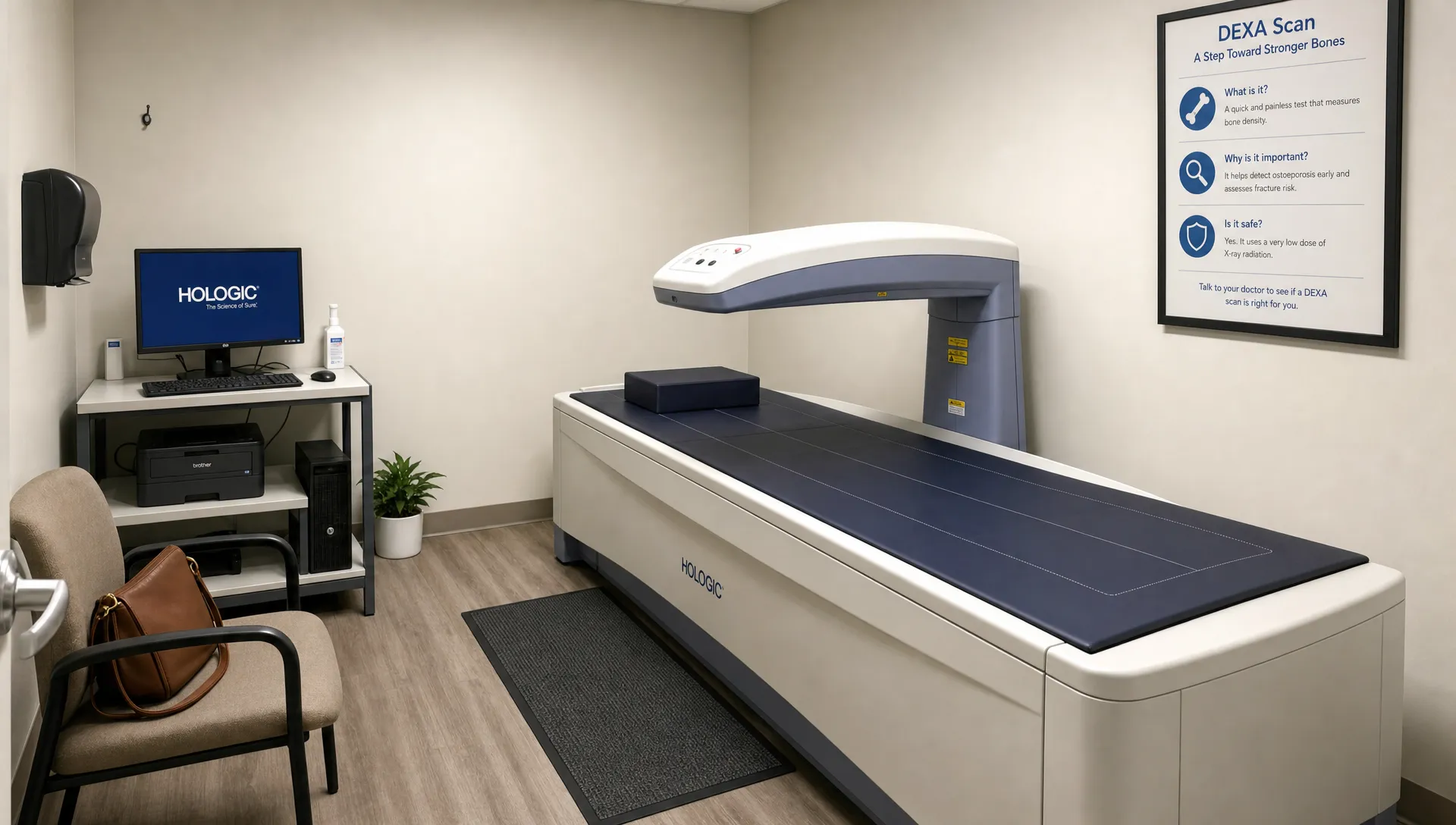
The scan itself is usually simple. You lie still on a padded scanning table while the DEXA arm passes over your body. The machine does not enclose you like some MRI scanners, and the test is painless. You do not need to perform any physical effort during the scan.
Before the scan, you may be asked to remove metal items such as belts, jewelry, watches, keys, or clothing with metal hardware. Metal can interfere with the accuracy of the scan. Depending on the appointment, you may change into appropriate clothing or simply scan in what you are wearing if it meets the guidelines.
During the scan, staying still matters. Movement can blur the image or affect measurement quality. The provider will position you properly, explain what to expect, and let you know when the scan is complete.
Afterward, the most valuable part is often the interpretation. A report full of numbers can be confusing if you have never seen one before. Expert interpretation helps connect the data to your goals, whether that means fat loss, muscle gain, bone health, metabolic risk awareness, or performance tracking.
How to prepare for a DEXA scan
Preparation is not complicated, but consistency matters, especially if you plan to repeat scans over time. Hydration, recent meals, exercise, and clothing can all affect comfort or measurement consistency.
| Before your appointment | Why it matters |
|---|---|
| Wear comfortable clothing without metal | Helps prevent scan interference |
| Remove jewelry, watches, belts, and metal accessories | Metal may affect image quality |
| Follow any instructions about eating or exercise | Consistency improves comparison between scans |
| Tell the provider if you may be pregnant | Radiation precautions are important |
| Mention recent contrast imaging tests | Some imaging materials can affect scan timing |
| Bring questions about your goals | Helps the interpretation focus on what matters to you |
If this is your first scan, do not worry about being “perfectly prepared.” The main goal is to get a high-quality baseline. For future scans, try to repeat similar conditions whenever possible, such as scanning at a similar time of day and following the same pre-scan routine.
How to understand your first DEXA results
A first DEXA report can feel like a lot of data at once. The key is to avoid focusing on one number in isolation. Body composition is best understood as a pattern.
For example, two people can have the same body weight but very different body fat percentages, lean mass levels, and visceral fat. Similarly, two people can have the same body fat percentage but different fat distribution, which may carry different implications for health and performance.
Your first scan is most useful as a baseline. It shows where you are today so future scans can show what is changing. If you start strength training, a later scan may show whether lean mass increased. If you begin a nutrition plan, a later scan may help determine whether weight loss came mostly from fat or whether too much lean mass was lost.
Bone density results deserve special context. DEXA can provide bone mineral density information, but interpretation may depend on age, sex, medical history, medications, and risk factors. If your scan raises medical questions about bone health, you should discuss those findings with a qualified healthcare provider. For more background, this bone density scan guide explains what bone density testing can reveal and why it matters.
Why DEXA beats BMI for many goals
BMI is simple and widely used, but it only compares height and weight. It does not distinguish fat from muscle. A muscular person may have a high BMI without having high body fat, while someone with a “normal” BMI may still have low muscle mass or elevated visceral fat.
DEXA is more informative because it looks beneath total weight. This matters if you are training hard, changing your diet, recovering from an injury, aging, or trying to improve metabolic health. Instead of asking only, “Did the scale go down?” DEXA lets you ask better questions:
- Did I lose fat while preserving muscle?
- Did I gain lean mass in the areas I am training?
- Is my visceral fat trending in the right direction?
- Are my left and right sides balanced?
- Is my bone density where it should be for my situation?
That does not mean every person needs constant scans. It means that when you want a precise baseline or objective progress check, DEXA can provide information that simpler tools cannot.
Who should consider a DEXA scan?
A DEXA scan can be useful for a wide range of adults, especially if the results will guide decisions. You may consider one if you are beginning a fitness program, changing your nutrition, training for a sport, monitoring muscle balance, tracking fat loss, or paying closer attention to bone health.
It can also be helpful for people who feel stuck because the scale is not telling the full story. For example, if your weight has not changed but your clothes fit differently, DEXA may show whether you gained muscle and lost fat at the same time. If you are losing weight quickly, it may help you see whether you are preserving lean mass.
For medical concerns, especially osteoporosis risk, fracture history, or medication-related bone loss, talk with your healthcare provider about whether a clinical bone density exam is appropriate.
How often should you repeat a DEXA scan?
The right timing depends on your goal. If you are using DEXA for body composition tracking, repeating too soon may not show meaningful change. Many people get the most useful comparison after they have followed a consistent training or nutrition plan long enough for measurable adaptation.
For bone density monitoring, timing is more individualized and may be guided by a healthcare provider. Bone changes usually happen more slowly than body composition changes, so testing frequency can differ depending on risk factors and clinical context.
The most important principle is consistency. A DEXA scan is powerful when it helps you make better decisions, not when it becomes another number to chase every week.
Common first-time patient mistakes to avoid
First-time patients often make one of three mistakes. The first is expecting the scan to judge their health from a single number. DEXA data is informative, but it works best when interpreted in context.
The second mistake is comparing results too aggressively with other people. Your age, sex, training history, injury history, nutrition, genetics, and health background all matter. The better comparison is usually your future scan versus your baseline scan.
The third mistake is not asking questions. If you do not understand a metric, ask what it means and how it relates to your goal. A clear explanation can turn a technical report into a practical plan.
Frequently Asked Questions
Does a DEXA X-ray hurt? No. A DEXA scan is painless and noninvasive. You lie still on a scanning table while the scanner arm passes over your body.
Is DEXA the same as a regular X-ray? No. A regular X-ray creates images used to evaluate structures such as bones or the chest. DEXA uses low-dose X-rays to measure bone density and body composition, including fat mass and lean mass.
How much radiation is in a DEXA scan? DEXA uses a very low radiation dose compared with many other imaging tests. If you are pregnant, may be pregnant, or have special medical concerns, tell the provider before scanning.
Can DEXA tell me my exact body fat percentage? DEXA is one of the most precise tools available for body composition assessment, but every measurement method has some margin of error. Its biggest value is providing a consistent, detailed baseline and tracking changes over time.
What should I wear to a DEXA scan? Wear comfortable clothing without metal when possible. Avoid belts, large zippers, underwire, jewelry, watches, or metal accessories that could interfere with the scan.
Will I get fitness or nutrition advice with my results? At DEXA SF, clients receive expert interpretation along with personalized fitness and nutrition guidance based on their scan results and goals.
Get clear answers from your first DEXA scan
Your first DEXA X-ray does not have to feel mysterious. The scan is quick, low dose, and designed to give you a clearer picture of body fat, lean mass, bone density, visceral fat, and body symmetry than most everyday measurement tools.
If you are in San Francisco and want accurate data with expert guidance, DEXA SF can help you understand your baseline and turn your results into practical next steps. Schedule your DEXA scan and leave with numbers you can actually use.