
Can a Nutrition Scan Help Personalize Your Eating Plan?
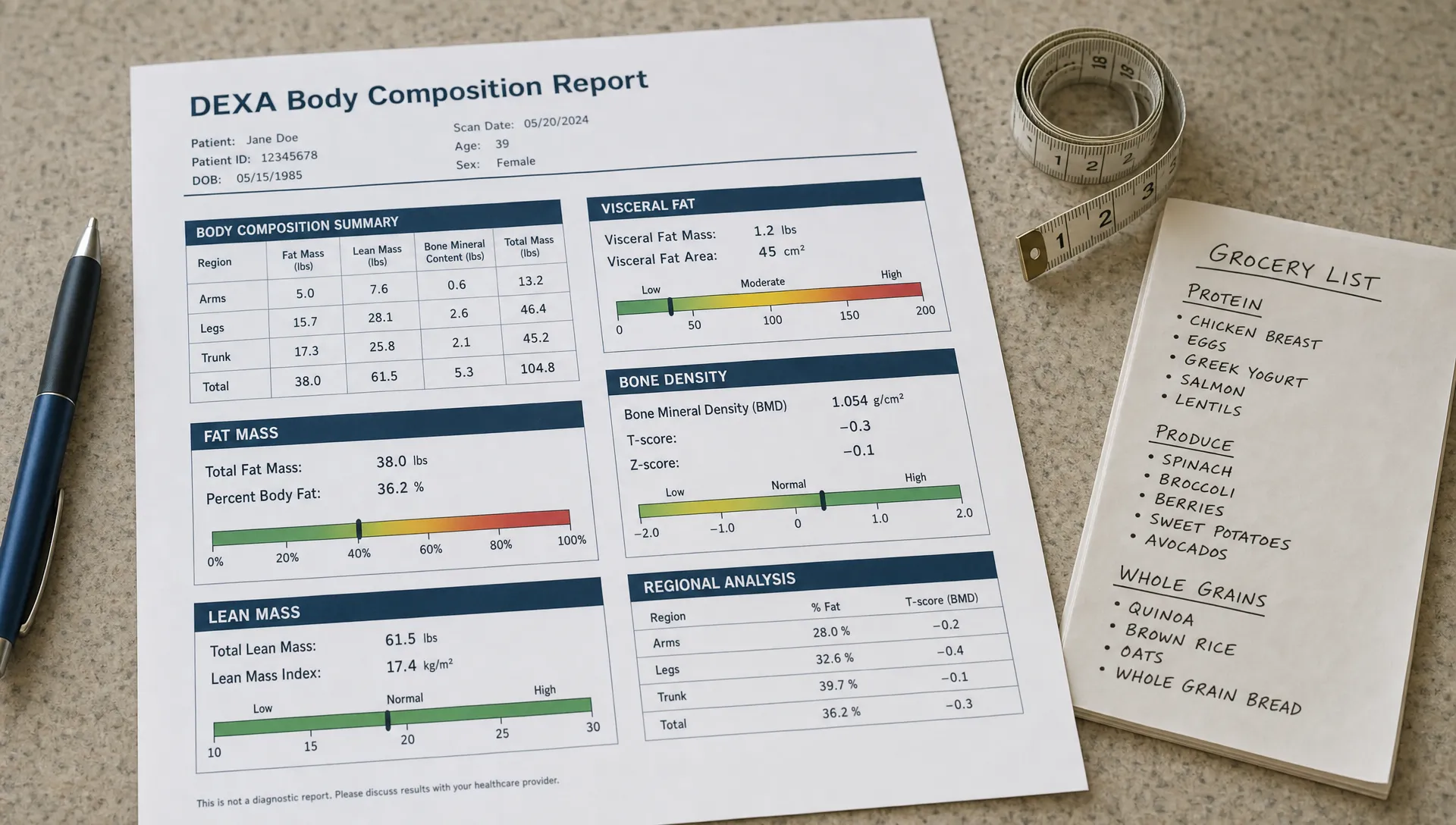
A nutrition scan can help personalize your eating plan, but only if you understand what it actually measures. The most useful version is not a vague wellness test that claims to reveal your “perfect diet.” It is a body composition assessment, such as a DEXA scan, that shows how much fat, lean mass, bone mass and visceral fat you carry so your nutrition choices can be based on real data rather than scale weight alone.
That distinction matters. Two people can weigh the same, eat the same calories and get very different results because their muscle mass, fat distribution, training history and metabolic needs are not the same. A personalized eating plan should account for those differences instead of forcing everyone into the same calorie target or macro split.
What a nutrition scan can and cannot tell you
A nutrition scan is best understood as a measurement tool, not a meal plan generator. DEXA, which stands for dual-energy X-ray absorptiometry, can estimate body fat percentage, lean mass, bone density and regional body composition. At DEXA SF, clients also receive expert interpretation and guidance that can help connect those numbers to fitness and nutrition decisions.
What it does not do is scan your blood for vitamins, diagnose food sensitivities or tell you whether a specific food is “good” or “bad” for your body. It also does not replace a registered dietitian, physician or medical evaluation when you have a clinical condition.
The value is in context. If your goal is fat loss, muscle gain, better metabolic health or performance, the scan can show whether your current plan is moving you in the right direction. That makes your eating plan easier to adjust with evidence.
Why scale weight is not enough for personalized nutrition
Scale weight is simple, but it compresses fat, muscle, water, bone and digestive contents into one number. If your weight drops 8 pounds, the scale does not tell you whether you lost mostly body fat or sacrificed lean tissue. If your weight stays flat, it cannot show whether you gained muscle and lost fat at the same time.
A nutrition scan can separate those outcomes. For example, someone trying to lose fat might see that their total weight barely changed over eight weeks, but their fat mass decreased and lean mass improved. That person may not need a more aggressive diet. They may need patience, enough protein and training consistency.
The opposite can also happen. A rapid drop in weight with a drop in lean mass may signal that calories are too low, protein intake is insufficient or resistance training is not supporting muscle retention. For a deeper look at how body composition data improves food choices, DEXA SF’s guide to building a better nutrition plan with a body scan covers the broader planning process.
The scan metrics that matter most for your eating plan
Not every number on a body composition report deserves equal attention. The right metrics depend on your goal, but a few tend to have the biggest nutrition implications.
| Scan result | Why it matters | How it can shape nutrition decisions |
|---|---|---|
| Body fat percentage | Shows fat mass relative to total body mass | Helps set realistic fat loss or recomposition goals |
| Lean mass | Reflects muscle and other non-fat soft tissue | Helps guide protein needs and calorie targets |
| Visceral fat | Estimates fat stored around internal organs | Supports a stronger focus on waist reduction, fiber intake and sustainable fat loss |
| Regional lean mass | Shows left vs. right or upper vs. lower differences | Helps align nutrition with training recovery and muscle-building priorities |
| Bone density | Measures bone mineral status | Can inform conversations about calcium, vitamin D, protein and medical follow-up |
A nutrition scan becomes more practical when these metrics are translated into decisions. Instead of saying, “I need to lose weight,” you can say, “I want to lose fat while maintaining lean mass.” That is a different plan.
How scan data can personalize calories
Calorie targets are often estimated from age, height, sex, activity and body weight. Those formulas can be useful starting points, but they can be imprecise because they do not directly account for your actual lean mass. Lean tissue is metabolically active, so two people at the same body weight may have different energy needs if one carries more muscle.
A nutrition scan can help refine the starting point by showing how much of your body is lean mass versus fat mass. If the scan is paired with metabolic data insights, it can give a clearer picture of energy needs. From there, you still need real-world tracking because sleep, stress, daily movement, training intensity and adherence all affect results.
The best use is iterative. Start with a reasonable calorie target, follow it consistently for several weeks, then compare changes in body composition. If fat mass is decreasing and lean mass is stable, the target is probably close. If lean mass is dropping quickly, the plan may be too aggressive.
Using DEXA results to set protein and macro targets
Protein is one of the most important nutrition variables when your goal involves fat loss, muscle gain or recomposition. A scan does not tell you an exact gram target on its own, but lean mass data can make protein planning more personal than using body weight alone.
For example, a smaller person with high lean mass may need a different protein strategy than someone of the same weight with lower lean mass. During a calorie deficit, enough protein can help preserve lean tissue. During a muscle gain phase, protein supports training adaptation when paired with progressive resistance training.
Carbohydrate and fat targets are more flexible. The Dietary Guidelines for Americans emphasize overall dietary patterns, nutrient density and limits on added sugars, sodium and saturated fat. In practice, your macros should support your training, preferences and health needs rather than follow a rigid template.
Matching your plan to the goal you actually have
A nutrition scan is most helpful when the eating plan matches the outcome you care about. “Get healthier” is a valid motivation, but it is too vague to guide calorie intake, protein targets or meal timing.
If your goal is fat loss, the priority is a sustainable calorie deficit that reduces fat mass while protecting lean mass. That usually means adequate protein, resistance training, fiber-rich foods and enough dietary flexibility to stick with the plan.
If your goal is muscle gain, the focus shifts to sufficient calories, enough protein and carbohydrates that support training performance. If your goal is recomposition, the plan may sit between those two approaches: small deficit or maintenance calories, consistent lifting and careful tracking of fat and lean mass.
DEXA data can also make fat loss more specific. If visceral fat is elevated, the plan may emphasize waist reduction, consistent activity and dietary patterns linked with cardiometabolic health. DEXA SF explains this in more detail in its article on what a body scan for visceral fat can add to your plan.
How often should you rescan?
Body composition changes take time, so scanning too often can create noise rather than clarity. For many goals, a repeat scan every 8 to 12 weeks is more useful than checking weekly. That window gives your nutrition and training plan enough time to create measurable change.
A nutrition scan is especially useful at the start of a new phase, after a few months of consistent effort or when progress feels confusing. For instance, if the scale has not moved but strength is up and clothes fit differently, a follow-up scan can confirm whether recomposition is happening.
Avoid reacting to one data point without context. Hydration, recent training, glycogen changes and normal biological variation can affect short-term interpretation. The trend across multiple scans is usually more informative than a single result.
Where metabolic data fits in
Body composition and metabolism are related, but they are not the same thing. DEXA can show how much lean mass you have and where fat is stored. Metabolic testing or metabolic estimates can help frame energy needs, especially when someone has been dieting for a long time or struggles to predict maintenance calories.
When used together, these measurements can sharpen nutrition decisions. A person with higher lean mass and high training volume may need more fuel than expected. A person with lower lean mass may need a more conservative calorie target paired with strength training to improve long-term energy expenditure.
If you are comparing different types of testing, DEXA SF’s article on what a metabolic scan can tell you alongside DEXA explains how the two perspectives can work together.
Common mistakes when using scan results for diet changes
The biggest mistake is treating scan results as a reason to start an extreme diet. If a report shows higher body fat than expected, the right response is not necessarily a crash plan. A steep deficit can backfire if it reduces training quality, increases hunger and leads to lean mass loss.
Another mistake is ignoring behavior. A nutrition scan can identify the direction of change, but it cannot cook meals, manage portions or improve consistency. The best plan still needs repeatable habits: protein at most meals, fruits and vegetables, adequate hydration, planned grocery shopping and a realistic approach to eating out.
It is also easy to overfocus on body fat percentage while ignoring bone density, lean mass and regional balance. A good interpretation looks at the whole report, then chooses a small number of priorities that match your goal.
When a nutrition scan is worth it
A nutrition scan is worth considering if you want a more objective baseline, have a specific body composition goal or feel stuck despite consistent effort. It is particularly useful for people pursuing fat loss, muscle gain, recomposition, athletic performance or long-term health tracking.
It may be less necessary if you are just starting basic healthy eating habits and do not yet need advanced measurement. In that case, simple changes like increasing protein, eating more minimally processed foods and walking more may be enough to begin.
The scan becomes more valuable when you are ready to act on the data. If you will use the results to adjust calories, protein, training and follow-up measurements, it can turn guesswork into a structured feedback loop.
Frequently Asked Questions
Is a nutrition scan the same as a DEXA scan? The phrase usually refers to using body composition data to guide nutrition. A DEXA scan is one of the most precise tools for measuring fat mass, lean mass, bone density and visceral fat, which can then inform an eating plan.
Can a scan tell me exactly what foods to eat? No. It can show what is happening in your body composition, but food choices still depend on preferences, allergies, medical needs, culture, budget and lifestyle. The scan helps personalize targets, not prescribe one universal menu.
How soon can nutrition changes show up on a scan? Many people need 8 to 12 weeks of consistent nutrition and training before meaningful body composition changes are easier to detect. Faster changes can happen, but short-term results are more likely to be affected by water and glycogen shifts.
Can it help if I want to lose fat but keep muscle? Yes. This is one of the best uses. By comparing fat mass and lean mass over time, you can see whether your calorie deficit, protein intake and training plan are helping preserve muscle while reducing fat.
Should I still work with a dietitian or doctor? If you have a medical condition, abnormal lab work, a history of disordered eating or bone density concerns, you should involve a qualified healthcare professional. Scan data can support that conversation, but it should not replace medical care.
Personalize your plan with better data
A personalized eating plan works best when it is built from evidence, adjusted over time and matched to your actual goal. A nutrition scan can provide the baseline and progress data that a scale cannot, especially when you want to understand fat loss, muscle retention, visceral fat or bone health more clearly.
At DEXA SF, you can schedule a professional DEXA body composition scan in San Francisco and receive expert interpretation to help connect your results to practical fitness and nutrition decisions. If you are ready to stop guessing, a scan can give your next eating plan a more measurable starting point.