
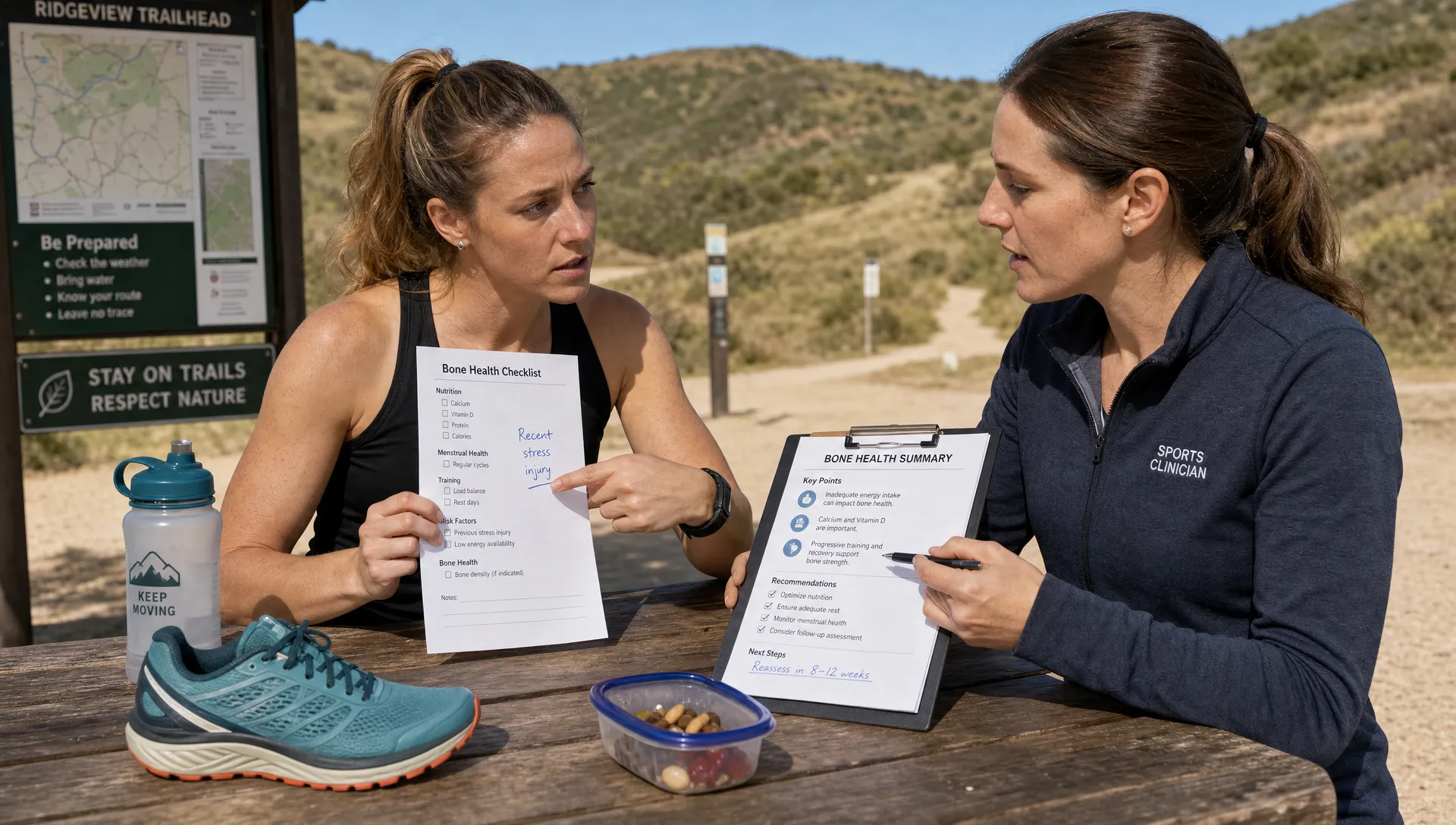
A Bone Health Assessment Checklist for Active Adults
Being active is good for your skeleton, but it does not automatically mean your bones are as strong as your muscles, lungs or race times suggest. Runners can develop stress injuries. Cyclists and swimmers can have excellent cardiovascular fitness with relatively little bone-loading stimulus. Lifters can build strength while still missing nutrition, vitamin D or recovery issues that affect bone remodeling.
A practical bone health assessment gives you a baseline, flags risks early and helps you decide whether lifestyle changes or objective testing make sense. Use this checklist to review the factors that matter most for active adults, then bring any concerns to a qualified clinician, sports dietitian or bone health professional.
Why active adults should check bone health
Bone is living tissue. It responds to mechanical loading, hormones, nutrition, medications, age and recovery. Exercise can be protective, especially resistance training and weight-bearing impact, but the type, dose and context of training matter.
For example, jumping, sprinting, hiking and strength training load bone differently than long indoor cycling sessions. Endurance athletes with low energy availability may train hard but underfuel, which can affect reproductive hormones, thyroid function and bone turnover. Masters athletes may also face age-related bone loss even when their weekly training volume remains high.
That is why a bone health assessment should not be limited to asking, “Do I work out?” A better question is, “Do my training, nutrition, recovery and medical risk factors support stronger bones over time?” If you want more detail on the measurement side, DEXA SF’s guide to what a BMD scan measures and when to get one explains how bone density is evaluated.
Your bone health assessment checklist
Use the sections below as a self-review. You do not need to treat every item as a medical problem. The goal is to identify patterns that deserve attention, especially if several risks show up together.
Review your fracture and stress injury history
Past injuries are one of the clearest signals to examine. A single traumatic fracture from a bike crash or ski fall is different from a stress fracture that developed during normal training. A fracture from a low-impact event, such as a fall from standing height, deserves medical follow-up.
Pay close attention to stress reactions, stress fractures, recurring shin pain, hip or groin pain during running and foot pain that worsens with loading. Active adults often normalize these issues as “training aches,” but repeated bone stress injuries may point to a mismatch between load, recovery and bone capacity.
Red flags to discuss with a clinician include:
- A stress fracture, especially in the hip, pelvis, sacrum or femoral neck
- More than one stress injury over several seasons
- A fracture from a low-impact fall or minor accident
- New loss of height, persistent back pain or suspicion of a vertebral fracture
- Bone pain that does not improve with reduced training load
Map your training load and bone-loading stimulus
Not all exercise challenges bone in the same way. The Bone Health & Osteoporosis Foundation emphasizes weight-bearing and muscle-strengthening exercise as key categories for bone health because bones adapt to the forces placed on them. Walking, hiking, stair climbing, tennis, resistance training and jumping drills all create different mechanical signals than cycling or swimming.
This does not make any sport “bad” for bones. Cycling, rowing and swimming can support cardiovascular fitness, muscle endurance and joint-friendly training. They simply may not provide enough impact stimulus on their own for some athletes, especially if those sports dominate the weekly schedule.
For your assessment, look at a normal training week rather than an ideal week. Note how often you include progressive resistance training, loaded carries, hill work, impact drills or multidirectional movement. Also note sudden changes, such as a sharp mileage increase, a new marathon block, a jump in CrossFit volume or returning to sport after time off. Bone adapts more slowly than fitness, so aggressive progressions can create risk even when your aerobic system feels ready.
Check calcium, vitamin D, protein and total energy intake
Nutrition is not a side detail for bone health. Bone tissue requires mineral availability, adequate protein and enough total energy to support training and remodeling. The National Institutes of Health notes that adults generally need 1,000 mg of calcium per day from ages 19 to 50, with higher recommendations for women over 50 and men over 70. You can review the NIH calcium guidance through the Office of Dietary Supplements.
Vitamin D helps the body absorb calcium and supports musculoskeletal health. The NIH vitamin D fact sheet lists 600 IU per day for most adults up to age 70 and 800 IU per day after age 70, though individual needs can vary based on blood levels, sun exposure, skin tone, medications and medical conditions. In San Francisco, foggy weather and indoor work can make it harder for some people to rely on sunlight alone.
Protein also matters because bone is not just mineral. It has a collagen matrix that contributes to structure and resilience. If you are training hard, losing weight, avoiding several food groups or frequently finishing the day underfueled, a sports dietitian can help you align intake with performance and bone health goals.
Screen recovery, hormones and energy availability
Active adults often track steps, pace, power, reps and heart rate. Fewer track whether the body has enough recovery capacity to keep adapting. Chronic under-recovery can show up as fatigue, declining performance, poor sleep, irritability, low libido, frequent illness or stalled strength gains.
For women, irregular or absent menstrual cycles are a major signal to take seriously, especially in the context of high training volume or low energy intake. For men, symptoms such as low libido, persistent fatigue and reduced morning erections can justify a conversation with a clinician about testosterone and overall health. These symptoms are not diagnostic by themselves, but they help complete the bone health picture.
The concept of Relative Energy Deficiency in Sport, often called RED-S, describes how low energy availability can affect multiple body systems, including bone health. If you are intentionally cutting weight, training through fatigue or struggling to eat enough around sessions, include that in your assessment rather than treating it as a separate performance issue.
Review medical history and medications
Several health conditions can affect bone density or nutrient absorption. These include celiac disease, inflammatory bowel disease, eating disorders, thyroid disorders, kidney disease and conditions that require long-term steroid treatment. A family history of osteoporosis or hip fracture can also raise your risk.
Medication history matters as well. Long-term glucocorticoid use is a known risk factor for bone loss. Some other medications may also affect bone health depending on dose, duration and personal risk profile. Do not stop or change prescribed medication on your own. Instead, use this checklist to start a more informed conversation with your healthcare provider.
Get objective measurements when the checklist raises questions
A DEXA scan is widely used to measure bone mineral density at clinically relevant sites such as the hip and spine. It can also measure body composition, including fat mass, lean mass and regional differences. For active adults, that combination can be useful because muscle mass, training adaptation and bone health are connected.
At DEXA SF, a professional scan can assess body fat, lean mass, bone density, visceral fat and asymmetries, followed by expert interpretation and practical fitness and nutrition guidance. If you are curious about the broader relationship between body composition and skeletal health, DEXA SF’s article on how body and bone health can be evaluated together is a helpful next read.
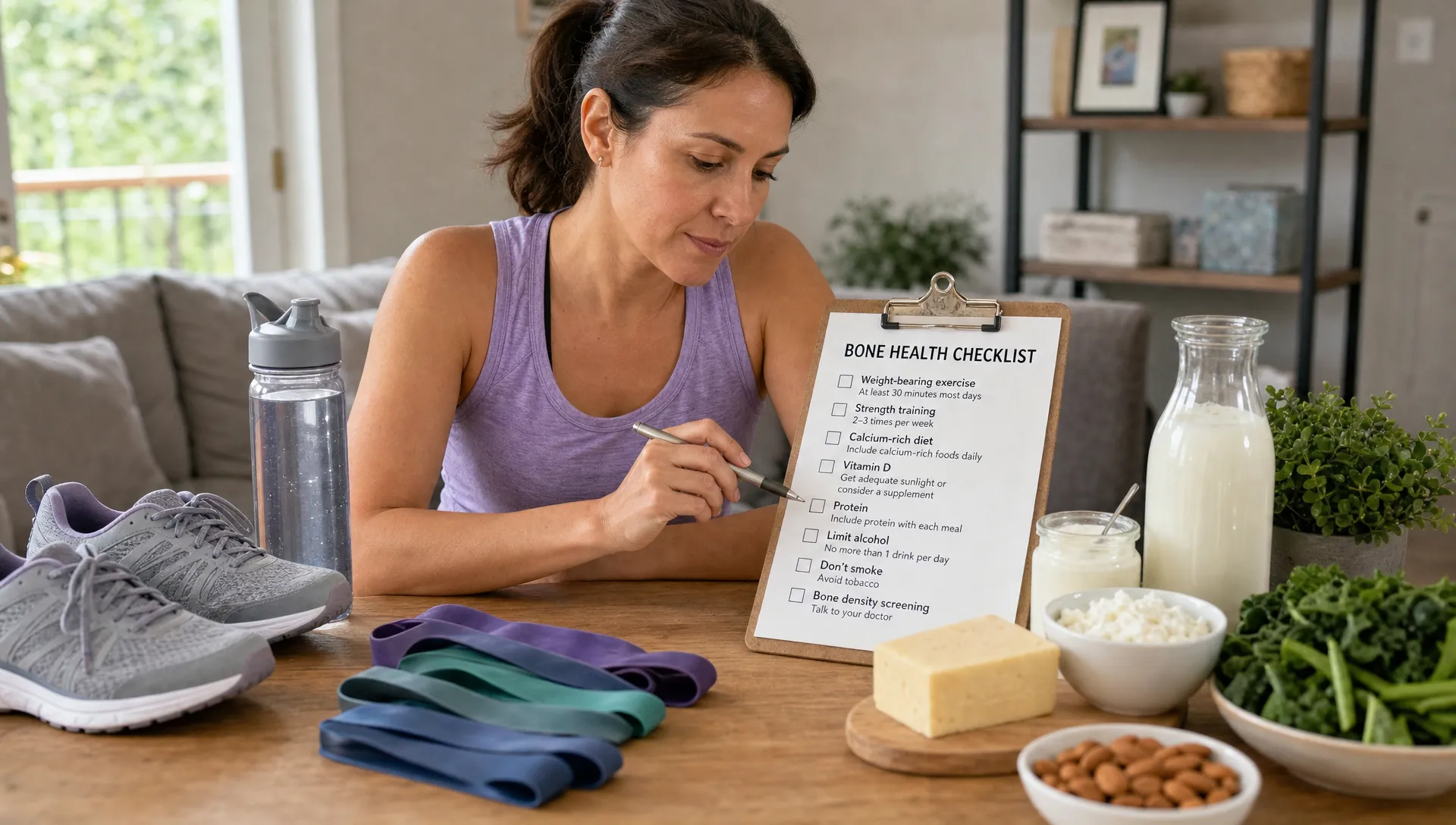
Quick checklist table for active adults
Use this table to summarize your own risk profile before a scan, annual physical or sports medicine appointment.
| Checklist area | What to review | Follow up if you notice |
|---|---|---|
| Injury history | Stress fractures, recurring bone pain, low-impact fractures | More than one stress injury or pain that returns with training |
| Training stimulus | Strength work, impact, sport variety, weekly load changes | High volume with little resistance or impact training |
| Nutrition | Calcium, vitamin D, protein, total calories | Restrictive eating, low dairy or calcium intake, low vitamin D risk |
| Recovery | Sleep, fatigue, soreness, performance trends | Persistent fatigue, frequent illness or declining performance |
| Hormonal signals | Menstrual regularity, libido, energy, relevant labs | Missed periods, low libido or symptoms of hormone disruption |
| Medical factors | Family history, GI disorders, thyroid issues, steroid use | Known risk factors or long-term medications affecting bone |
| Measurements | DEXA scan, BMD results, body composition trends | No baseline, prior low BMD or major changes in training or weight |
When should active adults consider a DEXA scan?
A DEXA scan can be useful as a baseline if you are serious about long-term health, but it becomes especially relevant when your checklist shows multiple risk factors. Consider discussing DEXA testing if you have had a stress fracture, a low-impact fracture, significant weight loss, menstrual irregularity, long-term steroid use, a family history of osteoporosis or a sport profile with high training volume and limited bone-loading stimulus.
Masters athletes may also benefit from establishing a baseline before problems appear. Bone loss can be silent for years, and performance alone does not always reveal it. A strong cyclist, swimmer or runner can still have lower-than-expected bone density.
If you decide to test, review what the scan includes ahead of time so you know what to expect. DEXA SF’s bone density scan guide walks through preparation, the scan process and why the results matter.
How often should you reassess bone health?
The right interval depends on your baseline results and risk profile. If your scan is normal, your training is stable and you have no major risk factors, you may only need periodic reassessment. If you are monitoring low bone density, recovering from a stress fracture, changing medication or addressing RED-S, your clinician may recommend a more structured follow-up plan.
For body composition and training feedback, some athletes choose more frequent DEXA scans to track lean mass, fat mass and asymmetry trends. Bone density changes more slowly, so interpreting BMD over time requires patience and consistent measurement methods.
The most useful reassessments compare like with like. Try to scan at the same facility when possible, keep conditions similar and bring previous results. The goal is not to chase tiny short-term changes. It is to see whether your overall plan is moving you in the right direction.
What to do with your results
A bone health assessment is only useful if it changes decisions. If your risk profile is low, your results can confirm that your current approach is working and give you a baseline for the future. If your results show lower-than-expected bone density or concerning body composition patterns, the next step is a plan.
That plan may include progressive resistance training, better fueling around workouts, improved calcium and vitamin D intake, medical evaluation for underlying conditions or changes to training load while an injury heals. The exact path depends on your results, age, sport, symptoms and health history.
Do not treat DEXA results as a pass-fail grade. Treat them as data. Active adults already understand that performance improves through feedback loops: test, adjust, train, recover and retest. Bone health works the same way, but the timeline is longer and the stakes include mobility, fracture prevention and lifelong strength.
Frequently Asked Questions
Can active adults still have low bone density? Yes. Activity helps, but sport type, nutrition, hormones, medications, genetics and recovery all affect bone density. Endurance athletes, cyclists, swimmers and people with past stress injuries can still have bone health risks.
Is a DEXA scan only for older adults? No. Older adults are a major group for bone density testing, but younger active adults may also benefit when they have risk factors such as stress fractures, low energy availability, menstrual irregularity, long-term steroid use or a family history of osteoporosis.
What is the difference between a bone health assessment and a DEXA scan? A bone health assessment is the broader review of risks, training, nutrition, recovery and medical history. A DEXA scan is an objective measurement tool that can provide bone density and body composition data.
Do I need to stop training before a bone health assessment? Usually no, but avoid making major training or diet changes right before a scan if you want a clean baseline. If you have bone pain or suspect a stress fracture, reduce loading and speak with a clinician.
Get a clearer bone health baseline in San Francisco
If you train regularly and want objective insight beyond the scale, a DEXA scan can help you understand bone density, lean mass, body fat, visceral fat and asymmetries in one appointment. DEXA SF provides professional DEXA body composition scans in San Francisco with expert interpretation plus fitness and nutrition guidance.
Use the checklist above to identify your questions, then schedule a scan with DEXA SF to turn your bone health assessment into actionable data.