
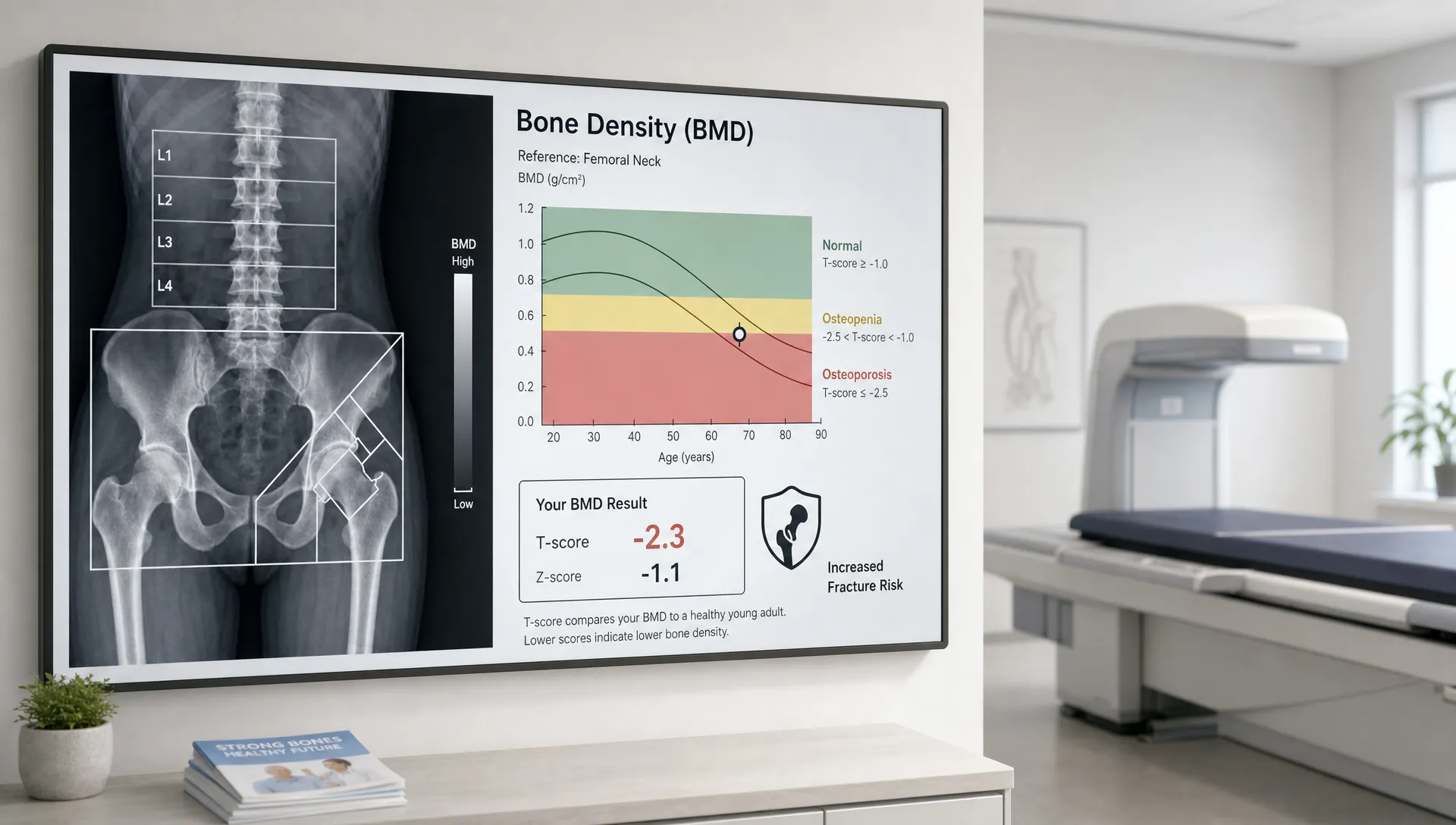
What a BMD Scan Measures and When to Get One
Bone loss is easy to miss because it usually happens silently. You can feel strong, train regularly, eat well, and still have lower-than-expected bone density. A BMD scan is designed to catch that risk early by measuring how much mineral is packed into your bones, then comparing your numbers with reference ranges that help estimate fracture risk.
BMD stands for bone mineral density. In most modern settings, it is measured with DXA or DEXA technology, short for dual-energy X-ray absorptiometry. You may see both spellings, but they usually refer to the same type of scan.
This guide explains what a BMD scan measures, what the numbers mean, when to consider getting one, and how to use the results as part of a smarter bone health plan.
What is a BMD scan?
A BMD scan is a noninvasive imaging test that estimates bone density using low-dose X-rays. It is most often used to screen for low bone mass, assess osteoporosis risk, and monitor changes in bone density over time.
The most common and clinically useful version is a central DXA scan, which measures areas such as the hip and lumbar spine. According to RadiologyInfo.org, DXA is commonly used to diagnose osteoporosis, estimate fracture risk, and track the effects of treatment.
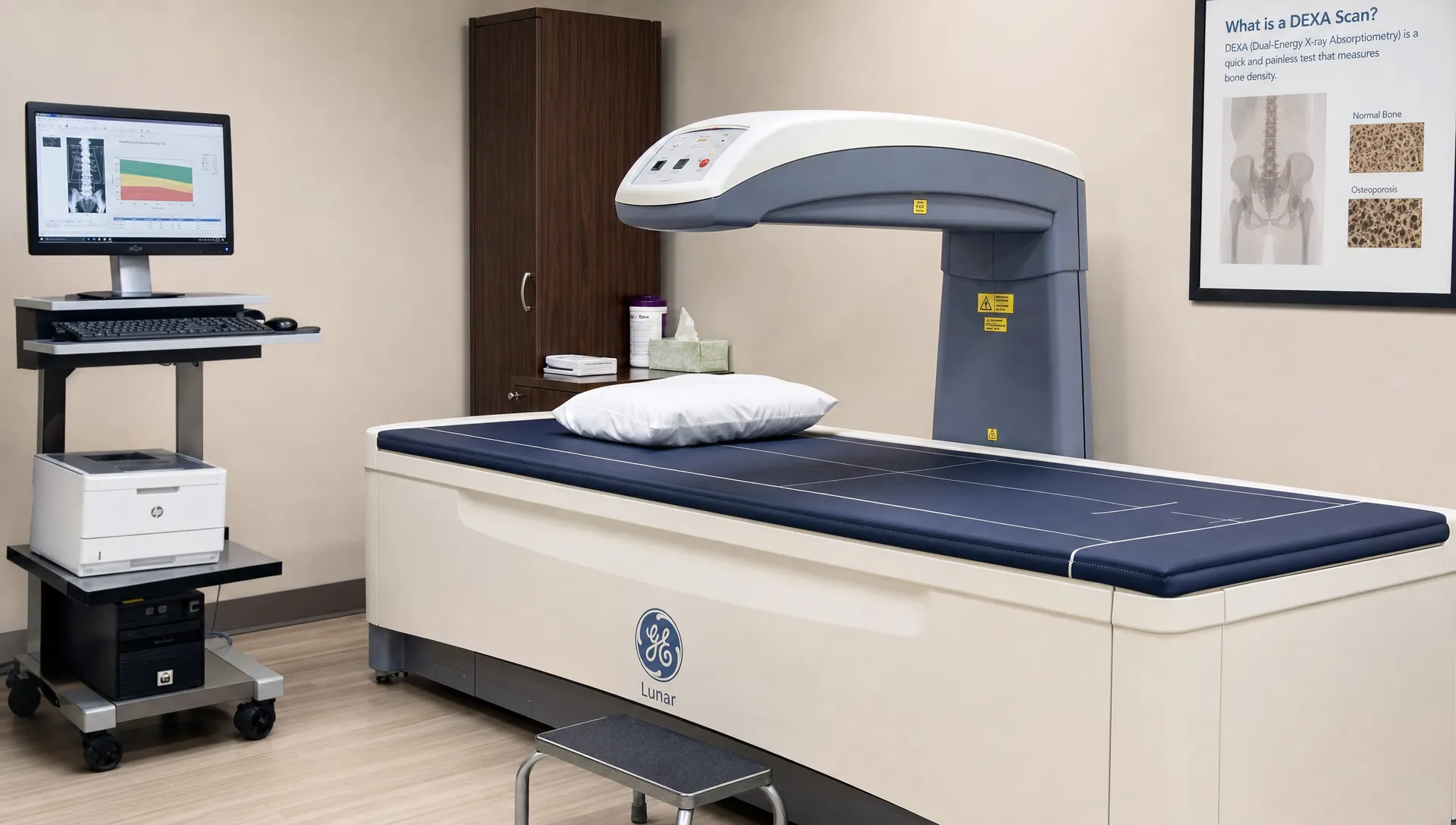
The scan does not require needles, anesthesia, or a recovery period. You typically lie still on a padded table while the scanner passes over the measurement area. The process is quick, and the information can be far more useful than body weight or general wellness markers when the goal is to understand skeletal health.
What a BMD scan actually measures
A BMD scan is not just one number. A useful report usually includes several measurements that describe bone quantity, density, and how your results compare with expected ranges.
| Measurement | What it means | Why it matters |
|---|---|---|
| Bone mineral content, or BMC | The amount of mineral measured in a bone region, usually in grams | Helps quantify how much mineral is present in the scanned area |
| Bone mineral density, or BMD | Mineral content divided by scanned bone area, usually reported as g/cm² | The core measurement used to assess low bone mass and osteoporosis risk |
| T-score | Your BMD compared with the average peak bone density of a healthy young adult | Used in postmenopausal women and men age 50 and older to classify normal bone density, osteopenia, or osteoporosis |
| Z-score | Your BMD compared with people of similar age and sex | Helps identify whether bone density is lower than expected for your demographic group |
| Region-specific results | Measurements from areas such as the hip, femoral neck, lumbar spine, or forearm | Fracture risk and interpretation can vary by skeletal site |
| Change over time | Comparison with prior scans, ideally from the same facility or machine type | Shows whether bone density is stable, improving, or declining |
The most important point is that BMD is location-specific. Your spine may look different from your hip, and your femoral neck may tell a different story than your total hip. That is why a clinician or qualified interpreter should look at the full report rather than a single headline number.
Common scan sites
For osteoporosis screening, the most common sites are the lumbar spine, total hip, and femoral neck. These areas are clinically important because fractures at the hip and spine can have major consequences for mobility, independence, and long-term health.
The forearm may be measured in certain situations, such as when the hip or spine cannot be interpreted reliably, or when specific medical conditions affect bone metabolism. Whole-body DEXA can also provide broader body composition data, including lean mass and fat mass, but a medical BMD assessment focuses primarily on bone density and fracture risk.
How BMD scan results are usually interpreted
BMD results are commonly summarized with T-scores and Z-scores. The National Institute of Arthritis and Musculoskeletal and Skin Diseases explains that these scores compare your bone density with reference populations, helping put your result into context.
For adults where T-score classification applies, the standard categories are:
| T-score range | Category | What it generally means |
|---|---|---|
| -1.0 or higher | Normal bone density | Bone density is within the expected young adult reference range |
| Between -1.0 and -2.5 | Low bone mass, often called osteopenia | Bone density is below normal but not in the osteoporosis range |
| -2.5 or lower | Osteoporosis | Bone density is low enough to meet the diagnostic threshold for osteoporosis |
A Z-score is interpreted differently. A very low Z-score can suggest that bone density is lower than expected for your age, which may prompt a clinician to look for contributing factors such as medication use, hormonal changes, digestive disorders, kidney disease, or other causes of secondary bone loss.
If you already have a report and want to understand the terminology, this plain-English guide to bone mineral density scan results explains common abbreviations such as BMD, BMC, T-score, Z-score, hip, spine, and femoral neck.
What a BMD scan does not measure
A BMD scan is powerful, but it has limits. It measures bone mineral density, not every aspect of bone strength. Bone quality, bone microarchitecture, fall risk, medication history, vision, balance, and muscle strength can all influence fracture risk even when BMD is known.
It also does not diagnose every bone problem. A BMD scan is different from a nuclear medicine bone scan, which is used for very different reasons, such as evaluating certain cancers, infections, unexplained bone pain, or areas of abnormal bone turnover. If you are trying to understand that distinction, this comparison of bone scan vs DEXA breaks down when each test is used.
A normal BMD result also does not mean you cannot fracture a bone. It means your bone density is not in the low range by the tested criteria. Fracture risk is broader than density alone, especially as people age or develop balance, vision, medication, or muscle loss concerns.
When to get a BMD scan
The right time to get a BMD scan depends on age, sex, medical history, fracture history, medications, and risk factors. For many people, the first scan is a baseline. For others, it is prompted by a fracture, a medical condition, or a treatment decision.
The U.S. Preventive Services Task Force recommends osteoporosis screening for women age 65 and older, and for postmenopausal women younger than 65 who are at increased risk. For men, screening decisions are more individualized, although many clinical guidelines advise discussing BMD testing for men age 70 and older, or earlier when risk factors are present.
You may want to ask a healthcare professional about a BMD scan if any of the following apply:
- You are a woman age 65 or older.
- You are postmenopausal and have risk factors such as low body weight, prior fracture, smoking, or a parent with a hip fracture.
- You are a man age 70 or older, or a younger man with significant risk factors.
- You have had a low-trauma fracture after age 50, such as a fracture from a standing-height fall.
- You take long-term corticosteroids or other medications known to affect bone density.
- You have medical conditions linked with bone loss, such as rheumatoid arthritis, celiac disease, inflammatory bowel disease, hyperparathyroidism, kidney disease, or low sex hormone levels.
- You have had early menopause, prolonged loss of menstrual periods, or a history of low energy availability.
- You are being treated for osteopenia or osteoporosis and need to monitor whether your bone density is changing.
Risk is cumulative. A single factor may not make testing urgent, but several factors together can justify getting a baseline earlier than standard age-based screening.
How often should you repeat a BMD scan?
BMD changes slowly, so repeating scans too often may not add useful information. The best interval depends on your baseline result, your risk level, and whether the result would change your plan.
| Situation | Typical follow-up approach to discuss |
|---|---|
| Normal BMD and low risk | A longer interval may be reasonable unless new risk factors develop |
| Low bone mass, or osteopenia | Repeat timing depends on how close the result is to osteoporosis range and whether risk factors are changing |
| Osteoporosis or high fracture risk | Follow-up is often used to monitor stability and treatment response |
| Starting or changing osteoporosis medication | A repeat scan may help assess whether the plan is working over time |
| New fracture, new medication, or new medical condition | Earlier reassessment may be appropriate if the result could affect care |
In practice, many people who are being actively monitored repeat a scan about every 1 to 2 years, but that is not a universal rule. If your baseline is normal and your risk is low, your clinician may recommend waiting longer.
For tracking, consistency matters. When possible, compare scans from the same facility or at least the same type of machine and measurement protocol. Small differences can occur because of positioning, equipment, software, and natural measurement variability. A meaningful change should be larger than the expected precision error of the test.
What to expect during the scan
A BMD scan is usually straightforward. You may be asked to wear comfortable clothing without metal zippers, buttons, or thick hardware. The technologist will position you on the table, often with supports to align the hip or spine correctly. Good positioning is important because small differences can affect the result.
You generally do not need to fast. Some facilities may ask you to avoid calcium supplements for 24 hours before the exam, so follow the instructions from your testing site. You should also tell the facility if you might be pregnant or if you recently had a contrast study, barium exam, or nuclear medicine scan, since those can affect scheduling or interpretation.
The scan itself is painless. You lie still while the scanner collects the images. Afterward, you can return to normal activities right away.
How to use BMD scan results wisely
The value of a BMD scan is not just knowing whether a score is normal or low. The real benefit is using the information to make better decisions.
For someone with normal bone density, a scan can provide reassurance and a baseline for future comparison. For someone with low bone mass, it can trigger earlier action around resistance training, protein intake, calcium and vitamin D adequacy, fall prevention, and medical evaluation. For someone with osteoporosis, it can support a more structured conversation about treatment options and monitoring.
Body composition can also add context. Muscle mass, balance, and strength all affect fall risk, and falls are a major driver of fractures. A full DEXA assessment that includes lean mass, body fat, visceral fat, and left-right asymmetries can help connect bone health with fitness and nutrition strategy. That is especially useful for people who are training, losing weight, aging proactively, or trying to preserve muscle while improving metabolic health.
If your result is low, do not panic. A low BMD score is not a personal failure, and it does not mean a fracture is inevitable. It means you have useful information that can guide prevention, treatment, and follow-up.
Frequently Asked Questions
Is a BMD scan the same as a DEXA scan? Usually, yes. BMD is the measurement, bone mineral density, and DEXA or DXA is the technology most commonly used to measure it.
Does a BMD scan hurt? No. The scan is noninvasive and painless. You lie still on a table while the scanner collects measurements.
Can a BMD scan show osteoporosis? Yes, a DEXA-based BMD scan is commonly used to diagnose osteoporosis when the T-score is -2.5 or lower at relevant skeletal sites, depending on the clinical context.
Should younger adults ever get a BMD scan? Sometimes. Younger adults may be tested if they have risk factors such as repeated stress fractures, long-term steroid use, early menopause, low hormone levels, eating disorders, low energy availability, or medical conditions that affect bone metabolism.
Can bone density improve after a low BMD result? In some cases, yes. Resistance training, adequate nutrition, calcium and vitamin D sufficiency, smoking cessation, limiting excessive alcohol, treating underlying conditions, and medication when appropriate can help protect or improve bone health.
Make your bone health measurable
A BMD scan gives you objective information about bone density before problems become obvious. It can help you establish a baseline, identify low bone mass, monitor change over time, and connect bone health with fitness, nutrition, and long-term fracture prevention.
If you are in the Bay Area and want precise DEXA-based insights, schedule a scan with DEXA SF. You will get professional body composition and bone health measurements, plus expert interpretation to help you understand what your numbers mean and what to do next.