
Why Body Fat Percentage Can Rise Without Weight Gain
Your weight has barely changed, but your body fat percentage is higher than it was at your last check. That can happen for two different reasons: your body composition has changed, or the measurement is being affected by testing conditions.
If your actual weight stays exactly the same, a genuine increase means you have gained fat and lost an equal amount of nonfat mass. But one higher reading does not establish that this happened. Understanding the difference can help you avoid unnecessary dieting and focus on what matters: preserving muscle, tracking fat mass and comparing reliable measurements.
Start with pounds of fat, not just scale weight
The basic calculation is:
Fat mass ÷ total body weight × 100
Your weight includes fat, muscle, water, organs, bone and other tissues. A bathroom scale adds everything together without showing which components have changed.
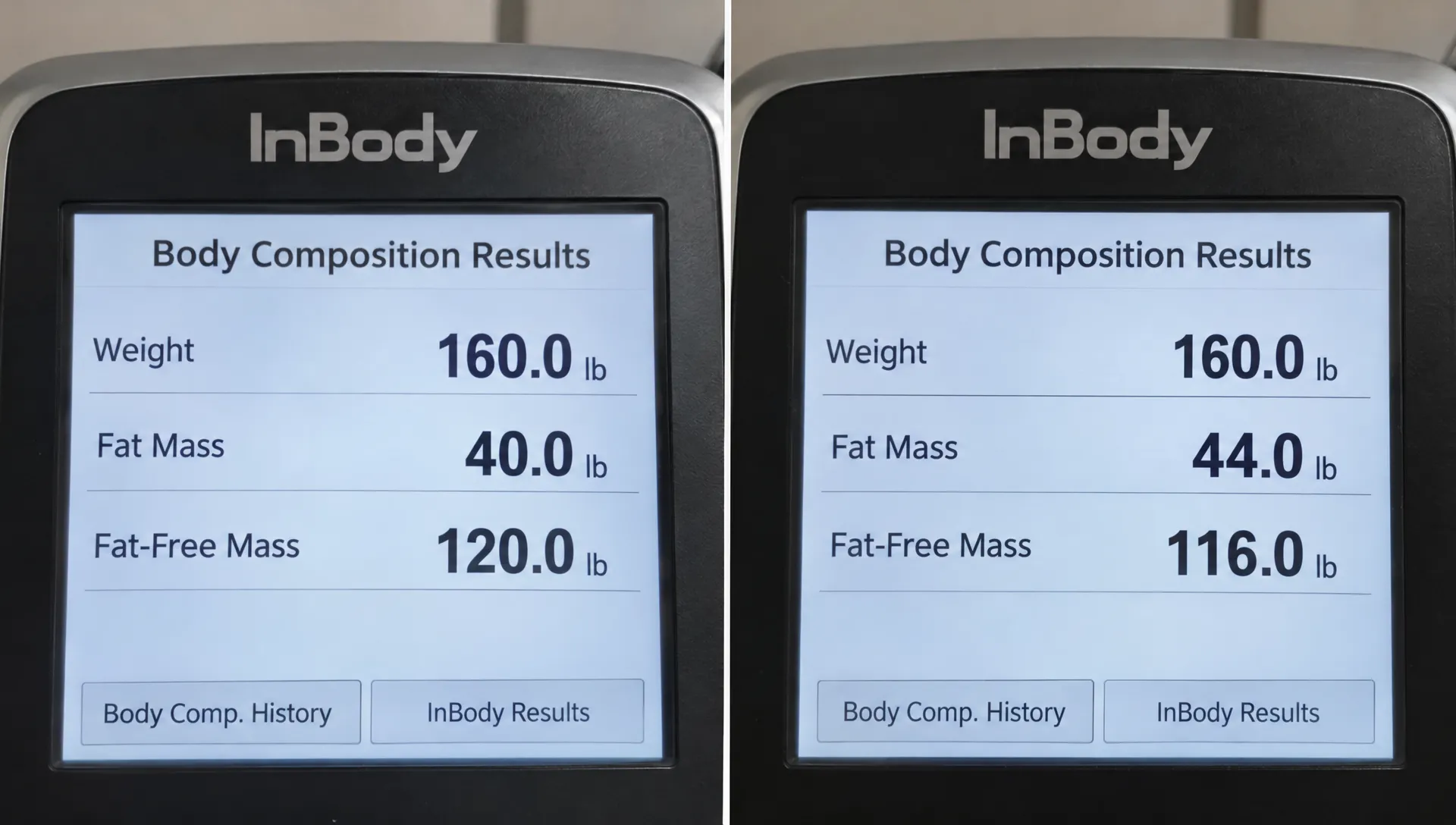
Here is an illustrative example of two measurements taken months apart:
| Measurement | First assessment | Later assessment |
|---|---|---|
| Total body weight | 160 lb | 160 lb |
| Fat mass | 40 lb | 44 lb |
| Fat-free mass | 120 lb | 116 lb |
| Percentage of weight from fat | 25% | 27.5% |
In this example, body fat percentage rises by 2.5 percentage points even though weight stays unchanged. Four pounds of fat have replaced four pounds of fat-free mass.
That does not prove four pounds of muscle were lost. Fat-free mass includes water and other nonfat tissues as well as muscle. The example demonstrates the arithmetic, not the cause of the change.
If both total weight and actual fat mass are unchanged, the true percentage cannot rise. A conflicting test result would point toward measurement differences, an imprecise comparison or a change too small for the scale to make obvious.
Why body fat percentage can rise at a stable weight
Muscle loss can offset fat gain
A prolonged break from strength training, an injury or a more sedentary routine can reduce the stimulus that maintains muscle. If food intake also exceeds your changing energy needs, fat can accumulate while muscle is being lost.
Over several months, this combination can increase body fat percentage without producing an obvious upward trend on the scale. You may notice reduced strength, a different fit around the waist or less muscle definition before your weight changes much.
Eating too little protein or repeatedly following restrictive diets can also make muscle maintenance harder, especially without resistance exercise. Weight stability alone does not confirm that your current routine is preserving muscle.
Your activity and energy needs may have changed
A new desk job, fewer daily steps or time away from a physically demanding hobby can lower energy expenditure. You might still eat the same meals and maintain a similar weight while your fat and lean tissue move in opposite directions.
This is not an argument for treating every missed workout as a problem. Meaningful tissue changes generally develop over time. Look for a sustained shift in routine rather than blaming one weekend or a few less-active days.
Aging, hormonal changes and illness can contribute
Aging can make muscle maintenance more challenging, particularly when activity declines. Menopause and other hormonal changes can also affect fat distribution and body composition, although they do not explain every unexpected result.
Illness, recovery from surgery and some medications may affect appetite, activity, fluid balance or muscle. A scan cannot identify which of these caused a change. Your health history, symptoms and training record provide context that the measurement alone cannot.
A higher reading may not mean you gained fat
A sudden jump in body fat percentage deserves a different interpretation from a gradual, repeatable increase over several months. Before changing your diet, check how the number was obtained.
Smart scales are sensitive to testing conditions
Most home body-composition scales use bioelectrical impedance, then estimate fat and lean tissue through equations. Hydration, recent exercise, meals and skin contact can influence the estimate.
A lower-carbohydrate period can also reduce glycogen and its associated water. That may change measured or estimated lean mass without representing an equivalent loss of muscle tissue. The direction and size of a smart-scale fluctuation depend on the device and circumstances.
These effects do not override the underlying math. They explain why a device can report a change that does not accurately reflect a change in body fat.
DEXA also requires a consistent comparison
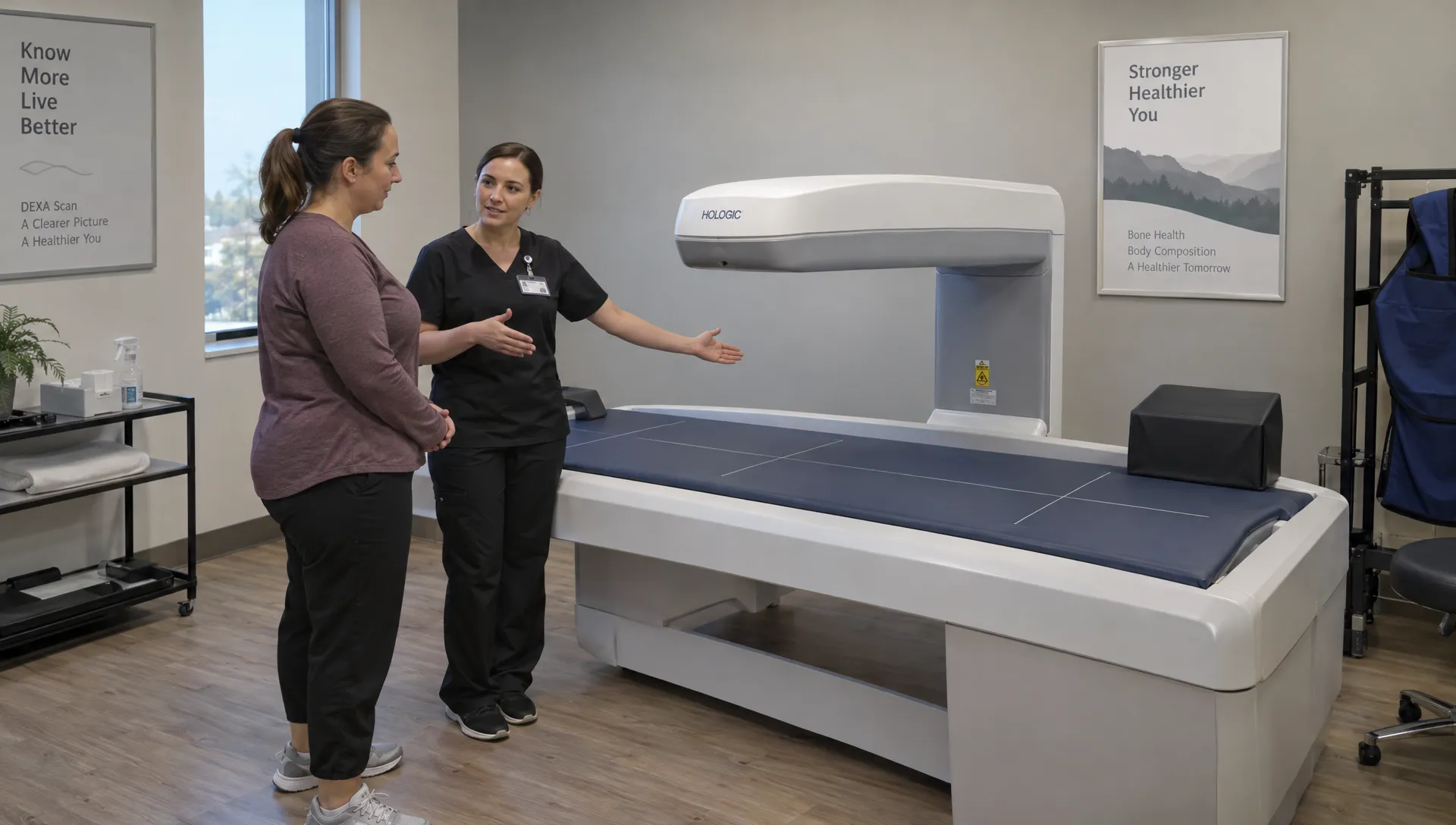
DEXA provides estimates of fat mass, lean soft tissue and bone mineral content, including regional measurements. It is useful for separating components that a scale combines, but it is not immune to variability.
Food and fluid in the body, recent exercise, positioning, equipment and analysis procedures can affect comparisons. DEXA lean soft tissue also includes water and nonmuscle tissues, so a lower lean-mass result is not automatically proof of muscle loss.
Our explanation of how accurate a DEXA scan is for body-composition tracking covers why reliable trends matter more than treating every decimal as exact.
How to tell whether the change is real
To decide whether your body fat percentage has meaningfully changed, review the measurements together rather than reacting to the headline number.
Compare the same method under similar conditions
A smart-scale result and a DEXA result are not interchangeable checkpoints. Neither are results from two devices necessarily directly comparable.
For follow-up testing, use the same facility, equipment and protocol when practical. Keep timing, hydration and recent activity reasonably consistent, following your provider’s instructions. This guide to preparing for a body-composition scan explains how to make repeat visits more comparable without trying to manipulate the result.
Look at fat mass and lean tissue separately
Ask whether fat mass increased, lean tissue decreased or both changed. Also check the measured weight on each assessment rather than relying on your memory of what you usually weigh.
If the report shows a small difference, ask the provider whether it exceeds the facility’s expected measurement variability. The number of decimal places on a report does not establish how confidently a change can be detected.
Check the result against your broader trend
Review several weeks of weight readings, waist measurements taken consistently and your strength-training record. Clothing fit can add context, although none of these independently proves a change in fat or muscle.
Stable strength does not rule out every muscle change, and a larger waist can reflect bloating as well as fat. Agreement across several indicators makes the interpretation more convincing than one isolated result.
What to do if the increase is confirmed
A repeatable rise in body fat percentage is a reason to review your routine, not automatically a reason to pursue a lower scale weight. The appropriate response depends on whether the main issue is fat gain, declining lean tissue or both.
Prioritize progressive strength training
If muscle preservation is the concern, resistance exercise should be central to the plan. The CDC’s adult physical activity guidelines recommend muscle-strengthening activity involving all major muscle groups on at least two days each week, alongside aerobic activity.
Choose an approach you can progress safely. Depending on your starting point, that might involve weights, resistance bands or body-weight movements. Track repetitions, resistance and technique so you can see whether your capacity is improving.
After an injury, surgery or prolonged inactivity, a physical therapist or qualified exercise professional can help adapt the program.
Review protein intake and overall food intake
Include protein-containing foods across your meals and make sure your eating pattern supports training and recovery. A registered dietitian can help set an appropriate intake based on your size, activity, preferences and medical needs.
If excess fat is accumulating, consider whether portions, snacks, alcohol or reduced daily movement have shifted your energy balance. Avoid assuming that an aggressive calorie cut is the best solution, particularly when strength and lean tissue are already declining.
Maintaining roughly the same weight while gradually gaining muscle and losing fat may be a reasonable goal for some people. That process takes time and is not guaranteed simply by adding workouts.
Investigate unexplained changes
Bring an unexpected composition change to a healthcare professional if it accompanies persistent weakness, unusual fatigue, swelling or other new symptoms. Also discuss medication changes and any illness that has affected your eating or activity.
Do not stop a prescribed medication because of a scan result. The useful next step is to evaluate the overall picture and determine whether further assessment is needed.
Frequently asked questions
Can body fat percentage rise overnight? A device’s reported value can change overnight, especially when hydration or testing conditions differ. A large overnight shift is more likely to reflect fluid changes or measurement variability than a comparable gain in fat tissue. Confirm the trend before acting on it.
Does a higher percentage always mean I gained fat? Not necessarily. If total weight falls because nonfat mass decreases, fat can represent a larger share of your weight even when fat mass stays the same. However, if actual total weight is exactly unchanged and the measurement is accurate, a higher percentage does mean more fat mass.
Can I lose muscle without losing weight? Yes. Muscle loss can be offset by increases in fat, water or other components. But a decrease in measured lean mass does not prove an equal decrease in muscle, because lean tissue measurements include water and other tissues.
Should I compare my result with an age-based chart? Age-based ranges provide broad context, but they cannot explain why your own result changed. Start with measurement quality, fat mass, lean tissue, strength and health history rather than using one chart category as a diagnosis.
How soon should I repeat a scan? Ask your provider about an interval suited to your goal and the size of change the equipment can reliably detect. Repeating too soon may reveal more measurement noise than meaningful progress. Keep follow-up conditions consistent.
Get a clearer picture of what changed
If your weight and body fat percentage seem to tell different stories, the next step is understanding the components behind them.
DEXA SF provides body-composition scans in San Francisco with fat, lean tissue, bone density and regional measurements, along with expert interpretation and personalized fitness and nutrition guidance. Schedule an assessment to establish a baseline or review a trend, then use the findings to guide your next steps rather than chasing a single number.