
Which DEXA Composition Metrics Matter in a Calorie Deficit?
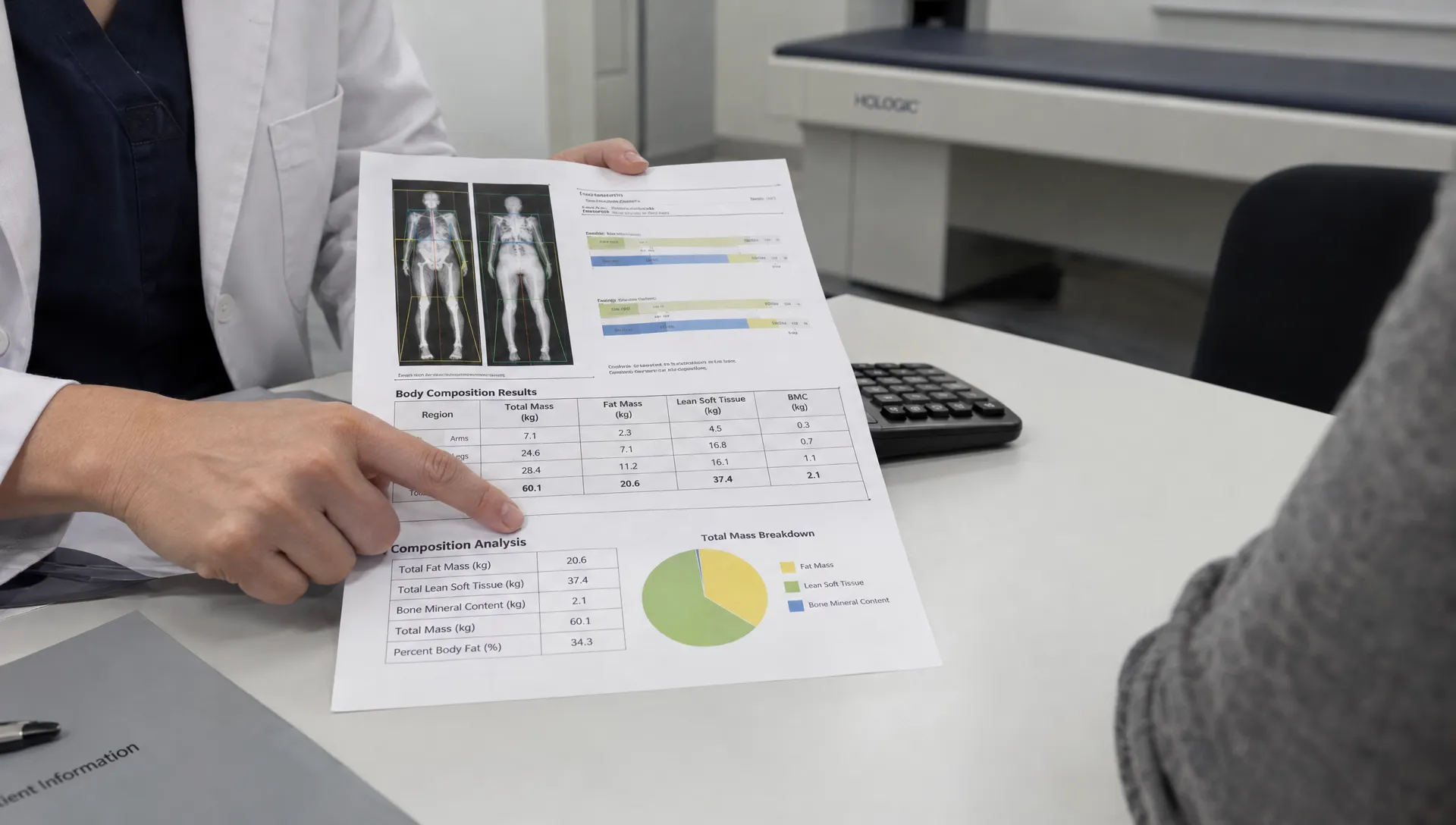
A calorie deficit can make the scale drop without telling you whether you are losing fat, preserving muscle or simply carrying less water. DEXA composition metrics help separate those changes, but only when you prioritize the right numbers and compare scans under similar conditions.
For most people pursuing fat loss, the main questions are straightforward: Is total fat mass decreasing? Is lean tissue reasonably stable? Are strength, recovery and health holding up? Body fat percentage adds context, but it should not be the only number driving your next adjustment.
Which DEXA Composition Metrics Matter Most During a Deficit?
Start with total fat mass and total lean soft tissue mass. Together, they provide a more useful picture of a cutting phase than scale weight or body fat percentage alone.
The other measurements have supporting roles. Regional lean mass can help investigate an unexpected change, visceral fat estimates add health context and bone measurements deserve attention when there are clinical concerns rather than as weekly dieting feedback.
| Metric | Priority during a calorie deficit | What it helps you assess | Main limitation |
|---|---|---|---|
| Total fat mass | Primary | Whether stored fat is decreasing | Small changes may fall within measurement variability |
| Total lean soft tissue mass | Primary | Whether nonfat soft tissue is being maintained | Includes water and other tissues, not just muscle |
| Body fat percentage | Secondary | Fat mass relative to reported body mass | Can change because fat, lean tissue or both changed |
| Regional lean mass | Supporting | Whether changes appear concentrated in particular areas | Positioning and regional measurement variability matter |
| Visceral fat estimate | Supporting | Changes in estimated fat around abdominal organs | Not a standalone diagnosis of metabolic health |
| Bone mineral measurements | Clinical context | Whether further bone-health assessment may be appropriate | Not a short-term measure of dieting success |
Use DEXA composition results to evaluate the quality of weight loss, not to chase an ideal-looking report. A lower percentage is less reassuring if it accompanies declining strength, poor recovery or an unnecessarily aggressive diet.
Read Fat and Lean Changes Together
Total fat mass is the clearest fat-loss outcome
Total fat mass reports an estimated amount of fat, usually in pounds or kilograms. If your goal is fat loss, this is the most direct result to track across comparable scans.
Suppose your scale weight has barely moved, but your scan shows lower fat mass and stable or higher lean tissue. That pattern can be consistent with improved body composition, especially when you are resistance training. It does not automatically mean the diet has stalled.
The opposite pattern also matters. A substantial drop in body weight with little measured fat loss deserves a closer look at hydration, scan preparation and the pace of your deficit.
Avoid setting a universal minimum amount of fat loss that every follow-up scan must show. The expected change depends on your starting point, time between scans and measurement precision.
Lean mass is a warning signal, not a direct muscle measurement
DEXA separates fat, lean soft tissue and bone mineral. Lean soft tissue is not synonymous with skeletal muscle: it includes muscle, organs, body water and other nonfat soft tissues.
During a deficit, lower carbohydrate intake and depleted glycogen can alter the lean estimate because glycogen storage is associated with water. Differences in hydration, food intake and recent exercise can also affect comparisons.
A decline in lean mass on a DEXA composition report therefore does not prove that you lost the same amount of muscle. Interpret it alongside strength trends, training consistency, protein intake and scan conditions.
Concern increases when the decline is repeated under standardized conditions and comes with deteriorating performance or recovery. Regional lean measurements, including the arms and legs, may provide additional context, but they still do not measure muscle function.
For a broader explanation of measurement strengths and limitations, the discussion of whether DEXA is the gold standard for body composition helps put small changes in perspective.
Body fat percentage needs its underlying numbers
Percentage is a ratio, not an independent tissue measurement. It can improve because fat decreased, lean tissue increased or both occurred. It can also move less than expected when both fat and lean tissue decline.
Consider a hypothetical follow-up showing fat mass falling from 40 to 34 pounds and lean soft tissue falling from 106 to 105 pounds. The scan estimates six pounds less fat and one pound less lean tissue. That is more informative than knowing only the new body fat percentage, but the lean change still needs interpretation.
When reviewing DEXA composition changes, look at the absolute fat and lean differences before deciding whether the percentage represents successful progress. Do not treat every pound classified as lean loss as confirmed muscle loss or calculate a precise muscle-loss fraction from those numbers.
Make Follow-Up Scans Comparable
Standardize preparation before interpreting a small change
A scan comparison is only as useful as the conditions behind it. Try to use the same facility, device and preparation routine. Changing equipment or analysis methods can complicate the comparison unless appropriate cross-calibration has been performed.
Follow your provider's preparation instructions, then keep these factors as similar as practical:
- Time of day and food intake: Match the timing and meal pattern used for your baseline.
- Hydration: Arrive normally hydrated rather than deliberately dehydrating or drinking unusually large amounts.
- Recent exercise: Keep the timing of hard training similar and follow any exercise restrictions from the facility.
- Carbohydrate intake: Avoid comparing an unusually depleted day with a high-carbohydrate day if your aim is to assess tissue change.
- Clothing and positioning: Follow the same scanning protocol and remove items as instructed.
You do not need identical conditions down to the minute. You do need enough consistency that a difference in preparation is not mistaken for a difference in muscle.
Allow enough time and ask about measurement precision
DEXA composition comparisons become more useful when the expected biological change is large enough to distinguish from measurement noise. Scanning every week is generally a poor way to evaluate gradual fat loss.
For a planned dieting phase, discussing a follow-up roughly 8 to 12 weeks after baseline can be a practical starting point, not a universal medical schedule. Your provider may recommend another interval based on your goals, expected change and circumstances.
Ask the facility about its precision assessment and least significant change, the threshold used to judge whether a difference exceeds expected measurement variability. The International Society for Clinical Densitometry's adult positions address precision assessment for body composition measurements.
Between scans, weekly average weight, waist measurements, training performance and recovery provide more immediate feedback than another isolated scan number.
Turn the Results Into a Deficit Decision
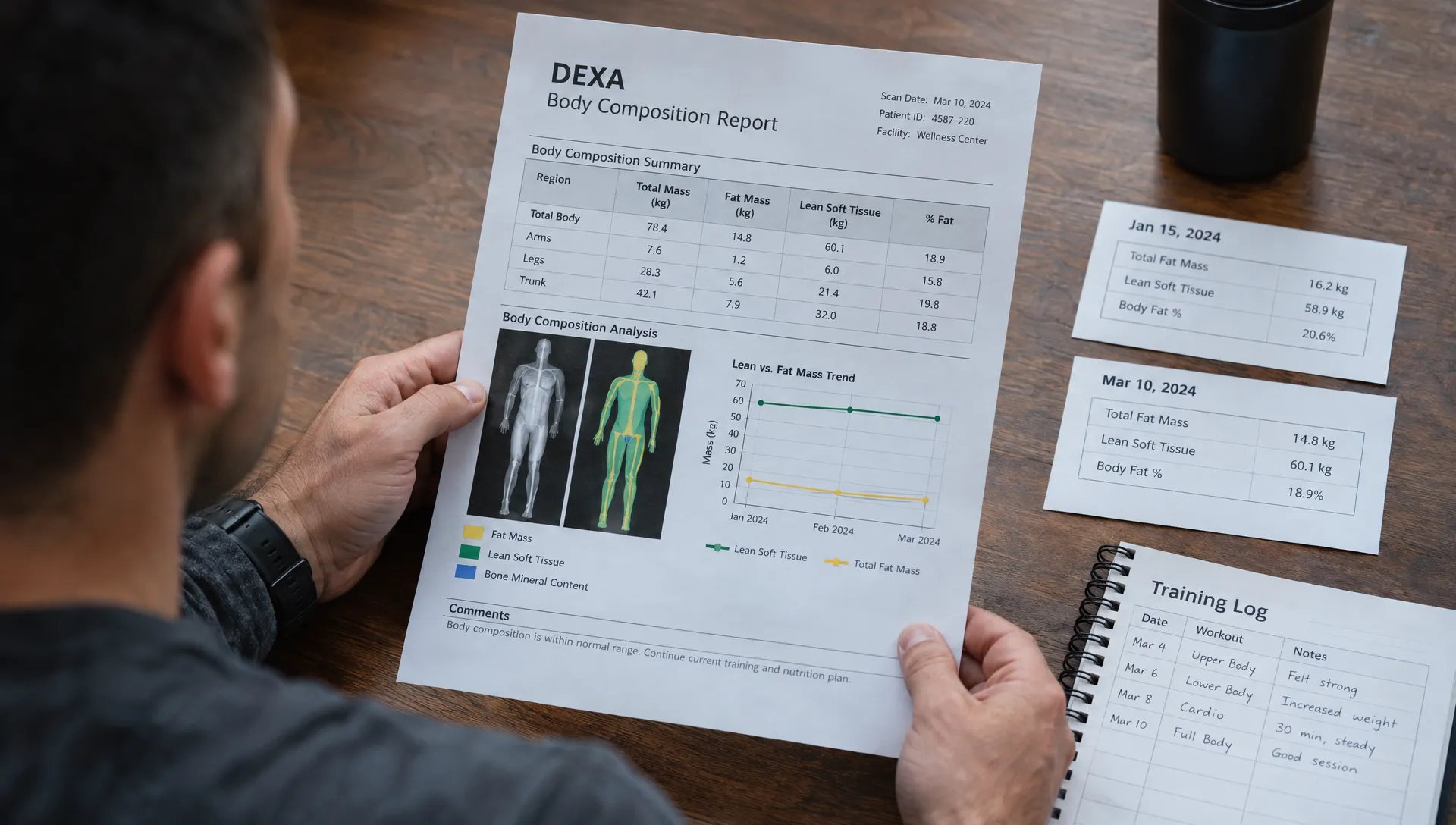
Fat is decreasing and lean tissue appears stable
This is usually the pattern you want, provided that performance, recovery and health are also acceptable. There is no need to deepen the deficit simply because you hoped for a faster percentage change.
Continue the approach long enough to evaluate a meaningful trend. Maintain resistance training and adequate protein rather than replacing lifting with progressively more cardio.
The International Society of Sports Nutrition's position stand on protein and exercise describes approximately 1.4 to 2.0 grams of protein per kilogram of body weight per day as sufficient for most exercising individuals, with higher needs possible during energy restriction. An appropriate target depends on your training, body size and health; people with medical dietary restrictions need individualized advice.
Fat and lean tissue are both decreasing
Before changing calories, check whether scan preparation differed. A depleted or less-hydrated follow-up can make lean tissue appear lower without establishing equivalent muscle loss.
If the DEXA composition trend persists under comparable conditions, review the size of the deficit, protein intake, resistance training and recovery. A smaller deficit may be more appropriate than adding exercise or cutting food further.
Strength loss is useful supporting evidence, but it is not definitive proof either. Fatigue, reduced glycogen and changes in exercise technique can affect performance.
Fat mass appears unchanged
First ask whether enough time has passed and whether the expected change exceeds the facility's measurement variability. A small difference is not automatically a failed diet.
If several weeks of average body weight and waist measurements are also unchanged, review actual intake and activity before making a modest adjustment. A scan cannot identify untracked snacks, reduced daily movement or inconsistent adherence.
The guide to DEXA measurements that can improve your training provides additional context for connecting regional results with exercise decisions.
Keep Visceral Fat and Bone Results in Perspective
Visceral fat adds context, not a separate dieting target
Visceral fat estimates can help track changes in fat around abdominal organs. That makes them relevant to health-oriented weight loss, but they should not override the overall pattern of fat loss, lean tissue preservation and well-being.
Your DEXA composition report may show improvement in total fat before a clear visceral fat change appears. You cannot selectively remove visceral fat through a particular abdominal exercise, and a scan estimate does not replace blood pressure, glucose or lipid assessment when those are clinically indicated.
Bone measurements are not a short-term score for your cut
Whole-body bone mineral measurements should not be treated as interchangeable with a diagnostic hip and spine bone density examination. A body composition scan alone should not be used to diagnose or rule out osteoporosis.
Bone health also changes on a different timescale from short-term weight fluctuations. Persistent under-fueling deserves attention even if a recent scan looks reassuring.
Menstrual disruption, recurrent stress injuries, persistent fatigue or dizziness are reasons to seek medical evaluation and reassess the diet. Do not wait for a follow-up scan to confirm that an aggressive deficit needs attention.
Frequently Asked Questions
Which matters more during a deficit, fat mass or body fat percentage? Total fat mass is usually the clearer fat-loss outcome. Interpret it alongside lean soft tissue. Percentage is useful context, but it cannot tell you by itself which tissue changed.
Does lower lean mass mean I definitely lost muscle? No. Lean soft tissue includes water and other nonfat tissues. Differences in glycogen, hydration and scan conditions can affect the result. A repeated decline alongside reduced strength or poor recovery is more concerning than one isolated change.
How often should I repeat a scan while dieting? Choose an interval that allows a meaningful change and a useful decision. Around 8 to 12 weeks can be a practical discussion point, but your provider should help select the timing. Frequent scans do not eliminate measurement variability.
Can DEXA composition results tell me exactly how many calories to eat? No. Body composition can inform a calorie estimate, but DEXA does not directly measure resting metabolic rate or total daily energy expenditure. Any calorie recommendation needs adjustment using your weight trend, activity, recovery and goals.
Establish a Baseline You Can Use
Before starting or extending a calorie deficit, decide what would justify continuing, reducing or ending it. A useful baseline pairs fat and lean measurements with your training performance, weight trend and health context.
DEXA SF provides body composition scans in San Francisco with expert interpretation and personalized fitness and nutrition guidance. You can schedule a scan with DEXA SF to establish that baseline and discuss which follow-up measurements will best support your goals.