
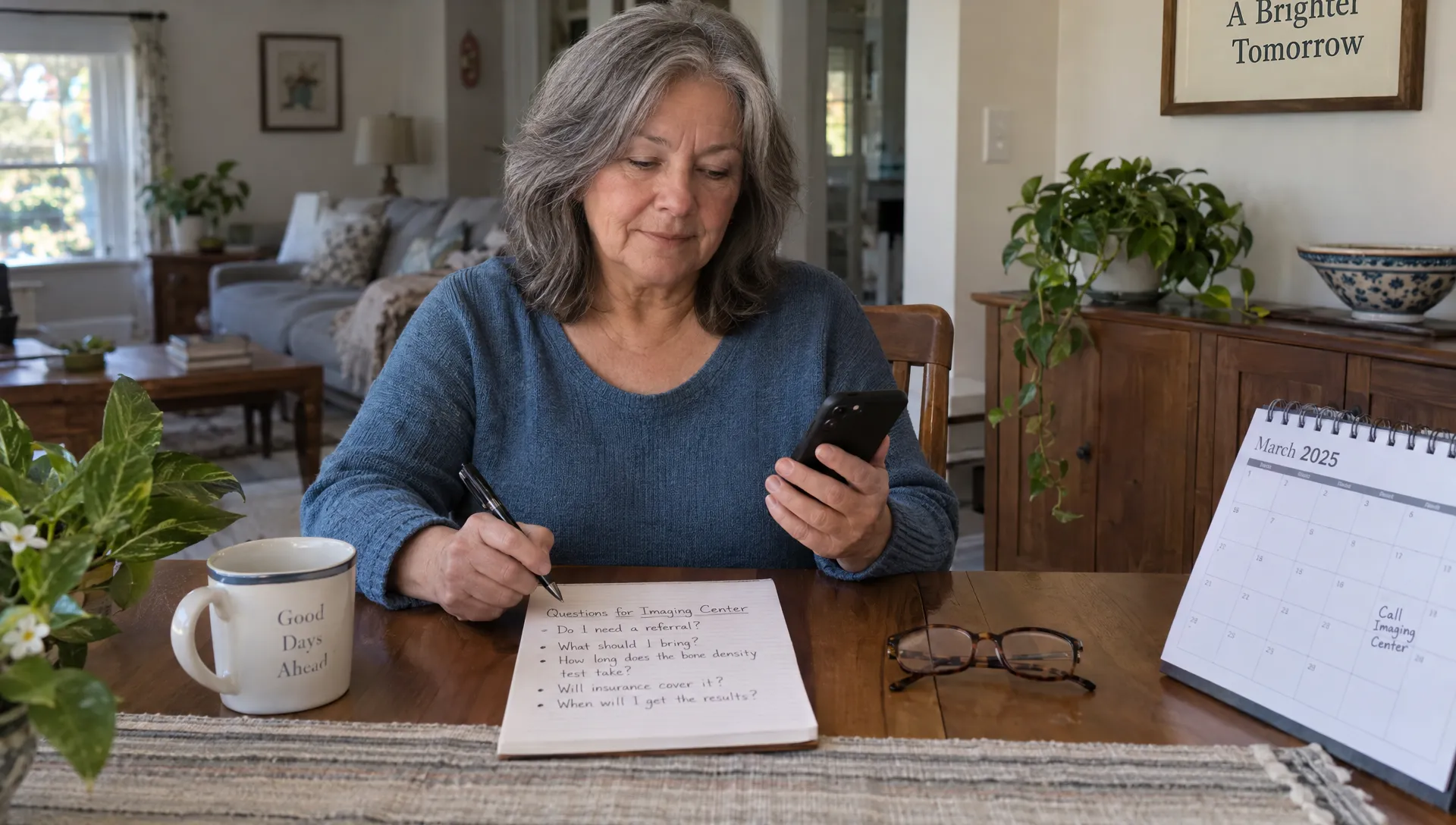
When Does a Bone Density Examination Require a Referral?
A bone density examination usually requires a clinician’s order when it is performed as a medical test or billed to insurance. Whether you also need a specialist referral depends on your health plan and the imaging facility. Self-pay appointments may follow different booking rules, but paying out of pocket does not automatically remove an order requirement.
Before scheduling, separate three questions: Who can order the test? What paperwork does the facility require? And what will your insurance cover? Each can have a different answer.
A referral, an order and authorization are different
People often use “referral” to mean any paperwork needed for a scan. In practice, these terms serve different purposes:
| Document or approval | What it does | Who typically provides it |
|---|---|---|
| Clinician’s order | Requests a specific examination for a medical reason | A clinician authorized to order the test |
| Specialist referral | Directs you to another clinician or service, sometimes to satisfy health plan rules | Your primary care clinician or another referring clinician |
| Prior authorization | Confirms that an insurer has approved a requested service under its rules | The insurer, after a request from the care team |
An order does not guarantee coverage, and prior authorization is not a guarantee that the insurer will pay every charge. The facility must also provide the service your plan covers, and your eligibility and benefits must apply on the appointment date.
When does a bone density examination require a clinician’s order?
For a diagnostic DXA or DEXA scan, the imaging facility will generally need an order that identifies the examination and its clinical purpose. Common reasons include osteoporosis screening, a fracture after a minor fall, prolonged glucocorticoid use or monitoring osteoporosis treatment.
You do not necessarily need to see an endocrinologist or another specialist first. A primary care physician can often initiate testing. Nurse practitioners, physician assistants and other clinicians may also order it when permitted by their scope of practice and the facility’s requirements.
The order helps the imaging team understand what needs to be measured and where the results should go. A request to assess osteoporosis risk is not interchangeable with a request for whole-body composition measurements.
If you already have an order, ask the imaging center to review it before your appointment. Missing clinical information or a mismatch between the requested examination and the facility’s services can delay testing.
For context on the medical reasons to discuss testing, our guide to who should consider DEXA bone density testing covers the broader risk factors.
How insurance changes the paperwork
When insurance will be billed, a bone density examination generally needs an appropriate order and documentation supporting coverage. The insurer may also have network, referral or authorization requirements. These are separate from the clinician’s decision that testing would be useful.
Medicare requirements
Medicare’s bone mass measurement coverage guidance states that Part B covers testing once every 24 months, or more often when medically necessary, for people who meet its eligibility requirements.
Covered circumstances include certain people at risk of osteoporosis, people with specific vertebral abnormalities, qualifying glucocorticoid use, primary hyperparathyroidism or monitoring of FDA-approved osteoporosis drug therapy. A treating physician or another qualified treating clinician must order the test under Medicare’s rules.
Being enrolled in Medicare does not make every DEXA appointment a covered service. A wellness body composition scan is not automatically covered as an osteoporosis examination.
Under Original Medicare, you generally pay nothing for a covered bone mass measurement when the provider accepts assignment. Medicare Advantage plans may have additional network or authorization procedures. Confirm the details with your plan and the testing facility before booking.
Private insurance requirements
Private plans differ. One plan may accept an order from your primary care clinician without a specialist referral, while another may require additional approval or use a designated imaging network.
Ask the facility for the planned procedure code and confirm benefits with your insurer. Screening and follow-up testing can be handled differently, so explain whether this is your first scan, a repeat examination or monitoring during treatment. Also ask about deductibles, coinsurance and any separate interpretation charge.
Can you book a self-pay appointment without a referral?
A self-pay bone density examination may have a simpler payment process, but it is not automatically available without a clinician’s order. Requirements depend on the examination, applicable rules and the facility’s clinical policies.
Some DEXA providers allow customers to book body composition appointments directly. That does not establish that they offer diagnostic osteoporosis testing without an order, or that their whole-body report can replace a dedicated clinical examination.
Before paying, confirm whether you need to obtain an order yourself, whether the facility has an established process for arranging one or whether you must use another imaging provider. Do not assume that an online appointment slot means all clinical requirements have been satisfied.
If you plan to seek reimbursement afterward, ask your insurer about that process in advance. A receipt or itemized bill alone does not establish eligibility for reimbursement, and paying privately does not bypass the plan’s medical necessity rules.
Make sure you are booking the right type of DEXA scan
The purpose of your bone density examination determines which service to request. DEXA technology can assess body composition as well as bone mineral density, but those appointments are not necessarily interchangeable.
For osteoporosis evaluation, central DXA commonly measures the hip and lumbar spine. The International Society for Clinical Densitometry’s adult positions identify these as standard measurement sites, with forearm measurement used in certain circumstances.
A whole-body composition scan can provide information about fat, lean tissue and bone measurements. However, a total-body bone density value does not automatically substitute for the site-specific measurements used to diagnose osteoporosis.
Ask whether the appointment includes the measurements your clinician requested, an appropriate clinical report and a process for sending results to your care team. This matters especially when you are following up on a previous abnormal result or monitoring treatment.
For repeat testing, tell the facility where your previous scan was performed. Comparing results across different machines can require additional technical consideration, so bringing an old report is helpful but does not always make the measurements directly comparable.
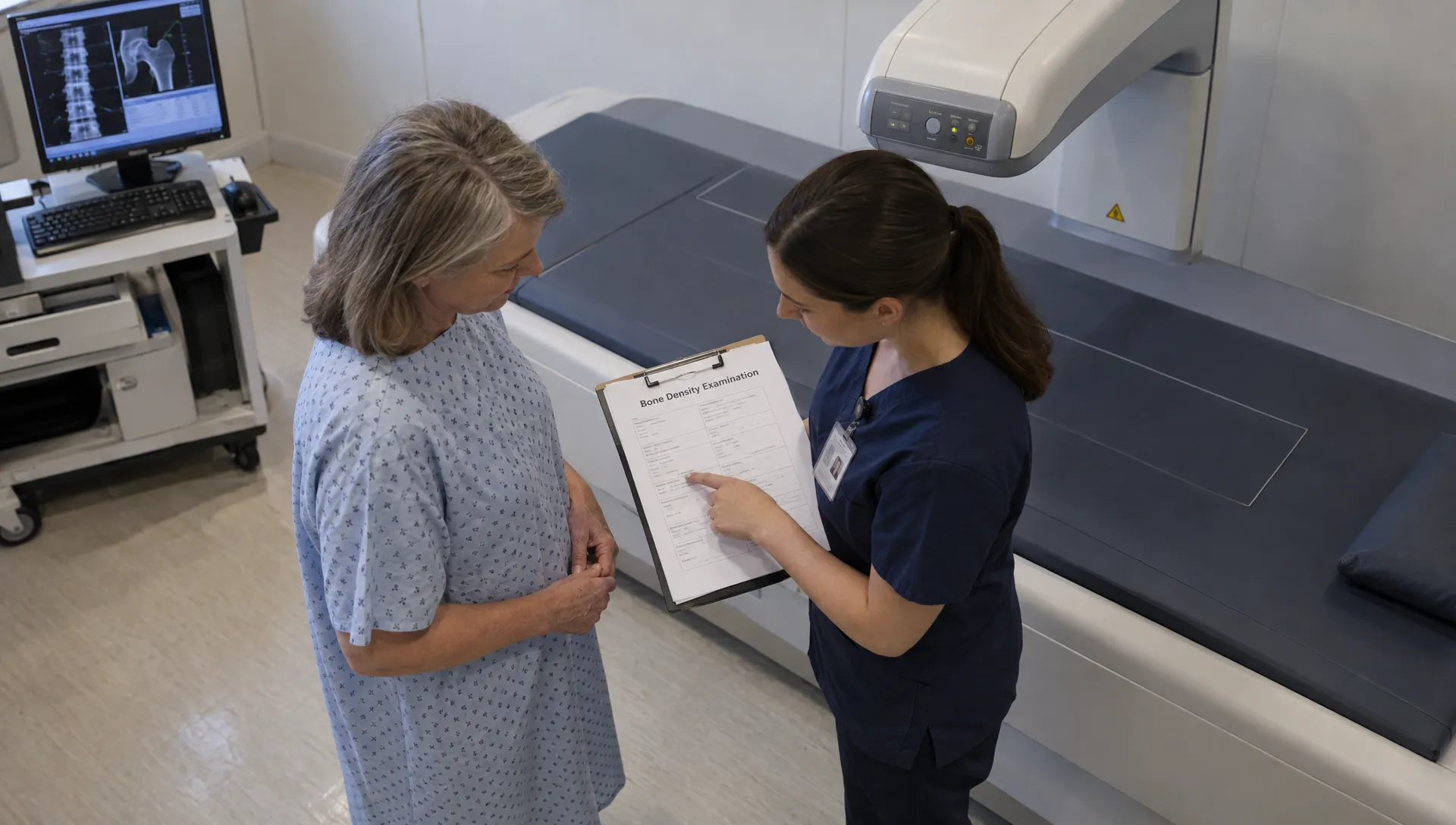
What to ask before scheduling
A brief call to the imaging center can prevent an unnecessary appointment or an unexpected bill. Describe why you want testing rather than asking only whether the facility “does DEXA.”
Use these questions to clarify the requirements:
- Which examination do I need? Confirm whether the appointment is for diagnostic hip-and-spine bone density testing, whole-body composition analysis or another protocol.
- Do you require an order? Ask which clinicians can provide it, what information it must contain and how to submit it.
- Does my plan require anything else? Check specialist referral rules, prior authorization and the facility’s network status with your insurer.
- What will I pay? Request the self-pay price or an insurance-based estimate, including any separate interpretation fee.
- Who receives the results? Establish whether the report goes to your ordering clinician and who will discuss medical follow-up.
If the answers from your insurer and the facility conflict, resolve the discrepancy before the scan. Ask each party to address the specific service and provider involved rather than relying on a general statement that “DEXA is covered.”
Keep any authorization number and written estimate with your appointment information. These records are useful if questions arise, although they do not override your insurance contract.
What to bring and how to prepare
Once your bone density examination is scheduled, bring identification, insurance information if applicable and the order if the facility has not already received it. Previous scan reports and a current medication list can help the clinical team understand the reason for testing.
Follow the center’s preparation instructions. According to RadiologyInfo’s bone densitometry guidance, patients are generally advised not to take calcium supplements for at least 24 hours beforehand. Confirm your instructions rather than changing prescribed treatment on your own.
Tell the facility if you might be pregnant or recently had a contrast study, barium examination or nuclear medicine test, since this may affect scheduling. Wear comfortable clothing without metal near the areas being scanned.
Afterward, arrange follow-up with the clinician responsible for your bone health. Our guide to questions to ask after your bone density analysis can help you prepare for that conversation.
Frequently asked questions
Can I get a bone density examination without seeing a specialist? Often, yes. A primary care clinician may be able to order the test without a specialist visit. Whether you need a separate referral depends on your health plan, the facility and your clinical circumstances. More complex findings may warrant specialist follow-up.
Can I wear a bra during a DEXA scan? It depends on the scan area and whether the bra contains metal. Underwires, hooks or adjusters may interfere with imaging. The facility may ask you to remove it or change into a gown. Follow its clothing instructions when you arrive.
What are the risks of a DEXA scan? DEXA uses a very low dose of ionizing radiation and is generally considered a low-risk examination. Tell the facility if you are pregnant or might be pregnant so the clinical team can decide whether testing should proceed or be postponed.
Is a DEXA scan the same as a bone scan? No. DEXA measures bone mineral density using low-dose X-rays. A nuclear medicine bone scan uses an injected radioactive tracer to assess bone activity and investigate certain conditions. The tests answer different questions, so confirm the exact examination named on your order.
Confirm the requirements before you book
DEXA SF provides DEXA body composition assessments with body fat, lean mass and bone density information, along with expert interpretation and fitness and nutrition guidance.
Before scheduling, contact DEXA SF to confirm which examination is available and what paperwork your appointment requires. If your goal is osteoporosis screening, diagnosis or treatment monitoring, clarify whether the service includes the clinical measurements your treating clinician needs. Confirming the scan type, order requirements and payment arrangements first helps you book the appropriate appointment.