
DEXA Bone Density Testing: Who Should Consider It?
Bone density is easy to ignore because bone loss usually does not feel like anything. You can be active, feel strong, and still be losing bone mineral density over time. For many people, the first obvious sign is a fracture from a fall or impact that should not have caused one.
That is why DEXA bone density testing can be so valuable. It helps identify low bone density before a serious fracture changes your mobility, training, independence, or long-term health. The key question is not simply “Can I get a scan?” It is “Am I in a group that would benefit from knowing my bone density now?”
Below is a practical, risk-based guide to who should consider DEXA bone density testing, what the results can tell you, and how to use the information responsibly.
What is DEXA bone density testing?
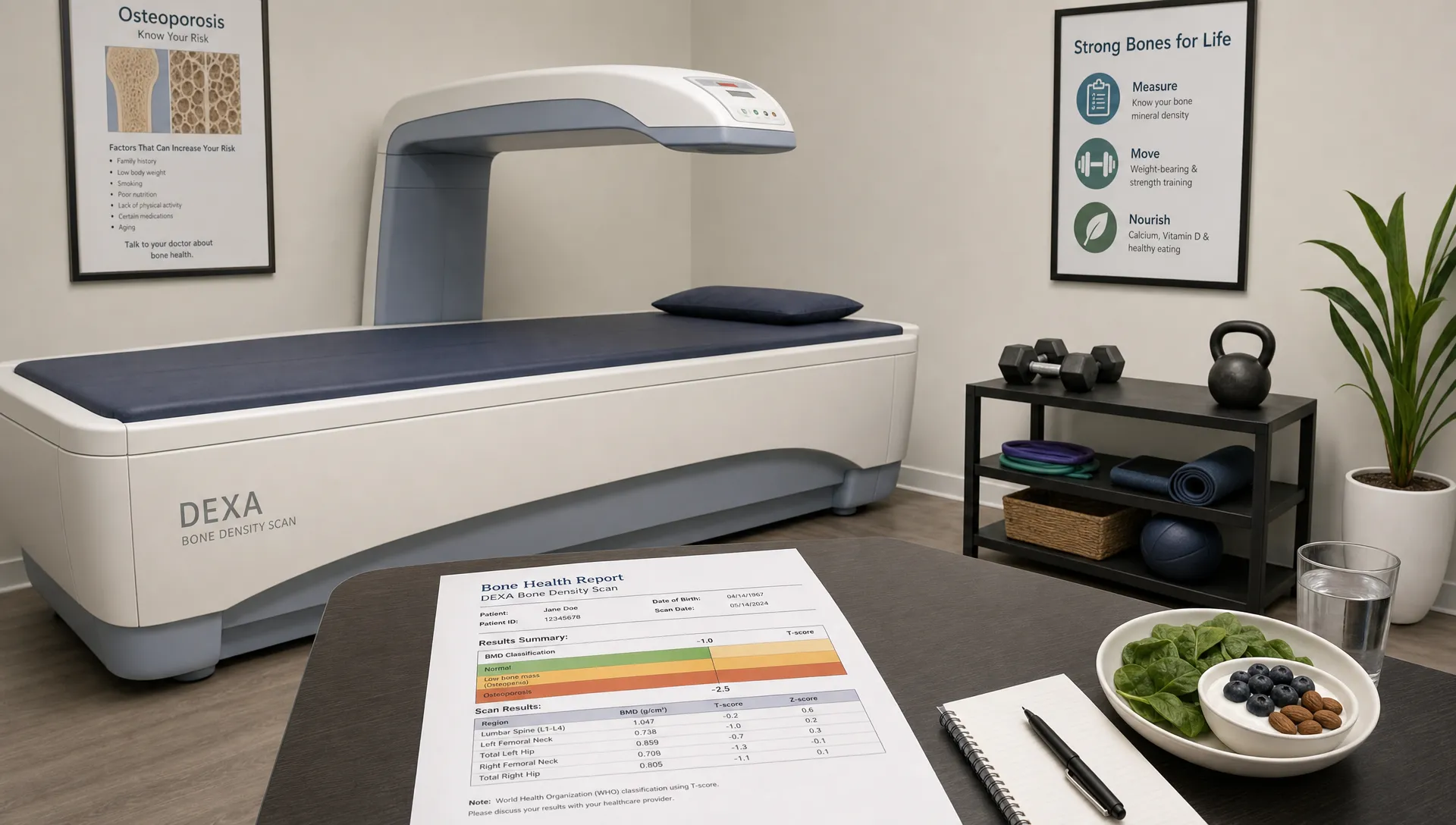
DEXA, also called DXA, stands for dual-energy X-ray absorptiometry. It uses low-dose X-ray technology to estimate bone mineral density, most commonly at clinically important fracture sites such as the hip and spine. DEXA is widely considered the standard test for measuring bone density because it is fast, noninvasive, and highly precise.
A bone density DEXA is different from a nuclear medicine bone scan, which is used for different medical questions. If you have been told you need a “bone scan” and are not sure which test was meant, this guide to the difference between a bone scan and DEXA can help you ask the right follow-up questions.
DEXA can also be used for body composition analysis, including lean mass, fat mass, visceral fat, and asymmetry. At DEXA SF, clients can use a DEXA scan to understand bone density alongside body composition metrics, then review the results with expert interpretation and practical fitness and nutrition guidance.
Why bone density matters before symptoms appear
Bone is living tissue. Your body is constantly breaking down old bone and forming new bone. When breakdown outpaces rebuilding, bone density can decline. Over time, this can lead to osteopenia, often called low bone mass, or osteoporosis, a condition in which bones become more fragile and fracture risk rises.
The challenge is that low bone density is usually silent. You generally cannot feel your bones becoming less dense. Many people discover the problem only after a wrist, hip, spine, or shoulder fracture.
According to the National Institute on Aging, osteoporosis is a major cause of fractures in older adults, especially women, but it can affect men as well. Early awareness allows you and your healthcare provider to address modifiable risks such as nutrition, strength training, vitamin D status, medication effects, fall risk, and, when appropriate, medical treatment.
Who should consider DEXA bone density testing?
Not everyone needs the same screening schedule. The strongest reasons to consider DEXA bone density testing are age, fracture history, hormonal status, medication use, medical conditions, and lifestyle factors that increase risk.
| Group | Why DEXA may be useful |
|---|---|
| Women age 65 and older | Major guidelines recommend routine osteoporosis screening because fracture risk rises with age. |
| Postmenopausal women under 65 with risk factors | Menopause accelerates bone loss, and added risks can make earlier screening appropriate. |
| Men age 70 and older | Several bone health organizations recommend testing older men, although recommendations vary by guideline. |
| Adults over 50 with a low-trauma fracture | A fracture from a standing-height fall or minor impact may signal underlying bone fragility. |
| People taking long-term corticosteroids | Glucocorticoids such as prednisone can reduce bone density, especially with prolonged use. |
| People with conditions linked to bone loss | Malabsorption, endocrine disorders, inflammatory diseases, and eating disorders can affect bone health. |
| Athletes with stress fractures or low energy availability | Repeated stress injuries or under-fueling can be signs that bone health needs attention. |
| Anyone monitoring known low bone density | Follow-up DEXA can help track whether bone density is stable, improving, or declining. |
The U.S. Preventive Services Task Force recommends screening women 65 and older, and postmenopausal women younger than 65 who are at increased risk. For men, evidence for broad population screening is less definitive, but many clinicians still recommend testing when age or risk factors justify it.
Women 65 and older
Women 65 and older are one of the clearest groups who should consider DEXA bone density testing. Bone loss accelerates after menopause because estrogen plays a protective role in maintaining bone density. By the mid-60s, even women who feel healthy and active may have meaningful bone loss.
For this group, DEXA is often used as a screening tool, not just a test ordered after a problem appears. A normal result can provide a baseline. A low result can prompt a conversation about nutrition, resistance training, fall prevention, medication review, and whether medical treatment is appropriate.
Postmenopausal women under 65 with risk factors
Not every woman needs to wait until 65. Earlier DEXA bone density testing may be appropriate for postmenopausal women with risk factors such as low body weight, a parent who had a hip fracture, smoking history, high alcohol intake, or use of medications associated with bone loss.
A common clinical approach is to estimate fracture risk first, then decide whether a DEXA scan is warranted. Tools such as FRAX are often used by healthcare professionals to estimate 10-year fracture risk based on age, sex, body size, fracture history, smoking, steroid use, rheumatoid arthritis, and other inputs.
If you are postmenopausal and have multiple risk factors, a DEXA result can clarify whether prevention advice is enough or whether you should discuss a more comprehensive bone health plan with a clinician.
Men with age-related or medical risk factors
Osteoporosis is often discussed as a women’s health issue, but men can develop low bone density too. Men tend to experience bone loss later than women, but fractures in older men can have serious consequences.
Men age 70 and older, men over 50 with a fragility fracture, and men with risk factors such as low testosterone, long-term steroid use, heavy alcohol intake, smoking, or chronic disease should consider asking a healthcare provider about DEXA bone density testing.
Because screening recommendations for men are less uniform than for women, risk context matters. A healthy 45-year-old man with no risk factors is different from a 58-year-old man with a prior low-trauma fracture or long-term medication exposure.
Adults with a fracture after age 50
A fracture after age 50 deserves attention, especially if it happened from a fall from standing height or a relatively minor impact. These are sometimes called low-trauma or fragility fractures.
Common sites include the wrist, hip, spine, ribs, pelvis, and upper arm. A DEXA scan can help determine whether low bone density contributed to the fracture and whether additional prevention steps are needed.
If you have had a fracture and are unsure whether it should trigger bone density testing, bring it up with your primary care clinician, orthopedist, or sports medicine provider. The goal is not just to heal the current fracture. It is to reduce the chance of the next one.
People taking medications associated with bone loss
Some medications can affect bone metabolism. Long-term oral corticosteroids, such as prednisone, are among the best-known examples. Other medications may also be relevant depending on the person and clinical context, including some cancer therapies, anti-seizure medications, and treatments that reduce sex hormones.
This does not mean you should stop or change a prescribed medication on your own. It means you should ask whether bone density monitoring is appropriate. For some people, DEXA bone density testing becomes part of a broader plan to balance the benefits of a medication with the need to protect bone health.
People with medical conditions that affect bone health
Bone density can be affected by more than age. Certain medical conditions can reduce nutrient absorption, alter hormone levels, increase inflammation, or change how the body builds and maintains bone.
Conditions that may justify a bone density conversation include celiac disease, inflammatory bowel disease, rheumatoid arthritis, chronic kidney disease, hyperthyroidism, hyperparathyroidism, eating disorders, prolonged amenorrhea, low testosterone, and a history of bariatric surgery or malabsorption.
If you have one of these conditions, DEXA can help establish a baseline and guide follow-up. It can also help separate guesswork from objective measurement, especially when paired with lab testing and medical evaluation.
Athletes, active adults, and people with stress injuries
Active people are not automatically protected from low bone density. Weight-bearing activity is generally beneficial for bone, but under-fueling, rapid weight loss, low energy availability, hormonal disruption, and repetitive training stress can increase risk.
Endurance athletes, dancers, weight-class athletes, and highly active adults with recurrent stress fractures may benefit from DEXA bone density testing. In these situations, bone density data can be part of a bigger picture that includes nutrition, training load, menstrual function in women, recovery, and overall energy availability.
For Bay Area athletes and fitness-focused clients, DEXA can be especially useful because it measures more than scale weight. It can show lean mass, fat mass, left-right asymmetries, visceral fat, and bone-related metrics in one scan. That makes it easier to evaluate whether a training or nutrition plan is supporting performance without compromising long-term health.
What DEXA bone density results mean
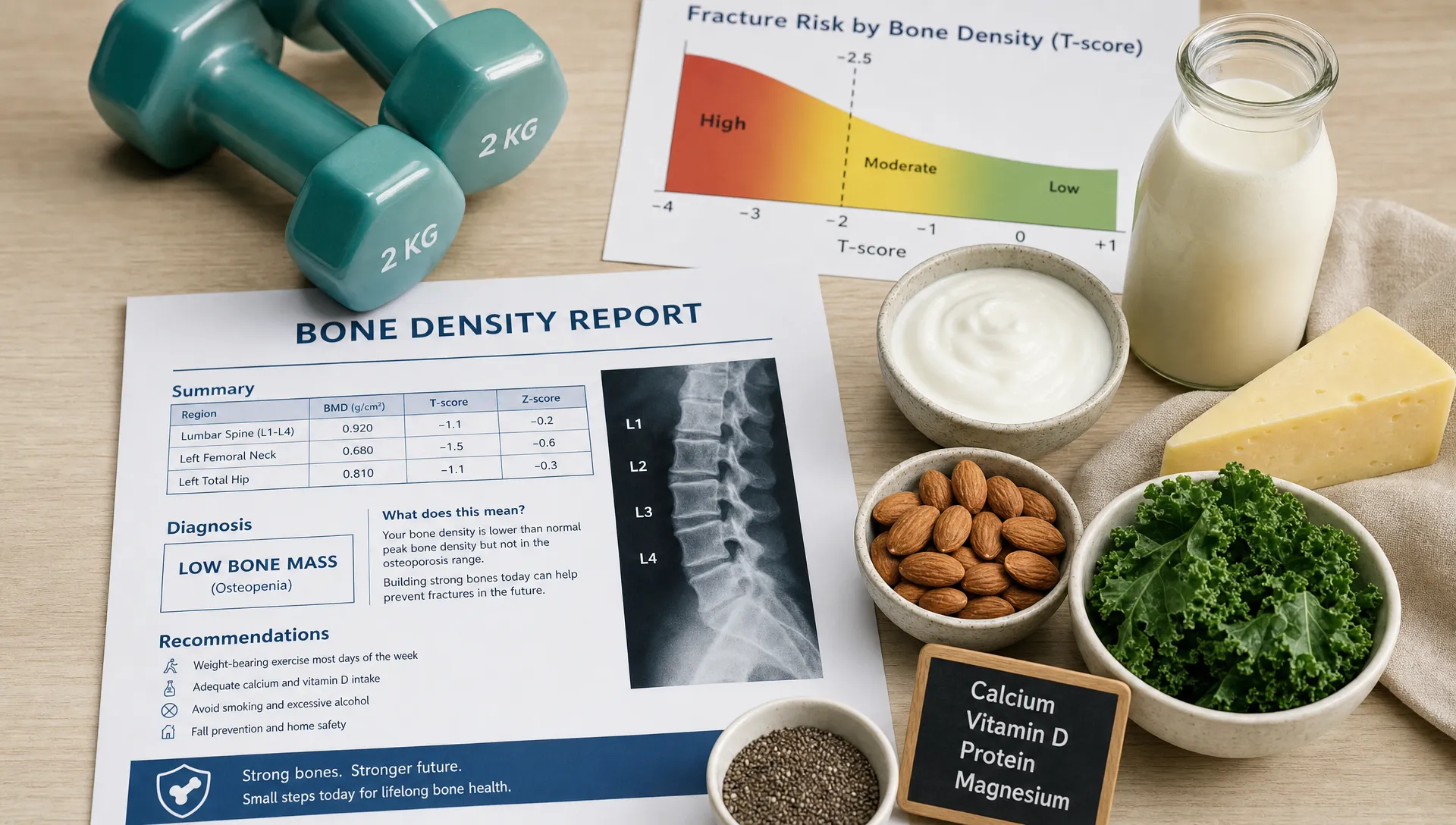
In clinical bone density testing, results are often reported as T-scores and Z-scores. A T-score compares your bone density with that of a healthy young adult reference population. A Z-score compares your bone density with what is expected for someone of your age and sex.
| Result type | Common interpretation |
|---|---|
| T-score of -1.0 or higher | Generally considered normal bone density. |
| T-score between -1.0 and -2.5 | Often classified as low bone mass, also called osteopenia. |
| T-score of -2.5 or lower | Often classified as osteoporosis in appropriate clinical settings. |
| Z-score of -2.0 or lower | May be described as below the expected range for age and may prompt evaluation for secondary causes. |
These categories are useful, but they are not the entire story. Fracture risk also depends on age, prior fractures, family history, fall risk, medications, medical conditions, and lifestyle factors. Two people with the same T-score may have different levels of overall risk.
If your results suggest low bone density, discuss them with a qualified healthcare provider. DEXA data is powerful, but decisions about diagnosis, medication, lab testing, and treatment should be made in a clinical context.
How often should you repeat DEXA bone density testing?
The right interval depends on your baseline result and risk profile. Someone with normal bone density and low risk may not need frequent testing. Someone with osteoporosis, a recent fracture, high-risk medication use, or active treatment may need closer follow-up.
Many clinical monitoring plans use intervals of one to two years when tracking known bone loss or response to treatment, but longer intervals may be reasonable for low-risk people with normal results. Your clinician can help determine what makes sense for your situation.
If you want a broader overview of scan timing, preparation, and the appointment experience, DEXA SF’s guide to what to expect during a bone density scan is a helpful companion resource.
When DEXA may not be necessary right away
DEXA bone density testing is useful, but it is not something every young, healthy adult needs for medical screening. If you are under 50, have no fracture history, no major risk factors, no concerning medication exposure, and no medical conditions linked to bone loss, routine osteoporosis screening may not be urgent.
That said, DEXA may still be valuable for non-diagnostic body composition goals. Many people use it to understand fat mass, lean mass, visceral fat, asymmetry, and bone-related metrics as part of a fitness or nutrition plan. The reason for scanning matters. Medical screening and performance tracking are related, but they are not the same thing.
What to do if your bone density is low
A low result should not cause panic. It should start a more informed plan. Depending on your results and risk factors, next steps may include reviewing calcium and vitamin D intake, checking relevant labs, adding progressive resistance training, improving protein intake, reducing fall risk, addressing smoking or alcohol, and evaluating medications or medical conditions that may contribute to bone loss.
Exercise matters, but it should be matched to your current health and fracture risk. Resistance training, balance work, and appropriate impact loading can support bone health for many people. If you already have osteoporosis or a history of fractures, get professional guidance before starting high-impact movements.
Nutrition also matters. Bone health depends on more than calcium alone. Adequate protein, vitamin D, total energy intake, and overall dietary quality all support the body’s ability to maintain bone and muscle. At DEXA SF, scan results can be paired with personalized fitness and nutrition guidance, helping clients translate numbers into practical habits.
Frequently Asked Questions
Is DEXA bone density testing painful? No. A DEXA scan is noninvasive and does not require needles or enclosed imaging tunnels. You typically lie still on a table while the scanner passes over the body.
Who should get a DEXA bone density test first? Women 65 and older, postmenopausal women under 65 with risk factors, adults over 50 with a low-trauma fracture, people on long-term corticosteroids, and people with conditions linked to bone loss are among the highest-priority groups.
Can men get osteoporosis? Yes. Men can develop osteoporosis, especially with aging, low testosterone, prior fractures, long-term steroid use, smoking, heavy alcohol intake, or certain chronic medical conditions.
Does a DEXA scan diagnose osteoporosis by itself? DEXA provides key bone density data, but diagnosis and treatment decisions should be made with a qualified healthcare provider who can consider your full medical history, fracture risk, lab results, and symptoms.
Can athletes have low bone density? Yes. Athletes with low energy availability, repeated stress fractures, hormonal disruption, or restrictive eating patterns may have low bone density despite high fitness levels.
How should I prepare for a DEXA scan? Preparation is usually simple. You may be asked to avoid calcium supplements shortly before the scan and wear clothing without metal. Follow the instructions from your scan provider.
Make bone density part of your health baseline
DEXA bone density testing is most useful when it helps you act earlier, not after a fracture forces the issue. If you are in a higher-risk group, have a fracture history, take medications that affect bone, or want a clearer picture of your body composition and bone health, a DEXA scan can provide objective data you can use.
If you are in San Francisco, DEXA SF offers professional DEXA scans that measure body fat, lean mass, visceral fat, asymmetries, bone density, and related metabolic insights. You will also receive expert interpretation and practical fitness and nutrition guidance, so your results become more than numbers on a report.
For medical diagnosis, medication decisions, or fracture management, share your results with your healthcare provider. For better self-knowledge and a more data-driven approach to your health, DEXA is an excellent place to start.