
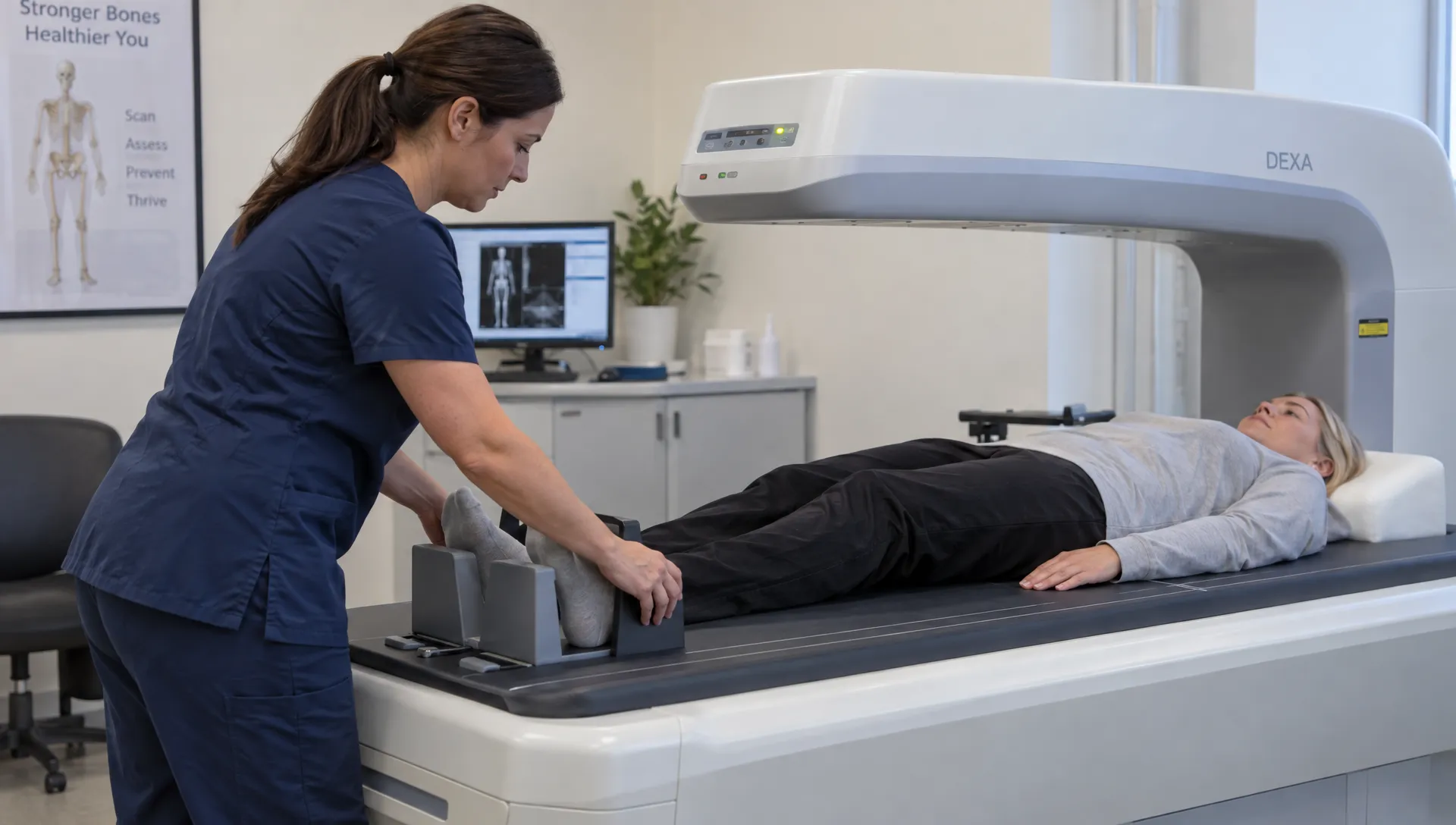
What to Look for in a Body Composition DEXA Scan Provider
Searching for a “body composition dexa scan near me” gives you a list of nearby locations, but it does not tell you which one will deliver useful, trustworthy results. A polished website and a low advertised price cannot show whether the staff follow a consistent scanning protocol or explain the limits of the measurements.
The strongest provider can show you how it earns your confidence before you book. Ask for a sample report, an explanation of its repeat-scan process and a clear description of who interprets the results. This guide focuses on the evidence behind the service, so you can distinguish a well-run appointment from a scan that leaves you with numbers and little context.
Ask for a sample report before paying
A sample report, with identifying information removed, is one of the most useful things a provider can share. It shows what you will actually receive rather than what its marketing promises.
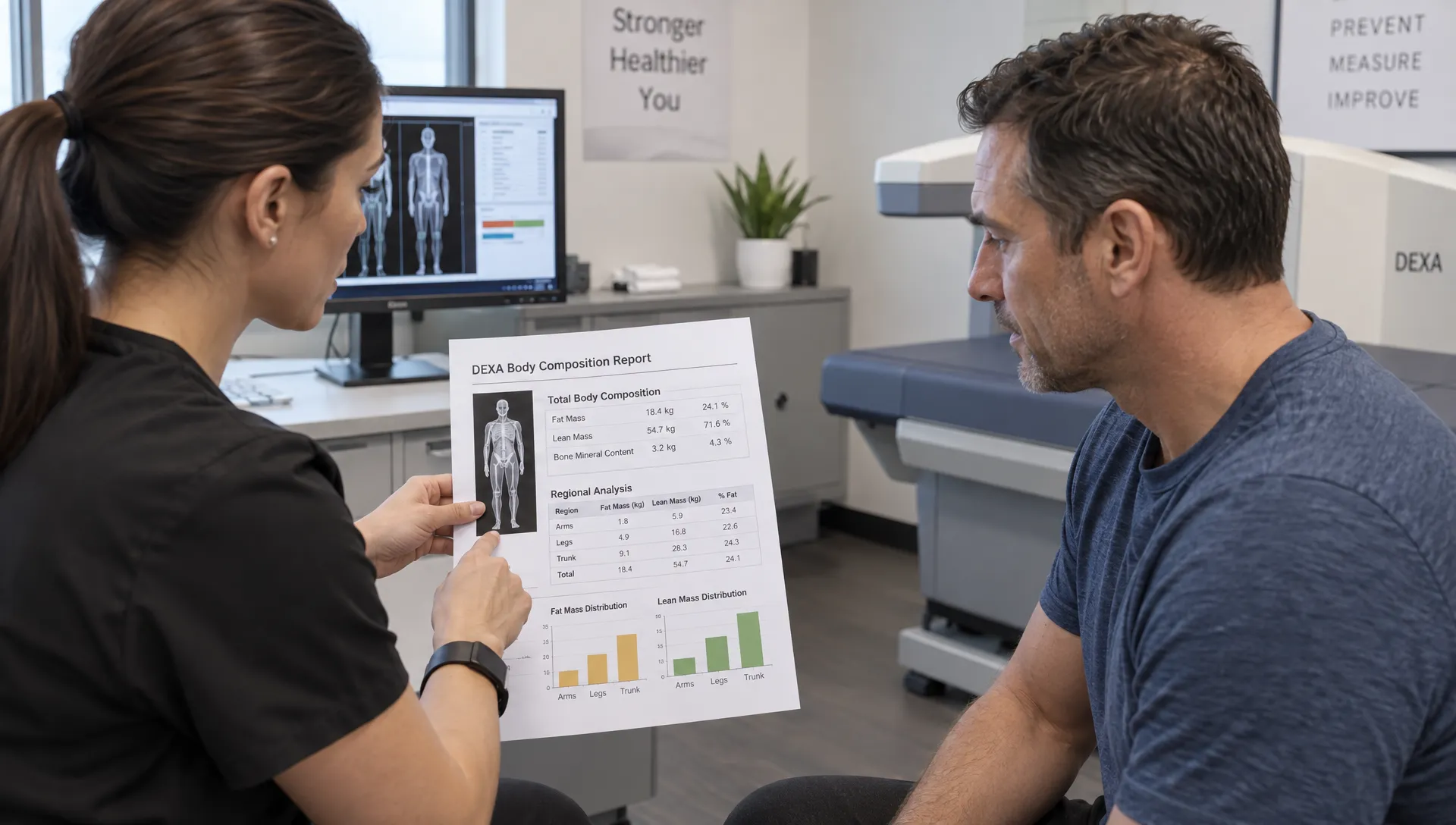
Look for clearly labeled total and regional measurements, units and an explanation of the terminology. For body composition tracking, fat mass and lean mass matter alongside body fat percentage. A percentage alone can obscure whether a change came from losing fat, gaining lean tissue or both.
When comparing a “body composition dexa scan near me” result, ask the provider to explain one sample finding in plain language. For example, what would it say if someone's weight stayed stable while fat mass decreased and lean mass increased? The answer should connect the measurements without promising that every small difference represents real progress.
The report should also make it clear which measurements are included and which depend on the equipment or software. If you need help recognizing the terminology, this guide to key metrics in a DEXA body composition report provides useful background.
Check whether the claims match what DEXA measures
Lean mass is not a direct measurement of muscle
DEXA estimates fat mass, lean soft tissue and bone mineral content. Lean soft tissue includes muscle, but it also includes water, organs and other nonfat tissues. A provider should not present every increase in lean mass as newly built muscle.
That distinction matters when comparing scans taken under different conditions. Hydration, food intake and recent exercise can affect the comparison. Left-to-right differences also need context: a measured asymmetry does not, by itself, diagnose an injury or prove that a training program is unbalanced.
A trustworthy provider discusses these limitations without dismissing the value of the scan. When you search for a “body composition dexa scan near me,” favor explanations that distinguish the measurement from the conclusion drawn from it.
Bone and metabolic information need careful labeling
A whole-body composition scan may report bone-related measurements, but it is not interchangeable with a clinical osteoporosis evaluation. Diagnostic bone density testing commonly assesses specific sites such as the hip and lumbar spine, with interpretation appropriate to the patient's medical circumstances.
If bone health is your main concern, ask whether you need a separate clinical examination rather than assuming a fitness-oriented scan answers the question.
Apply the same scrutiny to metabolic information. If a report includes resting metabolic rate, ask whether it is estimated from body composition or measured separately through indirect calorimetry. Likewise, DEXA visceral fat values are estimates generated by compatible analysis software, not a direct view of every abdominal fat deposit. Clear labeling is a sign of responsible reporting.
Questions to ask a “body composition dexa scan near me” provider
The most revealing questions concern repeatability. A useful baseline becomes less useful if follow-up scans use different equipment, positioning or preparation conditions without accounting for those differences.
The International Society for Clinical Densitometry's official adult positions address body composition precision assessment and quality control. This supports an important distinction: a machine's advertised performance is not the same as the precision achieved by a particular facility and its operators.
Ask these questions before committing to ongoing tracking:
| Question | What a useful answer should explain |
|---|---|
| Will follow-up scans use the same device? | How the facility maintains comparable measurements and handles equipment changes |
| How do you standardize positioning? | The positioning procedure used for initial and repeat scans |
| What preparation instructions will I receive? | How to keep food intake, hydration and exercise conditions reasonably consistent |
| How do you decide whether a change is meaningful? | The facility's measurement precision and the limits of small differences |
Listen for an explanation of measurement uncertainty
A strong answer does not require a lengthy technical lecture. It should explain that every measurement has some variability and that a small change may fall within that variability.
For repeat tracking, ask whether the facility has assessed its own precision and how it uses that information when interpreting changes. Where applicable, a least significant change threshold helps distinguish a measured difference from ordinary measurement noise.
Be cautious if the provider promises that any change in the last decimal place is meaningful. Also question comparisons across different devices or facilities if nobody discusses their limitations. Keeping the same location can help, but consistency depends on the process as well as the address.
Find out who interprets the results
The person operating the scanner and the person advising you afterward may have different roles. Ask who performs each task, what relevant training they have and whether they hold any credentials required for their role.
For interpretation, seek someone who can explain both the findings and their boundaries. A fitness professional may help connect regional lean mass patterns to training goals. A registered dietitian can provide nutrition guidance within their professional scope. Medical concerns require an appropriate clinician rather than a fitness recommendation based only on the report.
When evaluating a “body composition dexa scan near me” provider, ask what happens if a finding needs medical follow-up. A responsible service should have a clear way to recommend appropriate clinical evaluation without diagnosing a condition outside its scope.
Good guidance should also fit your goal. An endurance athlete, someone pursuing fat loss and an older adult concerned about strength may need different discussions. For examples of how measurements can inform a plan, explore using DEXA results for fitness goals.
Expect safety screening and practical preparation
DEXA uses a low dose of ionizing radiation. Low dose does not mean screening is unnecessary, and a provider should be comfortable answering questions about suitability before the appointment.
ACR and RSNA's RadiologyInfo guide to bone densitometry advises patients to disclose possible pregnancy and recent examinations involving contrast material or barium. Those details can affect whether a scan should proceed or be delayed. Let the facility know about relevant recent tests and follow its specific instructions.
For a “body composition dexa scan near me” appointment, confirm equipment fit and accessibility before paying. Ask about the scanner's height and weight limits, whether you can transfer onto the table comfortably and any accommodations you need. Limits vary by device, so a universal number is not a reliable answer.
Preparation instructions should arrive before scan day. They should address clothing and metal objects, along with conditions the facility wants kept consistent for body composition tracking. Avoid deliberately dehydrating yourself or making unusual last-minute changes to influence the result. The aim is a useful measurement, not the lowest possible percentage.
Clarify the full appointment, price and data access
The time spent on the scanner is only part of the service. Ask how much time is allocated to check-in, preparation and interpretation, particularly if you want help understanding your first report.
Request the total price for the appointment you intend to book. Establish whether it includes the report, a results discussion and any comparison with previous scans. If a consultation or follow-up is separate, that should be clear before payment. Check cancellation and rescheduling terms as well.
A “body composition dexa scan near me” listing should also lead to clear answers about access to your health information. Ask whether you receive a downloadable report, how records are stored and whether you can obtain past results if you change providers. If photos or testimonials are requested, permission should be separate from the basic scan service.
You do not need the most elaborate package. You need a transparent service that delivers measurements relevant to your goal, explains them responsibly and gives you access to the results.
Watch for promises the scan cannot support
Treat guaranteed outcomes as a warning sign. A scan can help establish a baseline and track changes, but it cannot guarantee fat loss, identify a perfect diet or determine an exact calorie target for every person.
Similarly, a provider should not use one body fat percentage to make sweeping statements about your overall health. Medical history, physical function, symptoms and other clinical information may matter more than a single number.
Before booking, you should be able to explain what you are purchasing in one sentence: a whole-body composition assessment, a clinical bone density examination or another clearly defined service. If the provider blurs those categories or avoids straightforward questions about its process, keep comparing options.
Frequently asked questions
Does a body composition DEXA scan diagnose osteoporosis? Not by itself. A whole-body composition report is not a substitute for a clinical bone density evaluation. If osteoporosis is your concern, ask a healthcare professional which examination and anatomical sites are appropriate.
How should I compare a “body composition dexa scan near me” search result with another provider? Compare sample reports, repeat-scan procedures, staff qualifications and the included interpretation. Then check practical factors such as accessibility, total price and whether you can obtain your records.
Should I choose the provider with the newest scanner? Equipment matters, but its age alone does not establish quality. Maintenance, quality control, operator training and consistent analysis also affect the usefulness of your results.
How soon should I repeat a scan? Choose the interval based on your goal and whether enough change is likely to occur to exceed measurement variability. Ask the provider to explain its recommendation rather than automatically choosing the shortest interval available.
Considering a scan in San Francisco?
DEXA SF provides body composition scanning in San Francisco, including body fat, lean mass, bone density information, visceral fat assessment and asymmetry detection, with expert interpretation and fitness and nutrition guidance.
Before scheduling, bring your main goal and ask which measurements will help address it. You can explore DEXA SF's scanning services and confirm preparation requirements, what your appointment includes and how your results will be explained.