
What to Expect From a Body Fitness Scan Before Your Visit
A body fitness scan should help you understand what makes up your weight, without turning your first visit into a test you can pass or fail. If you are considering DEXA SF, expect a body composition appointment that measures fat, lean tissue and bone, with guidance to help you understand the results.
The most useful expectations are practical: what you will be asked to remove, how you will lie on the scanner, what staying still involves and what you should understand before leaving. You do not need to arrive with an athletic physique or a detailed training history. A first scan establishes a starting point.
First, confirm what kind of scan you booked
“Body scan” can describe several technologies, including electrical impedance devices, optical scanners and DEXA. They do not measure the same things in the same way.
DEXA uses low-dose X-rays at two energy levels to estimate body composition. At DEXA SF, the service includes assessment of body fat, lean mass, visceral fat and bone density information, along with expert interpretation and fitness and nutrition guidance.
Before your visit, confirm the full appointment length and how results will be reviewed. Time on the scanning table is only one part of the appointment. Check-in, changing if needed and discussing the report can add time beyond the scan itself.
What happens during a body fitness scan
Check-in and a brief review
Staff may ask about your goals, relevant health information, previous scans and anything that could affect the examination. Mention pregnancy or the possibility of pregnancy before imaging, as well as recent contrast imaging or nuclear medicine tests. The provider can determine whether your appointment needs to be postponed.
You may need to remove shoes, jewelry or clothing with metal components. Ask in advance whether you should arrive in suitable clothing or change at the facility. If you have an implanted device, tell staff rather than assuming you cannot be scanned.
Positioning on the table
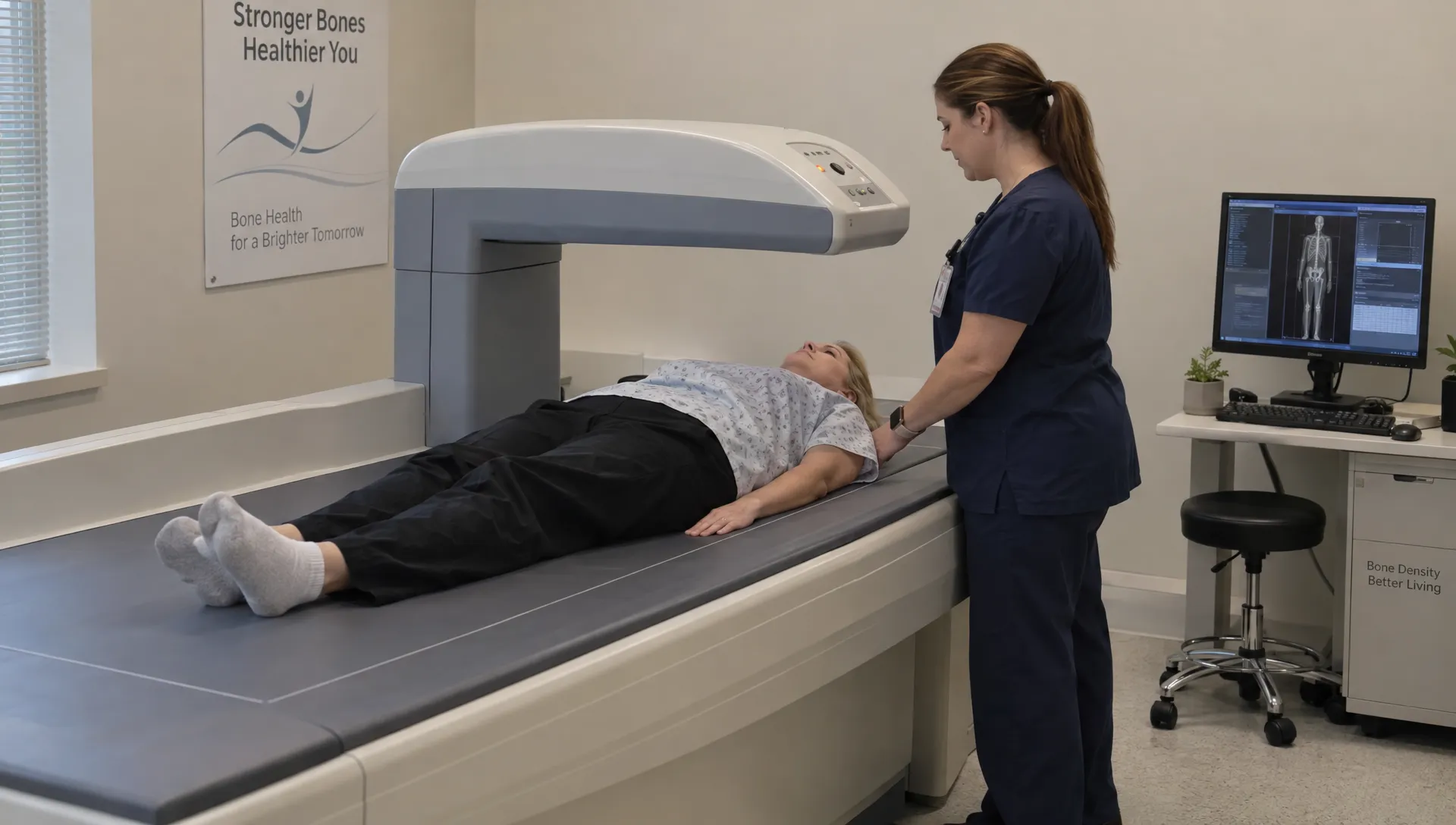
You will typically lie on your back on a padded, open table while a scanning arm passes above you. Staff will position your arms and legs so the system can distinguish body regions. Supports or positioning aids may be used.
Once positioned, your main job is to remain still and follow instructions. Movement can affect image quality and may require part of the examination to be repeated. Tell the operator if a position hurts or you need to move, rather than trying to tolerate it silently.
What will the scan feel like?
The scanning process itself is generally painless. There are no injections for a routine DEXA body composition examination, and you are not placed inside the enclosed tunnel associated with an MRI scanner.
For most people, the unfamiliar part of a body fitness scan is lying still while equipment moves nearby. If you have back pain, limited mobility or difficulty transferring onto a table, discuss that before booking. Ask about access, positioning support and any equipment limits relevant to you.
DEXA does involve ionizing radiation, even though the dose is low. RadiologyInfo’s explanation of bone densitometry, published by the American College of Radiology and Radiological Society of North America, describes the examination and its radiation considerations. Tell the provider if you are pregnant or might be pregnant; elective body composition scanning is generally deferred during pregnancy.
There is usually no recovery period from the imaging itself. Follow any instructions the facility gives you, particularly if your visit includes services beyond the scan.
What your results can actually tell you
Your body fitness scan report is a set of measurements and estimates, not a complete assessment of your health or athletic ability. Knowing the distinction helps you ask better questions when someone walks you through it.
| Report item | What it helps describe | Important limitation |
|---|---|---|
| Total body fat and fat percentage | How much of your measured body mass is fat | One percentage does not establish overall health |
| Regional lean mass | How lean tissue is distributed across your limbs and trunk | Lean mass includes water and other nonfat soft tissue, not just muscle |
| Visceral fat estimate | Estimated fat around internal organs | It does not diagnose diabetes, cardiovascular disease or another condition |
| Left-right differences | Differences between corresponding body regions | A difference alone does not prove an injury or functional problem |
| Bone measurements | Bone mineral content or density, depending on the report | A whole-body fitness scan is not automatically a diagnostic hip-and-spine osteoporosis exam |
If metabolic information appears in your report, ask how it was obtained. A resting metabolic rate calculated from body composition is an estimate, not the same as a measurement taken through indirect calorimetry, which analyzes breathing gases.
Likewise, regional lean mass can provide useful context for strength training, but the scan does not test strength, movement quality or endurance. Those require other assessments.
Expect interpretation, not just a printout
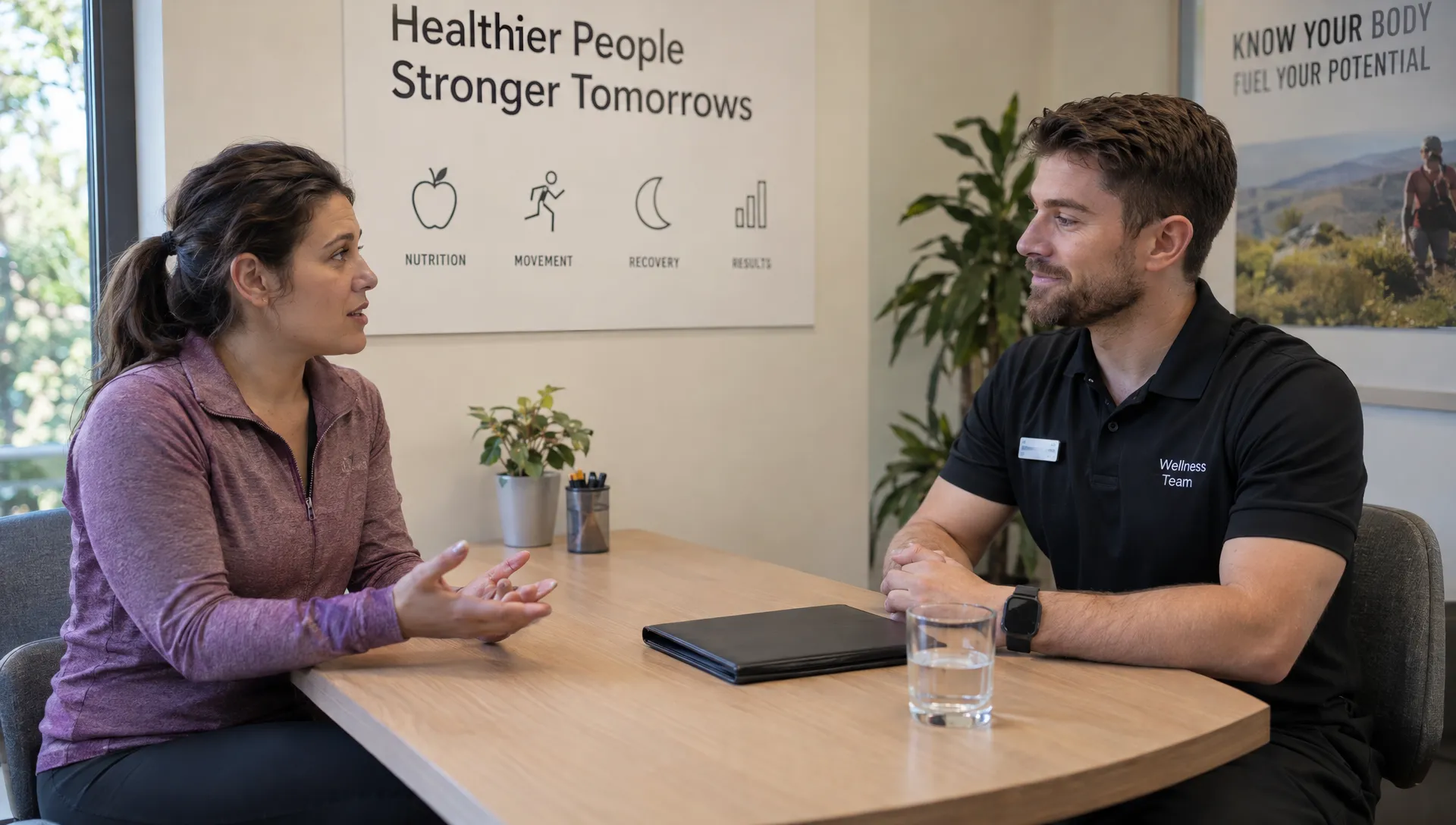
The value of a body fitness scan depends partly on whether you understand the findings. DEXA SF offers expert interpretation and personalized fitness and nutrition guidance, so arrive with a question you want the appointment to address.
For example, you might want to establish a baseline before starting resistance training, understand changes that the scale has not explained or see how lean tissue is distributed. Choose one main concern rather than trying to optimize every number at once.
During the review, ask which findings are relevant to that concern and which are simply descriptive. A small left-right difference may need context from your training history or an examination by a qualified clinician, not an immediate corrective workout.
A surprising number should start a conversation, not trigger a drastic diet or exercise change. If a result raises a medical concern, ask whether it warrants follow-up with your healthcare professional. Fitness guidance and medical diagnosis serve different purposes.
Arrive normally, then leave with a repeatable baseline
Your first body fitness scan is more useful when it reflects your usual condition rather than an attempt to produce the lowest possible body fat reading. Follow the facility’s instructions about food, fluids and exercise instead of improvising a fast or dehydrating yourself.
For the practical details, DEXA SF’s guide to preparing for a body fat percentage scan explains how to arrive under normal, repeatable conditions.
Before leaving, understand what should stay consistent if you return. Hydration, recent exercise, food intake, positioning and differences between machines or software can affect comparisons. Using the same facility and a similar routine can make changes easier to interpret, although no measurement is perfectly repeatable.
You do not need to commit to a repeat visit immediately. First decide what action the baseline supports and how much time would reasonably allow meaningful change. The guide to using a DEXA scan for fitness goals can help connect the report to a specific training objective.
Frequently asked questions
How long does a body fitness scan take? Many DEXA body composition scans take roughly 10 to 20 minutes on the table, but timing varies by equipment and protocol. Ask DEXA SF about the full appointment duration, including check-in and results review, rather than planning around imaging time alone.
Will I need to undress? You may be able to wear suitable clothing without metal, or the facility may ask you to change. Confirm its clothing policy beforehand, especially if your usual workout clothes have zippers, metal fasteners or an underwire.
Can I exercise after the appointment? The DEXA imaging itself generally requires no recovery period or activity restriction. Follow the provider’s instructions and any restrictions that already apply to your health.
Will the scan diagnose osteoporosis or explain an injury? Not by itself. A body composition scan is not a substitute for a clinical evaluation. Osteoporosis assessment typically involves dedicated hip and spine measurements interpreted alongside medical history, while an injury may require a physical examination or other imaging.
What if I feel uncomfortable discussing weight or body fat? Tell the person reviewing your report. You can ask to focus on relevant findings, function or longer-term trends rather than rankings and appearance-based goals. The appointment should provide useful information without judgment.
Plan your visit to DEXA SF
A useful first appointment ends with a clear baseline, an understanding of the report’s limits and one realistic next step. When you are ready to book a scan in San Francisco, visit DEXA SF and confirm the current preparation instructions, appointment timing and results-review process. Bring your main question so the conversation stays focused on what you want to learn.