What Qualifications Should a DEXA Technician Have?
A qualified DEXA technician needs more than familiarity with the scanner. Look for the authorization required where they practice, documented training on the equipment and experience performing the type of scan you need. Specialty credentials can strengthen that foundation, but a certificate alone does not prove that every scan will be positioned, analyzed and explained correctly.
For someone booking a body composition scan in San Francisco, the practical question is whether the person operating the equipment can produce reliable measurements safely. Here is how to evaluate their qualifications without needing a background in medical imaging.
The essentials at a glance
A strong qualification profile combines legal authorization, technical training and ongoing quality control. These are related, but they are not interchangeable.
| Qualification | What it helps establish | What it does not establish on its own |
|---|---|---|
| Applicable state license, certificate or permit | Authorization to perform work within a defined scope | Expertise in every DEXA application |
| Bone densitometry specialty credential | Knowledge assessed through a professional certification process | Permission to practice outside state requirements |
| Training on the specific scanner and software | Familiarity with positioning, acquisition and analysis | Consistent performance without quality checks |
| Experience with your examination type | Practical competence in body composition or clinical bone density scanning | Authority to diagnose medical conditions |
The strongest evidence is a combination of appropriate credentials and a repeatable scanning process. A provider should be able to explain both, rather than relying on a job title or years in business.
What credentials should a DEXA technician have?
State authorization comes first
DEXA, also called DXA, uses X-rays. Requirements for the person operating the equipment vary by jurisdiction and scope of practice. There is no single national credential that automatically satisfies every state's requirements.
In California, the California Department of Public Health's Radiologic Health Branch is the relevant authority for radiologic technology certification and permitting. Ask the facility which California authorization applies to the person performing your examination, then verify it through the state's official resources when available.
A useful question is: “What current license, certificate or permit authorizes the operator to perform this examination in California?” A fitness credential or manufacturer training certificate is not a substitute for legally required authorization.
Specialty credentials provide additional evidence
Two organizations worth recognizing are the American Registry of Radiologic Technologists (ARRT) and the International Society for Clinical Densitometry (ISCD).
ARRT offers a Bone Densitometry credential pathway. ISCD offers the Certified Bone Densitometry Technologist credential, commonly abbreviated CBDT, through its certification programs.
Ask whether your DEXA technician holds a relevant specialty credential and whether it is current. These credentials provide evidence of assessed knowledge, but neither should be treated as a replacement for state authorization or hands-on competence.
Their relevance also depends on your goal. A background in clinical bone density testing is valuable, but whole-body composition scanning requires its own positioning and analysis skills. Someone experienced with hip and spine examinations should not automatically be assumed to have extensive experience measuring regional fat and lean tissue.
Training should match the scanner and examination
DEXA systems are not interchangeable in every operational detail. Manufacturers, scanner models and software versions can differ in positioning instructions, analysis tools and reporting options.
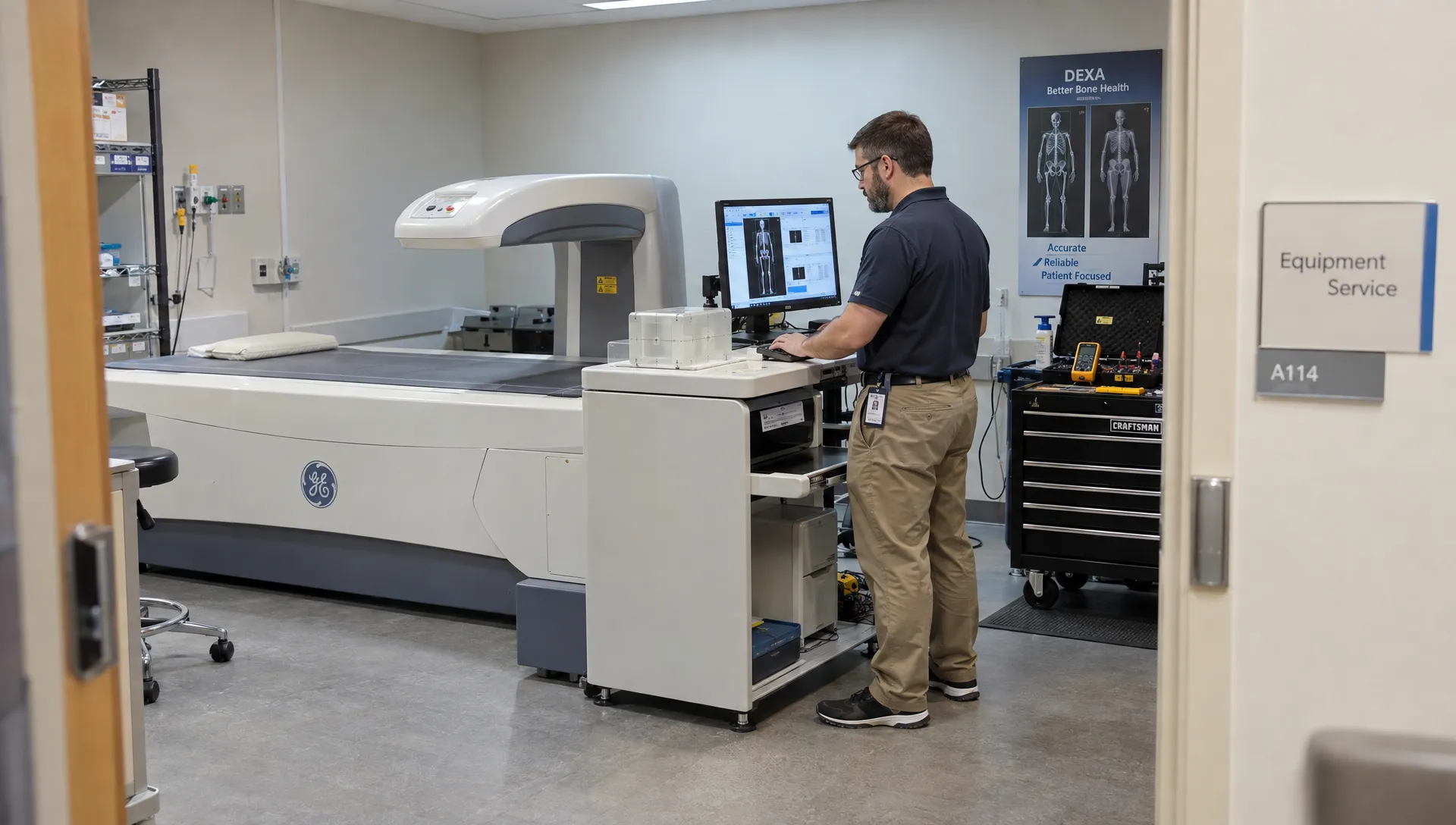
The operator should have documented training on the equipment they actually use. That training should cover patient positioning, scan acquisition, recognizing artifacts and reviewing the software's analysis. Supervised practice and competency assessment provide stronger evidence than attendance at a brief demonstration alone.
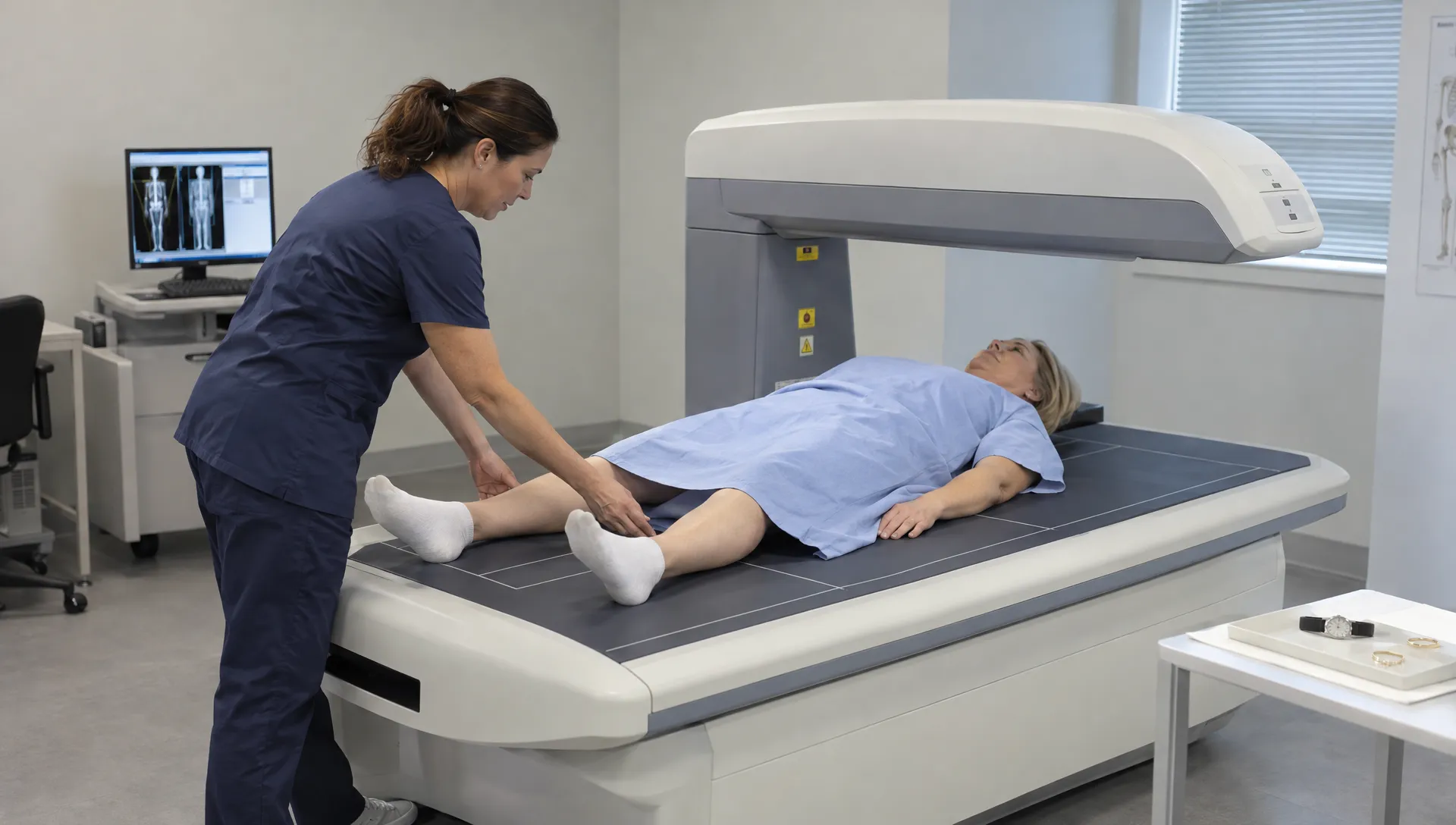
For body composition testing, ask whether the DEXA technician regularly performs whole-body scans. Relevant skills include checking arm and leg placement, preventing avoidable overlap and reviewing the boundaries used to divide body regions.
These details matter when comparing left and right sides. An apparent difference in lean tissue may reflect positioning or analysis choices rather than a meaningful physical asymmetry.
A reassuring answer describes specific training and practical experience. “The machine does everything automatically” is not a satisfactory explanation of competence, because automated analysis still needs review.
Safety competence should be visible in the process
A qualified operator should follow a consistent screening and identification process before starting the examination. That includes confirming the intended scan, checking relevant safety information and explaining what the person being scanned needs to do.
Pregnancy or possible pregnancy should be disclosed before an X-ray examination. The facility should have an established policy for assessing whether to proceed. The operator should also recognize equipment limits and circumstances that could affect positioning or measurement quality.
Metal objects, some implants, movement and certain recent imaging procedures can affect results. The appropriate response depends on the examination and the facility's protocol, not a blanket assumption that every scan can proceed unchanged.
A competent DEXA technician should be able to explain the scan in plain language without describing it as radiation-free or dismissing reasonable safety questions. Low radiation exposure does not eliminate the need for appropriate screening and technique.
Quality control separates a scan from a trustworthy measurement
Equipment checks and artifact review
Qualifications matter most when they translate into dependable daily practice. Ask how the facility checks scanner performance and what happens when a quality-control check falls outside its acceptable range.
Depending on the system and examination, quality assurance includes manufacturer-specified checks using a reference object, often called a phantom. The facility should also have a process for identifying movement, positioning problems and analysis errors before accepting a result.
For skeletal bone density testing, the ISCD Official Adult Positions address quality control, precision assessment and other technical standards. These standards demonstrate why competence involves more than obtaining an image that looks acceptable.
Consistency when tracking change
If you plan to repeat scans, ask how the DEXA technician maintains consistent positioning and analysis between visits. Using the same facility and equipment can reduce avoidable differences, although consistency alone cannot remove all measurement variability.
For clinical bone density monitoring, facilities use precision assessment and least significant change to help distinguish measurement variation from a meaningful change. A single universal percentage should not be applied to every facility or examination.
Body composition comparisons have additional influences, including hydration, recent exercise and food intake. A careful operator understands these limitations and does not promise that every small change represents actual fat loss or muscle gain.
Technical skill and medical interpretation are different qualifications
The person acquiring the scan may not be the person responsible for interpreting its medical significance. Ask the facility to explain who performs each role and what qualifications they hold.
An experienced DEXA technician can explain how measurements were obtained, identify technical limitations and describe the report within their professional scope. That does not automatically authorize them to diagnose osteoporosis, prescribe treatment or explain a suspected medical condition.
For a clinical bone density examination, medical interpretation should come from an appropriately qualified healthcare professional. A fitness-focused whole-body report is not interchangeable with a diagnostic hip and spine examination. Understanding the difference between fitness-focused and medical DEXA scans helps you choose the right service and interpretation pathway.
Body composition explanations also need precision. Lean mass is not a direct measurement of skeletal muscle alone. Visceral fat values are estimates generated by the system, and a calculated resting metabolic rate is not the same as a direct measurement through indirect calorimetry.
Clear professional boundaries are a sign of competence. A responsible provider explains what the scan supports and refers questions beyond that scope to the appropriate clinician or nutrition professional.
Questions that reveal qualifications before you book
You do not need to conduct a technical interview. A few focused questions can reveal whether the facility has a credible process behind its service.
- “What authorization does the person operating the scanner hold, and how can I verify it?”
- “What DEXA-specific training or specialty credentials do they have?”
- “How much experience do they have with whole-body composition scans, rather than only hip and spine scans?”
- “How do you assess operator competency and maintain scanning consistency?”
- “Who reviews the results, and who handles questions that require medical interpretation?”
A provider does not need to share private personnel records to explain its qualification standards. It should, however, be able to identify the relevant credentials and describe its training and quality-control process.
Be cautious if the only explanation is that the DEXA technician is a personal trainer, that the equipment is expensive or that the software removes the need for expertise. None of those statements establishes competence in operating an X-ray system.
Once those qualifications are clear, these questions to ask before booking a scan can help you confirm that the appointment will address your actual goals.
Frequently asked questions
Does a DEXA operator need a four-year degree? Not universally. Educational and credential pathways differ by jurisdiction and professional background. The important checks are applicable authorization, relevant technical education and demonstrated competence with the examination being performed. A degree alone does not establish all three.
Is a technician the same as a technologist? Facilities sometimes use these terms interchangeably in everyday language, while regulators and credentialing organizations use specific professional titles. Do not infer qualifications from the wording on a booking page. Verify the person's actual authorization and credentials.
Can a personal trainer perform DEXA scans? A personal training certification alone does not establish qualification to operate X-ray equipment. Someone with a fitness background would still need to satisfy applicable operator requirements and receive appropriate DEXA training. Fitness expertise can support coaching, but it does not replace imaging competence.
Does every DEXA technician need CBDT certification? CBDT is a relevant specialty credential, but it is not a universal legal requirement in every setting. Applicable state requirements come first. Current specialty certification can provide additional evidence of knowledge, especially when paired with equipment-specific training and practical experience.
Can a body composition scan diagnose osteoporosis? A whole-body composition report should not be treated as a substitute for an appropriately performed and interpreted clinical bone density examination. If osteoporosis is your concern, ask your healthcare professional which examination you need.
Choose qualified scanning and clear guidance
At DEXA SF, body composition scanning is paired with expert interpretation and personalized fitness and nutrition guidance. Before scheduling, ask about the operator's qualifications, experience with your scan type and the process for reviewing results. Those answers help you understand not just what the scanner measures, but how the team makes those measurements useful.