

What a Full Body Fat Scan Can Reveal During Menopause
Your weight may stay nearly the same during menopause while your waistline, strength or clothing fit changes. A full body fat scan can help explain that mismatch by showing how much fat and lean tissue you carry and where those tissues are distributed. It can also provide bone-related information, although a body composition scan is not a substitute for a diagnostic osteoporosis evaluation.
For women navigating perimenopause or postmenopause, the value is not finding a perfect body-fat percentage. It is establishing a useful baseline, identifying changes that deserve attention and choosing a plan that supports muscle, bone and metabolic health.
Why menopause can change body composition without changing weight
The menopause transition involves more than a slowing metabolism. Declining estrogen is associated with a shift toward abdominal fat storage. Aging, activity levels, sleep disruption and eating patterns can also influence body composition, so not every change is caused by hormones alone.
Research from the Study of Women’s Health Across the Nation, published in JCI Insight, found that fat gain accelerated and lean mass declined during the menopause transition. Those changes were not fully reflected in the pattern of body-weight changes.
That distinction matters. Losing some lean tissue while gaining fat can leave the scale relatively unchanged. Conversely, gaining lean tissue while losing fat may improve body composition without producing much weight loss.
A stable weight does not necessarily mean stable body composition. Looking beyond pounds can help you set goals that reflect what you want to preserve, especially strength and physical function.
What can a full body fat scan reveal during menopause?
DEXA, also called DXA, uses low-dose X-rays to estimate fat mass, lean soft tissue and bone mineral content. A whole-body examination provides regional information that a bathroom scale cannot offer.
The most useful results are those connected to a specific question or decision:
| Measurement | What it can help you understand | Important limitation |
|---|---|---|
| Total fat mass and body-fat percentage | Whether fat accounts for a larger share of your body weight | Neither measurement alone determines your overall health |
| Regional fat distribution | Whether more fat is concentrated around your trunk | A scan cannot establish why the distribution changed |
| Estimated visceral fat | The amount of fat estimated around abdominal organs | It does not diagnose diabetes or cardiovascular disease |
| Regional lean tissue | Whether lean tissue differs between limbs or changes over time | Lean tissue is not a direct measurement of skeletal muscle |
| Bone-related measurements | Whether bone health warrants further discussion | Whole-body results do not replace diagnostic hip and spine testing |
Abdominal fat that the scale can miss
A full body fat scan can help distinguish total fat gain from a change in where fat is stored. That is particularly relevant when your waist grows but your weight barely moves.
Visceral fat sits inside the abdominal cavity around internal organs. It differs from subcutaneous fat, which lies beneath the skin. Higher visceral fat is associated with greater cardiometabolic risk, but a DEXA estimate is only one piece of that assessment.
Blood pressure, cholesterol, glucose or A1c, family history and waist circumference still matter. A low-looking scan result does not cancel out an abnormal blood test, and an elevated estimate is not a diagnosis.
Understanding what visceral fat measurements can add to your plan can help you use this number without treating it as a standalone health verdict.
Lean tissue worth protecting during weight loss
DEXA reports lean soft tissue, which includes water, organs and other nonfat soft tissues as well as muscle. Measurements in the arms and legs can help track muscle-related changes, but they do not directly measure muscle quality or strength.
During menopause, this distinction becomes especially useful if you are dieting. A lower weight may reflect fat loss, lean-tissue loss or both. The goal is usually to reduce excess fat while preserving the tissue that supports movement and function.
Pair scan results with practical measures such as lifting performance, walking tolerance or the ease of rising from a chair. These provide information the scan cannot capture.
If a full body fat scan shows less lean tissue on a follow-up examination, review the size of the change, scan conditions and your training before assuming you have lost muscle. DEXA SF’s explanation of lean tissue measurements during weight loss covers that distinction in more detail.
Bone findings that may prompt a separate evaluation
Bone health deserves attention during and after menopause because declining estrogen contributes to bone loss. A whole-body DEXA examination can provide bone measurements, but the scan’s purpose and measurement sites matter.
A body composition scan should not be used by itself to diagnose osteoporosis. The International Society for Clinical Densitometry’s adult positions specify the central DXA sites used for diagnostic assessment, typically the lumbar spine and hip.
The U.S. Preventive Services Task Force recommends osteoporosis screening for women age 65 and older. It also recommends screening younger postmenopausal women who are at increased fracture risk based on clinical risk assessment.
A previous low-trauma fracture, long-term glucocorticoid use or other risk factors may justify a conversation sooner. Do not wait for a body composition result to raise those concerns with your clinician.
What the scan cannot tell you about menopause
A full body fat scan cannot measure estrogen levels, confirm menopause or explain every change in your body. It also cannot directly measure insulin sensitivity, cardiovascular fitness or resting metabolic rate. If a report includes estimated calorie needs, those estimates are not the same as a measured metabolic-rate test.
The examination cannot determine whether menopausal hormone therapy is appropriate. That decision depends on symptoms, medical history, risks and a clinician’s assessment, not body-fat distribution alone.
Persistent abdominal swelling, unexplained weight change or new pain should receive medical attention rather than being attributed automatically to menopause.
DEXA also involves a small amount of ionizing radiation. Tell the facility if you are pregnant or could be pregnant, and follow its screening and preparation instructions. The measurement is useful when it answers a practical question, not simply because more data are available.
Turning your results into a menopause-focused plan
The report becomes valuable when it changes a decision. Rather than trying to improve every number at once, choose one or two priorities based on your health history, symptoms and current habits.
Make strength and muscle preservation a priority
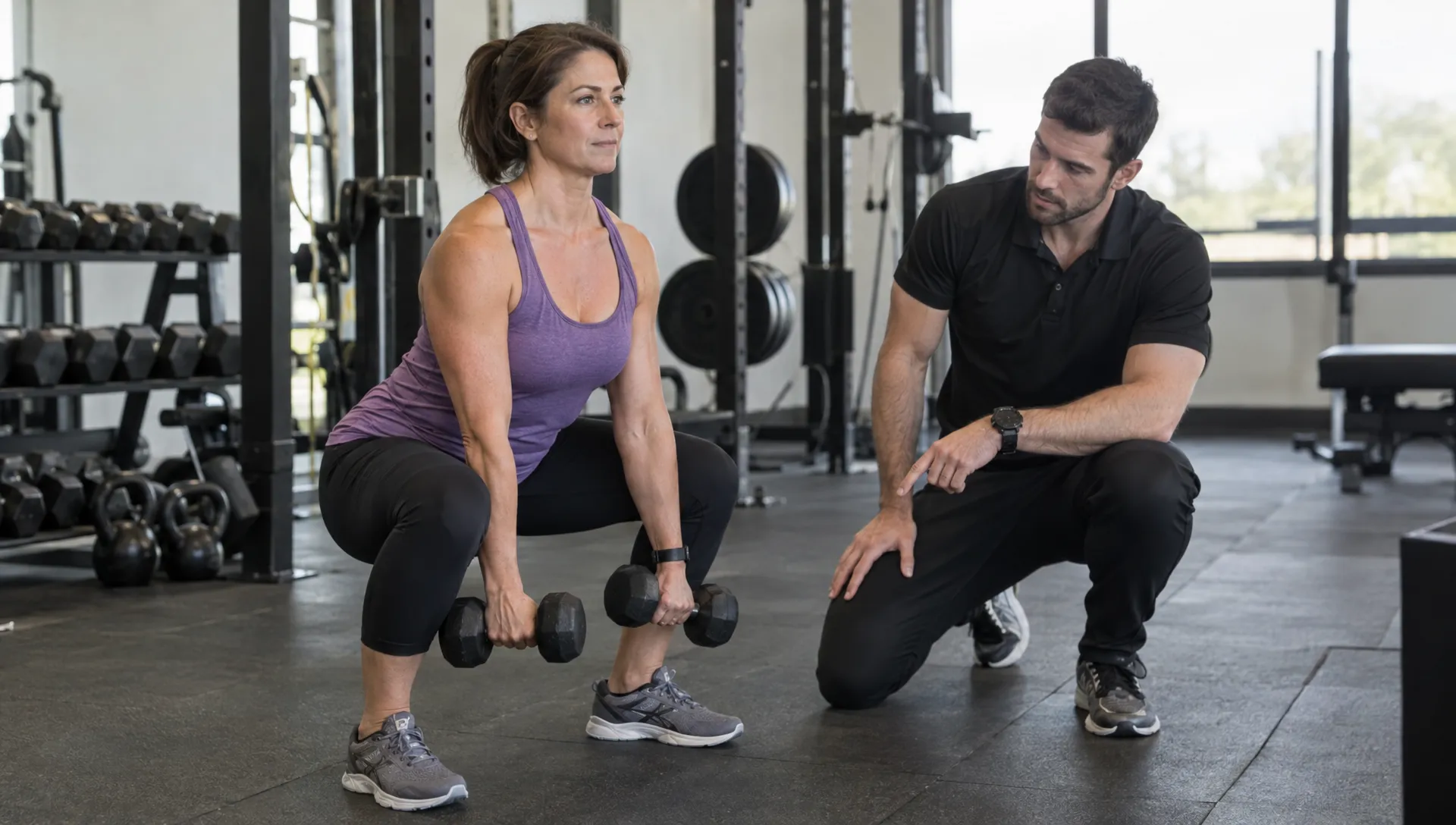
If a full body fat scan suggests that lean tissue is declining, review whether your routine includes progressive resistance training. Walking supports health, but it does not provide the same muscle-loading stimulus as appropriately challenging strength work.
General adult activity guidance includes muscle-strengthening exercise on at least two days per week. The right starting point depends on experience, injuries and health conditions. A qualified trainer or physical therapist can help adapt exercises when needed.
Track function alongside body composition. Maintaining strength while reducing fat may represent meaningful progress even if the scale moves slowly. If there is a substantial difference between limbs, consider previous injuries and daily habits rather than assuming the smaller side needs aggressive extra training.
Adjust nutrition without sacrificing lean tissue
If reducing fat is appropriate for you, avoid interpreting the report as a reason for severe calorie restriction. An overly restrictive diet can make it harder to maintain muscle, train consistently and meet nutrient needs.
Include protein-containing foods throughout the day and build meals around foods you can sustain: vegetables, fruit, legumes, whole grains and suitable protein sources. Protein needs vary with body size, activity and medical history. Kidney disease or other conditions may require individualized advice.
Bone-supporting nutrition also deserves attention, including adequate calcium and vitamin D. Supplements are not automatically necessary; dietary intake, risk factors and clinical advice should guide those decisions.
Sleep disruption and hot flashes can make consistent eating and exercise harder. Addressing those symptoms with your healthcare professional may support your plan more effectively than further tightening your diet.
Compare follow-up results under similar conditions
A full body fat scan is most useful for tracking when follow-up measurements are comparable. Use the same facility and scanner when possible, and follow consistent preparation instructions.
Hydration, recent exercise, positioning and differences between machines or software can affect results, particularly lean-tissue estimates. Avoid deliberately dehydrating yourself to obtain a lower weight or body-fat reading.
Ask the facility how it distinguishes a meaningful change from measurement variability. Small shifts should not automatically trigger a new diet or training program.
Choose a repeat interval that allows enough time for the result to influence your plan. Several months may be more useful than frequent scans, but there is no universal schedule for body composition monitoring. Diagnostic bone-density follow-up follows separate clinical considerations.
When a scan may be worth considering
A full body fat scan may be useful when your waistline changes despite stable weight, you want a baseline before starting resistance training or you are losing weight and want to monitor lean tissue.
It may add less value if you have no question the results would answer or if a number would encourage excessive restriction. You can improve strength, nutrition and cardiovascular health without having a scan first.
Before booking, ask whether the visit includes help interpreting the report. During menopause, knowing what a measurement does not mean can be just as important as understanding the measurement itself.
Frequently asked questions
Can DEXA tell whether belly fat is caused by menopause? No. It can describe fat distribution and estimate visceral fat, but it cannot establish the cause. Hormonal changes, aging, activity, sleep and other factors may contribute.
What body-fat percentage should I aim for after menopause? There is no single ideal percentage for every woman. Age, medical history, strength, fat distribution and personal goals affect interpretation. A lower percentage is not automatically a healthier outcome if achieving it means losing lean tissue or under-eating.
Do I still need an osteoporosis scan? Possibly. A whole-body composition examination does not replace diagnostic hip and spine DXA when screening or evaluation is indicated. Your clinician can determine whether separate testing is appropriate.
How often should I get a full body fat scan during menopause? Repeat testing should answer a specific question about your progress and allow enough time for meaningful change. Ask the facility and your healthcare professional about an interval suited to your goals rather than assuming frequent scanning is better.
Get a clearer baseline in San Francisco
DEXA SF provides body composition scans with measurements of fat, lean tissue, visceral fat and bone-related information, alongside expert interpretation and personalized fitness and nutrition guidance.
If you want to understand changes that the scale may be missing, schedule a DEXA scan with DEXA SF. Bring a focused question, such as whether you are preserving lean tissue during weight loss, so the results can support a practical next step.