
Can a Body Scan Measure Muscle Mass During Weight Loss?
Yes, a body scan can help you track muscle-related changes during weight loss, but body scan muscle mass results are usually measurements of lean tissue, not direct measurements of skeletal muscle. That distinction matters when you are trying to lose fat without sacrificing strength. A DEXA scan can show whether fat mass and lean mass are changing separately, giving you more useful information than scale weight alone. The clearest picture comes from comparable scans interpreted alongside your training performance, nutrition and health history.
What a Scan Can and Cannot Measure
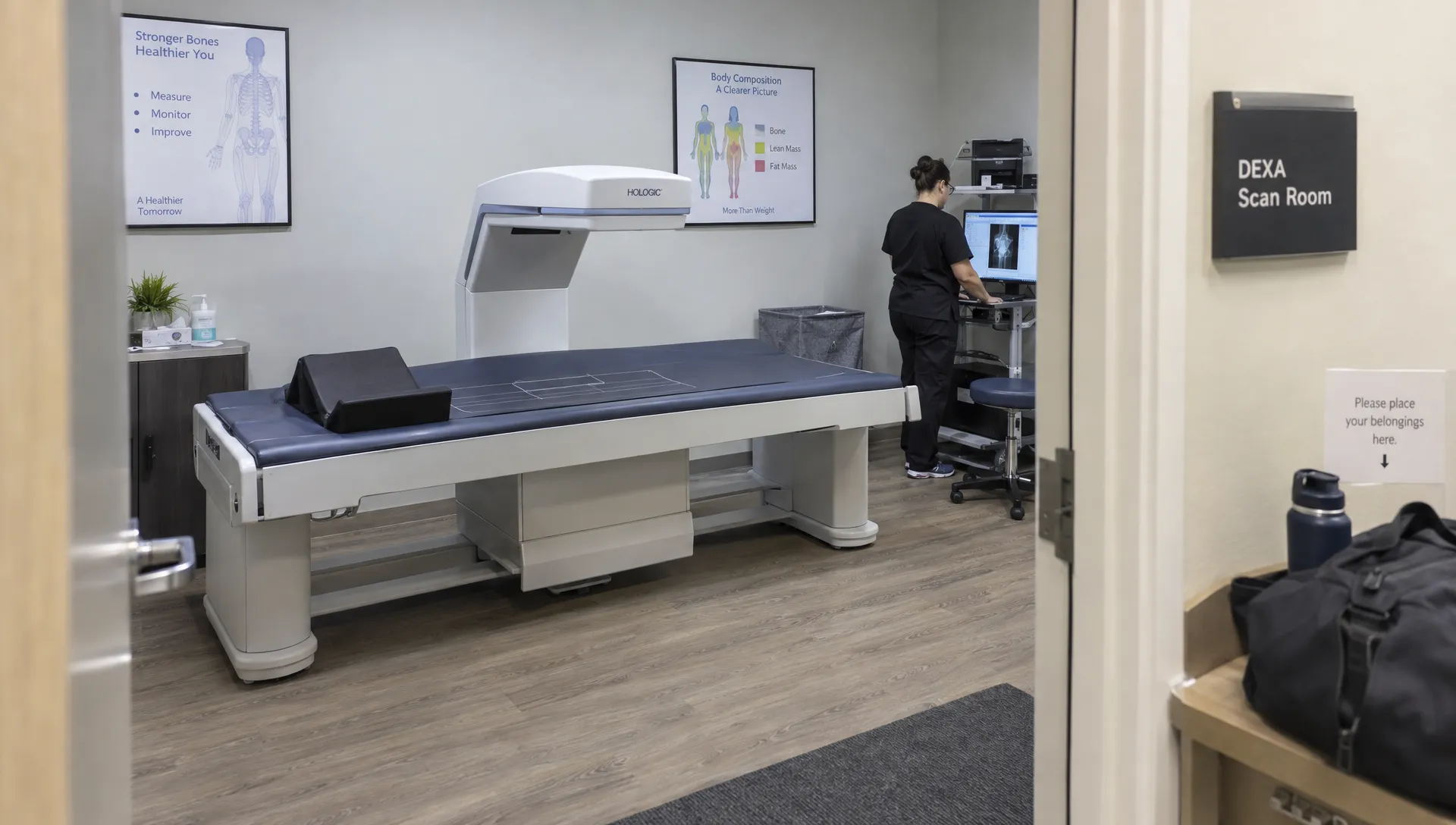
DEXA, also called DXA, uses low-dose X-rays to estimate three main components: fat mass, lean soft tissue and bone mineral content. It can also report how these components are distributed across body regions.
Lean soft tissue includes muscle, but it also includes water, organs and other nonfat soft tissues. Arm and leg lean mass is particularly useful for tracking muscle-related changes because those regions contain substantial skeletal muscle. Still, it remains a proxy rather than a direct inventory of muscle fibers.
A decline in DEXA lean mass does not automatically mean you lost the same amount of muscle. Conversely, a stable reading cannot prove that every muscle group stayed unchanged.
This is why a body composition scan can be more informative than a bathroom scale, without answering every question about muscle health on its own.
How to Interpret Body Scan Muscle Mass Results During Weight Loss
Start with absolute amounts, not just percentages. A lower body-fat percentage is encouraging when fat loss is the goal, but it does not establish whether lean tissue was preserved.
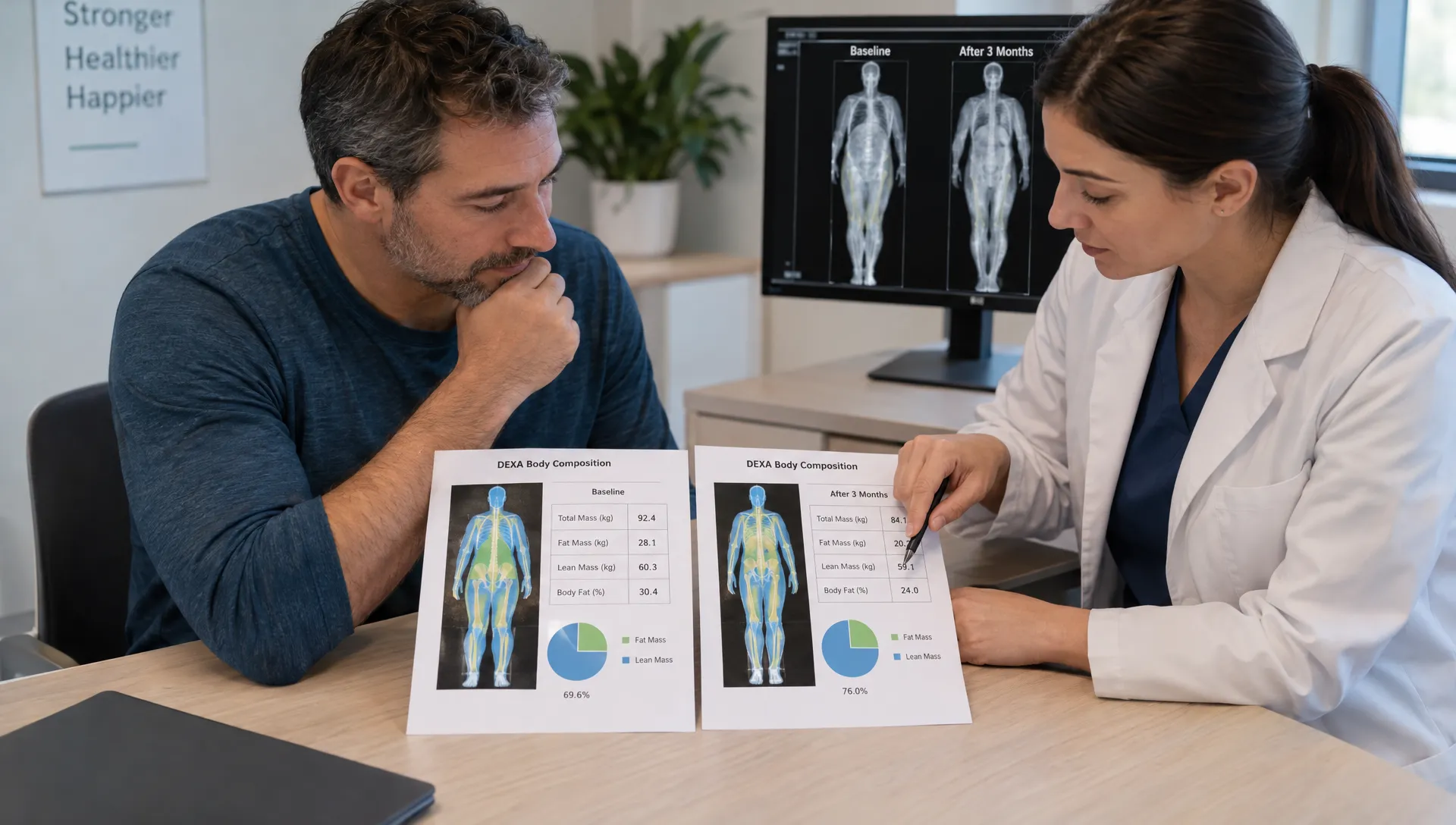
Consider this hypothetical example. These numbers illustrate interpretation, not an expected result or a promise of scan precision.
| Measurement | Before weight loss | Follow-up | Change |
|---|---|---|---|
| Total measured mass | 180 lb | 170 lb | 10 lb lower |
| Fat mass | 54 lb | 46 lb | 8 lb lower |
| Lean soft tissue | 120 lb | 118 lb | 2 lb lower |
| Bone mineral content | 6 lb | 6 lb | No change |
| Body-fat percentage | 30.0% | 27.1% | 2.9 percentage points lower |
Most of the measured weight reduction came from fat. However, the lean-tissue decrease deserves a closer look rather than an immediate conclusion that two pounds of muscle disappeared.
Was the follow-up performed after a hard workout? Had carbohydrate intake dropped sharply? Were both scans taken under similar conditions? Is the difference larger than the facility's expected measurement variability?
When reviewing body scan muscle mass results, the useful question is whether the pattern supports fat loss with reasonably preserved lean tissue, not whether one number moved slightly.
Also review regional results. A total-body value can conceal changes in the arms or legs, although regional measurements have their own variability. Falling leg lean mass combined with declining strength deserves more attention than an isolated small change with stable performance.
Why Lean Mass Can Drop Without Equivalent Muscle Loss
Water and carbohydrate changes
Muscle stores carbohydrate as glycogen, alongside water. Reducing carbohydrate intake or completing demanding exercise can change glycogen and fluid levels. Those shifts can influence a lean-mass estimate even when the amount of muscle tissue has not changed by the same amount.
This is especially relevant early in a weight-loss plan, when dietary changes may produce rapid scale movement. A scan obtained after several low-carbohydrate days may not be directly comparable with a baseline taken while eating substantially more carbohydrate.
Dehydration, recent meals and fluid retention can also complicate comparisons. Avoid treating a short-term fluctuation as proof of either muscle growth or muscle loss.
Measurement variability
Positioning, equipment, software and the scan protocol all affect repeatability. The International Society for Clinical Densitometry's official positions address body-composition measurement and precision assessment, underscoring why serial results need consistent methods.
Ask the facility about its precision error and, where available, its least significant change for the measurement you are tracking. This is a threshold used to distinguish a change from expected measurement variation under comparable conditions.
For body scan muscle mass tracking, a small difference should be interpreted against both scan variability and recent changes in hydration or diet. A trend across well-matched visits is generally more useful than reacting to a single reading.
Make Follow-Up Scans Comparable
The purpose of preparation is consistency, not producing the lowest possible body-fat reading. Follow the facility's instructions, and record anything that differs from your baseline visit.
Useful habits include:
- Use the same facility and machine when possible: Different devices or analysis methods can make direct comparisons harder.
- Schedule at a similar time of day: Keep meal timing reasonably consistent and follow the facility's preparation guidance.
- Arrive normally hydrated: Do not deliberately dehydrate or drink unusually large amounts of water before testing.
- Keep recent exercise and carbohydrate intake similar: Avoid comparing a rested baseline with a follow-up immediately after unusually demanding training or a major dietary change.
- Mention factors that may affect the reading: Report recent illness, swelling or other changes, and tell the provider if you are pregnant or could be pregnant before an X-ray-based scan.
Write down these conditions rather than relying on memory. A short note about your meals, training and hydration can explain an otherwise confusing result months later.
Consistency also applies to positioning and analysis. If you change facilities, bring your previous report and ask whether a direct comparison is appropriate. Sometimes establishing a new baseline is more defensible than calculating a precise change across incompatible scans.
Pair the Scan With Strength and Function
A scan describes body composition. It does not measure strength, endurance or your ability to perform everyday tasks. Those outcomes help determine whether a lean-mass change is practically important.
Track a few repeatable indicators, such as the load and repetitions you can manage on familiar exercises. For someone who does not lift weights, consistent measures of walking tolerance, stair climbing or getting up from a chair can provide useful context. Avoid judging performance from a single unusually tired day.
Stable strength alongside lower fat mass and broadly stable lean mass is reassuring, though it does not prove that no muscle was lost. Persistent declines in strength, poor recovery and a repeatable lean-mass reduction call for a review of the weight-loss plan.
Your body scan muscle mass trend becomes more actionable when it agrees with changes in performance and recovery, rather than standing alone as an isolated number.
People who are older, recovering from illness or already experiencing weakness may need closer clinical oversight. New or worsening weakness should not be managed solely by scheduling another scan.
What to Review if Lean Tissue Is Declining
Resistance training
Regular resistance training gives your body a reason to maintain muscle during a calorie deficit. The CDC's adult physical activity guidance recommends muscle-strengthening activity on at least two days per week, covering all major muscle groups.
That is a general health recommendation, not a personalized muscle-preservation program. Your exercise selection and workload should match your experience, recovery and any medical limitations. Adding more exercise is not always helpful if you are already under-recovered.
Protein and overall intake
Adequate protein supports muscle maintenance, but an appropriate target depends on body size, activity and health. The International Society of Sports Nutrition position stand on protein identifies approximately 1.4 to 2.0 grams per kilogram of body weight per day as sufficient for most healthy exercising individuals.
That range is not a universal prescription. People with kidney disease or other medical conditions should seek individualized advice, and using current body weight may not be appropriate for every person with obesity.
A scan can help frame the discussion, but it cannot tell you exactly how much protein or energy to eat. DEXA SF's guide to using body composition data in a nutrition plan explains how measurements can support that broader assessment.
The size of the calorie deficit
When body scan muscle mass results suggest a persistent lean-tissue decline, review whether your calorie deficit is too demanding for your training and recovery. Consider sleep, appetite and the rate of weight loss as well.
A clinician or registered dietitian can help adjust the plan, especially if weight loss is rapid, intake is difficult to maintain or you are using a weight-loss medication. Do not change prescribed medication based on a scan alone.
When Should You Scan Again?
There is no single interval that fits everyone. Repeat testing should leave enough time for a meaningful change and answer a question that could affect your plan.
For a structured weight-loss program, roughly 8 to 12 weeks can be a practical discussion point with the provider. It is not a universal medical rule. Your starting point, expected rate of change and the facility's measurement precision may justify a different interval.
Weekly scans are generally poor tools for distinguishing muscle changes from fluid fluctuations. Between visits, monitor body-weight trends, training performance and how you feel. At follow-up, compare absolute fat and lean measurements, preparation conditions and functional changes together.
Frequently Asked Questions
Can DEXA tell exactly how much skeletal muscle I have? Standard DEXA body-composition testing measures lean soft tissue rather than skeletal muscle directly. Arm and leg lean mass can serve as a useful proxy. MRI or CT can assess muscle size more directly, but those tests are not usually needed for routine weight-loss tracking.
Does every drop in lean mass mean I should stop losing weight? No. First check whether the change exceeds expected measurement variability and whether scan conditions were comparable. A persistent decline accompanied by worsening strength or recovery deserves a review with a qualified professional.
Are body scan muscle mass results useful during medication-assisted weight loss? Yes, they can help monitor lean-tissue trends alongside fat loss. They should be interpreted with dietary intake, strength and medical history. Your prescribing clinician can help address appetite suppression, rapid weight loss or difficulty meeting nutritional needs.
Can I lose fat while maintaining the same lean-mass reading? Yes. That pattern is compatible with lean-tissue preservation, particularly when strength remains stable. It is encouraging evidence, not proof that every muscle stayed exactly the same.
Get a Clearer View of Your Weight Loss
DEXA SF provides body-composition scans in San Francisco, with expert interpretation and personalized fitness and nutrition guidance. If you want to understand whether your weight-loss plan is reducing fat while preserving lean tissue, schedule a scan with DEXA SF and discuss how to make future comparisons meaningful.