

What a Body Mass Scan Can Reveal That BMI Misses
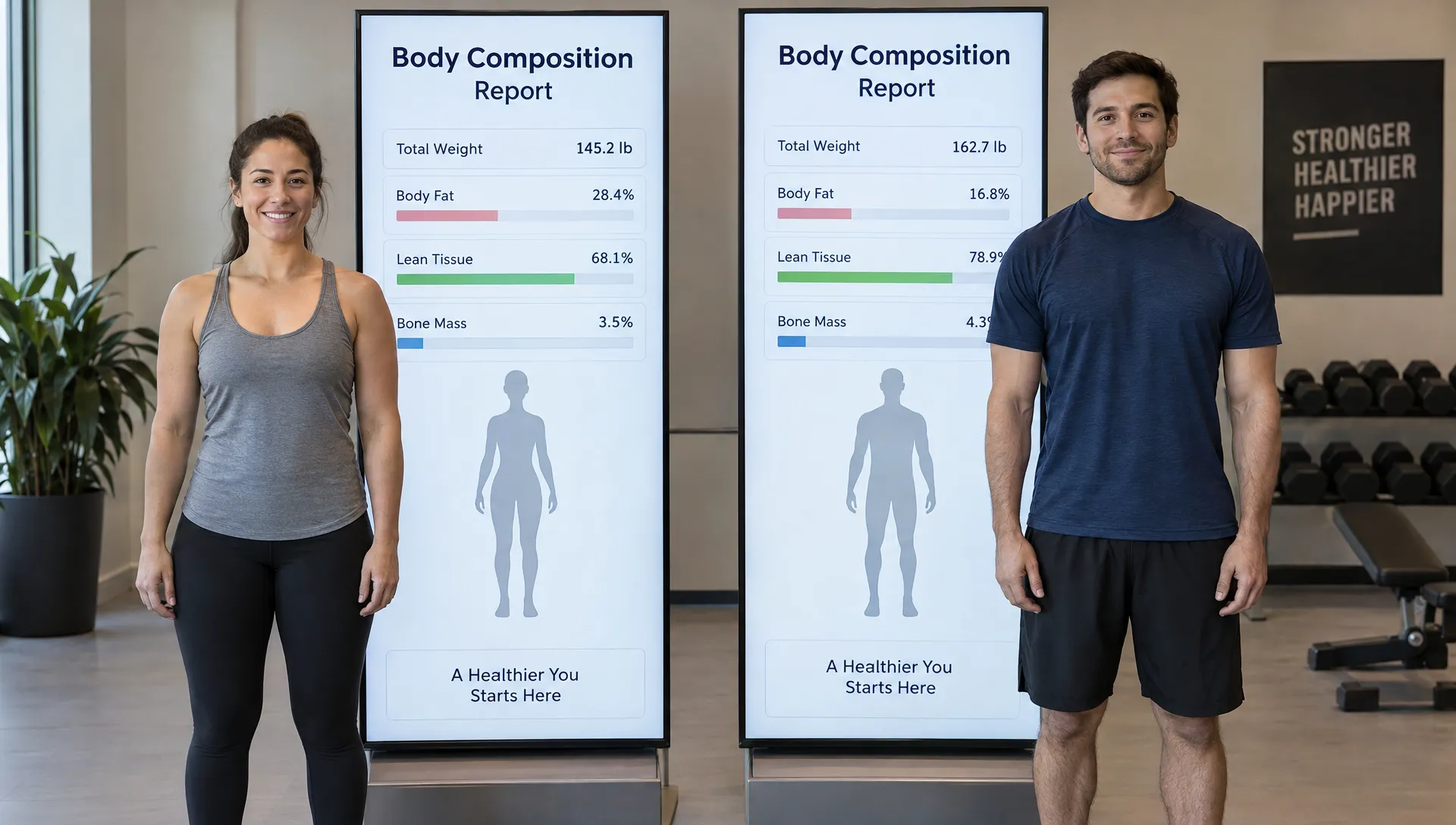
Two people can have the same height, weight and BMI yet carry very different amounts of fat and lean tissue. A body mass scan can help explain that difference by measuring body composition rather than calculating a ratio from the scale.
That distinction matters when you are evaluating a higher BMI, losing weight or wondering whether your training is changing your body. DEXA provides additional context, but it does not replace blood pressure checks, lab work or a clinician’s assessment. The useful question is not which measurement wins. It is what each measurement can actually tell you.
What BMI measures, and what it leaves out
Body mass index is weight in kilograms divided by height in meters squared. It does not directly measure body fat, muscle or bone.
The CDC’s adult BMI categories classify a BMI of 18.5 to below 25 as healthy weight, 25 to below 30 as overweight and 30 or above as obesity. These are screening categories for adults age 20 and older, not a complete assessment of an individual’s health.
BMI remains useful because it is inexpensive, accessible and associated with health risks across populations. Its limitation is that the same result can describe different bodies.
| Question | BMI | DEXA body composition scan |
|---|---|---|
| How does weight relate to height? | Calculates this directly | Not its primary purpose |
| How much weight is fat? | Cannot distinguish it | Estimates fat mass and body fat percentage |
| How much is lean tissue? | Cannot distinguish it | Measures lean soft tissue |
| Where is tissue distributed? | Does not show location | Provides regional measurements |
| What about bone? | Does not assess it | Provides bone mineral measurements |
What can a body mass scan reveal that BMI misses?
Whether a higher BMI reflects more fat, more lean tissue or both
Consider two hypothetical adults who are each 5 feet 8 inches tall and weigh 180 pounds. Both have a BMI of approximately 27.4, placing them in the same screening category.
If one has 20% body fat and the other has 30%, their fat mass would be 36 pounds and 54 pounds respectively. That is an 18-pound difference that BMI cannot show. These numbers illustrate the calculation, not recommended body fat targets.
The remaining weight includes lean soft tissue and bone mineral. It should not all be labeled muscle.
A body mass scan helps separate these components, making it easier to interpret why someone’s BMI is elevated. A strength-trained person may have substantial lean mass, while another person at the same BMI may carry more fat. Neither result, by itself, proves that someone is healthy or unhealthy.
Body fat percentage also needs context. Age, sex, medical history and the measurement method affect interpretation, so a single internet cutoff is not a substitute for an individualized review.
Where fat is concentrated
BMI cannot distinguish fat concentrated around the abdomen from fat distributed elsewhere. DEXA reports can provide regional fat measurements, and compatible systems can estimate visceral adipose tissue within the abdomen.
Visceral fat is different from the subcutaneous fat beneath the skin. Higher amounts are associated with cardiometabolic risk, but a scan does not diagnose diabetes, cardiovascular disease or insulin resistance.
This information can be relevant even when BMI falls within the healthy-weight category. A favorable weight-to-height ratio does not guarantee a favorable fat distribution.
For someone concerned about abdominal fat, a body mass scan can add context that BMI lacks. The result is most useful alongside waist circumference, blood pressure, cholesterol and glucose measurements rather than as an isolated verdict.
DEXA’s visceral fat result is an estimate derived from the scan, not a direct image of every internal fat deposit. Our guide to what visceral fat measurements can add to your plan explains how to use that information without treating one number as a diagnosis.
Whether weight changes include lean tissue changes
When weight decreases, BMI decreases regardless of what was lost. It cannot tell whether the change came mainly from fat, lean tissue or shifts in body water.
DEXA separates fat mass from lean soft tissue, allowing you to examine those changes more closely. That is useful during weight loss, when preserving muscle-related tissue and physical function may be important goals.
There is a terminology trap here: lean mass is not identical to skeletal muscle mass. DEXA lean soft tissue includes water, organs and other nonfat soft tissues. Hydration and glycogen changes can therefore influence the result without representing an equivalent change in muscle.
A body mass scan can also compare regional lean tissue in the arms and legs, including left-to-right differences. BMI cannot reveal those patterns. However, an asymmetry does not establish an injury or tell you which exercise will correct it. Strength testing, movement assessment and symptoms provide additional information.
If your main concern is maintaining muscle while losing weight, our explanation of tracking lean tissue during weight loss covers how to interpret changes more carefully.
Bone information that body weight cannot provide
A heavier body does not automatically mean stronger bones, and a lower BMI does not diagnose low bone density. BMI has no way to assess bone mineral directly.
A whole-body DEXA composition scan provides bone mineral content and may report whole-body bone mineral density. These measurements add another dimension to understanding body composition, particularly when changes in weight or nutrition raise questions about bone health.
However, a body composition scan is not automatically a diagnostic osteoporosis examination. Clinical assessment typically relies on appropriate skeletal sites, such as the hip and lumbar spine, together with medical history and other risk factors. The International Society for Clinical Densitometry’s adult positions describe the measurements used for clinical bone density interpretation.
Ask which bone measurements your appointment includes. If osteoporosis screening is your goal, confirm with your clinician that you are receiving the right examination rather than assuming any DEXA appointment serves the same purpose.
How to interpret BMI and scan results together
The strongest interpretation combines measurements rather than replacing one oversimplified number with another.
If your BMI is elevated but your scan shows substantial lean tissue, that helps explain your weight. It does not mean blood pressure, cholesterol or sleep-related symptoms can be ignored. If your BMI is within the healthy-weight category but your abdominal fat estimate is elevated, discuss that finding alongside your other risk factors.
Similarly, a lower BMI after weight loss does not establish that the weight loss was entirely beneficial. If repeated measurements suggest substantial lean tissue loss and your strength is declining, the plan may need review.
A body mass scan is most helpful when it answers a specific question: “What contributes to my weight?” or “What changed during this phase of training?” It is less helpful when the goal is simply to obtain a supposedly perfect score.
Before acting on the report, clarify whether a number is directly measured, calculated or estimated. Body fat percentage is calculated from measured components. Visceral fat is estimated by compatible software. Any calorie-needs figure derived from body composition is also an estimate, not a direct measurement of resting energy expenditure.
Those distinctions help keep the report useful without assigning it more certainty than it deserves.
When the additional information is worth obtaining
Not everyone needs a scan to begin improving their health. Regular activity, resistance training where appropriate, adequate nutrition and routine preventive care do not require detailed body composition data.
The extra information becomes more valuable when BMI leaves a practical question unresolved. That might include a muscular person whose BMI seems inconsistent with their build, someone monitoring a weight-loss program or an older adult concerned about declining strength despite stable weight.
Before booking a body mass scan, identify what you would do differently based on the result. If the answer is nothing, another measurement may add more worry than value. If the result could help guide a conversation about nutrition, training or further clinical assessment, the appointment has a clearer purpose.
For follow-up scans, use the same facility and equipment when possible and follow consistent preparation instructions. Hydration, recent exercise, food intake and positioning can affect comparisons. Ask the provider what size of change is meaningful given the system’s measurement precision.
What a scan still cannot tell you
More detailed measurements do not make DEXA a complete health examination. It cannot establish cardiovascular fitness, muscle strength, dietary quality or the cause of unexplained weight changes. It also cannot diagnose a metabolic disorder from body composition alone.
Small changes between scans may reflect measurement variability or temporary shifts in body water rather than true tissue change. The report needs interpretation, especially when a difference is too small to justify changing your plan.
DEXA uses a low dose of ionizing radiation. Tell the provider if you are pregnant or might be pregnant, and follow their screening process. Equipment also has size and weight limits, so confirm suitability in advance if relevant.
Unexplained weight loss, persistent weakness, pain or other concerning symptoms warrant medical evaluation rather than relying on a body composition appointment for answers.
Frequently asked questions
Can someone have a healthy BMI and still carry excess fat? Yes. BMI does not measure fat percentage or distribution. Some people within the healthy-weight category may have relatively high body fat or unfavorable abdominal fat distribution, which should be interpreted alongside other health measures.
Is a body mass scan the same as a DEXA scan? Not necessarily. The term is broad and may describe different technologies. In this article, it refers to a DEXA body composition scan. Ask which method a provider uses because measurements from different technologies are not interchangeable.
Does DEXA directly measure muscle? DEXA measures lean soft tissue, not skeletal muscle alone. Regional lean measurements can help monitor muscle-related changes, but hydration, other tissues and measurement variability also influence the result.
Should I stop paying attention to BMI after getting scanned? No. BMI remains a useful screening measure. DEXA adds tissue-specific information, while medical history, physical function, waist circumference and clinical testing help complete the assessment.
Get context for the number on your report
DEXA SF provides body composition scans in San Francisco with measurements of fat, lean tissue, bone mineral and regional differences, plus expert interpretation and personalized fitness and nutrition guidance.
If BMI leaves you with unanswered questions, schedule a DEXA scan with DEXA SF and bring a specific goal to the appointment. Understanding what contributes to your weight is more useful than judging your health from one category alone.