

How to Turn Nutrition Body Scan Data Into Meal Changes
A nutrition body scan can help you decide what to change at breakfast, lunch and dinner, but it does not produce a perfect menu. When the assessment uses DEXA, it measures body composition, including fat mass, lean tissue and bone mineral content. Those findings can help you set priorities, not diagnose nutrient deficiencies or identify foods you should avoid.
The useful next step is to turn one priority into a meal change you can repeat. Instead of overhauling your diet, choose a specific adjustment, monitor how you feel and evaluate whether your longer-term results support keeping it.
Choose one priority before changing your meals
Start with your goal, not whichever number on the report looks most concerning. Someone pursuing fat loss needs a different approach from someone trying to gain strength without losing weight.
Read fat mass and lean mass together. Body fat percentage is a ratio, so it can change because fat mass changes, lean mass changes or both. Also, DEXA lean mass is not a direct measurement of skeletal muscle. It includes water and other nonfat soft tissues.
If your goal is fat loss with lean-mass preservation, your first meal changes should support adequate protein and a manageable energy deficit. If strength and muscle gain are the priority, eating less may work against you.
Choose one primary outcome before deciding which meals to adjust.
Translate nutrition body scan results into a meal experiment
A report becomes useful when you connect it to something observable in your current eating pattern. The table below offers starting points, not prescriptions based on a single measurement.
| Finding or goal | Eating pattern to review | Practical first change |
|---|---|---|
| Reduce fat mass while preserving lean tissue | Large portions, liquid calories or frequent extras | Keep protein and vegetables, then modestly reduce one energy-dense extra |
| Support lean tissue and strength | Meals with little protein or inadequate overall food intake | Add a meaningful protein source to the meal that currently has the least |
| Address an elevated visceral-fat estimate | Overall energy intake, fiber-rich foods and alcohol intake | Replace a routine low-fiber snack with fruit, beans or a whole-grain option |
| Support bone health | Calcium-rich foods and overall dietary adequacy | Add an appropriate calcium-rich food and discuss concerning findings with a clinician |
| Understand left-right differences | Training history, injury or rehabilitation needs | Maintain adequate nutrition and seek training or clinical guidance rather than changing food for one side |
A nutrition body scan helps identify a priority, but your food habits determine the most useful experiment. If breakfast already supplies enough protein, adding more there may be less helpful than improving a protein-light lunch.
Put protein where your meals currently lack it
Protein is a practical place to start when your goal involves preserving or building lean tissue. It still needs to be paired with enough total food and an appropriate training stimulus.
The International Society of Sports Nutrition position stand on protein gives a range of 1.4 to 2.0 grams per kilogram of body weight daily for most exercising adults. For a 70-kilogram adult, that is approximately 100 to 140 grams per day. This is a general exercise-nutrition guideline, not a requirement calculated by DEXA.
Upgrade a protein-light breakfast
If breakfast is usually coffee and toast, consider keeping the toast and adding eggs, Greek yogurt or a suitable soy-based option. Oatmeal can become more substantial with milk or fortified soy milk plus yogurt on the side.
Check labels rather than assuming all alternatives are equivalent. Some plant-based yogurts and beverages contain little protein, even when they provide calcium.
You do not need identical protein amounts at every meal. A useful first step is simply avoiding a pattern in which nearly all your protein arrives at dinner.
Make lunch and dinner easier to repeat
Build meals around a recognizable protein source: fish, poultry, eggs, tofu, tempeh, beans or lentils. Legume-based meals may need a larger serving or another protein-containing food to meet your needs.
Your nutrition body scan does not tell you to buy protein powder. Convenient options such as canned fish, frozen edamame or ready-to-eat lentils may solve the same problem.
If you have kidney disease or another condition affecting protein needs, ask your clinician or registered dietitian for an individualized target before using a sports-nutrition range.
Adjust portions without cutting the foods that support your goal
For fat loss, the objective is a sustainable energy deficit, not the smallest possible meal. Start with a part of your routine that contributes calories without helping much with fullness or training.
For example, keep the chicken, rice and vegetables in your lunch bowl, but request sauce on the side and use a smaller amount. At another meal, replace a routine sweetened drink with water while leaving the food unchanged. These are alternatives, not changes you must make simultaneously.
If your goal is muscle gain and you consistently struggle to eat enough, the opposite adjustment may help: add a snack, increase a starch portion or include another source of dietary fat.
Any calorie estimate accompanying a nutrition body scan should be treated as a starting point, not an exact intake prescription. DEXA does not directly measure resting metabolic rate, and an estimate of resting needs does not include all daily activity. Understanding metabolic measurements alongside DEXA helps keep those numbers in context.
Watch for persistent hunger, worsening recovery, fatigue or declining training performance. Those signs can indicate that your adjustment is too aggressive, even if scale weight is falling.
Use fiber-rich substitutions for a visceral-fat goal
An elevated visceral-fat estimate is not a reason to follow a detox or eliminate an entire food group. No food selectively removes fat from around your organs.
Instead, improve the overall eating pattern with substitutions you can maintain. Replace some refined-grain choices with whole grains, add beans to soups or salads and choose whole fruit more often than juice. Increase fiber gradually if your current intake is low, and drink enough fluids.
These changes support dietary quality and may make an appropriate energy intake easier to sustain. If the finding is concerning, discuss it with a clinician alongside blood pressure, blood lipids and glucose rather than treating the scan as a complete health assessment.
Support bone health with food, not supplement guesswork
A bone-related finding on a nutrition body scan should prompt a review of dietary adequacy and, when appropriate, clinical assessment. It should not automatically trigger a high-dose supplement purchase. A whole-body composition scan is not interchangeable with a diagnostic hip-and-spine bone density examination.
The NIH Office of Dietary Supplements calcium guidance lists 1,000 milligrams daily for most adults ages 19 to 50. Recommended amounts vary with age and sex.
Practical additions include yogurt, milk, calcium-fortified soy milk or calcium-set tofu. Check labels because fortification and calcium content vary. Vitamin D also matters, but DEXA cannot diagnose a vitamin D deficiency. Discuss testing or supplementation with a clinician when indicated.
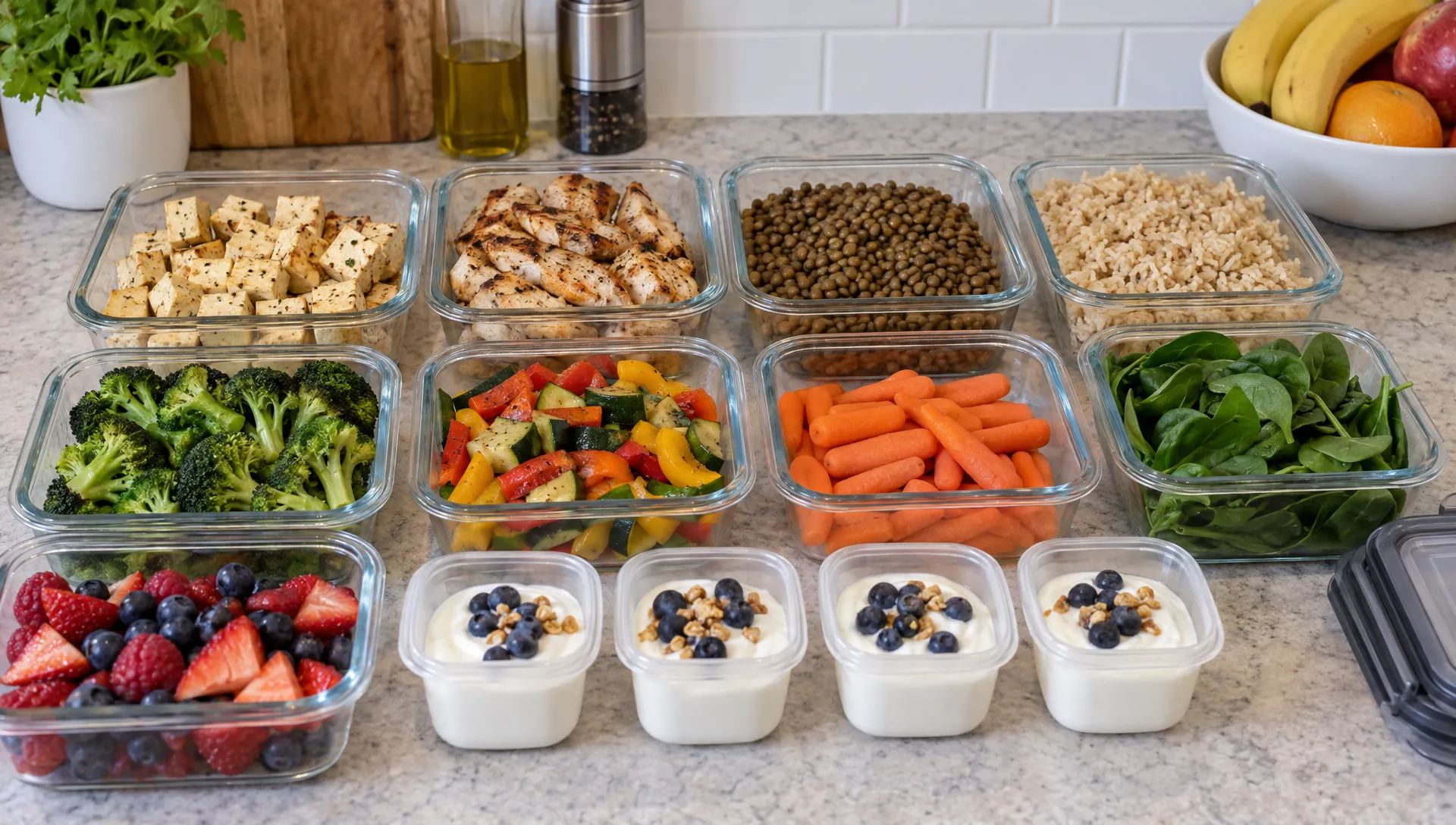
Turn the findings into one day of realistic eating
Consider an illustrative case: an active adult wants to reduce fat while preserving lean tissue. Their usual breakfast has little protein, lunch includes a large amount of dressing and dinner is already balanced.
A reasonable experiment is to add a protein source at breakfast and moderate the dressing at lunch. There is no need to shrink every meal.
| Meal | Current pattern | Trial change |
|---|---|---|
| Breakfast | Toast, jam and coffee | Keep the toast and add Greek yogurt or an appropriate soy-based option |
| Lunch | Grain bowl with vegetables, chicken and generous dressing | Keep the main ingredients and use a measured amount of dressing |
| Afternoon | Snack chosen when very hungry | Plan fruit with yogurt or edamame if a snack helps manage hunger |
| Dinner | Fish or tofu, potatoes and vegetables | Keep the meal unchanged initially |
The nutrition body scan informs the goal; this person's existing habits determine the changes. Someone already eating adequate protein but underfueling workouts would need a different experiment, potentially including more food rather than less.
Check the meal change before scheduling another scan
Use the first couple of weeks to assess whether the new routine is workable. That period is useful for evaluating adherence, appetite and energy, not for proving a meaningful DEXA change.
Keep a short record of what you changed and how consistently you followed it. Add observations about hunger, digestion, recovery and training performance. If weight tracking suits your goals and does not create distress, look at trends rather than individual readings.
Change one or two things at a time. If you simultaneously cut portions, add protein, stop drinking alcohol and increase training, it becomes harder to identify what helped or what made the plan difficult.
Compare follow-up results under similar conditions
Discuss an appropriate retesting interval with your provider. Meaningful body composition changes generally need more time than day-to-day weight fluctuations.
For a follow-up nutrition body scan, follow the provider's preparation instructions and use comparable conditions, ideally including the same device. Hydration, recent food intake and exercise can affect comparisons, especially lean-tissue estimates.
Judge success using both the report and your daily experience. Lower fat mass with stable performance and manageable hunger may support continuing the plan. A small change in lean mass does not automatically prove muscle loss, and one scan should not override a broader pattern of symptoms or progress.
Frequently Asked Questions
Can a DEXA scan tell me exactly what to eat? No. It measures body composition, not your ideal foods, food intolerances or micronutrient status. Meal choices also depend on your goals, medical history, activity, preferences and current intake.
Should I cut carbohydrates if my body fat is higher than I want? Not automatically. Carbohydrates can support training and provide fiber-rich foods such as beans, fruit and whole grains. Review overall energy intake and portions before eliminating a food group.
How soon should I repeat a nutrition body scan after changing meals? Ask your provider for an interval suited to your goal and the expected size of the change. Evaluate your eating routine first, then allow enough time for a follow-up scan to provide useful information rather than reacting to short-term fluctuations.
Get help choosing your first meal change
DEXA SF provides body composition scans in San Francisco, expert interpretation and personalized fitness and nutrition guidance. If you want help connecting your results to a practical next step, schedule a scan with DEXA SF and bring a few examples of your usual meals.
The most useful starting point is a clear priority and one repeatable change, not a completely new diet.