
How to Choose DEXA Scan Testing After Bariatric Surgery
Choosing dexa scan testing after bariatric surgery starts with a practical distinction: are you checking bone health, tracking changes in fat and lean tissue or trying to do both? Those goals can require different scan protocols and different kinds of interpretation. A whole-body composition report is not automatically a substitute for a diagnostic bone density exam.
The right appointment should answer a question your bariatric care team can act on. Before booking, clarify the purpose, timing and follow-up plan, then confirm that the provider can deliver the appropriate examination.
Start with the postoperative decision, not the scan package
After bariatric surgery, scale weight cannot tell you how much of your weight change comes from fat, lean tissue or fluid. Meanwhile, changes in nutrient intake, absorption and bone turnover can affect skeletal health even when weight loss is progressing as expected.
Gastric bypass and procedures with greater malabsorption deserve particular attention, but sleeve gastomy patients also need ongoing nutritional and bone health follow-up. Your procedure, age, menopausal status, fracture history and laboratory results all help determine what testing makes sense.
Ask your bariatric clinician to identify the immediate decision: investigating skeletal risk, assessing a concerning change in strength or establishing a body composition reference point. A scan is useful when its findings can guide care, not simply because it produces more numbers.
Match dexa scan testing to the right examination
DEXA, also called DXA, uses low-dose X-rays to assess body tissues. However, the body regions scanned and the report produced matter. Two appointments advertised as a “DEXA scan” may answer different questions.
| Your main question | Examination to ask about | What to confirm |
|---|---|---|
| Is my bone density low? | Diagnostic bone mineral density assessment, usually of the lumbar spine and hip | Appropriate sites, clinical interpretation and a report for your treating clinician |
| How are fat and lean tissue changing? | Whole-body body composition scan | Total and regional fat mass, lean soft tissue and a repeatable comparison protocol |
| Do I need both types of information? | Body composition assessment plus the clinically indicated bone density examination | Whether separate acquisitions, orders or appointments are required |
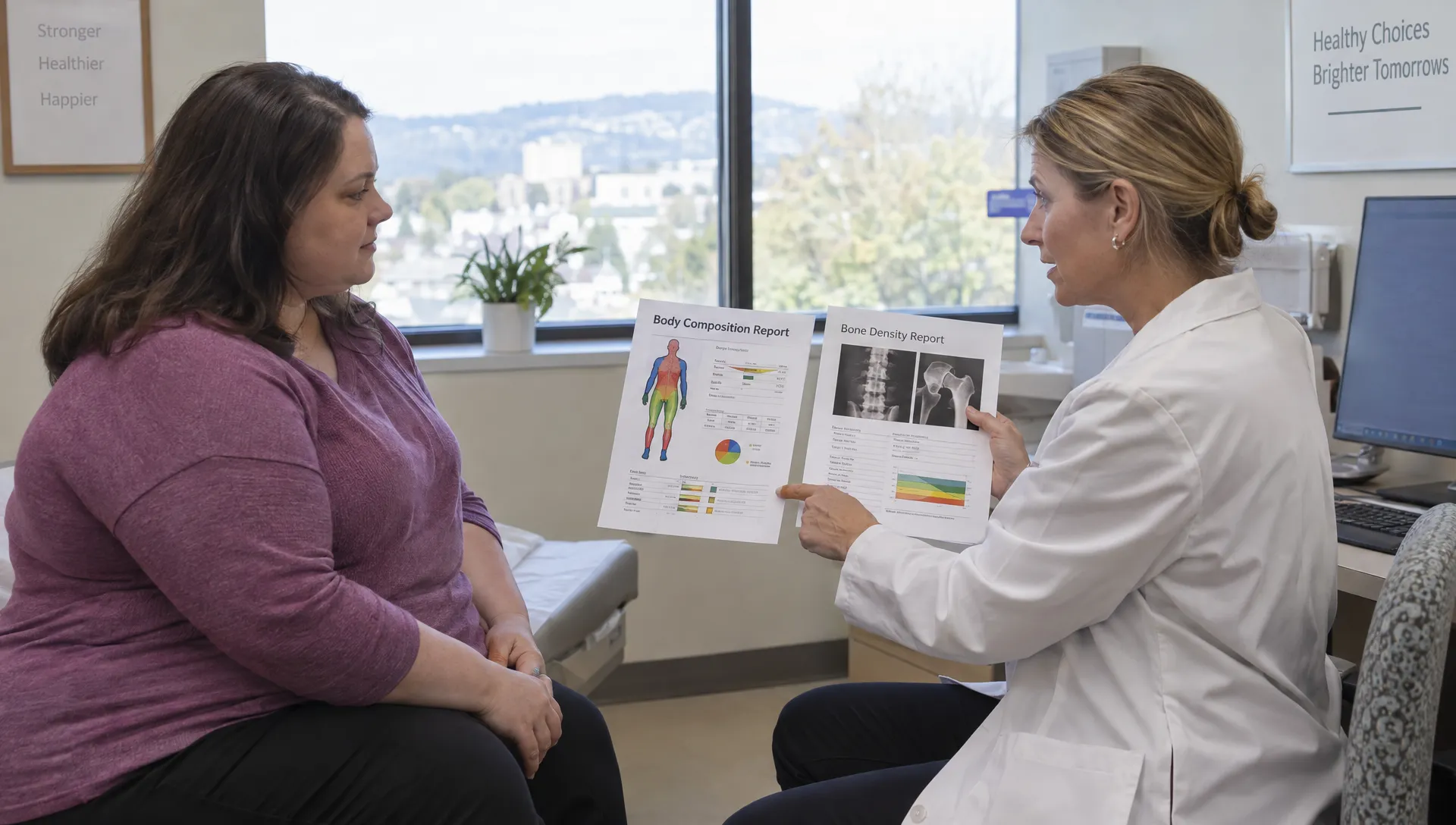
A whole-body report may include bone mineral measurements, but those values do not replace the standard spine and hip measurements used for many osteoporosis assessments. Likewise, a routine hip and spine exam does not necessarily provide a whole-body fat and lean tissue analysis.
Ask the provider to describe the actual examination rather than relying on a package name such as “complete body scan.” If your clinician ordered a diagnostic test, confirm that the appointment fulfills that order.
Set the timing with your bariatric clinician
There is no universal postoperative schedule for dexa scan testing that fits every patient. Someone with a previous fragility fracture, known low bone density or significant nutritional concerns may need a different plan from a younger person without those risks.
The Endotext guidance on postoperative bariatric care recommends bone density screening according to age-appropriate guidance and consideration of testing after two years in people at higher risk. That is not a rule to wait two years when symptoms or clinical risk justify earlier evaluation, nor a requirement that everyone receive annual scans.
For body composition tracking, ask when a baseline would be interpretable and when a repeat result could change your nutrition or exercise plan. Early postoperative fluid shifts can affect lean tissue estimates. A preoperative scan can provide context, but not having one does not make later testing useless.
Avoid choosing a monthly scan subscription before establishing a clinical reason for that frequency. Your care team should also continue laboratory monitoring, which may include calcium, 25-hydroxyvitamin D and parathyroid hormone, according to your procedure and individual needs. A scan cannot replace those tests.
Choose a provider who can make comparisons meaningful
For postoperative follow-up, dexa scan testing needs more than a readable chart. The provider should understand what can distort a comparison and be willing to coordinate with your treating team.
Confirm equipment fit and practical accessibility
Ask about the scanner’s table weight limit and scan width using your current measurements, not your goal weight. Both can affect whether a complete, interpretable examination is possible. If your body does not fit entirely within the scan field, ask how the provider handles that situation and documents any limitations.
Also mention difficulty lying flat, recent surgery, pain or mobility restrictions. A quick scan still requires safe positioning and the ability to remain sufficiently still. Confirm whether you need an order or medical clearance for the particular examination.
Ask how repeat scans are standardized
Whenever practical, use the same facility, scanner and acquisition protocol for follow-up. Ask how staff standardize positioning, clothing, meal timing and hydration conditions for body composition comparisons.
For bone density monitoring, ask whether the facility reports its least significant change, the threshold used to distinguish a meaningful difference from measurement variability. The International Society for Clinical Densitometry’s adult positions explain the importance of facility-specific precision assessment. A small numerical change is not automatically a biological change, especially after switching equipment.
Understand what the report can and cannot establish
When reviewing dexa scan testing, focus on what each measurement actually represents. Lean soft tissue is not a direct measurement of skeletal muscle. It includes water and other nonfat, nonbone tissues, so a decline does not prove that the entire change is muscle loss.
Regional lean tissue measurements can still be useful, particularly when interpreted alongside strength, physical function, dietary intake and symptoms. A falling lean tissue value accompanied by worsening strength deserves a different discussion from a small isolated fluctuation during changing hydration.
For bone health, make sure the report uses the appropriate reference scores. Clinicians generally use T-scores for postmenopausal women and men age 50 or older, while Z-scores are generally preferred in younger adults. Interpretation also depends on fracture history and other clinical information, not just a color-coded category.
Large changes in body size can complicate longitudinal interpretation. Positioning, soft tissue distribution and artifacts can influence results, which is another reason to retain the full report rather than only a screenshot of the summary page.
Ask who will explain unexpected findings and whether the provider can send the report to your bariatric clinician, primary care clinician or bone health specialist. General fitness guidance and medical evaluation serve different purposes; one should not be presented as a replacement for the other.
Connect results to nutrition and strength follow-up
The most useful outcome of dexa scan testing is a specific next step agreed upon with your care team. That might mean reviewing protein tolerance, investigating deficiencies, adapting resistance exercise or deciding whether a specialist bone health assessment is warranted.
If lean tissue is decreasing, bring information about your intake, exercise, strength and symptoms to the review. Your bariatric dietitian can assess protein intake in the context of your procedure, food tolerance and medical history. A scan alone cannot determine your ideal protein prescription or establish that a supplement is necessary.
Similarly, low bone density should prompt a clinical assessment rather than an automatic increase in over-the-counter supplements. Nutritional status, absorption, kidney function and other factors can influence management. Do not stop prescribed calcium or vitamin D because a scan appears normal.
For the broader connection between measurements and dietary decisions, see how to use a body scan to build a better nutrition plan. After bariatric surgery, apply that information with your specialist team rather than substituting a general weight-loss plan for postoperative nutrition care.
Verify preparation, pricing and report access before booking
Before paying for dexa scan testing, request preparation instructions for your exact examination. Instructions can differ between a diagnostic bone density appointment and a whole-body composition session.
Use this short booking checklist:
- Preparation: Ask about food, hydration, exercise and calcium supplements, and disclose recent contrast imaging or nuclear medicine procedures.
- Safety and positioning: Tell the provider if you are pregnant or might be pregnant, and mention pain or difficulty lying flat.
- Total cost: Confirm which examinations, interpretation and follow-up discussion are included, and whether separate fees apply.
- Records: Ask how you will receive the complete report and how it can be shared with your bariatric care team.
Follow the facility’s preparation instructions without independently changing prescribed medications or your bariatric supplement regimen. If instructions conflict with your postoperative plan, have the provider and prescribing clinician clarify them before the appointment.
Insurance coverage should be checked for the specific service, indication and provider. Coverage for a medically indicated bone density exam does not establish coverage for a wellness body composition scan. If insurance billing is offered, request the procedure codes and verify benefits with your insurer.
The general guide to what to know before you book a DEXA scan can help with appointment logistics, but your bariatric team should determine the medical purpose and follow-up plan.
Frequently asked questions
Can a normal scan rule out nutritional problems after bariatric surgery? No. Even reassuring dexa scan testing cannot rule out vitamin or mineral deficiencies, inadequate protein intake or every cause of weakness. Bone density and body composition results need to be considered alongside laboratory tests, dietary assessment and symptoms.
Does Medicare cover a DEXA scan after bariatric surgery? Medicare Part B covers qualifying bone mass measurements, generally once every 24 months or more often when medically necessary. Eligibility conditions and ordering requirements apply. Bariatric surgery alone does not guarantee coverage, and a self-pay body composition scan should not be assumed to qualify.
Is a higher bone density score always better? Not necessarily. Arthritis-related changes, certain artifacts and other factors can make some measurements appear higher. Unexpectedly high values, or large differences between sites, need clinical interpretation. They do not automatically mean that fracture risk is low or postoperative nutrition is adequate.
Does DEXA directly measure metabolic rate? No. Some body composition reports provide an estimated resting metabolic rate based on measured tissue and prediction equations. That is different from directly measuring energy expenditure with indirect calorimetry. After bariatric surgery, neither an estimate nor a scan should be used alone to set calorie intake.
Choose an appointment that supports your bariatric care plan
Before scheduling dexa scan testing, write down your procedure and date, the question you want answered and any previous scan details. Confirm the examination type with your clinician, then ask the provider about equipment fit, repeat-scan consistency and report interpretation.
DEXA SF offers body composition scanning and expert interpretation in San Francisco, along with bone density analysis and fitness and nutrition guidance. When contacting the team, explain your bariatric history and ask whether the available examination matches your clinician’s recommendation, particularly if you need a diagnostic hip and spine bone density study.