
Why a Body Fat Scan DEXA Is Worth It for Athletes
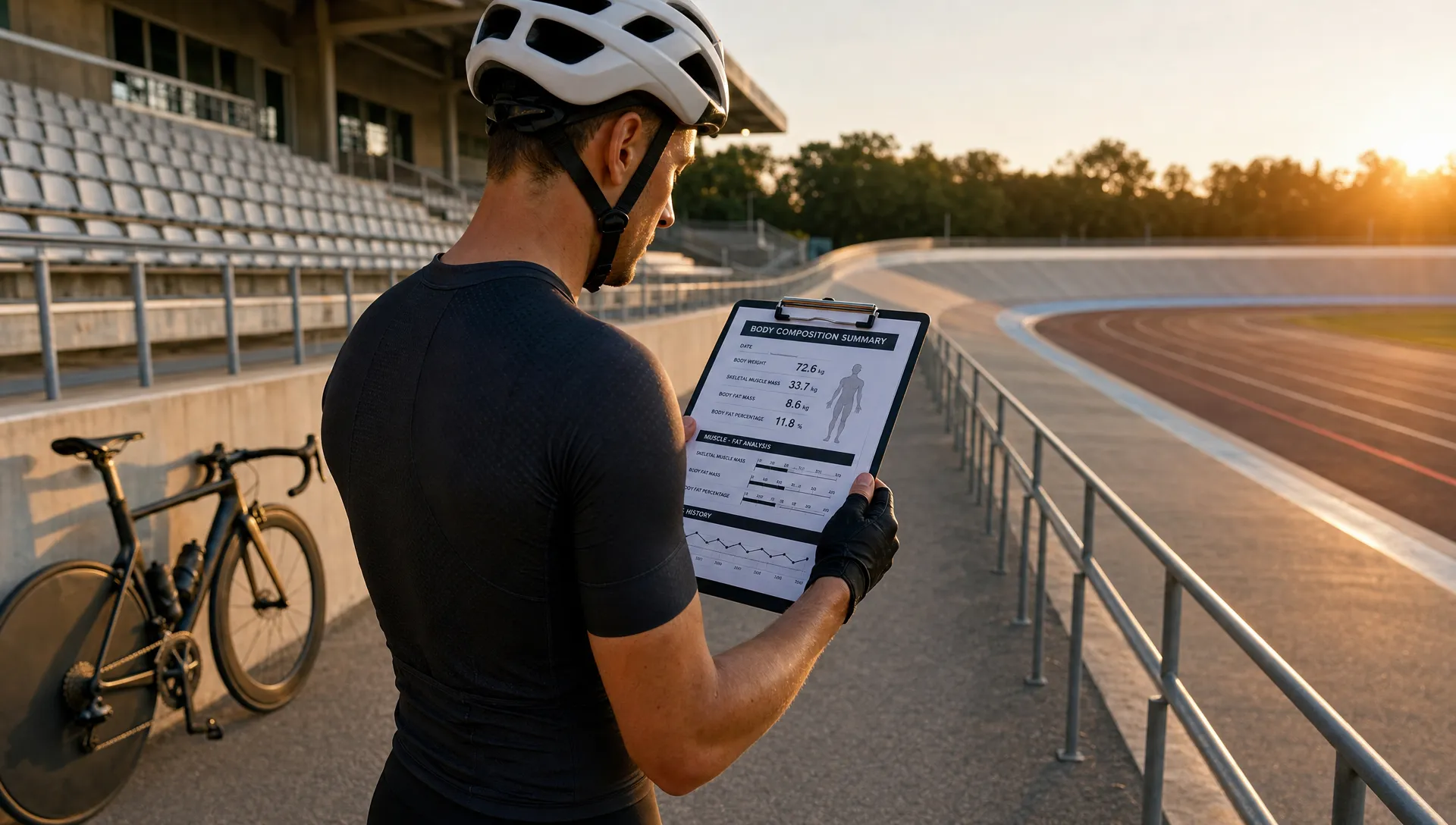
For athletes, the scale is a blunt instrument. It can tell you that body weight changed, but it cannot tell you whether that change came from fat, muscle, bone, water, or the natural fluctuation that follows a hard training block. That is why a body fat scan DEXA can be worth it: it gives athletes a more precise way to connect training and nutrition decisions to measurable body composition outcomes.
DEXA, also written DXA, stands for dual-energy X-ray absorptiometry. In a performance context, it is used to estimate body fat, lean mass, bone mineral content, and regional differences across the body. For an athlete, those details matter because performance is rarely about simply being lighter or heavier. It is about building the right tissue, in the right places, while supporting health and recovery.
A DEXA scan is most valuable when you use it as a decision-making tool, not just a one-time number. Whether you are trying to gain lean mass, drop fat without losing power, monitor bone health, or identify left-to-right imbalances, the scan can help you see what your current plan is actually doing.
What a Body Fat Scan DEXA Actually Measures
DEXA technology uses two low-dose X-ray energy levels to distinguish between different tissue types. Clinically, it is widely used for bone density assessment, and in sports and fitness settings it is also used for body composition analysis. A medical overview of dual-energy X-ray absorptiometry explains its role in measuring bone mineral density, while organizations such as the International Society for Clinical Densitometry publish positions on DXA use and interpretation.
For athletes, the value is not only total body fat percentage. The scan can also show how lean mass and fat mass are distributed across the trunk, arms, and legs. That regional view is where DEXA becomes especially useful for performance planning.
| DEXA metric | Why athletes care | Practical use |
|---|---|---|
| Total body fat percentage | Shows fat mass relative to total weight | Tracks fat-loss phases without relying on scale weight alone |
| Total lean mass | Estimates non-fat, non-bone tissue | Helps monitor muscle gain or muscle retention |
| Regional lean mass | Shows differences between arms, legs, and trunk | Highlights asymmetries that may affect performance or injury risk |
| Visceral fat estimate | Assesses deeper abdominal fat | Adds metabolic health context beyond appearance |
| Bone density data | Provides insight into skeletal health | Useful for endurance, weight-class, and high-impact athletes |
This is different from a smart scale or handheld body fat device, which typically uses bioelectrical impedance analysis. Those tools can be convenient, but hydration, recent exercise, food intake, and even skin temperature can influence readings. If you want a deeper comparison, DEXA SF has covered how accurate a DEXA scan is for body fat percentage in more detail.
Why Athletes Get More Value From DEXA Than the Average Fitness User
Many people want a body fat percentage out of curiosity. Athletes usually need more than curiosity. They need feedback that can guide changes in training load, nutrition, recovery, and competition strategy.
It separates useful weight change from misleading weight change
Two athletes can gain five pounds and have completely different outcomes. One may have gained mostly lean mass after a productive strength phase. Another may have gained mostly fat after a period of reduced training. On a scale, those outcomes look the same. On a DEXA report, they do not.
This distinction is especially important during body recomposition. If your goal is to lose fat while maintaining strength, scale weight may barely move because fat loss and muscle gain can happen at the same time. A DEXA scan can help reveal whether your plan is improving body composition even when your bathroom scale looks unimpressive.
It helps protect performance during fat-loss phases
Athletes often aim to get leaner for speed, agility, aesthetics, endurance efficiency, or weight-class requirements. The risk is pushing too hard and losing lean mass, strength, or recovery capacity. A DEXA scan can help you evaluate whether a calorie deficit is producing the intended fat loss without an unacceptable loss of lean tissue.
This does not mean the lowest body fat percentage is always best. In many sports, excessively low body fat can impair performance, recovery, hormones, and bone health. The goal is not to chase a universal number. The goal is to find the range where you perform well, recover well, and stay healthy.
It shows left-to-right asymmetries
Athletes are rarely perfectly symmetrical. A pitcher, tennis player, cyclist, runner, or combat athlete may naturally develop more lean mass on one side or in one limb. Some asymmetry is expected, but larger or changing differences can be a useful signal.
DEXA can show regional lean mass differences between the left and right arms and legs. That information can support conversations with coaches, physical therapists, or strength professionals. For example, if one leg consistently shows less lean mass after an injury, your program may need more unilateral strength work or a better return-to-play progression.
It adds bone health context
Bone density is not only a concern for older adults. It matters for athletes too, especially endurance athletes, athletes in weight-sensitive sports, and anyone with a history of stress fractures or under-fueling. The 2023 International Olympic Committee consensus statement on Relative Energy Deficiency in Sport highlights how low energy availability can affect health and performance, including bone health.
A DEXA scan is not a substitute for medical care, and athletes with stress fracture history, menstrual irregularities, or suspected low energy availability should work with qualified healthcare professionals. Still, bone density data can be an important part of understanding whether your training and nutrition are supporting long-term durability.
How DEXA Data Can Improve Training Decisions
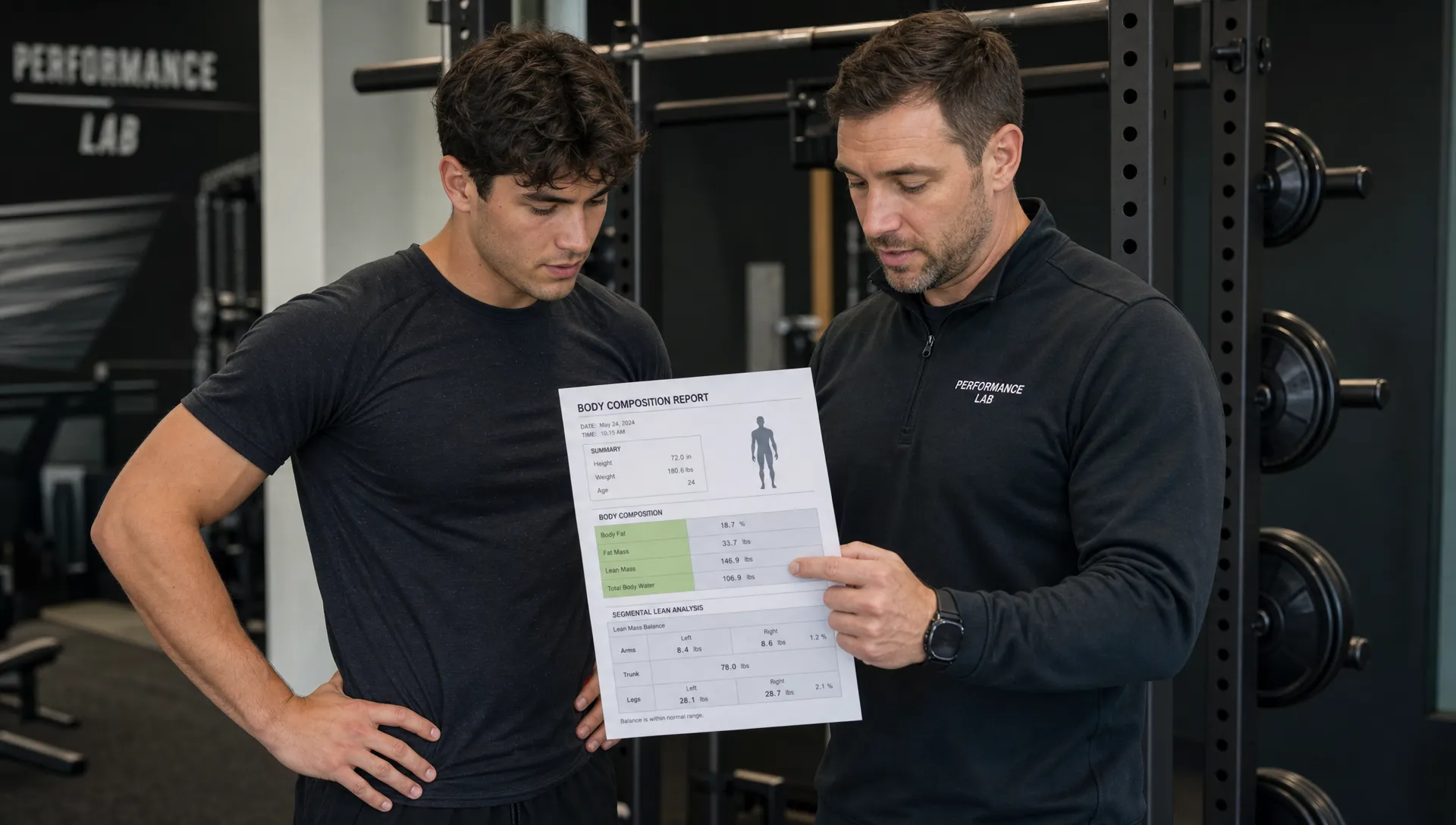
The biggest mistake athletes make with body composition testing is treating the result like a grade. A better approach is to treat it like a dashboard. The numbers should lead to better questions: Is my current training block building the tissue I want? Is my cut too aggressive? Am I recovering from injury evenly? Is my nutrition supporting performance?
| Athlete goal | What DEXA can reveal | Possible training or nutrition response |
|---|---|---|
| Gain muscle | Whether lean mass increased and where | Adjust strength volume, protein intake, or recovery time |
| Lose fat | Whether fat mass decreased while lean mass stayed stable | Keep the deficit moderate and monitor performance |
| Improve symmetry | Whether one limb has notably less lean mass | Add targeted unilateral work and reassess later |
| Return from injury | Whether lean mass has recovered in the affected region | Coordinate progression with a coach or clinician |
| Compete in a weight class | Whether weight changes are coming from fat or lean mass | Avoid last-minute cuts that compromise performance |
The key is consistency. A single scan gives you a baseline. A second scan, performed after a meaningful training cycle, shows direction. Over time, patterns become more useful than any single data point.
For example, if you are gaining weight during a hypertrophy phase, DEXA can help you see whether that gain is mostly lean mass or whether the surplus is too aggressive. If you are preparing for an endurance event and losing weight, it can help you confirm that the loss is not coming disproportionately from lean tissue. If you are coming back from a knee injury, regional lean mass can help you see whether the affected leg is catching up.
DEXA vs Other Body Fat Tests for Athletes
No body composition method is perfect, and every test has tradeoffs. The reason DEXA is often preferred by serious athletes is that it combines high-quality measurement with regional detail. It is more informative than a scale, less operator-dependent than skinfold calipers, and less affected by short-term hydration shifts than many impedance-based devices.
| Method | Strength | Limitation for athletes |
|---|---|---|
| Scale weight | Fast and easy | Cannot distinguish fat, muscle, water, or bone |
| BMI | Simple population-level screening tool | Often misleading for muscular athletes |
| Skinfold calipers | Affordable and portable | Accuracy depends heavily on technician skill and equations |
| Smart scales or BIA devices | Convenient for frequent checks | Hydration and timing can strongly affect results |
| DEXA scan | Detailed fat, lean mass, bone, and regional data | Requires an appointment and should be used thoughtfully over time |
If you are deciding between impedance testing and DEXA, this comparison of InBody vs DEXA for Bay Area athletes can help you understand the practical differences.
How Often Should Athletes Get a DEXA Scan?
The right scanning cadence depends on your goal. If you are casually training and simply want a baseline, one scan may be enough to understand where you are starting. If you are in a structured training phase, it usually makes sense to scan after enough time has passed for real tissue change to occur.
Many athletes consider rescanning after a meaningful block, such as 8 to 16 weeks of consistent training and nutrition. Competitive athletes may use DEXA a few times per year to track off-season muscle gain, pre-season conditioning, or post-injury recovery. More frequent testing is not always better because body composition changes take time, and overreacting to small shifts can lead to unnecessary program changes.
For the cleanest comparison, try to keep conditions consistent. Use the same facility when possible, scan at a similar time of day, and avoid comparing a scan taken after heavy training, travel, or unusual hydration to a scan taken under completely different conditions.
Because DEXA uses a small amount of ionizing radiation, it is not appropriate during pregnancy. If you have medical concerns or need bone density interpretation for diagnosis or treatment, discuss your results with a qualified healthcare professional.
When a Body Fat Scan DEXA Is Worth It
A body fat scan DEXA is most worth it when the information will change what you do next. It is not just for elite athletes. Recreational runners, lifters, cyclists, CrossFit athletes, martial artists, and team-sport athletes can all benefit if they are training with a specific goal.
It is especially useful if you are:
- Starting a new strength, fat-loss, or performance program and want a baseline
- Stuck at the same body weight but unsure if your composition is improving
- Trying to gain muscle without adding unnecessary fat
- Cutting weight and want to protect lean mass
- Returning from injury and monitoring side-to-side differences
- Concerned about bone density, stress fractures, or long-term durability
It may be less urgent if you are not ready to act on the results. Data is only valuable when it informs behavior. If you scan, get a number, and change nothing, the scan becomes trivia. If you scan, interpret the data, and use it to refine training and nutrition, it becomes a performance tool.
What to Look for in a DEXA Scan Provider
Athletes should look for more than the scan itself. The report matters, but interpretation matters too. A good provider should help you understand what the metrics mean in the context of your sport, goals, and training history.
DEXA SF provides professional DEXA body composition scans in San Francisco, including measurements related to body fat, lean mass, bone density, visceral fat, asymmetry, and metabolic insights. The service also includes expert interpretation, plus fitness and nutrition guidance based on your results. If you want a local overview of what the scan can show, this guide to a DEXA scan in San Francisco for body fat, muscle, and visceral fat is a helpful next step.
For athletes, that interpretation layer is important. A lower body fat percentage is not automatically better. More lean mass is not always useful if it slows you down or pushes you out of a weight class. The best result is the one that supports your sport, your health, and your performance timeline.
Frequently Asked Questions
Is a DEXA scan only useful for elite athletes? No. A DEXA scan can be useful for recreational athletes too, especially if you are following a structured training or nutrition plan and want objective feedback on fat loss, muscle gain, or asymmetries.
Can DEXA tell me my ideal body fat percentage? DEXA can measure your current body composition, but it does not define a universal ideal. The right range depends on your sport, sex, training phase, health history, and performance goals.
How should I prepare for a DEXA scan as an athlete? Follow the instructions from your scan provider. In general, consistency matters. Try to scan under similar conditions each time, including time of day, hydration, recent training, and food intake.
Is DEXA better than a smart scale for athletes? For detailed body composition data, yes. Smart scales are convenient for trends, but DEXA provides more detailed information about fat mass, lean mass, bone density, visceral fat, and regional distribution.
Bring More Precision to Your Training
If you are training hard, your measurement tools should be as serious as your program. A body fat scan DEXA can help you see whether your plan is building muscle, reducing fat, improving balance, and supporting long-term athletic health.
For athletes in San Francisco and the Bay Area, DEXA SF offers professional DEXA scans with expert interpretation and practical fitness and nutrition guidance, so your results can become an action plan rather than just a report.