
Best Reasons to Get a DEXA Scan in San Francisco
San Francisco is a city where people measure almost everything: miles run, watts on the bike, sleep scores, macros, steps, heart rate variability, and lifting volume. Yet one of the most important health metrics is often left to guesswork: what your body is actually made of.
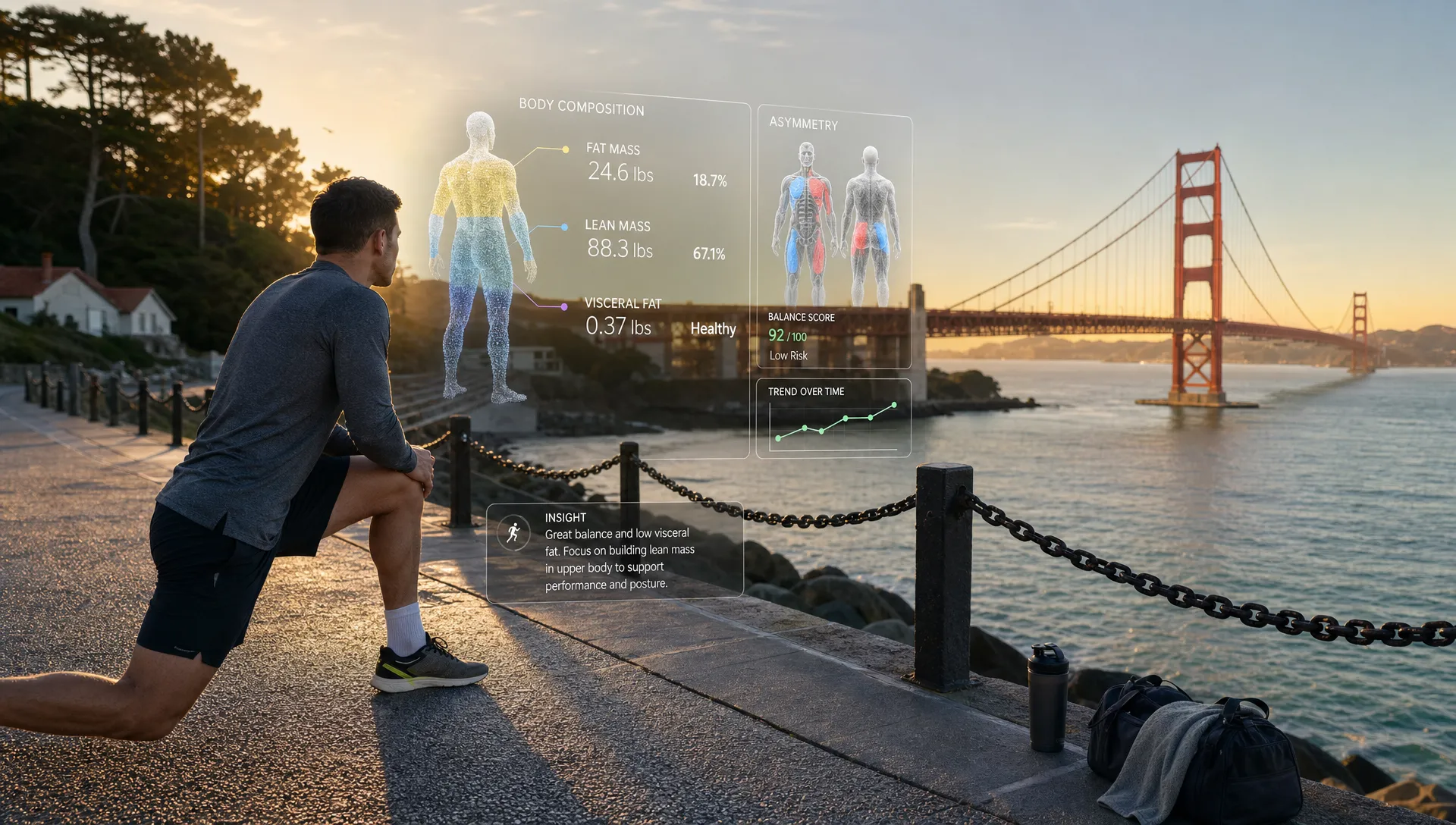
That is where a DEXA scan can be especially valuable. Short for dual-energy X-ray absorptiometry, DEXA provides a detailed look at body composition, including body fat, lean mass, bone density, visceral fat, and left-to-right asymmetries. For anyone trying to lose fat, gain muscle, improve performance, protect long-term health, or simply understand their baseline, a professional scan can replace vague assumptions with clear data.
If you are comparing options for a DEXA scan in San Francisco, the biggest question is not just whether the scan is accurate. It is whether the results help you make better decisions afterward. Here are the best reasons to get one, and how to use the information wisely.
1. You get a more complete baseline than weight or BMI can provide
Scale weight is useful, but it is incomplete. It cannot tell the difference between fat loss, muscle gain, water fluctuation, or changes in bone mineral content. BMI has a similar limitation. The CDC describes BMI as a screening tool, not a direct measure of body fat or overall health.
A DEXA scan gives you a more meaningful starting point. Instead of asking, “How much do I weigh?” you can ask better questions:
- How much of my weight is fat mass?
- How much is lean mass?
- Where is fat stored?
- Do I have more muscle on one side than the other?
- How does my bone density look?
That baseline matters because the same weight can represent very different bodies. Two people can both weigh 170 pounds, but one may have substantially more muscle and lower visceral fat, while the other may have a higher fat mass and lower lean mass. DEXA helps you see the difference.
2. You can track fat loss without losing sight of muscle
Many people start a nutrition or fitness plan with a simple goal: lose weight. But the better goal is usually to lose fat while preserving, or even building, lean mass.
This distinction becomes especially important during aggressive dieting, endurance training blocks, or medically supervised weight-loss programs. If the scale drops quickly, it may feel like progress. But if a meaningful portion of that loss comes from lean tissue, the outcome may not support strength, metabolism, performance, or long-term maintenance.
A DEXA scan separates fat mass from lean mass, so you can evaluate whether your plan is producing the type of change you actually want. If body fat is decreasing while lean mass is stable, that is a very different result from weight loss that includes a large reduction in muscle.
For a deeper breakdown of what DEXA measures beyond the scale, DEXA SF’s guide to body fat, muscle, and visceral fat measurement explains how these metrics fit together.
3. You can measure visceral fat, not just surface-level body fat
Not all fat carries the same health implications. Subcutaneous fat sits under the skin, while visceral fat is stored deeper in the abdomen around internal organs. Visceral fat is especially important because it is associated with cardiometabolic risk. Harvard Health notes that excess visceral fat is linked with higher risk for conditions such as cardiovascular disease and type 2 diabetes.
DEXA can estimate visceral fat, giving you a more specific picture than waist size or body fat percentage alone. This is useful for people who appear relatively lean but may still carry more abdominal fat than expected, as well as for people tracking improvements from nutrition, exercise, sleep, and stress changes.
In a health-conscious city like San Francisco, visceral fat data can be a powerful reality check. It shifts the focus away from appearance alone and toward measurable internal health markers.
4. You can see whether your training is actually building muscle
If you lift weights, do Pilates, train for endurance events, or work with a coach, you probably want to know whether your effort is changing your body composition. The scale may not move much when you gain muscle and lose fat at the same time. In fact, a “plateau” on the scale can hide excellent progress.
DEXA helps you see whether lean mass is increasing, decreasing, or staying stable. It can also show regional lean mass, which is helpful if you want to know whether your training is developing your legs, arms, or trunk as expected.
| Goal | What the scale shows | What DEXA adds | Why it matters |
|---|---|---|---|
| Fat loss | Total weight change | Fat mass and body fat percentage | Confirms whether weight loss is mostly fat |
| Muscle gain | Often little change | Lean mass by region | Shows whether training is adding muscle |
| Performance | Body weight only | Lean mass, fat mass, and asymmetry | Helps align body composition with sport demands |
| Longevity | General trend | Fat, lean mass, visceral fat, and bone density | Gives a broader view of health risk and resilience |
This is one of the strongest reasons to get a DEXA scan before and after a focused training block. You can make decisions based on what changed, not just how you feel or what the scale says.
5. You can identify left-to-right asymmetries
Most people are not perfectly symmetrical. You may have a dominant leg, a stronger arm, or a compensation pattern from an old injury. Small differences are normal, but larger imbalances can matter for athletes, lifters, runners, cyclists, and anyone returning to training after a setback.
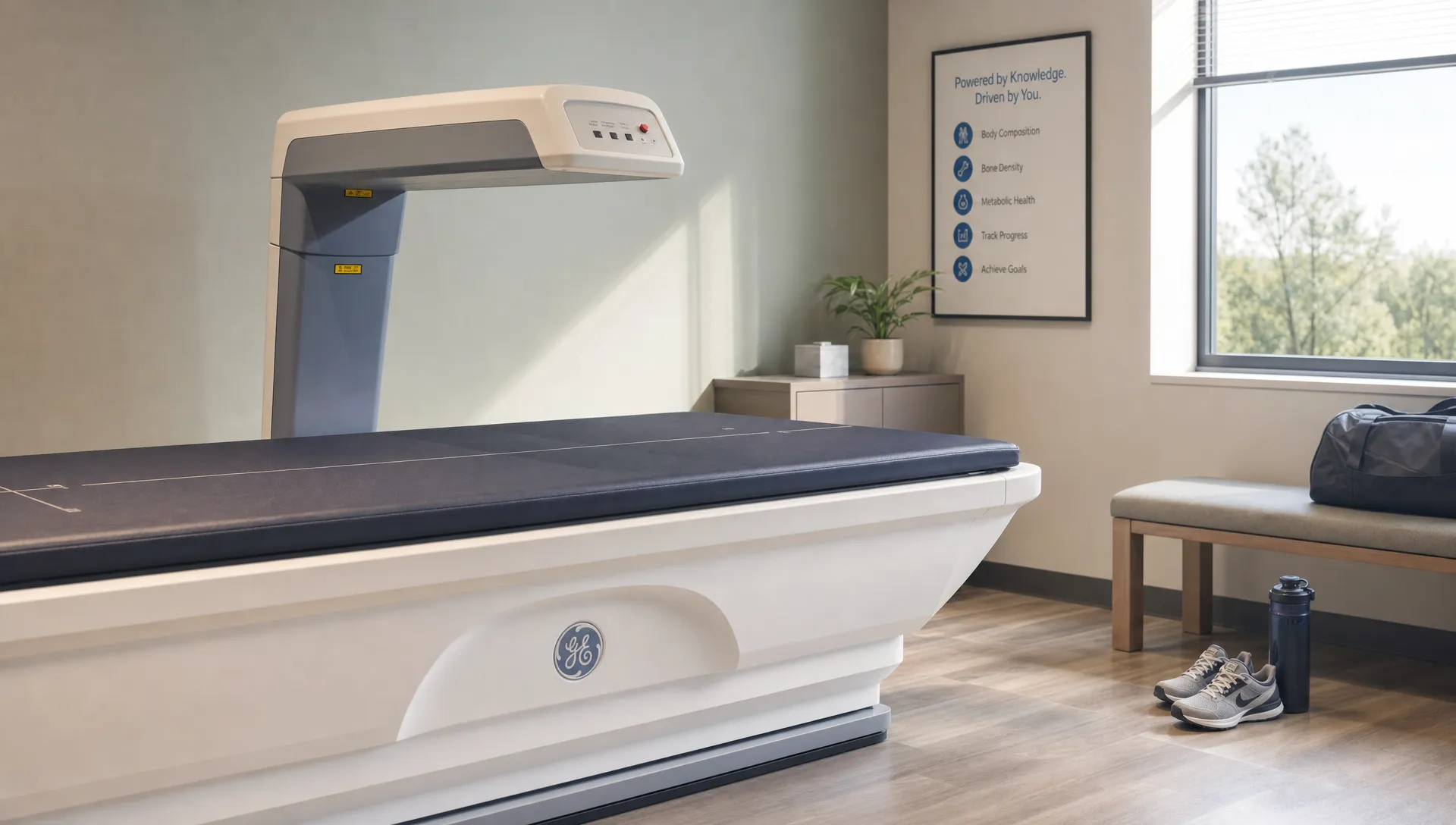
DEXA can detect asymmetries in lean mass between the left and right sides of the body. This does not replace a physical therapy evaluation or medical diagnosis, but it can provide useful context. If one leg has noticeably less lean mass than the other, that may help guide conversations with a coach, trainer, or clinician.
For San Francisco residents who spend weekends running trails, cycling Marin Headlands, climbing, rowing, playing recreational sports, or training in boutique fitness studios, asymmetry data can help make training more targeted.
6. You get bone density insight, not just body composition data
DEXA is widely known in medicine for bone density testing. Bone health matters across the lifespan, but it becomes especially important with age, family history, certain medical conditions, low energy availability, or hormonal changes.
The U.S. Preventive Services Task Force recommends osteoporosis screening for women 65 and older, as well as younger postmenopausal women at increased risk. If you have specific medical concerns about osteoporosis or fracture risk, you should discuss diagnostic testing and follow-up with your healthcare provider.
For general wellness and performance tracking, bone density analysis can still be valuable context. It gives you another layer of information beyond fat and muscle, especially if you are thinking about long-term strength, resilience, and healthy aging.
7. You can make nutrition decisions with better feedback
Nutrition changes often involve trial and error. You may increase protein, adjust calories, change meal timing, reduce alcohol, add carbs around workouts, or follow a structured plan. But without accurate body composition feedback, it is hard to know whether the plan is working as intended.
DEXA results can make nutrition conversations more specific. If lean mass is declining during a calorie deficit, your approach may need adjustment. If visceral fat remains elevated despite weight loss, your strategy may need to focus more on sustainable lifestyle factors such as sleep, resistance training, stress management, and dietary quality. If muscle is increasing while fat is stable, the next step may be different from someone losing both fat and lean mass.
At DEXA SF, clients receive expert interpretation along with fitness and nutrition guidance, so the scan is not just a report full of numbers. The goal is to help you understand what the data means and how it can inform your next move.
8. You can stop guessing when progress feels confusing
Body composition progress is rarely linear. You may train hard for six weeks and see no scale change. You may lose five pounds and wonder whether it was fat or muscle. You may feel stronger but look the same in the mirror. You may be doing “everything right” but still feel unsure.
DEXA can bring clarity to those moments. It helps answer questions like:
- Did I lose fat even though my weight stayed the same?
- Did I gain muscle during this strength program?
- Is my visceral fat trending down?
- Did one side of my body change more than the other?
- Is my current plan worth continuing?
This can be motivating, but it can also be grounding. Sometimes the data confirms that your plan is working. Other times, it shows that a change is needed. Either way, you are making decisions with better evidence.
9. You can choose a smarter scan cadence for your goals
A DEXA scan is most useful when it is part of a thoughtful tracking rhythm. You do not need to scan constantly. Body composition changes take time, and too-frequent testing can make normal fluctuations feel more important than they are.
For many people, a scan before starting a new program and another after a meaningful training or nutrition phase provides the clearest comparison. Athletes, people in structured fat-loss phases, and those making significant lifestyle changes may benefit from periodic scans, while others may only need occasional check-ins.
If you are deciding how often to scan, DEXA SF has a practical guide covering what a DEXA scan is, cost considerations, and scan frequency.
Who benefits most from a DEXA scan in San Francisco?
A DEXA scan can be useful for many people, but it is especially helpful if you want objective data to guide a specific goal.
You may benefit if you are starting a fat-loss plan, building muscle, training for a race or competition, returning from injury, monitoring visceral fat, evaluating a scale plateau, or establishing a long-term health baseline. It can also be valuable if you are already investing in coaching, personal training, nutrition support, or performance programming and want a clearer way to measure results.
In other words, DEXA is not only for elite athletes. It is for anyone who wants a more accurate understanding of body composition and a better way to track change.
What to expect from a professional DEXA scan experience
A good DEXA experience should be quick, clear, and easy to understand. The scan itself is typically straightforward: you lie still while the machine collects data. The real value comes from the quality of the measurements and the interpretation that follows.
With DEXA SF, you can schedule a professional DEXA body composition scan in San Francisco and review key metrics such as body fat, lean mass, bone density, visceral fat, asymmetries, and metabolic insights. Because expert interpretation is part of the experience, you do not have to walk away wondering what the report means.
That matters. Data only changes behavior when it is understandable, relevant, and connected to an action plan.
Frequently Asked Questions
Is a DEXA scan better than a smart scale? For body composition, DEXA is generally more detailed than a smart scale because it measures fat mass, lean mass, bone density, regional composition, visceral fat, and asymmetries. Smart scales can be useful for trends, but they are more affected by hydration and other variables.
Does a DEXA scan measure visceral fat? Yes, DEXA can estimate visceral fat, which is the deeper abdominal fat associated with higher cardiometabolic risk. This makes it useful for people who want to look beyond weight and overall body fat percentage.
Can a DEXA scan help if my weight has plateaued? Yes. A plateau on the scale may hide fat loss, muscle gain, water changes, or no meaningful body composition change. DEXA helps clarify what is actually happening.
How often should I get a DEXA scan? It depends on your goal. Many people scan before starting a focused program and again after enough time has passed to see meaningful change. If you have medical concerns, ask a healthcare professional what cadence is appropriate.
Is a DEXA scan the same as a medical osteoporosis test? DEXA is the technology used for bone density assessment, but if you need diagnostic osteoporosis screening or medical interpretation, you should work with your healthcare provider.
Is DEXA safe? DEXA uses low-dose X-ray technology. If you are pregnant, think you may be pregnant, or have a medical condition that affects whether imaging is appropriate, consult a qualified healthcare professional before scheduling.
Get clearer data for your next health goal
If you are serious about changing your body composition, improving performance, or building a more informed health baseline, a DEXA scan can give you the clarity that scales, mirrors, and estimates cannot.
For a precise DEXA scan in San Francisco, DEXA SF provides professional body composition testing, expert interpretation, and practical fitness and nutrition guidance so you can understand your results and use them with confidence.